This article was created with

eat-better-feel-better-logo-2.png

Ingredients

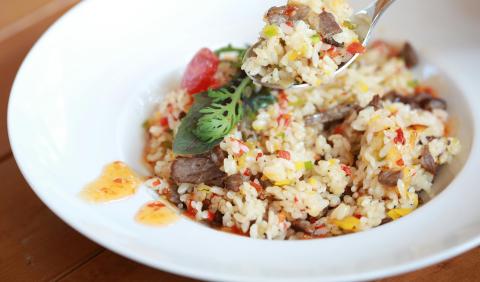
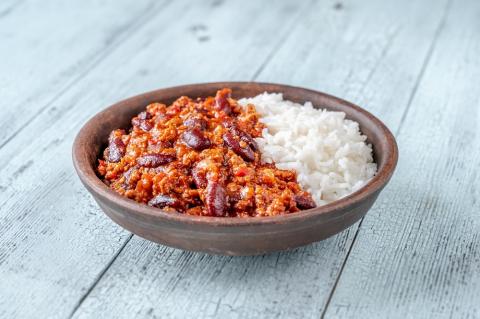
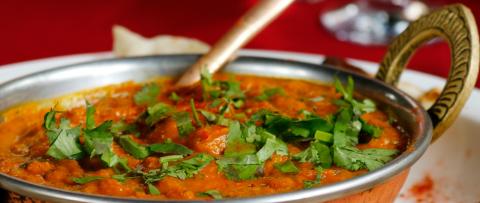
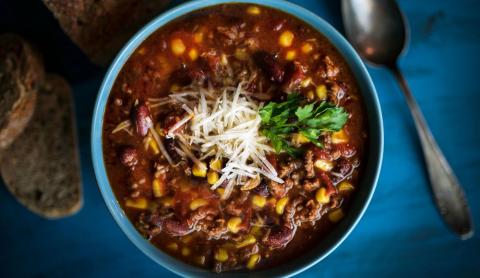
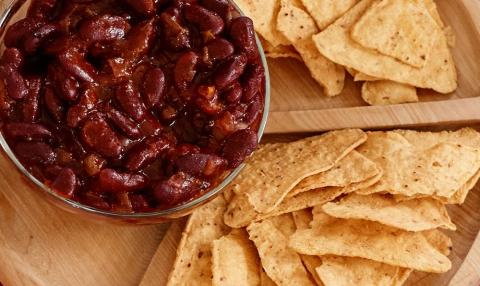
  • ½ Pack (200g) Lean Minced Beef
  • 2 Small (120g) Onions
  • 2 (6g) Garlic Cloves or 10g Garlic Puree
  • 2 Tins (800g) Chopped or Plum Tomatoes
  • 1 Teaspoons (3g) Chilli Powder
  • 1 (160g) Red Pepper
  • 5 Large Sized (100g) Mushrooms
  • 1 Tins (400g) Kidney Beans
  • 1 Pinch (1g) Black Pepper to taste
  • 1 Tablespoon (10g) Vegetable Oil
  • 1 Mug (300g) Easy Cook Rice

This recipe has been added to your Meal Planner.

Allergy Disclaimer

Always check the label of each ingredient for allergy warnings.

Method

  1. Peel and chop the onions, slice the mushrooms and the pepper. Finely chop or crush the peeled garlic.
  2. Heat oil in a pan and add the onion.
  3. When the onions start to turn brown add the mince, browning it over a gentle heat, and stir continuously to stop it from sticking.
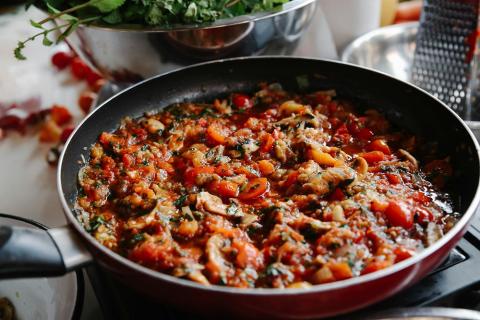
  4. Add the garlic, then add chopped tomatoes and chilli powder, bring the sauce to the boil then cover and lower the heat and simmer gently for 10-15 minutes. If using plum tomatoes, chop them up using a spoon when in the pan. Give the sauce a good stir from time to time.
  5. Meanwhile bring two mugs of water to the boil, add the rice and follow instructions on the packet for cooking.
  6. While the rice is cooking add the red pepper and sliced mushrooms to the sauce and simmer for 5 minutes.
  7. Add the drained kidney beans and simmer for another 5 minutes.
  8. Add black pepper to taste and serve with rice.

Cost Saver Tips

This is one of those recipes where you can make a large batch and then freeze it for later in the week. Rice shouldn't be kept for longer than 24 hours and should only be reheated once.

Tips for Kids

You can try this with different vegetables. If the kids aren't keen, chop the veg into small pieces and they might not notice them! If they're not keen on rice you could serve this with a baked potato instead. Or you could try brown rice to increase their fibre intake. You could also try using fresh chillis or additional spices such as cumin.

Nutritional Information

Based on a single serving of 533g (% of an adult's reference intake)

Energy

488 kcals ( 24 %)

1,908 kJ ( 24 %)

Fat

1.5 g ( 8 %)

Saturates

89.7 g ( %)

Sugar

11.2 g ( 12 %)

Salt

0.2 g ( 1 %)

Detailed nutritional information

Per 100g Per 533g serving
Energy Kcals 92 488
Energy Kj 358 1,908
Protein 4.5 g 23.8 g
Total Fat g g
Saturated Fat 0.3 g 1.5 g
Carbohydrates 16.8 g 89.7 g
Total Sugars 2.1 g 11.2 g
NSP Fibre 1.1 g 6 g
Sodium 19 mg 100 mg
Salt 0 g 0.2 g

Find out about nutritional labelling

Nutrition labels on the front of packaging

  • Most of the big supermarkets and many food manufacturers display nutritional information on the front of pre-packed food.
  • Front of pack nutrition labels provide information on the number of grams of fat, saturated fat, sugars and salt and the amount of energy (in kJ and kcal) in a serving or portion of a recipe.
  • The labels also include information about reference intakes (expressed as a percentage) which are guidelines about the approximate amount of particular nutrients and energy required for a healthy diet.
  • The colour coding tells you at a glance if the food has high (red), medium (amber) or low (green) amounts of fat, saturated fat, sugars and salt.
  • The more greens on the label, the healthier the choice
  • Amber means neither high nor low, so you can eat foods with all or mostly ambers on the label most of the time.
  • Reds on the label means the food is high in that nutrient and these are the foods we should cut down on. Try to eat these foods less often and in small amounts.

Food shopping tips

If you’re trying to decide which product to choose, check to see if there's a nutrition label on the front of the pack. This will help you to quickly assess how your choices stack up. You will often find a mixture of red, amber and green colour coding for the nutrients. So when you're choosing between similar products, try to go for more greens and ambers and fewer reds if you want to make a healthier choice.
Back to top

Ingredients

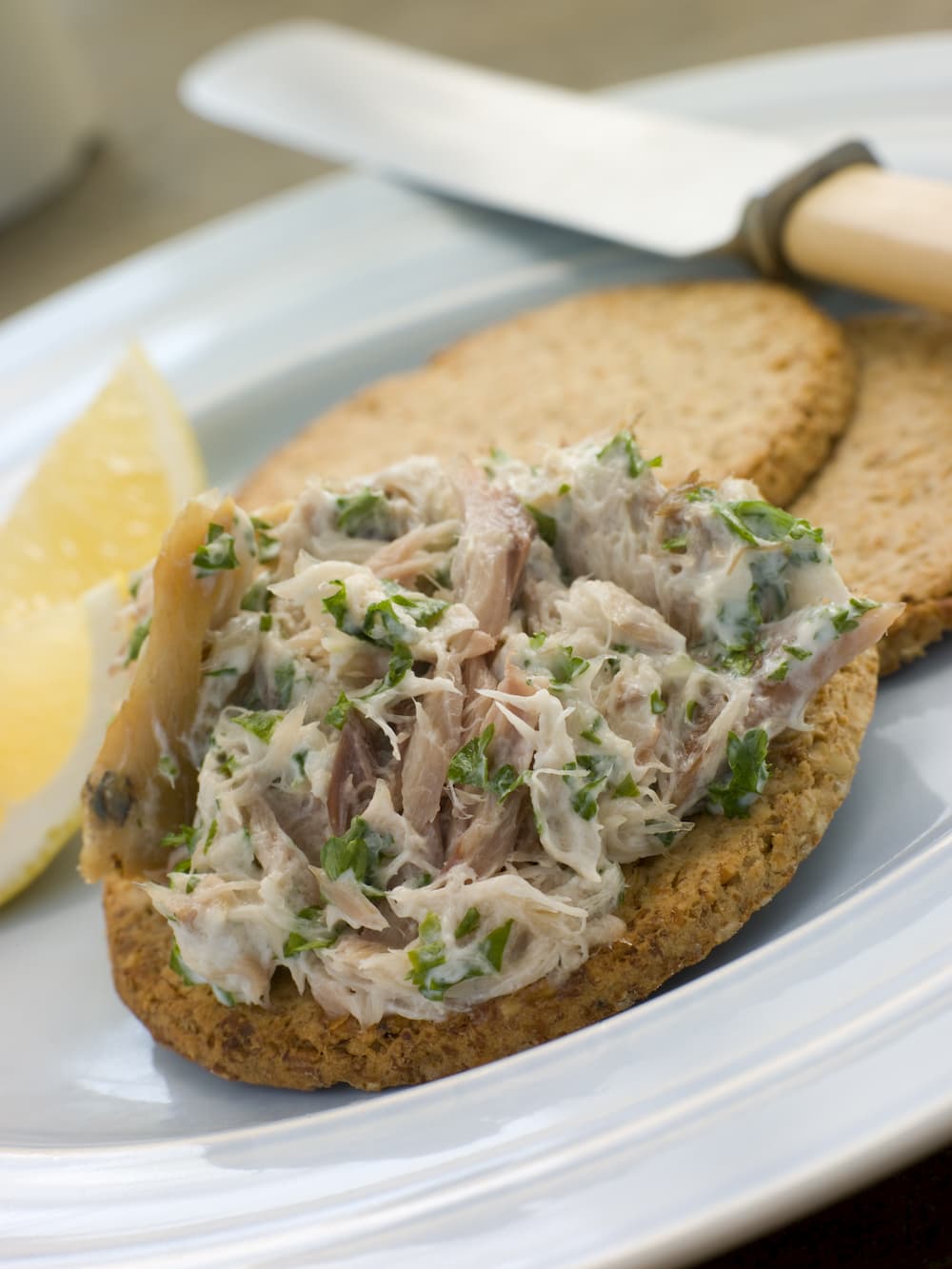
  • 2 Fillets (150g) Mackerel
  • 1 Tablespoons (3g) Fresh Chives
  • 2 Teaspoons (10g) Lemon Juice
  • 4 Low fat if possible Tablespoons (160g) Natural Yogurt
  • 1 Pinch (1g) Ground Black Pepper
  • 4 Portions (120g) Lettuce
  • 2 Medium sized (170g) Tomatoes
  • 2 cut these about an inch long Portions (120g) Cucumber
  • 8 (104g) Round Oatckaes

This recipe has been added to your Meal Planner.

Allergy Disclaimer

Always check the label of each ingredient for allergy warnings.

Method

  1. Skin and chop the mackerel fillets and finely chop the chives
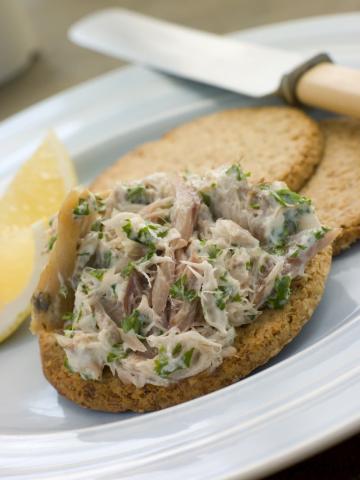
  2. Mix together the mackerel, chives, lemon juice and yogurt in a large bowl until blended. Season with black pepper
  3. Wash and shred the lettuce, and wash and slice the tomatoes and cucumber. Mix these salad ingredients together
  4. Serve the mackerel pate with the oatcakes and the prepared side salad

Time Saver Tips

Make the mackerel pate in advance and store in the fridge until ready to eat.

Cost Saver Tips

A bottle of lemon juice is a useful addition to your store cupboard - cheaper than buying fresh lemons!

Tips for Kids

Get them to help with mixing and blending the mackerel, chives, lemon juice and yogurt mixture.

Nutritional Information

Based on a single serving of 209g (% of an adult's reference intake)

Energy

277 kcals ( 14 %)

1,157 kJ ( 14 %)

Fat

4 g ( 20 %)

Saturates

19.8 g ( %)

Sugar

5.7 g ( 6 %)

Salt

1.6 g ( 26 %)

Detailed nutritional information

Per 100g Per 209g serving
Energy Kcals 133 277
Energy Kj 554 1,157
Protein 6 g 12.6 g
Total Fat g g
Saturated Fat 1.9 g 4 g
Carbohydrates 9.5 g 19.8 g
Total Sugars 2.7 g 5.7 g
NSP Fibre 0.5 g 1 g
Sodium 303 mg 632 mg
Salt 0.8 g 1.6 g

Find out about nutritional labelling

Nutrition labels on the front of packaging

  • Most of the big supermarkets and many food manufacturers display nutritional information on the front of pre-packed food.
  • Front of pack nutrition labels provide information on the number of grams of fat, saturated fat, sugars and salt and the amount of energy (in kJ and kcal) in a serving or portion of a recipe.
  • The labels also include information about reference intakes (expressed as a percentage) which are guidelines about the approximate amount of particular nutrients and energy required for a healthy diet.
  • The colour coding tells you at a glance if the food has high (red), medium (amber) or low (green) amounts of fat, saturated fat, sugars and salt.
  • The more greens on the label, the healthier the choice
  • Amber means neither high nor low, so you can eat foods with all or mostly ambers on the label most of the time.
  • Reds on the label means the food is high in that nutrient and these are the foods we should cut down on. Try to eat these foods less often and in small amounts.

Food shopping tips

If you’re trying to decide which product to choose, check to see if there's a nutrition label on the front of the pack. This will help you to quickly assess how your choices stack up. You will often find a mixture of red, amber and green colour coding for the nutrients. So when you're choosing between similar products, try to go for more greens and ambers and fewer reds if you want to make a healthier choice.

Back to top

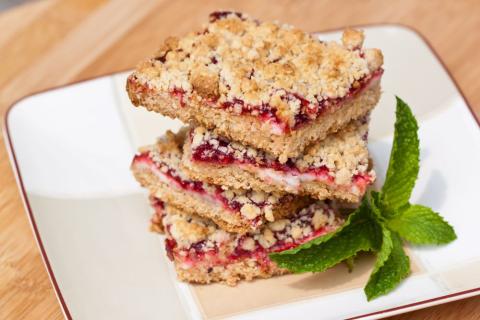
Ingredients

  • 5 Tablespoons (80g) Low Fat Spread
  • 3 Cups (250g) Porridge Oats
  • 1 ½ Tablespoons Honey
  • 2 Tablespoons (40g) Brown Sugar
  • 1 Teaspoon (3g) Dried Cinnamon
  • 3 Tablespoons (80g) Dried Berries

This recipe has been added to your Meal Planner.

Allergy Disclaimer

Always check the label of each ingredient for allergy warnings.

Method

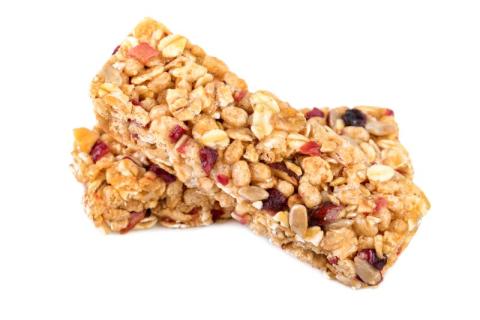
  1. Preheat the oven to 160°C / 140°C fan oven / 310°F / gas mark 3. Line a 18cmx25cm tin with grease proof (baking) paper.
  2. On a baking tray spread out the porridge oats and bake in the oven for 5-10 minutes until toasted.
  3. Meanwhile warm the spread, honey and sugar in a pan over a low heat stirring until the spread melts.
  4. Add the oats to the pan and mix in along with cinnamon and berries.
  5. Tip the mixture into the lined baking tin and press lightly smoothing evenly with the back of a spoon. Bake in the oven for approximately 30 minutes.
  6. Cool in tin and then cut into bars.

Time Saver Tips

Make in advance and stored in an airtight container once cooled.

Cost Saver Tips

Look for offers and try other dried fruit such as sultanas or chopped apricots

Tips for Kids

They will enjoy mixing the ingredients and pressing it into the tin. As this recipe contains added sugar it’s best kept to mealtimes.

Nutritional Information

Based on a single serving of 48g (% of an adult's reference intake)

Energy

183 kcals ( 9 %)

769 kJ ( 9 %)

Fat

0.9 g ( 5 %)

Saturates

32.5 g ( %)

Sugar

14.8 g ( 16 %)

Salt

0.1 g ( 2 %)

Detailed nutritional information

Per 100g Per 48g serving
Energy Kcals 382 183
Energy Kj 1,604 769
Protein 7.3 g 3.5 g
Total Fat g g
Saturated Fat 1.9 g 0.9 g
Carbohydrates 67.7 g 32.5 g
Total Sugars 0.9 g 14.8 g
NSP Fibre 3.7 g 1.8 g
Sodium 131 mg 63 mg
Salt 0.3 g 0.1 g

Find out about nutritional labelling

Nutrition labels on the front of packaging

  • Most of the big supermarkets and many food manufacturers display nutritional information on the front of pre-packed food.
  • Front of pack nutrition labels provide information on the number of grams of fat, saturated fat, sugars and salt and the amount of energy (in kJ and kcal) in a serving or portion of a recipe.
  • The labels also include information about reference intakes (expressed as a percentage) which are guidelines about the approximate amount of particular nutrients and energy required for a healthy diet.
  • The colour coding tells you at a glance if the food has high (red), medium (amber) or low (green) amounts of fat, saturated fat, sugars and salt.
  • The more greens on the label, the healthier the choice
  • Amber means neither high nor low, so you can eat foods with all or mostly ambers on the label most of the time.
  • Reds on the label means the food is high in that nutrient and these are the foods we should cut down on. Try to eat these foods less often and in small amounts.

Food shopping tips

If you’re trying to decide which product to choose, check to see if there's a nutrition label on the front of the pack. This will help you to quickly assess how your choices stack up. You will often find a mixture of red, amber and green colour coding for the nutrients. So when you're choosing between similar products, try to go for more greens and ambers and fewer reds if you want to make a healthier choice.

Back to top

Ingredients

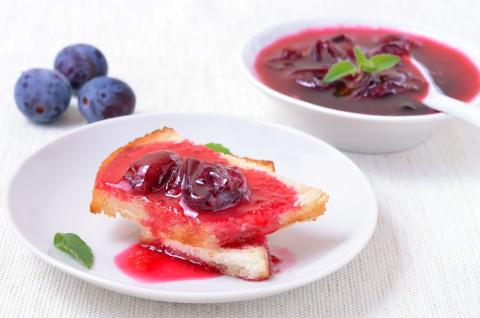
  • 4 Small sized (120g) Plums
  • 1 Medium sized (170g) Pear
  • ½ Cup (100ml) Unsweetened Apple Juice
  • ½ Teaspoon (2g) Ground Mixed Spice
  • 1 Tablespoon (30g) Sultanas
  • 1 Can (298g) Mandarins In Juice
  • 4 (144g) Wholemeal Bread
  • 1 Teaspoon (3g) Ground Cinnamon
  • 3 Tablespoons (120g) Low Fat Natural Yoghurt

This recipe has been added to your Meal Planner.

Allergy Disclaimer

Always check the label of each ingredient for allergy warnings.

Method

  1. Cut plums in half with a sharp knife, remove the stones and slice. Remove the core from the pear and slice.
  2. Put plums and pears into a saucepan with the apple juice and 3 tablespoons of water. Add the mixed spice and sultanas and cook on a gently heat for around 5 minutes until the plums and pears are tender.
  3. Sprinkle the bread with cinamon and then toast lightly.
  4. Drain juice from the mandarins and then add to the saucepan stir gently and heat for a further minute.
  5. Serve fruit with toast and yoghurt.

Time Saver Tips

There's no need to peel the pear.

Cost Saver Tips

Can use other fruit in season or that have in your fruit bowl. Try with apples or berries.

Tips for Kids

They will enjoy sprinkling the cinnamon on the bread.

Nutritional Information

Based on a single serving of 210g (% of an adult's reference intake)

Energy

164 kcals ( 8 %)

689 kJ ( 8 %)

Fat

0.4 g ( 2 %)

Saturates

34.6 g ( %)

Sugar

20.2 g ( 22 %)

Salt

0.5 g ( 8 %)

Detailed nutritional information

Per 100g Per 210g serving
Energy Kcals 78 164
Energy Kj 328 689
Protein 2.7 g 5.8 g
Total Fat g g
Saturated Fat 0.2 g 0.4 g
Carbohydrates 16.4 g 34.6 g
Total Sugars 9.6 g 20.2 g
NSP Fibre 1.5 g 3.1 g
Sodium 96 mg 202 mg
Salt 0.2 g 0.5 g

Find out about nutritional labelling

Nutrition labels on the front of packaging

  • Most of the big supermarkets and many food manufacturers display nutritional information on the front of pre-packed food.
  • Front of pack nutrition labels provide information on the number of grams of fat, saturated fat, sugars and salt and the amount of energy (in kJ and kcal) in a serving or portion of a recipe.
  • The labels also include information about reference intakes (expressed as a percentage) which are guidelines about the approximate amount of particular nutrients and energy required for a healthy diet.
  • The colour coding tells you at a glance if the food has high (red), medium (amber) or low (green) amounts of fat, saturated fat, sugars and salt.
  • The more greens on the label, the healthier the choice
  • Amber means neither high nor low, so you can eat foods with all or mostly ambers on the label most of the time.
  • Reds on the label means the food is high in that nutrient and these are the foods we should cut down on. Try to eat these foods less often and in small amounts.

Food shopping tips

If you’re trying to decide which product to choose, check to see if there's a nutrition label on the front of the pack. This will help you to quickly assess how your choices stack up. You will often find a mixture of red, amber and green colour coding for the nutrients. So when you're choosing between similar products, try to go for more greens and ambers and fewer reds if you want to make a healthier choice.

Back to top

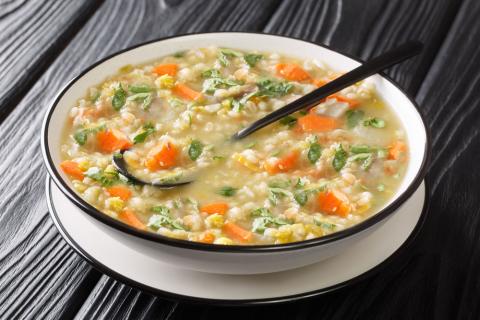
Ingredients

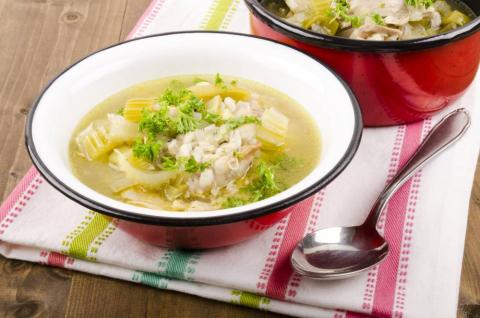
  • 8 (600g) Chicken Thighs
  • 1 Pint (600ml) Water
  • 1 (60g) Onion
  • 1 Tablespoon (20g) Pearl Barley
  • 1 (10g) Chicken Or Vegetable Reduced Salt Stock Cube
  • 2 (320g) Leeks
  • 1 Stick (30g) Celery
  • 1 Teaspoon (1g) Dried Thyme
  • (10g) Parsley
  • 1 Pinch Ground Black Pepper

This recipe has been added to your Meal Planner.

Allergy Disclaimer

Always check the label of each ingredient for allergy warnings.

Method

  1. Peel and chop the onion.
  2. In a large pan add the chicken thighs, water, onion and barley. Bring to the boil and then reduce heat and simmer for 1 hour.
  3. Remove the chicken from the pan and remove the skin and bone from each thigh using a sharp knife. Cut the chicken into bite size pieces and return to the pan.
  4. Wash the celery and leeks then finely chop then add to the pan with the thyme, parsley and stock cube. Stir to dissolve the stock cube, adding more water if required.
  5. Add pepper to taste and simmer until the vegetables are tender, approximately 20-30 minutes.

Time Saver Tips

Prepare in advance and heat through when required.

Cost Saver Tips

For a super speedy meal later on, why not batch cook this? Let it cool down then keep it in the fridge or freezer. This is a great recipe for leftover chicken. Just remember that you can’t freeze the soup if you use chicken that’s already been frozen and defrosted. No worries if you’ve run out of onions – celery or leeks are a good alternative. You could also use spring onion, too.

Tips for Kids

Try chopping vegetables really small or blend them so your little one can’t spot them – a sneaky but tasty way that could help get your little one eating a little more veg! You could even ask them if they’d like to help you prepare the vegetables. This might make them more likely to want to eat it when it’s ready!

Nutritional Information

Based on a single serving of 269g (% of an adult's reference intake)

Energy

156 kcals ( 8 %)

656 kJ ( 8 %)

Fat

0.8 g ( 4 %)

Saturates

9.1 g ( %)

Sugar

2.7 g ( 3 %)

Salt

0.8 g ( 13 %)

Detailed nutritional information

Per 100g Per 269g serving
Energy Kcals 58 156
Energy Kj 244 656
Protein 9.1 g 24.5 g
Total Fat g g
Saturated Fat 0.3 g 0.8 g
Carbohydrates 3.4 g 9.1 g
Total Sugars 1 g 2.7 g
NSP Fibre 0.6 g 1.6 g
Sodium 105 mg 282 mg
Salt 0.3 g 0.8 g

Find out about nutritional labelling

Nutrition labels on the front of packaging

  • Most of the big supermarkets and many food manufacturers display nutritional information on the front of pre-packed food.
  • Front of pack nutrition labels provide information on the number of grams of fat, saturated fat, sugars and salt and the amount of energy (in kJ and kcal) in a serving or portion of a recipe.
  • The labels also include information about reference intakes (expressed as a percentage) which are guidelines about the approximate amount of particular nutrients and energy required for a healthy diet.
  • The colour coding tells you at a glance if the food has high (red), medium (amber) or low (green) amounts of fat, saturated fat, sugars and salt.
  • The more greens on the label, the healthier the choice
  • Amber means neither high nor low, so you can eat foods with all or mostly ambers on the label most of the time.
  • Reds on the label means the food is high in that nutrient and these are the foods we should cut down on. Try to eat these foods less often and in small amounts.

Food shopping tips

If you’re trying to decide which product to choose, check to see if there's a nutrition label on the front of the pack. This will help you to quickly assess how your choices stack up. You will often find a mixture of red, amber and green colour coding for the nutrients. So when you're choosing between similar products, try to go for more greens and ambers and fewer reds if you want to make a healthier choice.

Back to top

Ingredients

  • 8 (400g) Reduced Fat Pork Sausages
  • ¼ Bag (200g) Frozen Spinach
  • 1 Pot (200g) Reduced Fat Crème Fraîche
  • 1 Tablespoon (10g) Vegetable Oil
  • 1 (150g) Onion
  • 2 (6g) Garlic Cloves
  • 6 (120g) Lasagne Sheets
  • ½ Pot (250g) Passata
  • 2 Tablespoons (30g) Tomato Puree
  • 1 Teaspoon (1g) Dried Mixed Herbs
  • 5 Tablespoons (50g) Grated Reduced Fat Mature Cheddar

This recipe has been added to your Meal Planner.

Allergy Disclaimer

Always check the label of each ingredient for allergy warnings.

Method

  1. Set the oven to 180°C / 160°C fan oven / 350°F / gas mark 4.
  2. Split the sausages along their length and remove the skins.
  3. Peel and finely chop the onion and garlic.
  4. Heat the oil in a pan and add the sausages. Break up and mash the meat with a wooden spoon whilst frying for 5-10 minutes until brown.
  5. Add the onions and garlic to the pan and fry for around 5 minutes until softened, stirring occasionally.
  6. Stir in the spinach and crème fraîche.
  7. Place the lasagne sheets in a baking tray or large bowl (in a single layer if possible), cover them with boiling water and allow them to soften for about 5 minutes. Don't let the sheets overlap and stick together.
  8. While the lasagne sheets are soaking, mix together the passata, tomato puree and mixed herbs in a large jug.
  9. Grate the cheese.
  10. Drain the lasagne sheets.
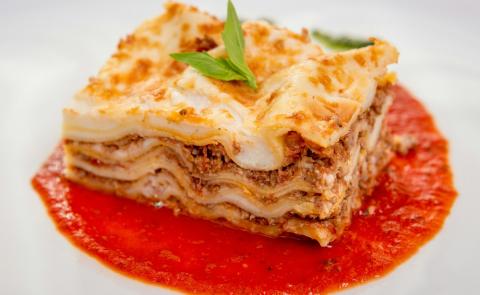
  11. Put half of the tomato mixture in the bottom of an ovenproof dish, then a layer of lasagne sheets, followed by a layer of the sausage and spinach mixture.  Repeat these layers and finish with a sprinkle of cheese.  
  12. Bake in the preheated oven for 25-30 minutes, and serve hot.

Try wholemeal lasagne to increase fibre content and add some other vegetables to boost your 5 a day.

Time Saver Tips

Prepare in advance and bake in the oven when required for around 40 minutes.

Cost Saver Tips

You could also use low-fat plain yoghurt if you don’t have any crème fraîche. If you don't have passata try using drained tinned tomatoes instead.

Tips for Kids

Why not let your wee one pick which green veggies to go in this? Things like cabbage, peas or broccoli (cut into small bits) are all just as tasty instead of spinach. If they get to pick, they might even be more likely to eat it!

Nutritional Information

Based on a single serving of 342g (% of an adult's reference intake)

Energy

462 kcals ( 23 %)

1,937 kJ ( 23 %)

Fat

8.1 g ( 41 %)

Saturates

40.8 g ( %)

Sugar

8.7 g ( 10 %)

Salt

1.6 g ( 26 %)

Detailed nutritional information

Per 100g Per 342g serving
Energy Kcals 135 462
Energy Kj 566 1,937
Protein 9.5 g 32.5 g
Total Fat g g
Saturated Fat 2.4 g 8.1 g
Carbohydrates 11.9 g 40.8 g
Total Sugars 2.5 g 8.7 g
NSP Fibre 1 g 3.4 g
Sodium 184 mg 629 mg
Salt 0.5 g 1.6 g

Find out about nutritional labelling

Nutrition labels on the front of packaging

  • Most of the big supermarkets and many food manufacturers display nutritional information on the front of pre-packed food.
  • Front of pack nutrition labels provide information on the number of grams of fat, saturated fat, sugars and salt and the amount of energy (in kJ and kcal) in a serving or portion of a recipe.
  • The labels also include information about reference intakes (expressed as a percentage) which are guidelines about the approximate amount of particular nutrients and energy required for a healthy diet.
  • The colour coding tells you at a glance if the food has high (red), medium (amber) or low (green) amounts of fat, saturated fat, sugars and salt.
  • The more greens on the label, the healthier the choice
  • Amber means neither high nor low, so you can eat foods with all or mostly ambers on the label most of the time.
  • Reds on the label means the food is high in that nutrient and these are the foods we should cut down on. Try to eat these foods less often and in small amounts.

Food shopping tips

If you’re trying to decide which product to choose, check to see if there's a nutrition label on the front of the pack. This will help you to quickly assess how your choices stack up. You will often find a mixture of red, amber and green colour coding for the nutrients. So when you're choosing between similar products, try to go for more greens and ambers and fewer reds if you want to make a healthier choice.

Back to top

Ingredients

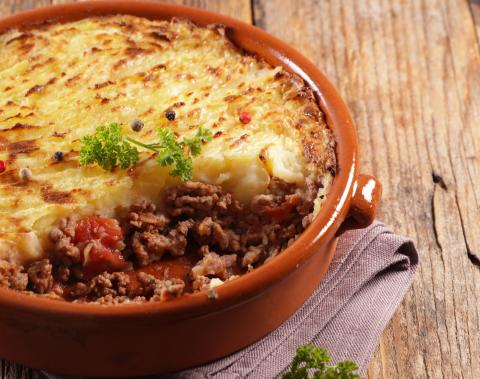
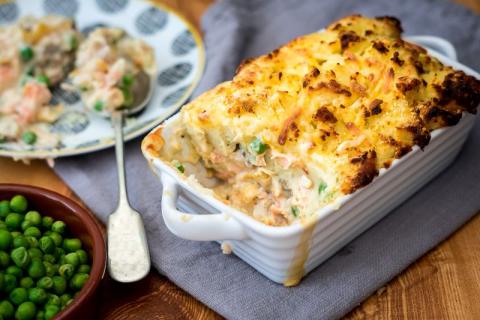
  • 1 Lean Pack (400g) Minced Beef
  • 1 Medium Sized (160g) Leek
  • 1 Medium Sized (90g) Parsnip
  • 2 Medium Sized (160g) Carrots
  • 4 Tablespoons (60g) Tomato Puree
  • 1 Tablespoons (20g) Plain Flour
  • 3 Cups (500ml) Water
  • 1 Reduced Salt (7g) Stock Cube (Beef Or Vegetable)
  • 1 Pinch (1g) Ground Black Pepper
  • 5 Large sized (1kg) Potatoes
  • ½ Cups (75ml) Semi-Skimmed Milk
  • 2 Teaspoons (10g) Low Fat Spread

This recipe has been added to your Meal Planner.

Allergy Disclaimer

Always check the label of each ingredient for allergy warnings.

Method

  1. Preheat the oven to 180oC / 160oC fan oven / 350oF / gas mark 4.
  2. Wash the leek, remove its outer layer and slice. Peel and dice parsnip, carrots and potatoes.
  3. In a large pan cook the mince until it starts to brown then add the leek and cook for a further 2 minutes.
  4. Add the parsnip and carrots to the mince and cook for 5 minutes. Next add the flour and cook for a further 2 minutes.
  5. Dissolve the stock cube in boiling water and add to the pan along with the tomato puree.
  6. Bring to the boil then simmer for 20 minutes until sauce begins to thicken and vegetables soften.
  7. In another pan boil the potatoes until they're soft then drain them, add the milk and low fat spread then mash with a fork or masher. Add pepper to taste.
  8. Add mince to oven proof dish and top with potato leaving no gaps.
  9. Cook in oven for 30-40 minutes, serve when potato has turned golden.

Time Saver Tips

You can prepare this pie in advance and pop it in the oven when you're ready to serve it up.

Tips for Kids

Let the kids get involved by asking them to wash the veg. Remember to chop it into bite-sized pieces for them.

Nutritional Information

Based on a single serving of 420g (% of an adult's reference intake)

Energy

469 kcals ( 23 %)

1,969 kJ ( 23 %)

Fat

5.6 g ( 28 %)

Saturates

55.5 g ( %)

Sugar

11.6 g ( 13 %)

Salt

0.9 g ( 15 %)

Detailed nutritional information

Per 100g Per 420g serving
Energy Kcals 109 469
Energy Kj 458 1,969
Protein 8 g 34 g
Total Fat g g
Saturated Fat 1.3 g 5.6 g
Carbohydrates 12.7 g 55.5 g
Total Sugars 2.1 g 11.6 g
NSP Fibre 1.4 g 6.5 g
Sodium 56 mg 275 mg
Salt 0.1 g 0.9 g

Find out about nutritional labelling

Nutrition labels on the front of packaging

  • Most of the big supermarkets and many food manufacturers display nutritional information on the front of pre-packed food.
  • Front of pack nutrition labels provide information on the number of grams of fat, saturated fat, sugars and salt and the amount of energy (in kJ and kcal) in a serving or portion of a recipe.
  • The labels also include information about reference intakes (expressed as a percentage) which are guidelines about the approximate amount of particular nutrients and energy required for a healthy diet.
  • The colour coding tells you at a glance if the food has high (red), medium (amber) or low (green) amounts of fat, saturated fat, sugars and salt.
  • The more greens on the label, the healthier the choice
  • Amber means neither high nor low, so you can eat foods with all or mostly ambers on the label most of the time.
  • Reds on the label means the food is high in that nutrient and these are the foods we should cut down on. Try to eat these foods less often and in small amounts.

Food shopping tips

If you’re trying to decide which product to choose, check to see if there's a nutrition label on the front of the pack. This will help you to quickly assess how your choices stack up. You will often find a mixture of red, amber and green colour coding for the nutrients. So when you're choosing between similar products, try to go for more greens and ambers and fewer reds if you want to make a healthier choice.

Back to top

Ingredients

  • 1 Cups (140ml) Semi-Skimmed Milk
  • 2 ½ Tablespoons (50g) Plain Flour
  • 1 Egg
  • 1 Tablespoons (15g) Low Fat Spread
  • 80 (160g) Blueberries

This recipe has been added to your Meal Planner.

Allergy Disclaimer

Always check the label of each ingredient for allergy warnings.

Method

  1. Pour flour into a bowl, add the egg and mix together well for 2 minutes.
  2. Gradually add milk until all the flour is mixed in.
  3. Continue to mix for another 2 minutes and then add any remaining milk.
  4. Melt half the low fat spread in a frying pan and add 3 tbsp of mixture to the pan.
  5. When golden brown, turn and cook the other side.
  6. Remove the crepe and add more mixture to the pan.
  7. After two crepes melt the remaining low fat spread to cook the remaining two crepes.
  8. Serve with blueberries.

Time Saver Tips

You could always use ready mix batter – quick and easy!

Cost Saver Tips

Enjoy with seasonal fruit: fresh,frozen or canned.

Tips for Kids

They will enjoy making the batter and tossing crepes. (Be sure to wash hands after handling raw egg and supervise if handling hot pans.)

Nutritional Information

Based on a single serving of 90g (% of an adult's reference intake)

Energy

102 kcals ( 5 %)

427 kJ ( 5 %)

Fat

1.1 g ( 6 %)

Saturates

14.1 g ( %)

Sugar

4.6 g ( 5 %)

Salt

0.2 g ( 3 %)

Detailed nutritional information

Per 100g Per 90g serving
Energy Kcals 113 102
Energy Kj 474 427
Protein 4.9 g 4.4 g
Total Fat g g
Saturated Fat 1.2 g 1.1 g
Carbohydrates 15.7 g 14.1 g
Total Sugars 5.1 g 4.6 g
NSP Fibre 1.2 g 1.1 g
Sodium 63 mg 56.7 mg
Salt 0.2 g 0.2 g

Find out about nutritional labelling

Nutrition labels on the front of packaging

  • Most of the big supermarkets and many food manufacturers display nutritional information on the front of pre-packed food.
  • Front of pack nutrition labels provide information on the number of grams of fat, saturated fat, sugars and salt and the amount of energy (in kJ and kcal) in a serving or portion of a recipe.
  • The labels also include information about reference intakes (expressed as a percentage) which are guidelines about the approximate amount of particular nutrients and energy required for a healthy diet.
  • The colour coding tells you at a glance if the food has high (red), medium (amber) or low (green) amounts of fat, saturated fat, sugars and salt.
  • The more greens on the label, the healthier the choice
  • Amber means neither high nor low, so you can eat foods with all or mostly ambers on the label most of the time.
  • Reds on the label means the food is high in that nutrient and these are the foods we should cut down on. Try to eat these foods less often and in small amounts.

Food shopping tips

If you’re trying to decide which product to choose, check to see if there's a nutrition label on the front of the pack. This will help you to quickly assess how your choices stack up. You will often find a mixture of red, amber and green colour coding for the nutrients. So when you're choosing between similar products, try to go for more greens and ambers and fewer reds if you want to make a healthier choice.

Back to top

Ingredients

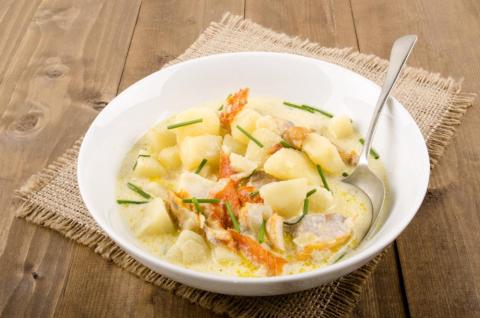
  • 2 (skinless and boneless) (240g) Smoked Haddock Fillets
  • ½ Cups (135ml) Water
  • 1 (150g) Onion
  • 1 Pint (600ml) Semi-Skimmed Milk
  • 4 (500g) Potatoes
  • (25g) Low Fat Spread
  • to taste Ground Black Pepper

This recipe has been added to your Meal Planner.

Allergy Disclaimer

Always check the label of each ingredient for allergy warnings.

Method

  1. Wash, peel and dice potatoes. Place in a large pan with boiling water and cook until soft, approximately 20 minutes.
  2. Peel onion and chop finely.
  3. Place the haddock in a medium sized frying pan with enough water to cover it, no more. Bring to the boil and add the chopped onion, then turn down the heat and simmer gently.
  4. When the haddock is cooked, separate the flakes using a fork. If they don't separate easily a little more cooking is needed.
  5. In a small pan, bring milk to the boil and then add this to the fish.
  6. Drain potatoes, return to the pan then add low fat spread and mash using a masher or fork until smooth.
  7. Stir potato into the fish, to thicken the soup and add black pepper to taste.

Time Saver Tips

Buy skinless & boneless haddock

Cost Saver Tips

Frozen fish is cheaper. Allow fish to defrost before cooking. Make in bulk and keep for another day.

Tips for Kids

Take a trip to your local fishmongers.

Nutritional Information

Based on a single serving of 397g (% of an adult's reference intake)

Energy

246 kcals ( 12 %)

1,032 kJ ( 12 %)

Fat

2.4 g ( 12 %)

Saturates

28.6 g ( %)

Sugar

9.9 g ( 11 %)

Salt

1.6 g ( 27 %)

Detailed nutritional information

Per 100g Per 397g serving
Energy Kcals 62 246
Energy Kj 260 1,032
Protein 5.6 g 22.2 g
Total Fat g g
Saturated Fat 0.6 g 2.4 g
Carbohydrates 7.2 g 28.6 g
Total Sugars 2.5 g 9.9 g
NSP Fibre 0.5 g 2 g
Sodium 180 mg 715 mg
Salt 0.4 g 1.6 g

Find out about nutritional labelling

Nutrition labels on the front of packaging

  • Most of the big supermarkets and many food manufacturers display nutritional information on the front of pre-packed food.
  • Front of pack nutrition labels provide information on the number of grams of fat, saturated fat, sugars and salt and the amount of energy (in kJ and kcal) in a serving or portion of a recipe.
  • The labels also include information about reference intakes (expressed as a percentage) which are guidelines about the approximate amount of particular nutrients and energy required for a healthy diet.
  • The colour coding tells you at a glance if the food has high (red), medium (amber) or low (green) amounts of fat, saturated fat, sugars and salt.
  • The more greens on the label, the healthier the choice
  • Amber means neither high nor low, so you can eat foods with all or mostly ambers on the label most of the time.
  • Reds on the label means the food is high in that nutrient and these are the foods we should cut down on. Try to eat these foods less often and in small amounts.

Food shopping tips

If you’re trying to decide which product to choose, check to see if there's a nutrition label on the front of the pack. This will help you to quickly assess how your choices stack up. You will often find a mixture of red, amber and green colour coding for the nutrients. So when you're choosing between similar products, try to go for more greens and ambers and fewer reds if you want to make a healthier choice.

Back to top

Ingredients

  • 10 Medium (950g) Potatoes
  • 1 Large (700g) Swede
  • 1 Medium (150g) Onion
  • 1 Pack (500g) Minced Lamb
  • 1 Level Tablespoon (20g) Plain Flour
  • 1 Tin (400g) Chopped or Plum Tomatoes
  • 1 Teaspoon (1g) Dried Rosemary (optional)
  • ¼ Pint (150ml) Water
  • 3 Tablespoons (45ml) Semi-Skimmed Milk
  • 1 Pinch Black Pepper to taste

This recipe has been added to your Meal Planner.

Allergy Disclaimer

Always check the label of each ingredient for allergy warnings.

Method

  1. Peel and dice the potatoes and swede. Peel and finely chop the onion.
  2. Carefully add the potatoes and swede to a large pan of boiling water and boil for 15-20 minutes until tender (the swede may take longer than the potatoes).
  3. Meanwhile, dry fry the minced lamb in a saucepan over a moderate heat until all the meat is browned.
  4. Drain off any excess fat then add the onion and fry for 3-4 minutes, stirring occasionally.
  5. Sprinkle over the flour and stir until the mixture is evenly coated.
  6. Stir in the chopped tomatoes, rosemary, and water. If using plum tomatoes, chop them with a spoon when in the pan. Bring to the boil and stir until thickened. Reduce the heat, cover and simmer for 20 minutes, stirring occasionally.
  7. When the potatoes and swede are tender, drain and mash until smooth with the milk. Season to taste with the black pepper and keep hot.
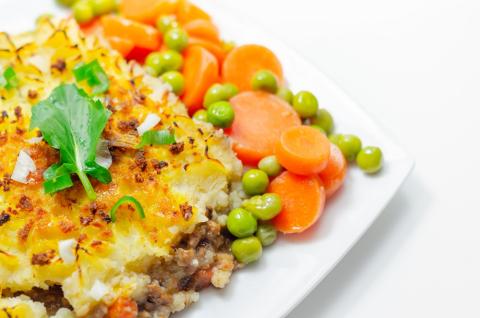
  8. Add the meat mixture to a heatproof dish and spoon the mashed potato and swede on top. Use the back of a spoon to level the surface. Roughen the surface with a fork if desired.
  9. Place the pie under a moderate pre-heated grill for 3-5 minutes or until the surface is golden brown and the potato is piping hot.
  10. Serve immediately.

Time Saver Tips

If peeling and cooking potatoes and swede takes too long when you’re busy – why not make a batch of mashed potato to keep in the fridge or freezer so it’s ready whenever you need it? For a quick and easy option that’s always on hand, make an extra-big portion of mince so you can freeze some of it. Remember to let it cool down before you pop it in the freezer and then allow it to defrost thoroughly before use.

Cost Saver Tips

Why not try buying frozen lamb instead of fresh? You can use any other kind of mince like beef or turkey in this too. Vegetarian mince is another option. So just keep a look out for whatever’s on offer.

Tips for Kids

Kids will love helping to mash the potatoes and swede. If you don't have a masher, use a fork. If the kids do not like swede, simply replace some of the swede with potatoes. You can serve the pie veg - why not let them choose?

Nutritional Information

Based on a single serving of 614g (% of an adult's reference intake)

Energy

434 kcals ( 22 %)

1,750 kJ ( 22 %)

Fat

6.5 g ( 33 %)

Saturates

48.9 g ( %)

Sugar

11.4 g ( 13 %)

Salt

0.2 g ( 3 %)

Detailed nutritional information

Per 100g Per 614g serving
Energy Kcals 71 434
Energy Kj 285 1,750
Protein 5.2 g 31.9 g
Total Fat g g
Saturated Fat 1.1 g 6.5 g
Carbohydrates 8 g 48.9 g
Total Sugars 1.9 g 11.4 g
NSP Fibre 0.7 g 4.2 g
Sodium 16 mg 97 mg
Salt 0 g 0.2 g

Find out about nutritional labelling

Nutrition labels on the front of packaging

  • Most of the big supermarkets and many food manufacturers display nutritional information on the front of pre-packed food.
  • Front of pack nutrition labels provide information on the number of grams of fat, saturated fat, sugars and salt and the amount of energy (in kJ and kcal) in a serving or portion of a recipe.
  • The labels also include information about reference intakes (expressed as a percentage) which are guidelines about the approximate amount of particular nutrients and energy required for a healthy diet.
  • The colour coding tells you at a glance if the food has high (red), medium (amber) or low (green) amounts of fat, saturated fat, sugars and salt.
  • The more greens on the label, the healthier the choice
  • Amber means neither high nor low, so you can eat foods with all or mostly ambers on the label most of the time.
  • Reds on the label means the food is high in that nutrient and these are the foods we should cut down on. Try to eat these foods less often and in small amounts.

Food shopping tips

If you’re trying to decide which product to choose, check to see if there's a nutrition label on the front of the pack. This will help you to quickly assess how your choices stack up. You will often find a mixture of red, amber and green colour coding for the nutrients. So when you're choosing between similar products, try to go for more greens and ambers and fewer reds if you want to make a healthier choice.

Back to top
Subscribe to Eat Better Feel Better