This article was created with

eat-better-feel-better-logo-2.png

Ingredients

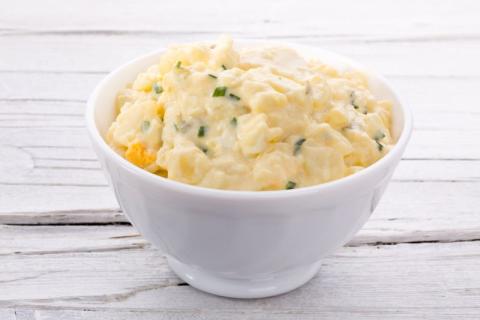
  • 6 Eggs
  • 1 Heaped tablespoon (30g) Low Fat Mayonnaise
  • 1 Tablespoon (40g) Low Fat Plain Yoghurt
  • Black Pepper to taste

This recipe has been added to your Meal Planner.

Allergy Disclaimer

Always check the label of each ingredient for allergy warnings.

Method

  1. Add boiling water to a medium sized pan and bring to the boil then turn down the heat.
  2. Using a spoon gently lower each egg into the pan.
  3. Keeping the water gently simmering, boil eggs for 10-12 minutes then remove from heat and fill the pan with cold water.
  4. Once cooled, crack the shells all over on a hard surface and then peel the shell off.
  5. In a bowl mash the eggs with a fork and mix with the mayonnaise and yoghurt. Add black pepper to taste.


Time Saver Tips

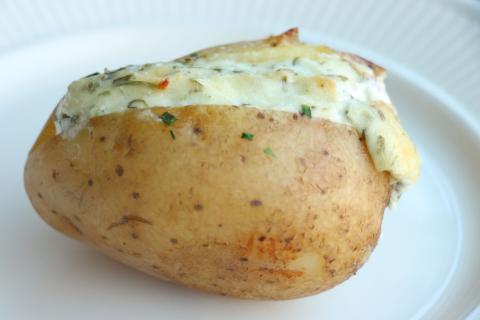
It’s handy to hard-boil eggs in advance – once cooled, keep them in the fridge so they’re ready to use. If you're in a rush, egg mayo makes a great, fuss-free topping for toast or baked potatoes.

Tips for Kids

The kids can help with cracking and peeling the eggs as well mashing them up.

Nutritional Information

Based on a single serving of 108g (% of an adult's reference intake)

Energy

156 kcals ( 8 %)

650 kJ ( 8 %)

Fat

2.7 g ( 14 %)

Saturates

1.5 g ( %)

Sugar

1 g ( 1 %)

Salt

0.4 g ( 7 %)

Detailed nutritional information

Per 100g Per 108g serving
Energy Kcals 145 156
Energy Kj 602 650
Protein 12.3 g 13.3 g
Total Fat g g
Saturated Fat 2.5 g 2.7 g
Carbohydrates 1.3 g 1.5 g
Total Sugars 1 g 1 g
NSP Fibre 0 g 0 g
Sodium 131 mg 142 mg
Salt 0.3 g 0.4 g

Find out about nutritional labelling

Nutrition labels on the front of packaging

  • Most of the big supermarkets and many food manufacturers display nutritional information on the front of pre-packed food.
  • Front of pack nutrition labels provide information on the number of grams of fat, saturated fat, sugars and salt and the amount of energy (in kJ and kcal) in a serving or portion of a recipe.
  • The labels also include information about reference intakes (expressed as a percentage) which are guidelines about the approximate amount of particular nutrients and energy required for a healthy diet.
  • The colour coding tells you at a glance if the food has high (red), medium (amber) or low (green) amounts of fat, saturated fat, sugars and salt.
  • The more greens on the label, the healthier the choice
  • Amber means neither high nor low, so you can eat foods with all or mostly ambers on the label most of the time.
  • Reds on the label means the food is high in that nutrient and these are the foods we should cut down on. Try to eat these foods less often and in small amounts.

Food shopping tips

If you’re trying to decide which product to choose, check to see if there's a nutrition label on the front of the pack. This will help you to quickly assess how your choices stack up. You will often find a mixture of red, amber and green colour coding for the nutrients. So when you're choosing between similar products, try to go for more greens and ambers and fewer reds if you want to make a healthier choice.
Back to top

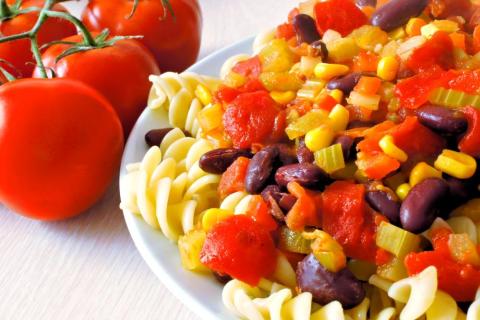
Ingredients

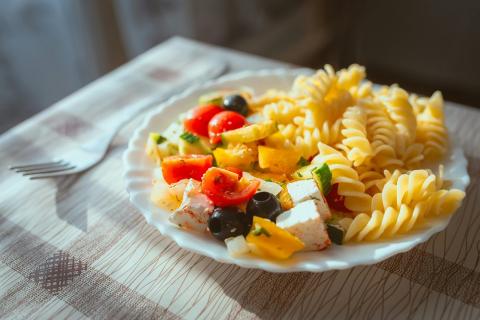
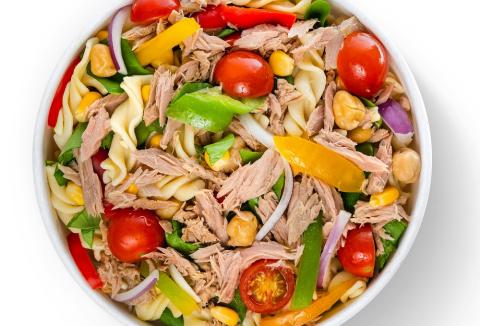
  • (280g) Pasta
  • (120g) Feta Cheese
  • 1 Small (60g) Red onion
  • 4 Medium (340g) Tomatoes
  • 1 Small Can (210g) Chickpeas
  • 1 (160g) Red Pepper
  • 1 (160g) Yellow Pepper
  • 4 Tablespoons (40g) Olive Oil
  • 2 Tablespoons (30g) Lemon Juice
  • 1 (3g) Garlic Clove
  • 1 For Taste Pinch (1g) Ground Black Pepper

This recipe has been added to your Meal Planner.

Allergy Disclaimer

Always check the label of each ingredient for allergy warnings.

Method

  1. Cook the pasta according to the instructions on the packet.
  2. Peel and finely chop the red onion and garlic.
  3. Wash and chop the tomatoes and peppers.
  4. Chop the feta into bite size pieces - it doesn't matter if it crumbles.
  5. Make the salad dressing by mixing together the olive oil, lemon juice, garlic and black pepper.
  6. When the pasta is cooked, drain it and rinse under cold running water. Add the pasta to a bowl.
  7. Add the feta, red onion, tomatoes and peppers to the bowl with the pasta and mix.
  8. Drain and rinse the chick peas and add to the bowl and mix.
  9. Pour the dressing into the bowl, mix and serve.

Time Saver Tips

You can make this salad in advance and keep it in the fridge until you want to eat it.

Cost Saver Tips

Buy Greek style salad cheese or other cheese instead of feta.

Tips for Kids

Make this salad as colourful as possible by using their favourite salad vegetables. You can also pop in the pasta shapes they like best.

Nutritional Information

Based on a single serving of 417g (% of an adult's reference intake)

Energy

486 kcals ( 24 %)

2,040 kJ ( 24 %)

Fat

5.9 g ( 30 %)

Saturates

59.7 g ( %)

Sugar

9.1 g ( 10 %)

Salt

1.3 g ( 22 %)

Detailed nutritional information

Per 100g Per 417g serving
Energy Kcals 117 486
Energy Kj 489 2,040
Protein 4.1 g 17 g
Total Fat g g
Saturated Fat 1.4 g 5.9 g
Carbohydrates 14.3 g 59.7 g
Total Sugars 2.2 g 9.1 g
NSP Fibre 1.9 g 7.9 g
Sodium 125 mg 523 mg
Salt 0.3 g 1.3 g

Find out about nutritional labelling

Nutrition labels on the front of packaging

  • Most of the big supermarkets and many food manufacturers display nutritional information on the front of pre-packed food.
  • Front of pack nutrition labels provide information on the number of grams of fat, saturated fat, sugars and salt and the amount of energy (in kJ and kcal) in a serving or portion of a recipe.
  • The labels also include information about reference intakes (expressed as a percentage) which are guidelines about the approximate amount of particular nutrients and energy required for a healthy diet.
  • The colour coding tells you at a glance if the food has high (red), medium (amber) or low (green) amounts of fat, saturated fat, sugars and salt.
  • The more greens on the label, the healthier the choice
  • Amber means neither high nor low, so you can eat foods with all or mostly ambers on the label most of the time.
  • Reds on the label means the food is high in that nutrient and these are the foods we should cut down on. Try to eat these foods less often and in small amounts.

Food shopping tips

If you’re trying to decide which product to choose, check to see if there's a nutrition label on the front of the pack. This will help you to quickly assess how your choices stack up. You will often find a mixture of red, amber and green colour coding for the nutrients. So when you're choosing between similar products, try to go for more greens and ambers and fewer reds if you want to make a healthier choice.

Back to top

Ingredients

  • 12 Breaded Fish Fingers
  • 4 Medium Sized (340g) Tomatoes
  • 8 Slices (288g) Wholemeal Bread

This recipe has been added to your Meal Planner.

Allergy Disclaimer

Always check the label of each ingredient for allergy warnings.

Method

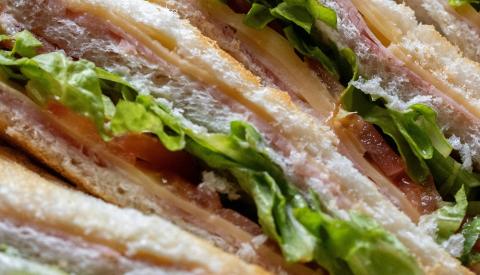
  1. Grill the fish fingers as per manufacturer’s instructions.
  2. Slice each tomato into 6 slices.
  3. Make a sandwich with the fish fingers and tomatoes.
  4. Slice in half and enjoy.

Tips for Kids

Fish fingers are always a favourite. Try chopping tomatoes into very small pieces (like a salsa).

Nutritional Information

Based on a single serving of 230g (% of an adult's reference intake)

Energy

317 kcals ( 16 %)

1,334 kJ ( 16 %)

Fat

2.5 g ( 13 %)

Saturates

44.9 g ( %)

Sugar

4.6 g ( 5 %)

Salt

1.6 g ( 27 %)

Detailed nutritional information

Per 100g Per 230g serving
Energy Kcals 138 317
Energy Kj 580 1,334
Protein 7.8 g 17.9 g
Total Fat g g
Saturated Fat 1.1 g 2.5 g
Carbohydrates 19.5 g 44.9 g
Total Sugars 2 g 4.6 g
NSP Fibre 2.1 g 4.8 g
Sodium 297 mg 683 mg
Salt 0.7 g 1.6 g

Find out about nutritional labelling

Nutrition labels on the front of packaging

  • Most of the big supermarkets and many food manufacturers display nutritional information on the front of pre-packed food.
  • Front of pack nutrition labels provide information on the number of grams of fat, saturated fat, sugars and salt and the amount of energy (in kJ and kcal) in a serving or portion of a recipe.
  • The labels also include information about reference intakes (expressed as a percentage) which are guidelines about the approximate amount of particular nutrients and energy required for a healthy diet.
  • The colour coding tells you at a glance if the food has high (red), medium (amber) or low (green) amounts of fat, saturated fat, sugars and salt.
  • The more greens on the label, the healthier the choice
  • Amber means neither high nor low, so you can eat foods with all or mostly ambers on the label most of the time.
  • Reds on the label means the food is high in that nutrient and these are the foods we should cut down on. Try to eat these foods less often and in small amounts.

Food shopping tips

If you’re trying to decide which product to choose, check to see if there's a nutrition label on the front of the pack. This will help you to quickly assess how your choices stack up. You will often find a mixture of red, amber and green colour coding for the nutrients. So when you're choosing between similar products, try to go for more greens and ambers and fewer reds if you want to make a healthier choice.

Back to top

Ingredients

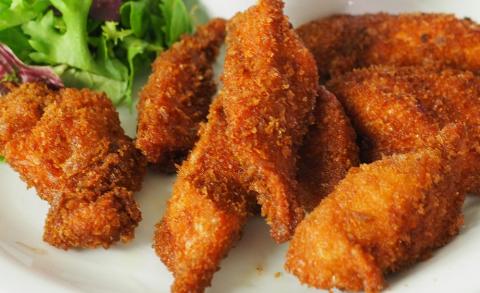
  • 2 (Frozen or Fresh) (250g) Salmon Fillets
  • 2 Heaped tablespoons (60g) Plain Flour
  • (1g) Black Pepper
  • 2 (60g) Egg Whites
  • 2 (Hard Cheese) Heaped tablespoons (20g) Grated Parmesan Cheese
  • 4 Heaped tablespoons (60g) Breadcrumbs
  • 1 (For the Dip) Heaped tablespoon (33g) Low Fat Mayonnaise
  • 1 (For the Dip) Heaped tablespoon (40g) Low Fat Plain Yoghurt
  • 1 (For the Dip) Teaspoon (40g) Mustard
  • 1 Optional - (For the Dip) Teaspoon (1g) Chopped Parsley

This recipe has been added to your Meal Planner.

Allergy Disclaimer

Always check the label of each ingredient for allergy warnings.

Method

  1. Preheat the oven to 200°C / 180°C fan oven / 400°F / gas mark 6.  Using kitchen roll or fingers coat a baking tray with vegetable oil.
  2. If using frozen fish make sure it is defrosted before use.
  3. Rinse the salmon gently and pat dry with kitchen towel. Using a sharp knive cut the fish into approximately 10 cm strips that are 11/5cm in width and height.
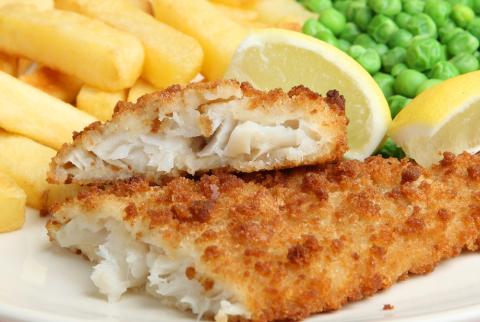
  4. Place the flour and pepper in a bowl. In another bowl crack each egg being careful to keep the yolks in the shell (these are not required). Beat the egg whites with a whisk or folk until frothy. In a third bowl mix the cheese and breadcrumbs together.
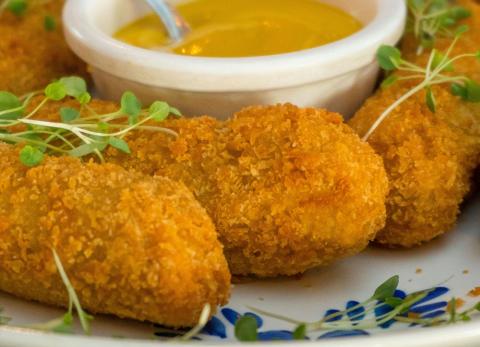
  5. Coat each salmon strip in flour, pat to remove excess then dip in the egg and finally coat in breadcrumb mix.
  6. Place the sticks onto the baking tray. Bake in the oven for around 15- 20 minutes  until golden brown.
  7. While the fish sticks are cooking make the dip by mixing the mayonnaise, yoghurt, mustard and herbs (if using) in a small bowl.

Time Saver Tips

Fish sticks & dip can both be made in advance and kept in the fridge. Cook strips when ready.

Cost Saver Tips

Use frozen fish. Choose an un-grated hard cheese instead of parmesan.
Tips for Kids

They will enjoy coating the fish. Try a mixture of white fish and salmon sticks if they aren't used to eating salmon.

Nutritional Information

Based on a single serving of 125g (% of an adult's reference intake)

Energy

308 kcals ( 15 %)

1,291 kJ ( 15 %)

Fat

3 g ( 15 %)

Saturates

28.3 g ( %)

Sugar

2.4 g ( 3 %)

Salt

0.5 g ( 8 %)

Detailed nutritional information

Per 100g Per 125g serving
Energy Kcals 246 308
Energy Kj 1,033 1,291
Protein 15.1 g 18.9 g
Total Fat g g
Saturated Fat 2.4 g 3 g
Carbohydrates 22.6 g 28.3 g
Total Sugars 1.9 g 2.4 g
NSP Fibre 0.5 g 0.6 g
Sodium 176 mg 220 mg
Salt 0.4 g 0.5 g

Find out about nutritional labelling

Nutrition labels on the front of packaging

  • Most of the big supermarkets and many food manufacturers display nutritional information on the front of pre-packed food.
  • Front of pack nutrition labels provide information on the number of grams of fat, saturated fat, sugars and salt and the amount of energy (in kJ and kcal) in a serving or portion of a recipe.
  • The labels also include information about reference intakes (expressed as a percentage) which are guidelines about the approximate amount of particular nutrients and energy required for a healthy diet.
  • The colour coding tells you at a glance if the food has high (red), medium (amber) or low (green) amounts of fat, saturated fat, sugars and salt.
  • The more greens on the label, the healthier the choice
  • Amber means neither high nor low, so you can eat foods with all or mostly ambers on the label most of the time.
  • Reds on the label means the food is high in that nutrient and these are the foods we should cut down on. Try to eat these foods less often and in small amounts.
Food shopping tips

If you’re trying to decide which product to choose, check to see if there's a nutrition label on the front of the pack. This will help you to quickly assess how your choices stack up. You will often find a mixture of red, amber and green colour coding for the nutrients. So when you're choosing between similar products, try to go for more greens and ambers and fewer reds if you want to make a healthier choice.
Back to top

Ingredients

  • 4 (480g) Haddock Fillets
  • 4 Tablespoons (80g) Plain Flour
  • 2 (100g) Eggs
  • 4 Cups (200g) Dried Breadcrumbs
  • 5 (1kg) Potatoes
  • 2 Tablespoons (20g) Vegetable Oil
  • 10 Tablespoons (320g) Frozen Peas

This recipe has been added to your Meal Planner.

Allergy Disclaimer

Always check the label of each ingredient for allergy warnings.

Method

  1. Preheat the oven to 200°C / 180°C fan oven / 400°F / gas mark 6.
  2. Peel potatoes and cut into chips about 1cm wide. Cook in a pan of boiling water for 10 minutes.
  3. Drain the chips, place on a baking tray and drizzle the oil over them. Bake in the oven for approximately 20 minutes, turning over half way.
  4. Break egg into a bowl and whisk using a fork. Put the flour and breadcrumbs on separate plates. Cover another baking tray with greaseproof paper.
  5. Coat each piece of fish in flour, then dip in the egg and roll in breadcrumbs until all surfaces are covered. Place on the baking tray.
  6. Cook fish in the oven for approximately 10-12 minutes until golden, turning over half way.
  7. Heat peas through in boiling water on the hob or steam in microwave for 2-3 minutes and serve with the fish and chips.

Time Saver Tips

It can be handy if you prepare fish ahead and keep in the fridge ready to use when you need it. For an extra quick option, you could even have this with some low-fat oven chips out of the freezer.

Cost Saver Tips

For a cheaper option, you could give frozen fish fillets a go instead of fresh ones. These are also useful to keep in the freezer for whenever you need them – just pop your frozen fish in the fridge to defrost the night before to give them a chance to thaw before coating in breadcrumbs. Why not try any white fish like pollock or cod instead of haddock – whatever’s on offer? Salmon is really tasty in this as well. A great way to use up any leftover bread is by making your own breadcrumbs. Just take eight slices of medium bread, toast it a little under the grill, cut off the crusts and slice each piece open so you can toast the inside. Once it’s cooled down, rub between your fingers into crumbs. You could even try using wholemeal bread for a bit of extra fibre.
Tips for Kids

You could try letting them help you coat the fish in breadcrumbs. You could even let them choose which fish they want at the fish counter so they feel extra helpful.

Nutritional Information

Based on a single serving of 494g (% of an adult's reference intake)

Energy

618 kcals ( 31 %)

2,594 kJ ( 31 %)

Fat

1.5 g ( 8 %)

Saturates

100.3 g ( %)

Sugar

5.4 g ( 6 %)

Salt

1 g ( 17 %)

Detailed nutritional information

Per 100g Per 494g serving
Energy Kcals 125 618
Energy Kj 525 2,594
Protein 7.6 g 37.5 g
Total Fat g g
Saturated Fat 0.3 g 1.5 g
Carbohydrates 20.3 g 100.3 g
Total Sugars 1.1 g 5.4 g
NSP Fibre 1.7 g 8.4 g
Sodium 97 mg 479 mg
Salt 0.2 g 1 g

Find out about nutritional labelling

Nutrition labels on the front of packaging

  • Most of the big supermarkets and many food manufacturers display nutritional information on the front of pre-packed food.
  • Front of pack nutrition labels provide information on the number of grams of fat, saturated fat, sugars and salt and the amount of energy (in kJ and kcal) in a serving or portion of a recipe.
  • The labels also include information about reference intakes (expressed as a percentage) which are guidelines about the approximate amount of particular nutrients and energy required for a healthy diet.
  • The colour coding tells you at a glance if the food has high (red), medium (amber) or low (green) amounts of fat, saturated fat, sugars and salt.
  • The more greens on the label, the healthier the choice
  • Amber means neither high nor low, so you can eat foods with all or mostly ambers on the label most of the time.
  • Reds on the label means the food is high in that nutrient and these are the foods we should cut down on. Try to eat these foods less often and in small amounts.

Food shopping tips

If you’re trying to decide which product to choose, check to see if there's a nutrition label on the front of the pack. This will help you to quickly assess how your choices stack up. You will often find a mixture of red, amber and green colour coding for the nutrients. So when you're choosing between similar products, try to go for more greens and ambers and fewer reds if you want to make a healthier choice.

Back to top

Ingredients

  • 4 Medium Sliced (144g) Wholemeal Bread
  • 4 Medium Sized Eggs
  • 1 Tablespoons (15g) Low Fat Spread
  • 4 Tablespoons (60ml) Semi-Skimmed Milk
  • 12 (160g) Strawberries
  • 80 (160g) Blueberries

This recipe has been added to your Meal Planner.

Allergy Disclaimer

Always check the label of each ingredient for allergy warnings.

Method

  1. Crack the eggs into a bowl and whisk with fork, then add the milk and whisk further.
  2. Hea thet low fat spread in a frying pan.
  3. Soak the bread in the egg and place in the pan.
  4. Cook until each side is golden brown.
  5. Slice the strawberries in half and serve the fruit on top of the toast.

Cost Saver Tips

It's usually cheaper to use fruit that's in season.

Tips for Kids

They will enjoy soaking the bread (remember to wash hands after handling raw egg). Serve with their favourite fruit.

Nutritional Information

Based on a single serving of 178g (% of an adult's reference intake)

Energy

198 kcals ( 10 %)

829 kJ ( 10 %)

Fat

2.3 g ( 12 %)

Saturates

21.2 g ( %)

Sugar

6.8 g ( 8 %)

Salt

0.7 g ( 12 %)

Detailed nutritional information

Per 100g Per 178g serving
Energy Kcals 111 198
Energy Kj 466 829
Protein 6.2 g 11 g
Total Fat g g
Saturated Fat 1.3 g 2.3 g
Carbohydrates 11.9 g 21.2 g
Total Sugars 3.8 g 6.8 g
NSP Fibre 1.7 g 3 g
Sodium 159 mg 283 mg
Salt 0.4 g 0.7 g

Find out about nutritional labelling

Nutrition labels on the front of packaging

  • Most of the big supermarkets and many food manufacturers display nutritional information on the front of pre-packed food.
  • Front of pack nutrition labels provide information on the number of grams of fat, saturated fat, sugars and salt and the amount of energy (in kJ and kcal) in a serving or portion of a recipe.
  • The labels also include information about reference intakes (expressed as a percentage) which are guidelines about the approximate amount of particular nutrients and energy required for a healthy diet.
  • The colour coding tells you at a glance if the food has high (red), medium (amber) or low (green) amounts of fat, saturated fat, sugars and salt.
  • The more greens on the label, the healthier the choice
  • Amber means neither high nor low, so you can eat foods with all or mostly ambers on the label most of the time.
  • Reds on the label means the food is high in that nutrient and these are the foods we should cut down on. Try to eat these foods less often and in small amounts.

Food shopping tips

If you’re trying to decide which product to choose, check to see if there's a nutrition label on the front of the pack. This will help you to quickly assess how your choices stack up. You will often find a mixture of red, amber and green colour coding for the nutrients. So when you're choosing between similar products, try to go for more greens and ambers and fewer reds if you want to make a healthier choice.

Back to top

Ingredients

  • 8 Low fat Tablespoons (320g) Natural Yogurt
  • 25 (100g) Raspberries
  • 8 (100g) Strawberries
  • 1 (120g) Banana
  • 2 Tablespoons (40g) Brown Sugar

This recipe has been added to your Meal Planner.

Allergy Disclaimer

Always check the label of each ingredient for allergy warnings.

Method

  1. Wash the raspberries and strawberries and peel the banana.
  2. Chop the strawberries and banana into bite-sized pieces.
  3. Place a handful of mixed fruit in the bottom of 4 small dishes.
  4. Spoon yogurt over the fruit until covered and sprinkle sugar on top.
  5. Place the dishes under a hot grill until the sugar melts.
  6. Allow the sugar to set (harden) then serve.

Cost Saver Tips

Can be made with any type of fruit, including frozen or tinned fruit, so check to see what is on offer and in season.

Tips for Kids

You can make this with a variety of fruit so be sure to add your kid's favourite!

Nutritional Information

Based on a single serving of 150g (% of an adult's reference intake)

Energy

128 kcals ( 6 %)

543 kJ ( 6 %)

Fat

0.4 g ( 2 %)

Saturates

23.9 g ( %)

Sugar

23.3 g ( 26 %)

Salt

0.2 g ( 3 %)

Detailed nutritional information

Per 100g Per 150g serving
Energy Kcals 85 128
Energy Kj 362 543
Protein 3.2 g 4.8 g
Total Fat g g
Saturated Fat 0.3 g 0.4 g
Carbohydrates 16 g 23.9 g
Total Sugars 15.6 g 23.3 g
NSP Fibre 0.8 g 1.2 g
Sodium 47 mg 71 mg
Salt 0.1 g 0.2 g

Find out about nutritional labelling

Nutrition labels on the front of packaging

  • Most of the big supermarkets and many food manufacturers display nutritional information on the front of pre-packed food.
  • Front of pack nutrition labels provide information on the number of grams of fat, saturated fat, sugars and salt and the amount of energy (in kJ and kcal) in a serving or portion of a recipe.
  • The labels also include information about reference intakes (expressed as a percentage) which are guidelines about the approximate amount of particular nutrients and energy required for a healthy diet.
  • The colour coding tells you at a glance if the food has high (red), medium (amber) or low (green) amounts of fat, saturated fat, sugars and salt.
  • The more greens on the label, the healthier the choice
  • Amber means neither high nor low, so you can eat foods with all or mostly ambers on the label most of the time.
  • Reds on the label means the food is high in that nutrient and these are the foods we should cut down on. Try to eat these foods less often and in small amounts.

Food shopping tips

If you’re trying to decide which product to choose, check to see if there's a nutrition label on the front of the pack. This will help you to quickly assess how your choices stack up. You will often find a mixture of red, amber and green colour coding for the nutrients. So when you're choosing between similar products, try to go for more greens and ambers and fewer reds if you want to make a healthier choice.

Back to top

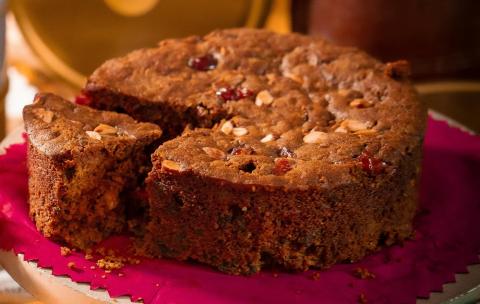
Ingredients

  • 12 (180g) Dried Dates
  • ½ Pints (300ml) Water
  • 1 Bag (500g) Dried Mixed Fruit
  • 9 Tablespoons (180g) Wholemeal Flour
  • 1 Teaspoon (4g) Baking Powder
  • 1 Teaspoon (4g) Cocoa Powder
  • 1 Teaspoon (3g) Mixed Spice
  • 1 Tablespoon (25g) Ground Almonds
  • 2 juice only (110g) Oranges

This recipe has been added to your Meal Planner.

Allergy Disclaimer

Always check the label of each ingredient for allergy warnings.

Method

  1. In a medium saucepan place the dates and water, bring just to the boil and simmer for approximately 30 minutes. Stir occasionally until all of the dates have broken down to a pulp then leave to cool slightly.
  2. Preheat the oven to 180°C / 160°C fan oven / 325°F / gas mark 4. Line a loaf or 20cm round tin with greaseproof/ baking paper.
  3. Apart from the oranges add all other ingredients to the pan and mix together.
  4. Squeeze the juice of the oranges into a jug or cup and gradually add to the pan until the mixture is moist but not too wet.
  5. Put the mixture into the tin and bake in oven for approximately 75 minutes. The cake should be browning on top.

Time Saver Tips

This cake can be made in advance and stored in an airtight container once cooled. Use fresh orange juice.

Cost Saver Tips

Can use other dried fruit you may have in cupboard, such as cherries or apricots, as long as chopped to the size of a sultana

Tips for Kids

Use their favourite dried fruit and they can help with mixing the ingredients together.

Nutritional Information

Based on a single serving of 12g (% of an adult's reference intake)

Energy

208 kcals ( 10 %)

873 kJ ( 10 %)

Fat

0.2 g ( 1 %)

Saturates

47 g ( %)

Sugar

37.4 g ( 42 %)

Salt

0.2 g ( %)

Detailed nutritional information

Per 100g Per 12g serving
Energy Kcals 202 208
Energy Kj 848 873
Protein 3.8 g 3.9 g
Total Fat g g
Saturated Fat 0.2 g 0.2 g
Carbohydrates 45.7 g 47 g
Total Sugars 36.3 g 37.4 g
NSP Fibre 2.9 g 3 g
Sodium 64 mg 66 mg
Salt 0.2 g 0.2 g

Find out about nutritional labelling

Nutrition labels on the front of packaging

  • Most of the big supermarkets and many food manufacturers display nutritional information on the front of pre-packed food.
  • Front of pack nutrition labels provide information on the number of grams of fat, saturated fat, sugars and salt and the amount of energy (in kJ and kcal) in a serving or portion of a recipe.
  • The labels also include information about reference intakes (expressed as a percentage) which are guidelines about the approximate amount of particular nutrients and energy required for a healthy diet.
  • The colour coding tells you at a glance if the food has high (red), medium (amber) or low (green) amounts of fat, saturated fat, sugars and salt.
  • The more greens on the label, the healthier the choice
  • Amber means neither high nor low, so you can eat foods with all or mostly ambers on the label most of the time.
  • Reds on the label means the food is high in that nutrient and these are the foods we should cut down on. Try to eat these foods less often and in small amounts.

Food shopping tips

If you’re trying to decide which product to choose, check to see if there's a nutrition label on the front of the pack. This will help you to quickly assess how your choices stack up. You will often find a mixture of red, amber and green colour coding for the nutrients. So when you're choosing between similar products, try to go for more greens and ambers and fewer reds if you want to make a healthier choice.

Back to top

Ingredients

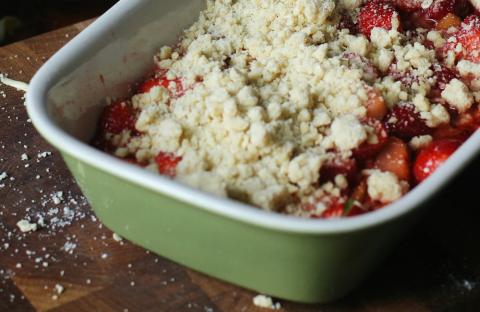
  • (300g) Blackberries
  • 2 (380g) Cooking Apples
  • 2 ½ Tablespoons (50g) Granulated Sugar
  • 5 Dessert spoons (50ml) Water
  • 5 Heaped Spoonful Tablespoons (150g) Plain Flour
  • 5 Tablespoons (75g) Low Fat Spread

This recipe has been added to your Meal Planner.

Allergy Disclaimer

Always check the label of each ingredient for allergy warnings.

Method

  1. Preheat the oven to 190°C / 170°C fan oven / 375°F / gas mark 5.
  2. Peel and slice the cooking apples.
  3. Simmer the fruit, sugar and water in a pan for 10 minutes then set aside until cool.
  4. Rub the flour and low-fat spread together until it resembles breadcrumbs.
  5. Place the fruit in an ovenproof dish, leaving any liquid. Add the flour mixture on top and press down lightly with the palm of your hand or the back of a spoon.
  6. Bake in the oven for 20 minutes and serve hot.

Time Saver Tips

Don't peel the apple.

Cost Saver Tips

This dish can be made with many types of fruit, including tinned fruit, so check to see what is in season and on offer, e.g. pears, peaches, rhubarb, gooseberries or plums.

Tips for Kids

Can be made with your children’s favourite fruit.

Nutritional Information

Based on a single serving of 210g (% of an adult's reference intake)

Energy

297 kcals ( 15 %)

1,248 kJ ( 15 %)

Fat

1.7 g ( 9 %)

Saturates

48.1 g ( %)

Sugar

22.8 g ( 25 %)

Salt

0.3 g ( 5 %)

Detailed nutritional information

Per 100g Per 210g serving
Energy Kcals 141 297
Energy Kj 594 1,248
Protein 2.6 g 5.5 g
Total Fat g g
Saturated Fat 0.8 g 1.7 g
Carbohydrates 22.9 g 48.1 g
Total Sugars 10.9 g 22.8 g
NSP Fibre 2.2 g 4.6 g
Sodium 59 mg 124 mg
Salt 0.1 g 0.3 g

Find out about nutritional labelling

Nutrition labels on the front of packaging

  • Most of the big supermarkets and many food manufacturers display nutritional information on the front of pre-packed food.
  • Front of pack nutrition labels provide information on the number of grams of fat, saturated fat, sugars and salt and the amount of energy (in kJ and kcal) in a serving or portion of a recipe.
  • The labels also include information about reference intakes (expressed as a percentage) which are guidelines about the approximate amount of particular nutrients and energy required for a healthy diet.
  • The colour coding tells you at a glance if the food has high (red), medium (amber) or low (green) amounts of fat, saturated fat, sugars and salt.
  • The more greens on the label, the healthier the choice
  • Amber means neither high nor low, so you can eat foods with all or mostly ambers on the label most of the time.
  • Reds on the label means the food is high in that nutrient and these are the foods we should cut down on. Try to eat these foods less often and in small amounts.

Food shopping tips

If you’re trying to decide which product to choose, check to see if there's a nutrition label on the front of the pack. This will help you to quickly assess how your choices stack up. You will often find a mixture of red, amber and green colour coding for the nutrients. So when you're choosing between similar products, try to go for more greens and ambers and fewer reds if you want to make a healthier choice.

Back to top

Ingredients

  • 1 Can (400g) Pears (Or Your Favourite Fruit) In Juice
  • 1 ½ Small Low Fat Pots Tubs (200g) Natural Yogurt
  • 2 Teaspoons (10g) Sugar

This recipe has been added to your Meal Planner.

Allergy Disclaimer

Always check the label of each ingredient for allergy warnings.

Method

  1. Crush the fruit with a fork using a little of the juice.
  2. Mix the fruit with the yogurt and sugar.
  3. Chill and then serve.

Tips for Kids

They'll love getting involved with the crushing and mixing – why not use their favourite fruit?

Nutritional Information

Based on a single serving of 152g (% of an adult's reference intake)

Energy

71 kcals ( 4 %)

281 kJ ( 4 %)

Fat

0.3 g ( 2 %)

Saturates

14.7 g ( %)

Sugar

14.6 g ( 16 %)

Salt

0.1 g ( 2 %)

Detailed nutritional information

Per 100g Per 152g serving
Energy Kcals 47 71
Energy Kj 185 281
Protein 1.8 g 2.7 g
Total Fat g g
Saturated Fat 0.2 g 0.3 g
Carbohydrates 9.7 g 14.7 g
Total Sugars 9.6 g 14.6 g
NSP Fibre 0.9 g 1.4 g
Sodium 23 mg 35 mg
Salt 0.1 g 0.1 g

Find out about nutritional labelling

Nutrition labels on the front of packaging

  • Most of the big supermarkets and many food manufacturers display nutritional information on the front of pre-packed food.
  • Front of pack nutrition labels provide information on the number of grams of fat, saturated fat, sugars and salt and the amount of energy (in kJ and kcal) in a serving or portion of a recipe.
  • The labels also include information about reference intakes (expressed as a percentage) which are guidelines about the approximate amount of particular nutrients and energy required for a healthy diet.
  • The colour coding tells you at a glance if the food has high (red), medium (amber) or low (green) amounts of fat, saturated fat, sugars and salt.
  • The more greens on the label, the healthier the choice
  • Amber means neither high nor low, so you can eat foods with all or mostly ambers on the label most of the time.
  • Reds on the label means the food is high in that nutrient and these are the foods we should cut down on. Try to eat these foods less often and in small amounts.

Food shopping tips

If you’re trying to decide which product to choose, check to see if there's a nutrition label on the front of the pack. This will help you to quickly assess how your choices stack up. You will often find a mixture of red, amber and green colour coding for the nutrients. So when you're choosing between similar products, try to go for more greens and ambers and fewer reds if you want to make a healthier choice.

Back to top
Subscribe to Eat Better Feel Better