This article was created with

eat-better-feel-better-logo-2.png

Ingredients

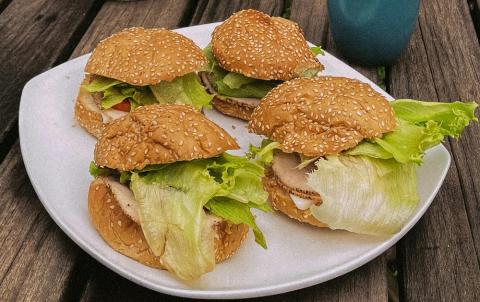
  • 1 Can (418g) Pink Salmon
  • 2 (160g) Carrots
  • 1 (60g) Onion
  • 2 Cups (100g) Breadcrumbs
  • 1 (50g) Egg
  • 5 Tablespoons (50g) Reduced Fat Cheddar Cheese
  • 1 Teaspoon (1g) Dried Parsley
  • 1 Pinch (1g) Ground Black Pepper
  • 2 Cups (285g) Brown Rice
  • 2 Cups (160g) Frozen Peas
  • 1 Tablespoon (15ml) Sweet Chilli Sauce

This recipe has been added to your Meal Planner.

Allergy Disclaimer

Always check the label of each ingredient for allergy warnings.

Method

  1. Preheat the oven to 200°C / 180°C fan oven / 400°F / gas mark 6.
  2. Drain the salmon and remove any skin or bones. Place in a large bowl and mash with a fork.
  3. Peel onions and carrots. Finely chop the onion, grate the carrot and cheese then mix in with the salmon.
  4. Crack the egg into the bowl and mix in along with breadcrumbs and parsley. Add black pepper to taste.
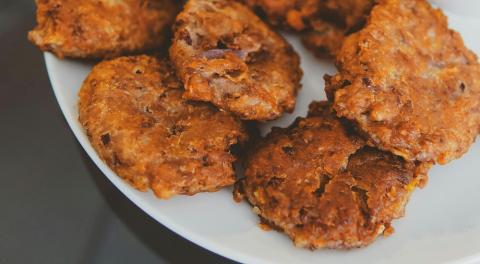
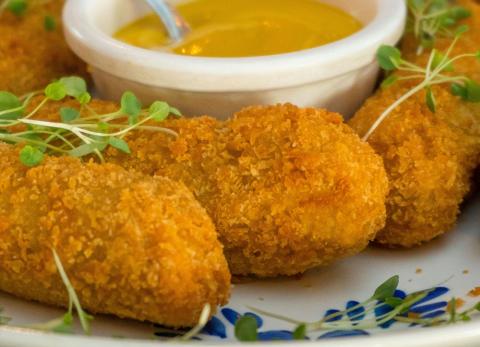
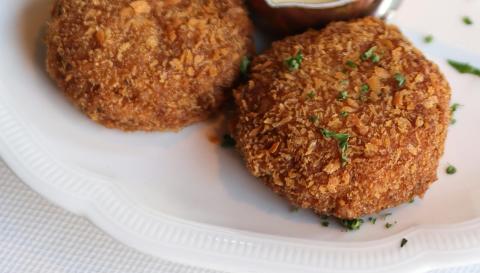
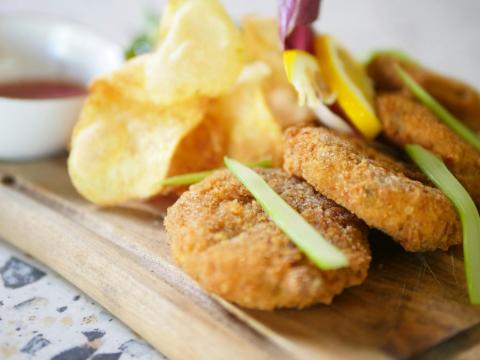
  5. Cover a baking tray with greaseproof paper. Shape mixture into 4 burgers and place on baking tray.
  6. Bake in oven for approximately 20-25 minutes until golden brown.
  7. Meanwhile cook the rice as per manufacturers' instructions. During the last few minutes of cooking add the peas to the water making sure the water continues to boil.
  8. Serve the burgers with the rice topped with sweet chilli sauce.

Time Saver Tips

Prepare burgers in advance and cook when needed.

Tips for Kids

They will enjoy making the burgers.

Nutritional Information

Based on a single serving of 390g (% of an adult's reference intake)

Energy

573 kcals ( 29 %)

2,406 kJ ( 29 %)

Fat

3.1 g ( 16 %)

Saturates

92.8 g ( %)

Sugar

8.2 g ( 9 %)

Salt

1.6 g ( 27 %)

Detailed nutritional information

Per 100g Per 390g serving
Energy Kcals 147 573
Energy Kj 617 2,406
Protein 8.1 g 31.6 g
Total Fat g g
Saturated Fat 0.8 g 3.1 g
Carbohydrates 23.8 g 92.8 g
Total Sugars 2.1 g 8.2 g
NSP Fibre 1.4 g 5.5 g
Sodium 151 mg 589 mg
Salt 0.4 g 1.6 g

Find out about nutritional labelling

Nutrition labels on the front of packaging

  • Most of the big supermarkets and many food manufacturers display nutritional information on the front of pre-packed food.
  • Front of pack nutrition labels provide information on the number of grams of fat, saturated fat, sugars and salt and the amount of energy (in kJ and kcal) in a serving or portion of a recipe.
  • The labels also include information about reference intakes (expressed as a percentage) which are guidelines about the approximate amount of particular nutrients and energy required for a healthy diet.
  • The colour coding tells you at a glance if the food has high (red), medium (amber) or low (green) amounts of fat, saturated fat, sugars and salt.
  • The more greens on the label, the healthier the choice
  • Amber means neither high nor low, so you can eat foods with all or mostly ambers on the label most of the time.
  • Reds on the label means the food is high in that nutrient and these are the foods we should cut down on. Try to eat these foods less often and in small amounts.

Food shopping tips

If you’re trying to decide which product to choose, check to see if there's a nutrition label on the front of the pack. This will help you to quickly assess how your choices stack up. You will often find a mixture of red, amber and green colour coding for the nutrients. So when you're choosing between similar products, try to go for more greens and ambers and fewer reds if you want to make a healthier choice.
Back to top

Ingredients

  • 5 Large sized (1kg) Potatoes
  • 6 (60g) Spring Onions
  • 1 Tablespoon (10g) Vegetable Oil
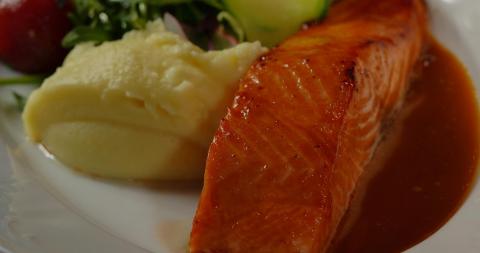
  • 4 (560g) Salmon Fillets
  • 4 Tablespoons (60ml) Semi-Skimmed Milk
  • (300g) Broccoli
  • 1 Pinch (1g) Ground Black Pepper
  • 2 Teaspoons (2g) Dried Parsley

This recipe has been added to your Meal Planner.

Allergy Disclaimer

Always check the label of each ingredient for allergy warnings.

Method

  1. Peel the potatoes and cut them into chunks, boil for around 20 minutes until soft. Finely chop the spring onions and add them to the water for the last few minutes with the potatoes
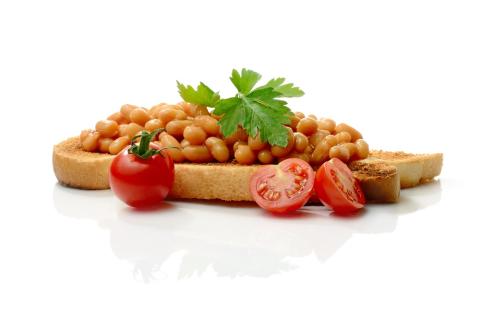
  2. After the potatoes have been cooking for 10 minutes heat the vegetable oil in a non-stick frying pan, add the salmon skin side down. Cook on a high heat for 2-3 minutes then turn them over and reduce the heat for a further 3-4 minutes
  3. Chop broccoli into florets and boil for 5-6 minutes
  4. Drain the potatoes and spring onions and mash with the milk using a masher or fork
  5. Serve salmon, with parsley sprinkled over it, on top of the mash with broccoli

Cost Saver Tips

Frozen salmon could be used.

Tips for Kids

Serve with any of their favourite vegetables. Remove the salmon from the skin and break into small pieces - a whole fillet will serve two smaller children.

Nutritional Information

Based on a single serving of 458g (% of an adult's reference intake)

Energy

403 kcals ( 22 %)

2,015 kJ ( 22 %)

Fat

2.7 g ( 14 %)

Saturates

42.6 g ( %)

Sugar

3.7 g ( 4 %)

Salt

0.2 g ( 3 %)

Detailed nutritional information

Per 100g Per 458g serving
Energy Kcals 96 403
Energy Kj 440 2,015
Protein 6.9 g 31.6 g
Total Fat g g
Saturated Fat 0.6 g 2.7 g
Carbohydrates 9.3 g 42.6 g
Total Sugars 0.8 g 3.7 g
NSP Fibre 1.1 g 5 g
Sodium 20 mg 92 mg
Salt 0.1 g 0.2 g

Find out about nutritional labelling

Nutrition labels on the front of packaging

  • Most of the big supermarkets and many food manufacturers display nutritional information on the front of pre-packed food.
  • Front of pack nutrition labels provide information on the number of grams of fat, saturated fat, sugars and salt and the amount of energy (in kJ and kcal) in a serving or portion of a recipe.
  • The labels also include information about reference intakes (expressed as a percentage) which are guidelines about the approximate amount of particular nutrients and energy required for a healthy diet.
  • The colour coding tells you at a glance if the food has high (red), medium (amber) or low (green) amounts of fat, saturated fat, sugars and salt.
  • The more greens on the label, the healthier the choice
  • Amber means neither high nor low, so you can eat foods with all or mostly ambers on the label most of the time.
  • Reds on the label means the food is high in that nutrient and these are the foods we should cut down on. Try to eat these foods less often and in small amounts.

Food shopping tips

If you’re trying to decide which product to choose, check to see if there's a nutrition label on the front of the pack. This will help you to quickly assess how your choices stack up. You will often find a mixture of red, amber and green colour coding for the nutrients. So when you're choosing between similar products, try to go for more greens and ambers and fewer reds if you want to make a healthier choice.

Back to top

Ingredients

  • 8 Medium Slices 50:50 Bread
  • 4 Tins (480g) Sardines In Tomato Sauce
  • 4 Medium (340g) Tomatoes

This recipe has been added to your Meal Planner.

Allergy Disclaimer

Always check the label of each ingredient for allergy warnings.

Method

  1. Toast the bread.
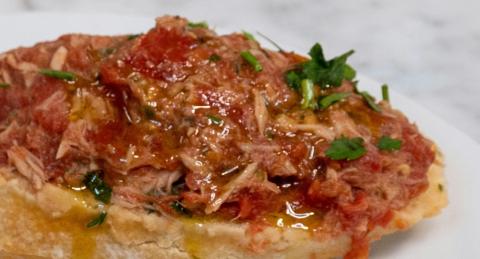
  2. Empty the contents of the tins into a bowl and break up the fish with a fork.
  3. Wash the tomatoes and cut into slices.
  4. Spoon the sardines onto the toast and place the sliced tomatoes on top.
  5. Can be served immediately or after warming under the grill.

Cost Saver Tips

You can use any tinned fish that’s in tomato sauce, from mackerel to pilchards – why not use whatever’s on offer?

Tips for Kids

Break the fish up into very small pieces with a fork to help your little one. To help towards their five a day, you could serve this with a green salad. And for a boost of fibre, pop the fish on a slice of wholemeal bread.

Nutritional Information

Based on a single serving of 258g (% of an adult's reference intake)

Energy

365 kcals ( 18 %)

1,537 kJ ( 18 %)

Fat

3.8 g ( 20 %)

Saturates

32.6 g ( %)

Sugar

5.9 g ( 7 %)

Salt

1.5 g ( 25 %)

Detailed nutritional information

Per 100g Per 258g serving
Energy Kcals 142 365
Energy Kj 596 1,537
Protein 10.9 g 28.2 g
Total Fat g g
Saturated Fat 1.5 g 3.8 g
Carbohydrates 12.6 g 32.6 g
Total Sugars 2.3 g 5.9 g
NSP Fibre 1.6 g 4.1 g
Sodium 239 mg 617 mg
Salt 0.6 g 1.5 g

Find out about nutritional labelling

Nutrition labels on the front of packaging

  • Most of the big supermarkets and many food manufacturers display nutritional information on the front of pre-packed food.
  • Front of pack nutrition labels provide information on the number of grams of fat, saturated fat, sugars and salt and the amount of energy (in kJ and kcal) in a serving or portion of a recipe.
  • The labels also include information about reference intakes (expressed as a percentage) which are guidelines about the approximate amount of particular nutrients and energy required for a healthy diet.
  • The colour coding tells you at a glance if the food has high (red), medium (amber) or low (green) amounts of fat, saturated fat, sugars and salt.
  • The more greens on the label, the healthier the choice
  • Amber means neither high nor low, so you can eat foods with all or mostly ambers on the label most of the time.
  • Reds on the label means the food is high in that nutrient and these are the foods we should cut down on. Try to eat these foods less often and in small amounts.

Food shopping tips

If you’re trying to decide which product to choose, check to see if there's a nutrition label on the front of the pack. This will help you to quickly assess how your choices stack up. You will often find a mixture of red, amber and green colour coding for the nutrients. So when you're choosing between similar products, try to go for more greens and ambers and fewer reds if you want to make a healthier choice.

Back to top

Ingredients

  • 8 (400g) Pork Sausages (choose reduced fat whenever possible)
  • 2 Medium (300g) Onions
  • ½ Teaspoon (1g) Dried Mixed Herbs
  • ½ Teaspoon (4g) Mustard
  • 1 (7g) Vegetable Stock Cube (use reduced salt whenever possible)
  • 1 Pint (600ml) Boiling Water
  • 1 Pinch Black Pepper to taste
  • 2 Level Teaspoons (14g) Plain Flour
  • 12 Medium (1kg) Potatoes
  • 5 Teaspoons (25g) Low Fat Spread
  • 10 Tablespoons (300g) Frozen Green Peas

This recipe has been added to your Meal Planner.

Allergy Disclaimer

Always check the label of each ingredient for allergy warnings.

Method

To make the sausages and onion gravy:

  1. Heat the frying pan on a medium heat. Add the sausages to the pan and fry for 10 minutes, turning occasionally so they don't stick.
  2. Peel and slice the onions and add to the pan once the sausages are golden brown on all sides.
  3. Crumble the stock cube into the boiling water and add the dried herbs and mustard. Mix well.
  4. Add the stock to the pan, leaving a small amount of stock to mix with the flour. Mix the flour and stock into a paste.
  5. Bring the stock to the boil and simmer gently for 2-3 minutes. Add the paste and stir with a fork or whisk until the gravy has thickened. Add black pepper to taste.
 

To make the mash and peas:

  1. Peel the potatoes and chop them into small cubes.
  2. Boil the potatoes in a pan of boiling water until they are tender.
  3. Drain the potatoes and mash with the low fat spread with a fork or masher. Add black pepper to taste.
  4. Cook the peas in a saucepan of boiling water for 2-3 minutes.
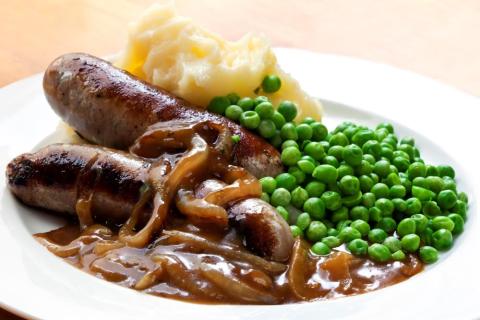
  5. Serve the sausages, mash and peas with onion gravy poured on top.

Time Saver Tips

To save time, prepare and start boiling the potatoes while the sausages are frying and cook the peas once the stock has been added to the sausages. Another quick way to thicken gravy is to stir in a tablespoon of cornflour. Or you could try using a reduced-salt gravy mix.

Tips for Kids

Your wee one will love to mash the potatoes – your very own little helper in the kitchen! Using reduced fat or veggie sausages is an easy way to make this super healthy, so there’s less fat on their plates. Some kids might prefer gravy without onions, and it’s still tasty without them. You could even add extra veg – like carrots or sweetcorn with the peas. This can be fresh, frozen or out of a can. Using reduced fat or veggie sausages is an easy way to make this super healthy, so there’s less fat on their plates.

Nutritional Information

Based on a single serving of 561g (% of an adult's reference intake)

Energy

416 kcals ( 21 %)

1,758 kJ ( 21 %)

Fat

2.4 g ( 12 %)

Saturates

64.1 g ( %)

Sugar

14.1 g ( 16 %)

Salt

2.2 g ( 47 %)

Detailed nutritional information

Per 100g Per 561g serving
Energy Kcals 74 416
Energy Kj 313 1,758
Protein 4.3 g 23.9 g
Total Fat g g
Saturated Fat 0.5 g 2.4 g
Carbohydrates 11.4 g 64.1 g
Total Sugars 2.5 g 14.1 g
NSP Fibre 2.1 g 11.7 g
Sodium 154 mg 862 mg
Salt 0.4 g 2.2 g

Find out about nutritional labelling

Nutrition labels on the front of packaging

  • Most of the big supermarkets and many food manufacturers display nutritional information on the front of pre-packed food.
  • Front of pack nutrition labels provide information on the number of grams of fat, saturated fat, sugars and salt and the amount of energy (in kJ and kcal) in a serving or portion of a recipe.
  • The labels also include information about reference intakes (expressed as a percentage) which are guidelines about the approximate amount of particular nutrients and energy required for a healthy diet.
  • The colour coding tells you at a glance if the food has high (red), medium (amber) or low (green) amounts of fat, saturated fat, sugars and salt.
  • The more greens on the label, the healthier the choice
  • Amber means neither high nor low, so you can eat foods with all or mostly ambers on the label most of the time.
  • Reds on the label means the food is high in that nutrient and these are the foods we should cut down on. Try to eat these foods less often and in small amounts.

Food shopping tips

If you’re trying to decide which product to choose, check to see if there's a nutrition label on the front of the pack. This will help you to quickly assess how your choices stack up. You will often find a mixture of red, amber and green colour coding for the nutrients. So when you're choosing between similar products, try to go for more greens and ambers and fewer reds if you want to make a healthier choice.

Back to top

Ingredients

  • 4 (200g) Reduced Fat Pork Sausages
  • 4 (240g) White Finger Rolls
  • (28g) Low Fat Spread
  • 1 Tablespoons (10g) Vegetable Oil
  • 2 (320g) Peppers
  • 1 (150g) Onion

This recipe has been added to your Meal Planner.

Allergy Disclaimer

Always check the label of each ingredient for allergy warnings.

Method

  1. Grill the sausages for 15-20 minutes, turning frequently until coloured all over.
  2. While the sausages are cooking, wash and slice the peppers. Peel and slice the onion.
  3. Fry the peppers and onion in the oil until soft.
  4. Spread each finger roll with thin layer of low fat spread.
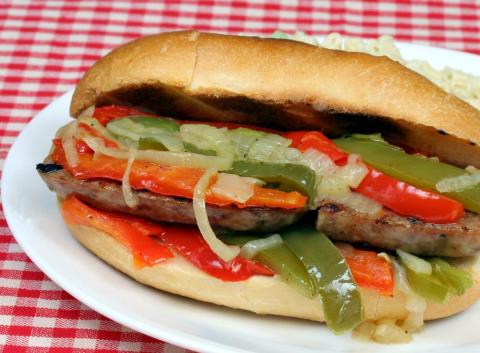
  5. Add a cooked sausage and a quarter of the pepper and onion mix to each roll. Enjoy hot.

Tips for Kids

Add their favourite vegetables to the sausage sandwich, like sliced tomatoes or lettuce. Try adding a squirt of tomato ketchup.

Nutritional Information

Based on a single serving of 210g (% of an adult's reference intake)

Energy

310 kcals ( 15 %)

1,302 kJ ( 15 %)

Fat

2.1 g ( 11 %)

Saturates

37.3 g ( %)

Sugar

6.6 g ( 7 %)

Salt

1.5 g ( 25 %)

Detailed nutritional information

Per 100g Per 210g serving
Energy Kcals 147 310
Energy Kj 620 1,302
Protein 8.4 g 17.6 g
Total Fat g g
Saturated Fat 1 g 2.1 g
Carbohydrates 17.8 g 37.3 g
Total Sugars 3.1 g 6.6 g
NSP Fibre 0.5 g 3.2 g
Sodium 284 mg 597 mg
Salt 0.7 g 1.5 g

Find out about nutritional labelling

Nutrition labels on the front of packaging

  • Most of the big supermarkets and many food manufacturers display nutritional information on the front of pre-packed food.
  • Front of pack nutrition labels provide information on the number of grams of fat, saturated fat, sugars and salt and the amount of energy (in kJ and kcal) in a serving or portion of a recipe.
  • The labels also include information about reference intakes (expressed as a percentage) which are guidelines about the approximate amount of particular nutrients and energy required for a healthy diet.
  • The colour coding tells you at a glance if the food has high (red), medium (amber) or low (green) amounts of fat, saturated fat, sugars and salt.
  • The more greens on the label, the healthier the choice
  • Amber means neither high nor low, so you can eat foods with all or mostly ambers on the label most of the time.
  • Reds on the label means the food is high in that nutrient and these are the foods we should cut down on. Try to eat these foods less often and in small amounts.

Food shopping tips

If you’re trying to decide which product to choose, check to see if there's a nutrition label on the front of the pack. This will help you to quickly assess how your choices stack up. You will often find a mixture of red, amber and green colour coding for the nutrients. So when you're choosing between similar products, try to go for more greens and ambers and fewer reds if you want to make a healthier choice.

Back to top

Ingredients

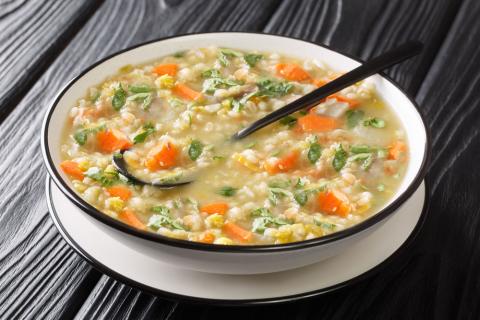
  • 2 Medium (160g) Carrots
  • ¼ Medium (250g) Swede
  • 1 Medium (150g) Onion
  • 1 Stick (30g) Celery
  • 1 (160g) Leek
  • ½ Cup (100g) Pearl Barley
  • 2 Pints (1,200ml) Water
  • 2 (14g) Beef, Lamb or Vegetable Stock Cubes (choose reduced salt whenever possible)
  • 1 Pinch Black Pepper to taste

This recipe has been added to your Meal Planner.

Allergy Disclaimer

Always check the label of each ingredient for allergy warnings.

Method

  1. Peel carrots, onion and swede. Remove outer layer of leek and wash celery.
  2. Dice all vegetables.
  3. Place vegetables in a large pan and add boiling water. Add stock cubes and pearl barley to the pan and stir, allowing stock cubes to fully dissolve.
  4. Once water is boiling reduce heat and simmer until barley is soft, approximately 2-3 hours.
  5. Add black pepper to taste. More water can be added if necessary.

Time Saver Tips

Barley can be soaked overnight to reduce cooking time. Broth can be made in advance and reheated when needed.

Cost Saver Tips

A good use of leftover vegetables. Make in bulk and freeze once cooled for another day.

Tips for Kids

Chopping the vegetables extra small or blending them is a good way to help your kids eat more if they’re a bit squeamish about their veggies. Letting them help you prepare the vegetables might also make your little one more likely to eat their veggies! Try serving with wholemeal bread to up their fibre intake.

Nutritional Information

Based on a single serving of 375g (% of an adult's reference intake)

Energy

129 kcals ( 6 %)

548 kJ ( 6 %)

Fat

0 g ( 0 %)

Saturates

33.9 g ( %)

Sugar

7.4 g ( 8 %)

Salt

0.8 g ( 13 %)

Detailed nutritional information

Per 100g Per 375g serving
Energy Kcals 34 129
Energy Kj 146 548
Protein 0.9 g 3.4 g
Total Fat g g
Saturated Fat 0 g 0 g
Carbohydrates 7.8 g 33.9 g
Total Sugars 2 g 7.4 g
NSP Fibre 0.7 g 2.7 g
Sodium 83 mg 311 mg
Salt 0.2 g 0.8 g

Find out about nutritional labelling

Nutrition labels on the front of packaging

  • Most of the big supermarkets and many food manufacturers display nutritional information on the front of pre-packed food.
  • Front of pack nutrition labels provide information on the number of grams of fat, saturated fat, sugars and salt and the amount of energy (in kJ and kcal) in a serving or portion of a recipe.
  • The labels also include information about reference intakes (expressed as a percentage) which are guidelines about the approximate amount of particular nutrients and energy required for a healthy diet.
  • The colour coding tells you at a glance if the food has high (red), medium (amber) or low (green) amounts of fat, saturated fat, sugars and salt.
  • The more greens on the label, the healthier the choice
  • Amber means neither high nor low, so you can eat foods with all or mostly ambers on the label most of the time.
  • Reds on the label means the food is high in that nutrient and these are the foods we should cut down on. Try to eat these foods less often and in small amounts.

Food shopping tips

If you’re trying to decide which product to choose, check to see if there's a nutrition label on the front of the pack. This will help you to quickly assess how your choices stack up. You will often find a mixture of red, amber and green colour coding for the nutrients. So when you're choosing between similar products, try to go for more greens and ambers and fewer reds if you want to make a healthier choice.

Back to top

Ingredients

  • 6 Level Tablespoons (110g) Self-Raising Flour
  • 1 Egg
  • 8 Tablespoons (120ml) Semi-Skimmed Milk
  • 1 Tablespoon (10g) Vegetable Oil
  • 4 Teaspoons (20g) Low Fat Spread

This recipe has been added to your Meal Planner.

Allergy Disclaimer

Always check the label of each ingredient for allergy warnings.

Method

  1. Crack the egg into a bowl and beat with a fork. Sieve the flour into the bowl and add the milk to make a thick batter.
  2. Grease a frying pan with the oil and heat until it is moderately hot.
  3. A spoonful at a time, drop the batter onto the frying pan. The pancakes should be a neat round shape. The batter should make 8 small pancakes.
  4. When the pancakes are covered with bubbles, slip a broad knife or spatula under them. If they are a golden brown colour underneath, turn and brown the other side. Turn once only.
  5. When cooked, wrap them in a clean tea-towel until cool, unless they are to be eaten hot.
  6. Spread with low fat spread and enjoy!

Time Saver Tips

Pancakes can be made in advance and eaten cold.

Tips for Kids

Children will enjoy watching the pancakes cook until they bubble. Pancakes can be eaten as breakfast or as a snack, served with fruit. To up the fibre content, try substituting half of the white flour with wholemeal flour.

Nutritional Information

Based on a single serving of 63g (% of an adult's reference intake)

Energy

166 kcals ( 8 %)

702 kJ ( 8 %)

Fat

1.3 g ( 7 %)

Saturates

23.7 g ( %)

Sugar

1.6 g ( 2 %)

Salt

0.1 g ( 2 %)

Detailed nutritional information

Per 100g Per 63g serving
Energy Kcals 264 166
Energy Kj 1,114 702
Protein 8.1 g 5.1 g
Total Fat g g
Saturated Fat 2.1 g 1.3 g
Carbohydrates 37.7 g 23.7 g
Total Sugars 2.6 g 1.6 g
NSP Fibre 1.7 g 1.1 g
Sodium 90 mg 57 mg
Salt 0.2 g 0.1 g

Find out about nutritional labelling

Nutrition labels on the front of packaging

  • Most of the big supermarkets and many food manufacturers display nutritional information on the front of pre-packed food.
  • Front of pack nutrition labels provide information on the number of grams of fat, saturated fat, sugars and salt and the amount of energy (in kJ and kcal) in a serving or portion of a recipe.
  • The labels also include information about reference intakes (expressed as a percentage) which are guidelines about the approximate amount of particular nutrients and energy required for a healthy diet.
  • The colour coding tells you at a glance if the food has high (red), medium (amber) or low (green) amounts of fat, saturated fat, sugars and salt.
  • The more greens on the label, the healthier the choice
  • Amber means neither high nor low, so you can eat foods with all or mostly ambers on the label most of the time.
  • Reds on the label means the food is high in that nutrient and these are the foods we should cut down on. Try to eat these foods less often and in small amounts.

Food shopping tips

If you’re trying to decide which product to choose, check to see if there's a nutrition label on the front of the pack. This will help you to quickly assess how your choices stack up. You will often find a mixture of red, amber and green colour coding for the nutrients. So when you're choosing between similar products, try to go for more greens and ambers and fewer reds if you want to make a healthier choice.

Back to top

Ingredients

  • 6 Medium Eggs
  • 2 Tablespoons (30g) Low Fat Spread
  • 12 Tablespoons (180ml) Semi-Skimmed Milk
  • 1 Pinch Black Pepper to taste
  • 4 Thick Slices Wholemeal Bread

This recipe has been added to your Meal Planner.

Allergy Disclaimer

Always check the label of each ingredient for allergy warnings.

Method

  1. Using a fork mix the eggs and milk in a bowl.
  2. Heat the low fat spread in a pan, do not let it brown.
  3. Add the egg mixture to the pan and allow to set for 20-30 seconds.
  4. Stir with a wooden spoon, lifting from the bottom of the pan, leave for 10 seconds and then stir again. Repeat until the eggs are setting.
  5. Remove from the heat and allow to stand for 10-20 seconds to finish cooking then stir and serve on toast. Add pepper to taste.

Cost Saver Tips

One easy way to pad out their plate is to serve it with your favourite toasted bread. Wholemeal bread will help your little one get some extra fibre, too. But if they aren't keen on wholemeal toast try 50:50.

Tips for Kids

They’ll love being a little helper, cracking the eggs. Just remember to wash their hands after handling raw eggs. You could also try scrambled egg on a toasted muffin. Or why not add some tomato to your egg? This would make a nice lunch.

Nutritional Information

Based on a single serving of 160g (% of an adult's reference intake)

Energy

246 kcals ( 12 %)

1,034 kJ ( 12 %)

Fat

3.2 g ( 16 %)

Saturates

21.9 g ( %)

Sugar

3.5 g ( 4 %)

Salt

0.9 g ( 15 %)

Detailed nutritional information

Per 100g Per 160g serving
Energy Kcals 154 246
Energy Kj 646 1,034
Protein 9.7 g 15.5 g
Total Fat g g
Saturated Fat 2 g 3.2 g
Carbohydrates 13.7 g 21.9 g
Total Sugars 2.2 g 3.5 g
NSP Fibre 2.1 g 3.4 g
Sodium 224 mg 358 mg
Salt 0.6 g 0.9 g

Find out about nutritional labelling

Nutrition labels on the front of packaging

  • Most of the big supermarkets and many food manufacturers display nutritional information on the front of pre-packed food.
  • Front of pack nutrition labels provide information on the number of grams of fat, saturated fat, sugars and salt and the amount of energy (in kJ and kcal) in a serving or portion of a recipe.
  • The labels also include information about reference intakes (expressed as a percentage) which are guidelines about the approximate amount of particular nutrients and energy required for a healthy diet.
  • The colour coding tells you at a glance if the food has high (red), medium (amber) or low (green) amounts of fat, saturated fat, sugars and salt.
  • The more greens on the label, the healthier the choice
  • Amber means neither high nor low, so you can eat foods with all or mostly ambers on the label most of the time.
  • Reds on the label means the food is high in that nutrient and these are the foods we should cut down on. Try to eat these foods less often and in small amounts.

Food shopping tips

If you’re trying to decide which product to choose, check to see if there's a nutrition label on the front of the pack. This will help you to quickly assess how your choices stack up. You will often find a mixture of red, amber and green colour coding for the nutrients. So when you're choosing between similar products, try to go for more greens and ambers and fewer reds if you want to make a healthier choice.

Back to top

Ingredients

  • 2 medium sized (300g) Onions
  • 20 medium sized (300g) Mushrooms
  • 2 (6g) Garlic Cloves
  • 3 Tablespoons (30g) Vegetable Oil
  • ½ Pack (250g) Risotto Rice
  • 2 Pints (1L) Water
  • 1 Pinch (1g) Ground Black Pepper
  • 1 Tub (100g) Low Fat Plain Yoghurt
  • 2 Teaspoons (2g) Dried Parsley
  • 1 (7g) Reduced Salt Stock Cube (Vegetable Or fish)
  • 2 (200g) Haddock Fillets
  • 2 (200g) Smoked Haddock Fillets

This recipe has been added to your Meal Planner.

Allergy Disclaimer

Always check the label of each ingredient for allergy warnings.

Method

  1. Wash both types of fish with cold running water, pat dry with a paper towel and cut into small pieces (1cm X 1cm).
  2. Peel the onions and garlic then wipe and slice mushrooms, dice the onions and crush the garlic with the back of a knife.
  3. Heat the oil in a large pan then add the onion, garlic and mushrooms and allow them to cook gently without colour for a few minutes.
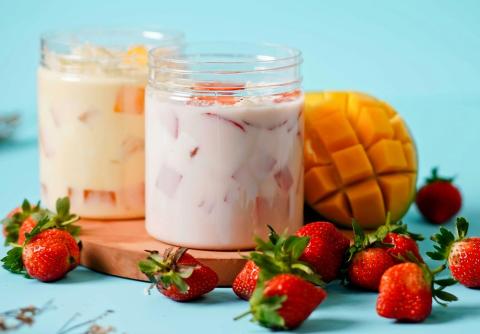
  4. Add the risotto rice to the pan and stir into the rest of the ingredients allowing the rice to be coated with the oil, again for a few minutes.

  5. Dissolve the stock cube in boiling water and gradually add it to the pan, allowing the rice to absorb the liquid between additions of more.
  6. For the last 5-10 minutes of the rice cooking, add the cut fish to the pan and stir in. Now add the yoghurt, parsley and pepper and finish cooking.
  7. The dish is ready to serve once the rice is cooked and the stock has been absorbed. Additional water may need to be added if the stock has been absorbed before the rice is cooked.

Cost Saver Tips

Look for offers on white fish- it doesn't have to be haddock. Frozen fish will be cheaper than fresh.

Tips for Kids

Take them to the fresh fish counter so they can buy their fish for the risotto

Nutritional Information

Based on a single serving of 538g (% of an adult's reference intake)

Energy

441 kcals ( 22 %)

1,851 kJ ( 22 %)

Fat

1.6 g ( 8 %)

Saturates

64.6 g ( %)

Sugar

5.9 g ( 7 %)

Salt

1.1 g ( 18 %)

Detailed nutritional information

Per 100g Per 538g serving
Energy Kcals 82 441
Energy Kj 344 1,851
Protein 4.6 g 24.7 g
Total Fat g g
Saturated Fat 0.3 g 1.6 g
Carbohydrates 12 g 64.6 g
Total Sugars 1.1 g 5.9 g
NSP Fibre 0.4 g 2.2 g
Sodium 78 mg 420 mg
Salt 0.2 g 1.1 g

Find out about nutritional labelling

Nutrition labels on the front of packaging

  • Most of the big supermarkets and many food manufacturers display nutritional information on the front of pre-packed food.
  • Front of pack nutrition labels provide information on the number of grams of fat, saturated fat, sugars and salt and the amount of energy (in kJ and kcal) in a serving or portion of a recipe.
  • The labels also include information about reference intakes (expressed as a percentage) which are guidelines about the approximate amount of particular nutrients and energy required for a healthy diet.
  • The colour coding tells you at a glance if the food has high (red), medium (amber) or low (green) amounts of fat, saturated fat, sugars and salt.
  • The more greens on the label, the healthier the choice
  • Amber means neither high nor low, so you can eat foods with all or mostly ambers on the label most of the time.
  • Reds on the label means the food is high in that nutrient and these are the foods we should cut down on. Try to eat these foods less often and in small amounts.

Food shopping tips

If you’re trying to decide which product to choose, check to see if there's a nutrition label on the front of the pack. This will help you to quickly assess how your choices stack up. You will often find a mixture of red, amber and green colour coding for the nutrients. So when you're choosing between similar products, try to go for more greens and ambers and fewer reds if you want to make a healthier choice.

Back to top

Ingredients

  • (250g) Low Fat Plain Yoghurt
  • 1 Heaped teaspoon Honey
  • ½ Pack (250g) Frozen Mixed Berries

This recipe has been added to your Meal Planner.

Allergy Disclaimer

Always check the label of each ingredient for allergy warnings.

Method


Blend ingredient in a food processor until smooth then serve.

Time Saver Tips

Can be made in advance and stored in freezer.

Tips for Kids

Can use their favourite frozen berry rather than a mixture. Add favourite fruit or nuts as a topping. As this recipe contains added sugar it’s best kept to mealtimes.

Nutritional Information

Based on a single serving of 134g (% of an adult's reference intake)

Energy

78 kcals ( 4 %)

328 kJ ( 4 %)

Fat

0.4 g ( 2 %)

Saturates

15.1 g ( %)

Sugar

15 g ( 17 %)

Salt

0.1 g ( 2 %)

Detailed nutritional information

Per 100g Per 134g serving
Energy Kcals 58 78
Energy Kj 245 328
Protein 2.7 g 3.6 g
Total Fat g g
Saturated Fat 0.3 g 0.4 g
Carbohydrates 11.3 g 15.1 g
Total Sugars 11.2 g 15 g
NSP Fibre 0.9 g 1.2 g
Sodium 33.2 mg 44.5 mg
Salt 0.1 g 0.1 g

Find out about nutritional labelling

Nutrition labels on the front of packaging

  • Most of the big supermarkets and many food manufacturers display nutritional information on the front of pre-packed food.
  • Front of pack nutrition labels provide information on the number of grams of fat, saturated fat, sugars and salt and the amount of energy (in kJ and kcal) in a serving or portion of a recipe.
  • The labels also include information about reference intakes (expressed as a percentage) which are guidelines about the approximate amount of particular nutrients and energy required for a healthy diet.
  • The colour coding tells you at a glance if the food has high (red), medium (amber) or low (green) amounts of fat, saturated fat, sugars and salt.
  • The more greens on the label, the healthier the choice
  • Amber means neither high nor low, so you can eat foods with all or mostly ambers on the label most of the time.
  • Reds on the label means the food is high in that nutrient and these are the foods we should cut down on. Try to eat these foods less often and in small amounts.

Food shopping tips

If you’re trying to decide which product to choose, check to see if there's a nutrition label on the front of the pack. This will help you to quickly assess how your choices stack up. You will often find a mixture of red, amber and green colour coding for the nutrients. So when you're choosing between similar products, try to go for more greens and ambers and fewer reds if you want to make a healthier choice.

Back to top
Subscribe to Eat Better Feel Better