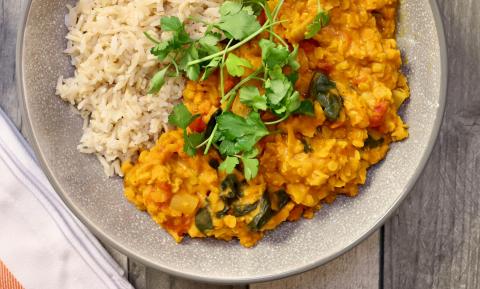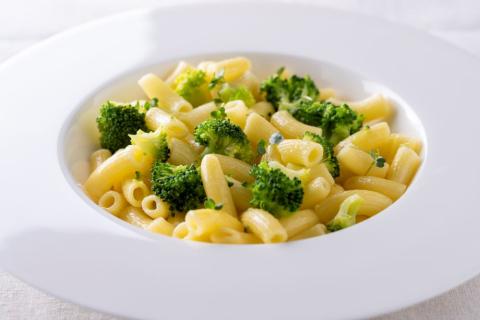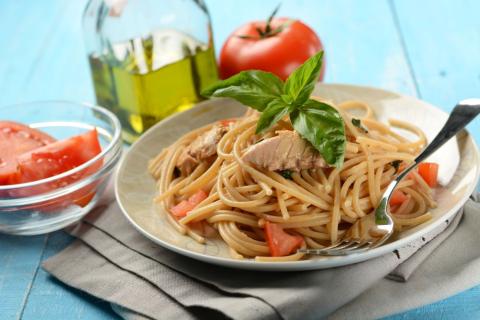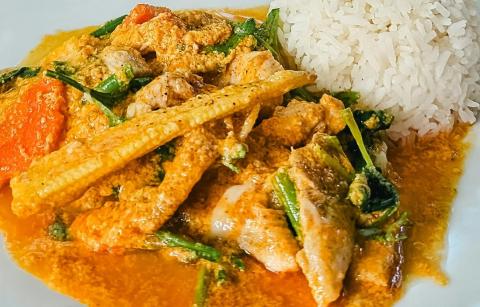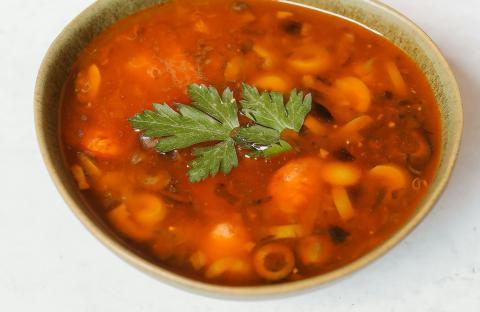
This article was created with

eat-better-feel-better-logo-2.png

Ingredients

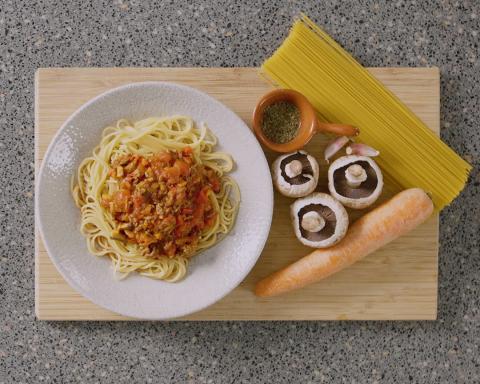
  • 2 Small Sized (120g) Onions
  • 1 Medium Sized (160g) Red Pepper
  • 5 Large Sized (100g) Mushrooms
  • 2 (6g) Garlic Cloves or 1 Teaspoon (5g) Garlic Puree
  • 1 Tablespoons (10g) Vegetable Oil
  • ½ Pack (200g) Lean Minced Beef
  • 2 Tins (800g) Chopped or Plum Tomatoes
  • 2 Teaspoons (2g) Dried Mixed Herbs
  • 1 Medium Sized (80g) Carrot
  • ½ Pack (300g) Spaghetti
  • 1 Pinch Ground Black Pepper

This recipe has been added to your Meal Planner.

Allergy Disclaimer

Always check the label of each ingredient for allergy warnings.

Method

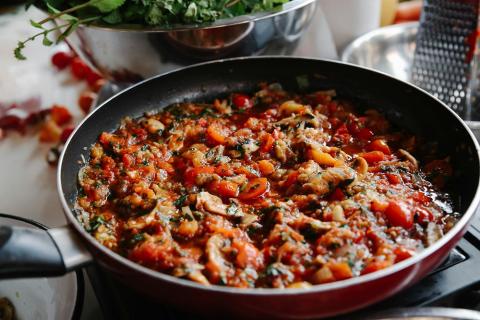
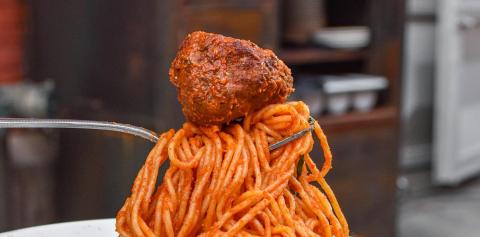
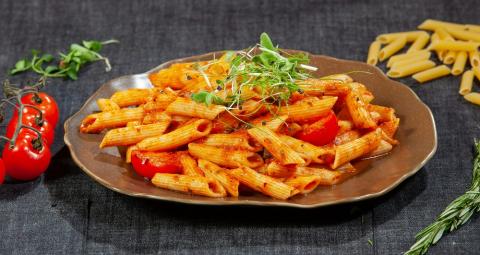
  1. Peel and chop the onions; wash, peel and dice the carrot; wipe dirt off the mushrooms and slice; wash, deseed and dice peppers and finely chop or crush the garlic.
  2. Heat the oil in a pan then slowly brown the onion over a gentle heat.
  3. Add the mince, stirring to stop it from sticking.
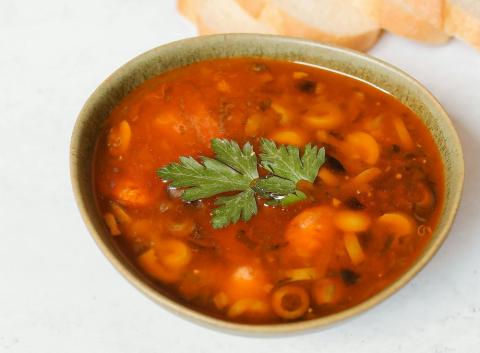
  4. Add the remaining ingredients, apart from the spaghetti, bring the sauce to the boil, cover and then lower the heat and simmer gently for 15-20 minutes, giving it a stir now and again. If using plum tomatoes, chop them up using a spoon when in the pan.
  5. While that’s cooking bring a large pan of water to the boil, add the spaghetti and follow the instructions on the packet for cooking.
  6. Add pepper to sauce to taste. Drain the spaghetti and serve with sauce.

Time Saver Tips

To save time at meal time, you can prepare the sauce in advance and heat through when needed. You can also use garlic puree, to save chopping that garlic. Why not try making the sauce in bulk? That way, you can freeze some for another time.

Cost Saver Tips

Keep your eyes peeled for great offers on mince – it doesn’t have to be beef, any minced meat is tasty. You could also try veggie mince. Plum tomatoes can be a cheaper alternative to chopped tomatoes. Don’t forget, you can save leftover spaghetti by mixing it with a little oil, covering it, and popping it in the fridge for up to a day.

Tips for Kids

Why not try wholemeal spaghetti to give your wee one a fibre boost? If you do, bear in mind it may take 2-4 minutes longer to cook. And you could try serving it with some bread. Use their favourite pasta shapes and remember to chop vegetables into bite-size pieces for little mouths. You could grate the carrot instead of dicing it if they're not carrot fans. You could even add other veggies like celery or courgette to help towards their five a day.

Nutritional Information

Based on a single serving of 457g (% of an adult's reference intake)

Energy

377 kcals ( 19 %)

1,436 kJ ( 19 %)

Fat

1.4 g ( 7 %)

Saturates

63.2 g ( %)

Sugar

13.4 g ( 15 %)

Salt

0.2 g ( 3 %)

Detailed nutritional information

Per 100g Per 457g serving
Energy Kcals 82 377
Energy Kj 314 1,436
Protein 4.6 g 6.7 g
Total Fat g g
Saturated Fat 0.3 g 1.4 g
Carbohydrates 13.8 g 63.2 g
Total Sugars 2.9 g 13.4 g
NSP Fibre 1.5 g 6.7 g
Sodium 15 mg 66 mg
Salt 0 g 0.2 g

Find out about nutritional labelling

Nutrition labels on the front of packaging

  • Most of the big supermarkets and many food manufacturers display nutritional information on the front of pre-packed food.
  • Front of pack nutrition labels provide information on the number of grams of fat, saturated fat, sugars and salt and the amount of energy (in kJ and kcal) in a serving or portion of a recipe.
  • The labels also include information about reference intakes (expressed as a percentage) which are guidelines about the approximate amount of particular nutrients and energy required for a healthy diet.
  • The colour coding tells you at a glance if the food has high (red), medium (amber) or low (green) amounts of fat, saturated fat, sugars and salt.
  • The more greens on the label, the healthier the choice
  • Amber means neither high nor low, so you can eat foods with all or mostly ambers on the label most of the time.
  • Reds on the label means the food is high in that nutrient and these are the foods we should cut down on. Try to eat these foods less often and in small amounts.

Food shopping tips

If you’re trying to decide which product to choose, check to see if there's a nutrition label on the front of the pack. This will help you to quickly assess how your choices stack up. You will often find a mixture of red, amber and green colour coding for the nutrients. So when you're choosing between similar products, try to go for more greens and ambers and fewer reds if you want to make a healthier choice.
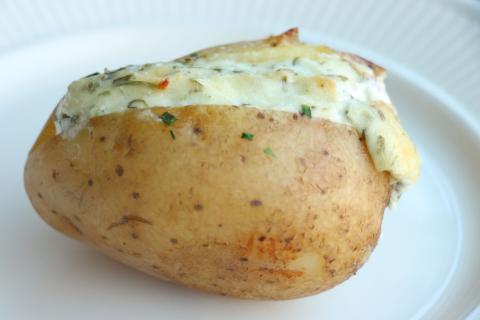
Back to top

Ingredients

  • 10 Eggs
  • 7 Medium Sized (600g) Potatoes
  • 2 Medium Sized (300g) Onions
  • 3 Teaspoons (15g) Low Fat Spread
  • 1 Pinch (1g) Ground Black Pepper

This recipe has been added to your Meal Planner.

Allergy Disclaimer

Always check the label of each ingredient for allergy warnings.

Method

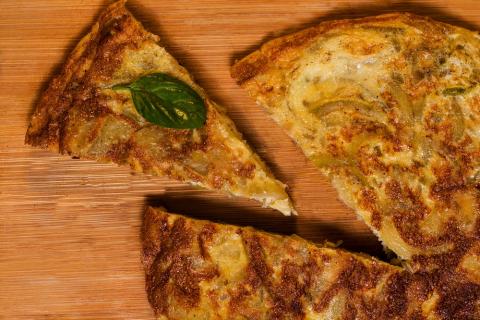
  1. Peel and slice the onions. Wash and peel the potatoes and cut into roughly ½ cm slices.
  2. Heat 2 teaspoons of low fat spread in a large frying pan over a low heat. Add the onions and cook gently for 10-15 minutes until they start to brown.
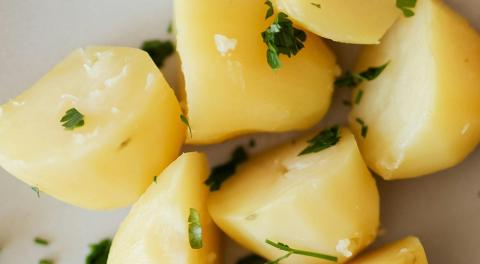
  3. Meanwhile, add the potatoes to a saucepan, cover with boiling water and simmer for 8-10 minutes until just cooked through. Drain well.
  4. Break the eggs into a jug or bowl. Beat with a fork and add the pepper.
  5. Heat the grill. Add another teaspoon of low fat spread and the potatoes to the frying pan. Pour over the egg mixture and cook for 15 minutes until the omelette is nearly set and golden brown underneath.
  6. Put the frying pan under the grill with the handle outside the oven so it does not become too hot. Cook for a further 2 minutes, until the omelette is set and golden brown. Divide into four portions and serve.

Time Saver Tips

This recipe is ideal for using up any leftover cooked potatoes you have.

Cost Saver Tips

Save a bit of money by using any leftover potatoes and vegetables you have instead of buying fresh ones.

Tips for Kids

Choose your child’s favourite vegetables to add to the omelette.

Nutritional Information

Based on a single serving of 315g (% of an adult's reference intake)

Energy

339 kcals ( 17 %)

1,416 kJ ( 17 %)

Fat

4.4 g ( 22 %)

Saturates

26 g ( %)

Sugar

4.8 g ( 5 %)

Salt

0.5 g ( 9 %)

Detailed nutritional information

Per 100g Per 315g serving
Energy Kcals 107 339
Energy Kj 450 1,416
Protein 6.1 g 19.4 g
Total Fat g g
Saturated Fat 1.4 g 4.4 g
Carbohydrates 8.3 g 26 g
Total Sugars 1.5 g 4.8 g
NSP Fibre 0.9 g 2.8 g
Sodium 68 mg 213 mg
Salt 0.2 g 0.5 g

Find out about nutritional labelling

Nutrition labels on the front of packaging

  • Most of the big supermarkets and many food manufacturers display nutritional information on the front of pre-packed food.
  • Front of pack nutrition labels provide information on the number of grams of fat, saturated fat, sugars and salt and the amount of energy (in kJ and kcal) in a serving or portion of a recipe.
  • The labels also include information about reference intakes (expressed as a percentage) which are guidelines about the approximate amount of particular nutrients and energy required for a healthy diet.
  • The colour coding tells you at a glance if the food has high (red), medium (amber) or low (green) amounts of fat, saturated fat, sugars and salt.
  • The more greens on the label, the healthier the choice
  • Amber means neither high nor low, so you can eat foods with all or mostly ambers on the label most of the time.
  • Reds on the label means the food is high in that nutrient and these are the foods we should cut down on. Try to eat these foods less often and in small amounts.

Food shopping tips

If you’re trying to decide which product to choose, check to see if there's a nutrition label on the front of the pack. This will help you to quickly assess how your choices stack up. You will often find a mixture of red, amber and green colour coding for the nutrients. So when you're choosing between similar products, try to go for more greens and ambers and fewer reds if you want to make a healthier choice.

Back to top

Ingredients

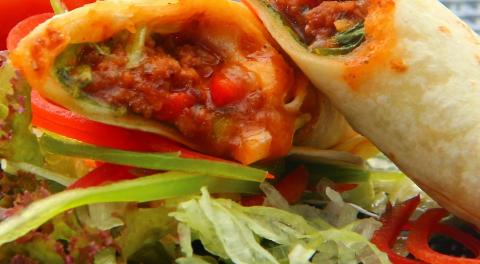
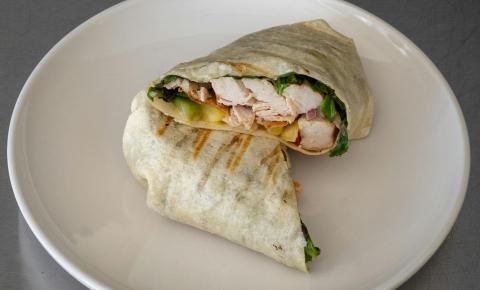
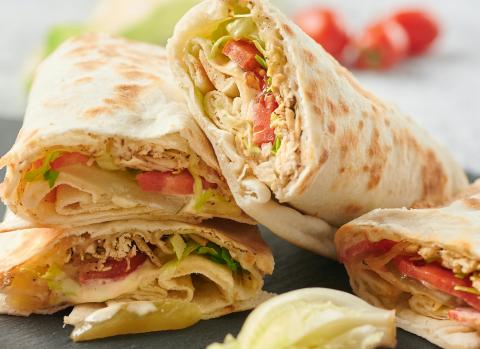
  • 4 (240g) Wheat Tortillas
  • 3 Breasts (400g) Roast / Cooked Chicken
  • 8 Small Leaves Leaves (40g) Lettuce
  • 1 Medium Sized (85g) Tomato
  • 4 Tablespoons (60g) Reduced Calorie Mayonnaise

This recipe has been added to your Meal Planner.

Allergy Disclaimer

Always check the label of each ingredient for allergy warnings.

Method

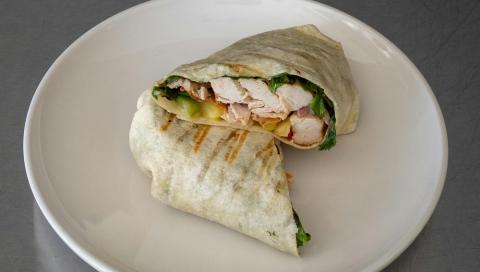
  1. Cut chicken into bite size pieces, slice tomato and shred lettuce.
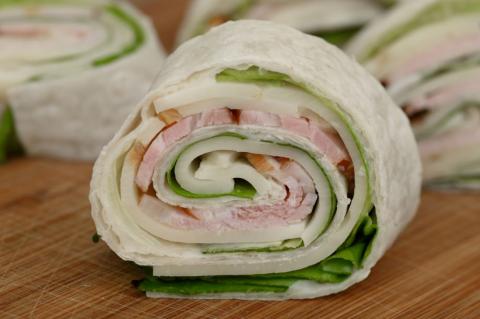
  2. Arrange all ingredients in a line in the middle of the tortilla.
  3. Fold tortilla as per manufacturer’s instructions.

Cost Saver Tips

Left over chicken from a Sunday roast? Don't throw it out – this is the recipe to use it in.

Tips for Kids

Have fun learning how to make wraps.

Nutritional Information

Based on a single serving of 204g (% of an adult's reference intake)

Energy

383 kcals ( 19 %)

1,609 kJ ( 19 %)

Fat

2.8 g ( 14 %)

Saturates

37.9 g ( %)

Sugar

2.1 g ( 2 %)

Salt

1 g ( 17 %)

Detailed nutritional information

Per 100g Per 204g serving
Energy Kcals 188 383
Energy Kj 790 1,609
Protein 15.7 g 32 g
Total Fat g g
Saturated Fat 1.4 g 2.8 g
Carbohydrates 18.6 g 37.9 g
Total Sugars 1.1 g 2.1 g
NSP Fibre 0.8 g 1.7 g
Sodium 192 mg 392 mg
Salt 0.5 g 1 g

Find out about nutritional labelling

Nutrition labels on the front of packaging

  • Most of the big supermarkets and many food manufacturers display nutritional information on the front of pre-packed food.
  • Front of pack nutrition labels provide information on the number of grams of fat, saturated fat, sugars and salt and the amount of energy (in kJ and kcal) in a serving or portion of a recipe.
  • The labels also include information about reference intakes (expressed as a percentage) which are guidelines about the approximate amount of particular nutrients and energy required for a healthy diet.
  • The colour coding tells you at a glance if the food has high (red), medium (amber) or low (green) amounts of fat, saturated fat, sugars and salt.
  • The more greens on the label, the healthier the choice
  • Amber means neither high nor low, so you can eat foods with all or mostly ambers on the label most of the time.
  • Reds on the label means the food is high in that nutrient and these are the foods we should cut down on. Try to eat these foods less often and in small amounts.

Food shopping tips

If you’re trying to decide which product to choose, check to see if there's a nutrition label on the front of the pack. This will help you to quickly assess how your choices stack up. You will often find a mixture of red, amber and green colour coding for the nutrients. So when you're choosing between similar products, try to go for more greens and ambers and fewer reds if you want to make a healthier choice.

Back to top

Ingredients

  • (5g) Vegetable Oil
  • (1g) Chilli Powder
  • 2 Tablespoon (45g) Popping Corn

This recipe has been added to your Meal Planner.

Allergy Disclaimer

Always check the label of each ingredient for allergy warnings.

Method

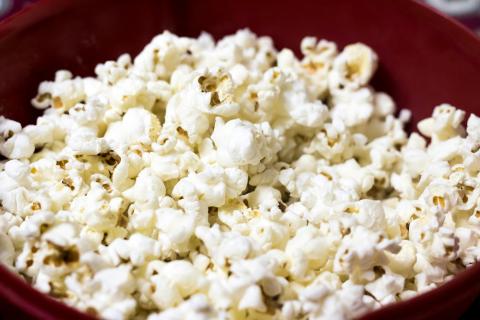
  1. Heat oil in a large pan that has a lid (keep lid off while heating the oil)
  2. Once oil starts to smoke add  popping corn to the pan and cover with lid. Depending on the size of your pan you may need to cook in smaller amounts.
  3. Shake the pan regularly until it begins to pop than shake constantly while popping.
  4. Once the corn has popped sprinkle on your spice and shake until evenly coated then serve. Can be enjoyed hot or cold.

Remember that little ones can choke on small foods. Read our page on choking to see what you can do to prevent this. 

Time Saver Tips

Why not make the popcorn beforehand and keep it handy in an airtight container to stay fresh for later?

Cost Saver Tips

You could try buying the popping corn in bulk, so you can just keep the pack sealed until you want to get popping again!

Tips for Kids

If your little one isn’t a big fan of spice, you could make this plain or add less spice. What about giving cinnamon a go for a different flavour?

Nutritional Information

Based on a single serving of 9g (% of an adult's reference intake)

Energy

53 kcals ( 3 %)

224 kJ ( 3 %)

Fat

0.4 g ( 2 %)

Saturates

0.1 g ( 1 %)

Sugar

0.1 g ( 1 %)

Salt

1 g ( 0 %)

Detailed nutritional information

Per 100g Per 9g serving
Energy Kcals 593 53
Energy Kj 2,491 224
Protein 6.2 g 0.6 g
Total Fat g g
Saturated Fat 4.3 g 0.4 g
Carbohydrates 1.1 g 0.1 g
Total Sugars 1.1 g 0.1 g
NSP Fibre 9.3 g 0.8 g
Sodium 4 mg 0.4 mg
Salt 1 g 1 g

Find out about nutritional labelling

Nutrition labels on the front of packaging

  • Most of the big supermarkets and many food manufacturers display nutritional information on the front of pre-packed food.
  • Front of pack nutrition labels provide information on the number of grams of fat, saturated fat, sugars and salt and the amount of energy (in kJ and kcal) in a serving or portion of a recipe.
  • The labels also include information about reference intakes (expressed as a percentage) which are guidelines about the approximate amount of particular nutrients and energy required for a healthy diet.
  • The colour coding tells you at a glance if the food has high (red), medium (amber) or low (green) amounts of fat, saturated fat, sugars and salt.
  • The more greens on the label, the healthier the choice
  • Amber means neither high nor low, so you can eat foods with all or mostly ambers on the label most of the time.
  • Reds on the label means the food is high in that nutrient and these are the foods we should cut down on. Try to eat these foods less often and in small amounts.

Food shopping tips

If you’re trying to decide which product to choose, check to see if there's a nutrition label on the front of the pack. This will help you to quickly assess how your choices stack up. You will often find a mixture of red, amber and green colour coding for the nutrients. So when you're choosing between similar products, try to go for more greens and ambers and fewer reds if you want to make a healthier choice.

Back to top

Ingredients

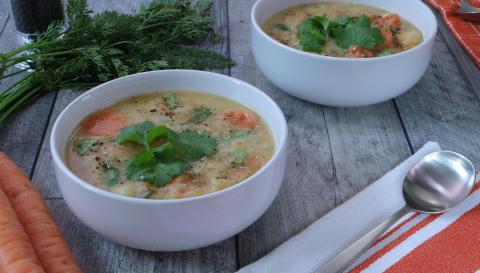
  • 1 ¾ Pints (1L) Water
  • 1 (7g) Chicken or Vegetable Stock Cube (use reduced salt when possible)
  • 2 (200g) Skinless And Boneless Chicken Thighs
  • 2 Medium Sized (160g) Carrots
  • 4 (40g) Spring Onions
  • ½ Head (85g) Broccoli
  • 10 Medium Sized (100g) Mushrooms
  • 2 Teaspoons (10g) Soy Sauce (use reduced salt when possible)
  • 1 Teaspoon (3g) Ground Ginger
  • ½ Bag (175g) Rice Noodles
  • 1 (3g) Garlic Clove or 1 Teaspoon (5g) Garlic Puree
  • Pinch Chilli Flakes or Chilli Powder

This recipe has been added to your Meal Planner.

Allergy Disclaimer

Always check the label of each ingredient for allergy warnings.

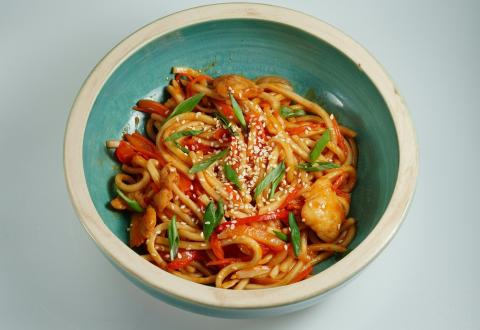
Method

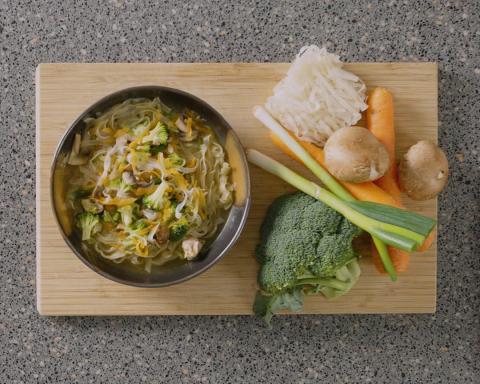
  1. Make the stock by dissolving the stock cube in 1 litre of boiling water.
  2. Wash, peel and grate the carrots. If you don't have a grater, slice the carrots very finely.
  3. Wash and slice the spring onions.
  4. Wipe the dirt off the mushrooms and slice them.
  5. Separate the broccoli into small florets.
  6. Peel and crush, or finely chop, the garlic.
  7. Add the stock, chicken thighs, ginger, garlic, soy sauce and chilli flakes if using, to a large saucepan, and simmer for 10-15 minutes until the chicken is cooked.
  8. Remove the chicken thighs from the pan and chop into bite size pieces
  9. Add the carrots, broccoli, spring onions and mushrooms to the pan and cook for 5-10 minutes
  10. Add the noodles to the pan and cook for a further 2-3 minutes.
  11. Return the chicken to pan and serve hot. 

Time Saver Tips

Why not make this in bulk without the noodles and freeze it? That way it’s easy to just reheat and add the noodles before plating up for a quick meal. Let it cool before freezing.

Cost Saver Tips

Any fine noodles can be used if rice noodles aren't available. And the soup tastes great with any veggies, so it’s good to use up whatever’s in your fridge. You don't have to use chicken thigh meat either, so can use any chicken that's on offer. This soup is also a good way to use up leftover chicken. In fact, it’s even easier – just skip the step where you cook the chicken and add the leftover chicken just before you put the noodles in. This will give enough time for it to heat through. Just remember, if the chicken’s been frozen before, you cannot freeze the soup. You could also make this vegetarian by using Quorn pieces, or vegetarian and vegan by using Tofu. You can also add tinned beans or chickpeas instead of chicken.

Tips for Kids

Chopping the vegetables extra small or blending them can be a fun idea that might help your kids eat more if they’re sometimes a bit fussy about their veggies. Why not ask them to help you prepare the vegetables? They could help grate carrots, slice mushrooms or separate the broccoli florets. They might be more likely to want to eat something they’ve helped to make. You could even let your wee one choose which vegetables to put in the pot – they’ll love picking their favourites!

Nutritional Information

Based on a single serving of 361g (% of an adult's reference intake)

Energy

235 kcals ( 12 %)

989 kJ ( 12 %)

Fat

0.5 g ( 3 %)

Saturates

39.8 g ( %)

Sugar

3.4 g ( 4 %)

Salt

1.2 g ( 20 %)

Detailed nutritional information

Per 100g Per 361g serving
Energy Kcals 65 235
Energy Kj 273 989
Protein 3.9 g 14.1 g
Total Fat g g
Saturated Fat 0.1 g 0.5 g
Carbohydrates 11 g 39.8 g
Total Sugars 0.9 g 3.4 g
NSP Fibre 0.5 g 1.8 g
Sodium 137 mg 495 mg
Salt 0.3 g 1.2 g

Find out about nutritional labelling

Nutrition labels on the front of packaging

  • Most of the big supermarkets and many food manufacturers display nutritional information on the front of pre-packed food.
  • Front of pack nutrition labels provide information on the number of grams of fat, saturated fat, sugars and salt and the amount of energy (in kJ and kcal) in a serving or portion of a recipe.
  • The labels also include information about reference intakes (expressed as a percentage) which are guidelines about the approximate amount of particular nutrients and energy required for a healthy diet.
  • The colour coding tells you at a glance if the food has high (red), medium (amber) or low (green) amounts of fat, saturated fat, sugars and salt.
  • The more greens on the label, the healthier the choice
  • Amber means neither high nor low, so you can eat foods with all or mostly ambers on the label most of the time.
  • Reds on the label means the food is high in that nutrient and these are the foods we should cut down on. Try to eat these foods less often and in small amounts.

Food shopping tips

If you’re trying to decide which product to choose, check to see if there's a nutrition label on the front of the pack. This will help you to quickly assess how your choices stack up. You will often find a mixture of red, amber and green colour coding for the nutrients. So when you're choosing between similar products, try to go for more greens and ambers and fewer reds if you want to make a healthier choice.

Back to top

Ingredients

  • 1 Tablespoon (10g) Vegetable Oil
  • 1 Large Sized (240g) Onion
  • 1 (3g) Garlic Clove
  • 1 Teaspoon (1g) Dried Coriander
  • 1 1 cm Piece (10g) Ginger
  • To Taste Ground Black Pepper
  • 1 Pack (250g) Mushrooms
  • 1 Tin (440g) Chickpeas In Unsalted Water
  • 1 Tin (400g) Chopped Tomatoes
  • ½ (200g) French Stick
  • 8 Teaspoons (40g) Low Fat Spread

This recipe has been added to your Meal Planner.

Allergy Disclaimer

Always check the label of each ingredient for allergy warnings.

Method

  1. Peel and finely chop the onions and garlic. Use a knife or vegetable peeler to remove the outer layer of ginger and finely chop. Slice the mushrooms.
  2. In a large pan heat the vegetable oil. Fry the onions for 2-3 minutes then add the garlic and mushrooms and fry for a further 2 minutes.
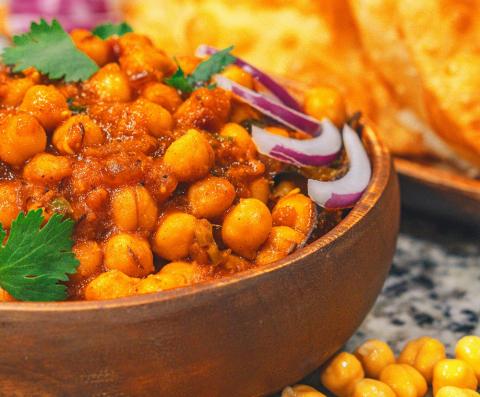
  3. Drain the chickpeas and add to the pan with the chopped tomatoes, ginger and coriander.
  4. Bring to the boil and then simmer for approximately 10 - 15 minutes allowing the stew to thicken. Add black pepper to taste.
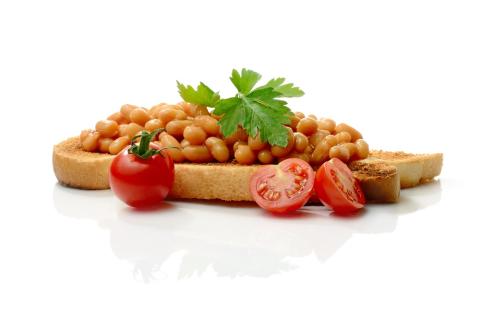
  5. Cut the French stick into chunks, spread with low fat spread then serve with the stew.
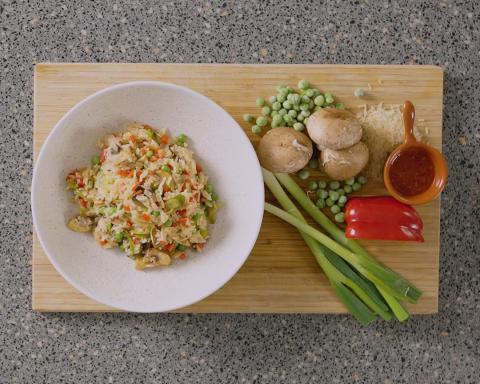
Time Saver Tips

Make in advance and reheat when ready.

Cost Saver Tips

Can serve with other bread that you already have at home.

Tips for Kids

Let them help with the preparing of vegetables and stirring of the stew. Try with their favourite vegetables.

Nutritional Information

Based on a single serving of 389g (% of an adult's reference intake)

Energy

308 kcals ( 15 %)

1,294 kJ ( 15 %)

Fat

1.6 g ( 8 %)

Saturates

46.5 g ( %)

Sugar

8.5 g ( 9 %)

Salt

1.3 g ( 22 %)

Detailed nutritional information

Per 100g Per 389g serving
Energy Kcals 98 308
Energy Kj 412 1,294
Protein 3.7 g 11.6 g
Total Fat g g
Saturated Fat 0.5 g 1.6 g
Carbohydrates 14.8 g 46.5 g
Total Sugars 2.7 g 8.5 g
NSP Fibre 1.7 g 5.3 g
Sodium 176 mg 553 mg
Salt 0.4 g 1.3 g

Find out about nutritional labelling

Nutrition labels on the front of packaging

  • Most of the big supermarkets and many food manufacturers display nutritional information on the front of pre-packed food.
  • Front of pack nutrition labels provide information on the number of grams of fat, saturated fat, sugars and salt and the amount of energy (in kJ and kcal) in a serving or portion of a recipe.
  • The labels also include information about reference intakes (expressed as a percentage) which are guidelines about the approximate amount of particular nutrients and energy required for a healthy diet.
  • The colour coding tells you at a glance if the food has high (red), medium (amber) or low (green) amounts of fat, saturated fat, sugars and salt.
  • The more greens on the label, the healthier the choice
  • Amber means neither high nor low, so you can eat foods with all or mostly ambers on the label most of the time.
  • Reds on the label means the food is high in that nutrient and these are the foods we should cut down on. Try to eat these foods less often and in small amounts.

Food shopping tips

If you’re trying to decide which product to choose, check to see if there's a nutrition label on the front of the pack. This will help you to quickly assess how your choices stack up. You will often find a mixture of red, amber and green colour coding for the nutrients. So when you're choosing between similar products, try to go for more greens and ambers and fewer reds if you want to make a healthier choice.

Back to top

Ingredients

  • 2 Medium Sized (300g) Onions
  • 2 Medium Sized (160g) Carrots
  • 1 (160g) Leek
  • 2 Tablespoons (20ml) Vegetable Oil
  • 4 Large Sized (800g) Potatoes
  • 2 Frozen Tablespoons (60g) Peas
  • 2 Frozen Tablespoons (60g) Sweetcorn
  • 1 Tins (400g) Chopped Tomatoes
  • 2 Tablespoons (30g) Tomato Puree
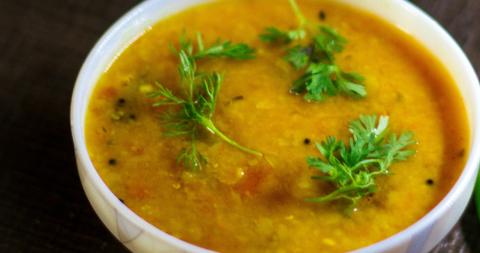
  • 1 Cups (200g) Red Lentils
  • 1 Teaspoons (2g) Mixed Herbs
  • 1 Teaspoons (2g) Chilli Powder
  • 2 Cups (200ml) Water
  • 1 Pinch (1g) Ground Black Pepper

This recipe has been added to your Meal Planner.

Allergy Disclaimer

Always check the label of each ingredient for allergy warnings.

Method

  1. Turn oven on to 160oC / 140oC fan oven / 320oF / gas mark 3. Slice the onions, carrots and leeks and dice the potatoes.
  2. Heat the oil on a hob in a large pan, fry the onions and leeks until golden.
  3. Add all the other vegetables and potatoes and stir in the tomato puree and tomatoes.
  4. Rinse the lentils and add to pan with water, herbs, chilli powder and pepper.
  5. Bring to boil and then simmer on a low heat for 10 minutes.
  6. Transfer to an ovenproof dish, cook in oven for 30-40 minutes, then serve.

Time Saver Tips

This dish can be prepared in advanced and then reheated/ cooked in oven when ready. Carrots and potatoes don’t need to be peeled, just washed. Use an ovenproof pan if you have one to avoid transferring to a dish.

Cost Saver Tips

Continue to simmer gently on the hob rather than transferring to the oven.

Nutritional Information

Based on a single serving of 509g (% of an adult's reference intake)

Energy

473 kcals ( 24 %)

1,990 kJ ( 24 %)

Fat

1 g ( 5 %)

Saturates

84 g ( %)

Sugar

16.3 g ( 18 %)

Salt

0.4 g ( 7 %)

Detailed nutritional information

Per 100g Per 509g serving
Energy Kcals 93 473
Energy Kj 391 1,990
Protein 4.4 g 22.4 g
Total Fat g g
Saturated Fat 0.2 g 1 g
Carbohydrates 16.5 g 84 g
Total Sugars 3.2 g 16.3 g
NSP Fibre 1.9 g 9.7 g
Sodium 32 mg 163 mg
Salt 0.1 g 0.4 g

Find out about nutritional labelling

Nutrition labels on the front of packaging

  • Most of the big supermarkets and many food manufacturers display nutritional information on the front of pre-packed food.
  • Front of pack nutrition labels provide information on the number of grams of fat, saturated fat, sugars and salt and the amount of energy (in kJ and kcal) in a serving or portion of a recipe.
  • The labels also include information about reference intakes (expressed as a percentage) which are guidelines about the approximate amount of particular nutrients and energy required for a healthy diet.
  • The colour coding tells you at a glance if the food has high (red), medium (amber) or low (green) amounts of fat, saturated fat, sugars and salt.
  • The more greens on the label, the healthier the choice
  • Amber means neither high nor low, so you can eat foods with all or mostly ambers on the label most of the time.
  • Reds on the label means the food is high in that nutrient and these are the foods we should cut down on. Try to eat these foods less often and in small amounts.

Food shopping tips

If you’re trying to decide which product to choose, check to see if there's a nutrition label on the front of the pack. This will help you to quickly assess how your choices stack up. You will often find a mixture of red, amber and green colour coding for the nutrients. So when you're choosing between similar products, try to go for more greens and ambers and fewer reds if you want to make a healthier choice.

Back to top

Ingredients

  • 2 Tablespoons (20g) Vegetable Oil
  • 1 (150g) Onion
  • 2 (6g) Garlic Cloves
  • 3 (600g) Potatoes
  • 4 (320g) Carrots
  • 2 (180g) Parsnips
  • 1 Tin (400g) Chopped Tomatoes
  • 2 Tablespoons (18g) Curry Powder
  • ½ Pints (300ml) Water
  • 1 (9g) Reduced Salt Vegetable Stock Cube
  • 1 Cup (150g) Red Lentils
  • 2 can also use dry Tablespoons (2g) Fresh Coriander
  • 4 Heaped tablespoons (160g) Low Fat Plain Yoghurt

This recipe has been added to your Meal Planner.

Allergy Disclaimer

Always check the label of each ingredient for allergy warnings.

Method

  1. Peel and dice the onion and garlic. Peel and thickly slice the carrots and parsnips. Wash and cut the potatoes into 2 cm pieces.
  2. Heat the oil in a large saucepan and then cook the onion and garlic over a medium heat for 3-4 minutes until softened. Stir occasionally.
  3. Add the potatoes, carrots and parsnips to the pan and cook for a further 5 minutes, stirring untilt the vegetables begin to brown.
  4. Make up the stock with boiling water and add this to the pan with the chopped tomatoes and curry powder. Bring the pan to the boil and then reduce the heat.
  5. Rinse the lentils with cold water using a sieve and then add to the pan, simmer with lid on for 15-20 minutes until the lentils and vegetables have softened and the sauce thickened.
  6. Finely chop the coriander if using fresh and add half of it to the pan then heat through.
  7. Serve with yoghurt on top and the remaining coriander.

Time Saver Tips

Cook in advance and reheat and add the yoghurt when ready to serve.

Cost Saver Tips

A use of leftover vegetables.

Tips for Kids

They may prefer the vegetables cut into smaller pieces.

Nutritional Information

Based on a single serving of 503g (% of an adult's reference intake)

Energy

445 kcals ( 22 %)

1,776 kJ ( 22 %)

Fat

1.5 g ( 8 %)

Saturates

71.4 g ( %)

Sugar

18.1 g ( 20 %)

Salt

1 g ( 16 %)

Detailed nutritional information

Per 100g Per 503g serving
Energy Kcals 84 445
Energy Kj 353 1,776
Protein 3.8 g 19.1 g
Total Fat g g
Saturated Fat 0.3 g 1.5 g
Carbohydrates 14.2 g 71.4 g
Total Sugars 3.6 g 18.1 g
NSP Fibre 2 g 10.1 g
Sodium 100 mg 503 mg
Salt 0.2 g 1 g

Find out about nutritional labelling

Nutrition labels on the front of packaging

  • Most of the big supermarkets and many food manufacturers display nutritional information on the front of pre-packed food.
  • Front of pack nutrition labels provide information on the number of grams of fat, saturated fat, sugars and salt and the amount of energy (in kJ and kcal) in a serving or portion of a recipe.
  • The labels also include information about reference intakes (expressed as a percentage) which are guidelines about the approximate amount of particular nutrients and energy required for a healthy diet.
  • The colour coding tells you at a glance if the food has high (red), medium (amber) or low (green) amounts of fat, saturated fat, sugars and salt.
  • The more greens on the label, the healthier the choice
  • Amber means neither high nor low, so you can eat foods with all or mostly ambers on the label most of the time.
  • Reds on the label means the food is high in that nutrient and these are the foods we should cut down on. Try to eat these foods less often and in small amounts.

Food shopping tips

If you’re trying to decide which product to choose, check to see if there's a nutrition label on the front of the pack. This will help you to quickly assess how your choices stack up. You will often find a mixture of red, amber and green colour coding for the nutrients. So when you're choosing between similar products, try to go for more greens and ambers and fewer reds if you want to make a healthier choice.

Back to top

Ingredients

For the pancakes:

  • 5 Tablespoons (100g) Plain Flour
  • 2 Eggs
  • ½ Pint (250ml) Semi-Skimmed Milk
  • 1 Tablespoon (10g) Vegetable Oil

For the filling:

  • 1 Tablespoon (10g) Vegetable Oil
  • 6 Tablespoons (250g) Spinach
  • 2 (120g) Onions
  • 1 (1g) Ground Nutmeg
  • 20 (200g) Mushrooms

For the cheese sauce:

  • 2 Level Tablespoons (50g) Plain Flour
  • 1 Pint (500ml) Semi-Skimmed Milk
  • 5 Tablespoons (50g) Grated Cheddar Cheese
  • ½ Teaspoon Mustard
  • 1 Pinch (1g) Ground Black Pepper

This recipe has been added to your Meal Planner.

Allergy Disclaimer

Always check the label of each ingredient for allergy warnings.

Method

  1. Place the pancake ingredients into a mixing bowl and whisk (a fork can be used) until the mixture is completely smooth, then allow to rest for 10 minutes.
  2. Heat a frying pan on a fairly high heat and carefully add half the oil for the pancakes add the other half after you have cooked two pancakes.
  3. Add approximately 1 1/2 tbsp of the batter to the pan and swirl it around by tipping the pan slightly so the mixture covers the bottom.
  4. Allow to cook for 45 seconds to 1 minute until the underneath is golden brown then flip to cook the other side for the same amout of time.
  5. Lift the pancake out of the pan on to a square of greaseproof paper, once the next pancake is cooked place it on top of the other pancake with greaseproof paper between them, continue untill all pancakes have been cooked then place them to one side, covered with greaseproof paper.
  6. Peel and dice the onions then heat the oil for the filling in the frying pan on a moderate heat and add the onions for 2-3 minutes until they soften.
  7. Slice and dice the mushrooms and add to the pan cooking for a further 2-3 minutes. Chop the spinach and add that to the pan with the nutmeg.
  8. After another 2-3 minutes allow the filling to cool for 5 minutes, then share between the pancakes to the thickness of your thumb and fold the pancake in half or roll.
  9. Heat the margarine for the sauce in a pan until melted. Take the pan off the heat and add the flour, mix together to form a paste then gradually add the milk placing the pan back on a gentle heat. Add cheese, mustard and black pepper to heat once the sauce thickens.
  10. Serve pancakes with sauce.

Time Saver Tips

Make the sauce at the same time as the filling for the pancakes.

Tips for Kids

They will enjoy tossing the pancakes and adding in the filling.

Nutritional Information

Based on a single serving of 343g (% of an adult's reference intake)

Energy

405 kcals ( 20 %)

1,701 kJ ( 20 %)

Fat

5.8 g ( 29 %)

Saturates

41.5 g ( %)

Sugar

12 g ( 13 %)

Salt

1 g ( 17 %)

Detailed nutritional information

Per 100g Per 343g serving
Energy Kcals 118 405
Energy Kj 496 1,701
Protein 6 g 20.6 g
Total Fat g g
Saturated Fat 1.7 g 5.8 g
Carbohydrates 12.1 g 41.5 g
Total Sugars 3.5 g 12 g
NSP Fibre 0.9 g 3.1 g
Sodium 112 mg 384 mg
Salt 0.3 g 1 g

Find out about nutritional labelling

Nutrition labels on the front of packaging

  • Most of the big supermarkets and many food manufacturers display nutritional information on the front of pre-packed food.
  • Front of pack nutrition labels provide information on the number of grams of fat, saturated fat, sugars and salt and the amount of energy (in kJ and kcal) in a serving or portion of a recipe.
  • The labels also include information about reference intakes (expressed as a percentage) which are guidelines about the approximate amount of particular nutrients and energy required for a healthy diet.
  • The colour coding tells you at a glance if the food has high (red), medium (amber) or low (green) amounts of fat, saturated fat, sugars and salt.
  • The more greens on the label, the healthier the choice
  • Amber means neither high nor low, so you can eat foods with all or mostly ambers on the label most of the time.
  • Reds on the label means the food is high in that nutrient and these are the foods we should cut down on. Try to eat these foods less often and in small amounts.

Food shopping tips

If you’re trying to decide which product to choose, check to see if there's a nutrition label on the front of the pack. This will help you to quickly assess how your choices stack up. You will often find a mixture of red, amber and green colour coding for the nutrients. So when you're choosing between similar products, try to go for more greens and ambers and fewer reds if you want to make a healthier choice.

Back to top

Ingredients

  • 4 Medium Slices (144g) Wholemeal Bread
  • 2 Reduced Salt and Sugar Tins (800g) Baked Beans
  • 2 Medium Sized (170g) Tomatoes

This recipe has been added to your Meal Planner.

Allergy Disclaimer

Always check the label of each ingredient for allergy warnings.

Method

  1. Toast the bread.
  2. Heat the baked beans in a pan.
  3. Slice the tomatoes into bite sized pieces and add to the beans.
  4. Once heated through, serve beans and tomatoes on the toast.

Nutritional Information

Based on a single serving of 274g (% of an adult's reference intake)

Energy

252 kcals ( 13 %)

1,058 kJ ( 13 %)

Fat

0.5 g ( 3 %)

Saturates

46 g ( %)

Sugar

7.9 g ( 9 %)

Salt

1.9 g ( 32 %)

Detailed nutritional information

Per 100g Per 274g serving
Energy Kcals 92 252
Energy Kj 386 1,058
Protein 5.3 g 14.5 g
Total Fat g g
Saturated Fat 0.2 g 0.5 g
Carbohydrates 16.8 g 46 g
Total Sugars 2.9 g 7.9 g
NSP Fibre 3.5 g 9.6 g
Sodium 294 mg 806 mg
Salt 0.7 g 1.9 g

Find out about nutritional labelling

Nutrition labels on the front of packaging

  • Most of the big supermarkets and many food manufacturers display nutritional information on the front of pre-packed food.
  • Front of pack nutrition labels provide information on the number of grams of fat, saturated fat, sugars and salt and the amount of energy (in kJ and kcal) in a serving or portion of a recipe.
  • The labels also include information about reference intakes (expressed as a percentage) which are guidelines about the approximate amount of particular nutrients and energy required for a healthy diet.
  • The colour coding tells you at a glance if the food has high (red), medium (amber) or low (green) amounts of fat, saturated fat, sugars and salt.
  • The more greens on the label, the healthier the choice
  • Amber means neither high nor low, so you can eat foods with all or mostly ambers on the label most of the time.
  • Reds on the label means the food is high in that nutrient and these are the foods we should cut down on. Try to eat these foods less often and in small amounts.

Food shopping tips

If you’re trying to decide which product to choose, check to see if there's a nutrition label on the front of the pack. This will help you to quickly assess how your choices stack up. You will often find a mixture of red, amber and green colour coding for the nutrients. So when you're choosing between similar products, try to go for more greens and ambers and fewer reds if you want to make a healthier choice.

Back to top
Subscribe to Eat Better Feel Better