Ingredients

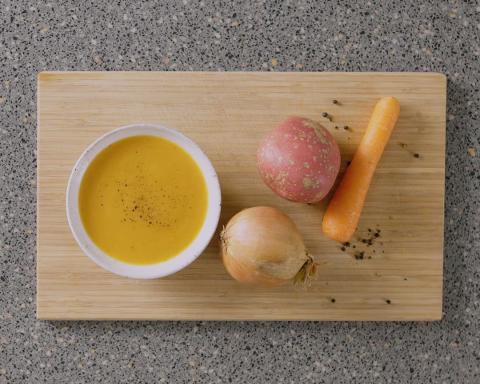
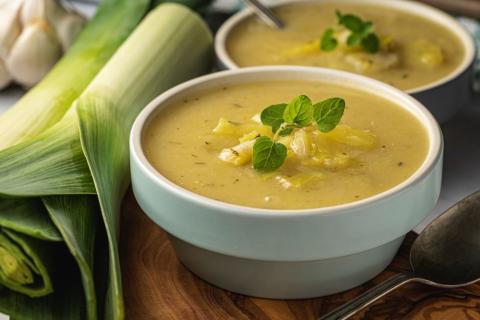
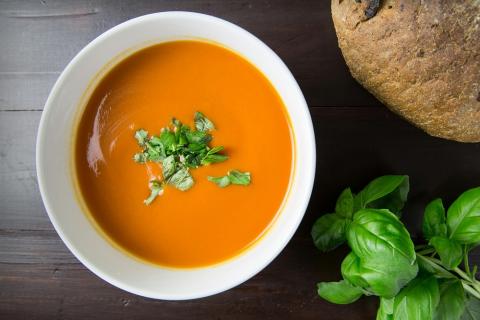
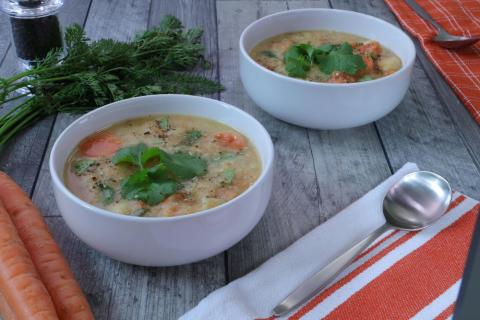
  • 1 Medium sized onion (150g) Onion
  • 3 Sticks (90g) Celery
  • 1 Tablespoon (10g) Vegetable Oil
  • 3 Average sized potatoes (180g) Potatoes
  • 6 2 pints Cups (1L) Water
  • 2 (14g) Reduced Salt Vegetable Stock Cube
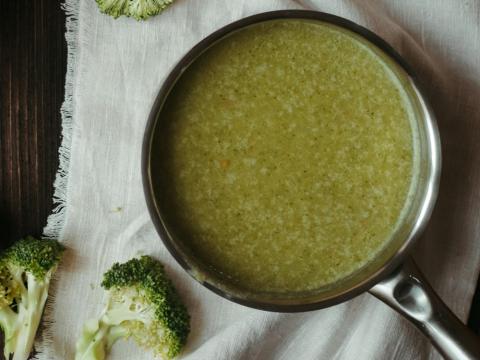
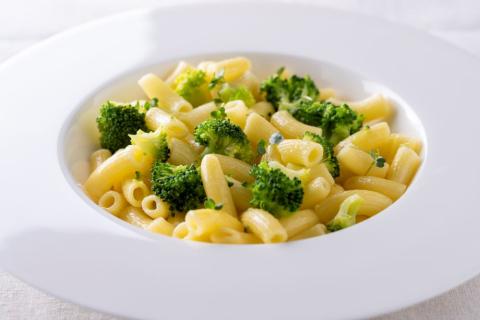
  • 1 Large head (300g) Broccoli
  • (100g) Stilton or other blue cheese
  • Ground Black Pepperto taste 

This recipe has been added to your Meal Planner.

Allergy Disclaimer

Always check the label of each ingredient for allergy warnings.

Method

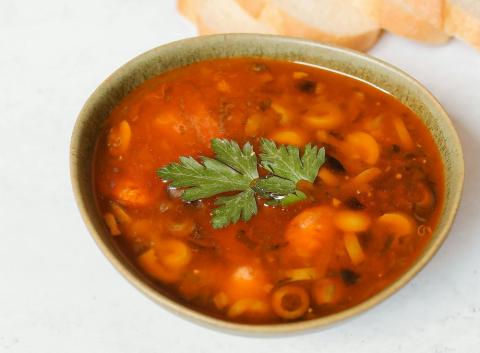
  1. Peel the onion and finely dice. Wash celery and slice. Peel potatoes and cut into small pieces.
  2. Heat oil in a large saucepan then add onion and celery for around 5 minutes until soft.
  3. Dissolve stock cube in boiling water and add to the pan with the potato. Bring to the boil and then simmer for arounf 15-20 minutes until the potatoes are soft.
  4. Chop the broccoli into small pieces and add to the pan for 3-4 minutes.
  5. Add half the stilton to the pan along with black pepper. Stir until the cheese melts
  6. Pour the soup into a blender or alternatively through a seive. Return to the pan to reheat.
  7. Serve the soup with remaining stilton crumbled on top. (you can add all stilton to the soup if preferred)

Time Saver Tips

Can be made in advance: Reheat when required

Cost Saver Tips

Look for offers on any blue cheese.

Tips for Kids

If the cheese is too strong don't serve with cheese on top.

Nutritional Information

Based on a single serving of 392g (% of an adult's reference intake)

Energy

196 kcals ( 10 %)

823 kJ ( 10 %)

Fat

6.3 g ( 31 %)

Saturates

11.8 g ( %)

Sugar

3.9 g ( 4 %)

Salt

0.8 g ( 13 %)

Detailed nutritional information

Per 100g Per 392g serving
Energy Kcals 50 196
Energy Kj 210 823
Protein 2.7 g 9.8 g
Total Fat g g
Saturated Fat 1.6 g 6.3 g
Carbohydrates 3 g 11.8 g
Total Sugars 1 g 3.9 g
NSP Fibre 0.8 g 3.1 g
Sodium 83 mg 325 mg
Salt 0.2 g 0.8 g

Find out about nutritional labelling

Nutrition labels on the front of packaging

  • Most of the big supermarkets and many food manufacturers display nutritional information on the front of pre-packed food.
  • Front of pack nutrition labels provide information on the number of grams of fat, saturated fat, sugars and salt and the amount of energy (in kJ and kcal) in a serving or portion of a recipe.
  • The labels also include information about reference intakes (expressed as a percentage) which are guidelines about the approximate amount of particular nutrients and energy required for a healthy diet.
  • The colour coding tells you at a glance if the food has high (red), medium (amber) or low (green) amounts of fat, saturated fat, sugars and salt.
  • The more greens on the label, the healthier the choice
  • Amber means neither high nor low, so you can eat foods with all or mostly ambers on the label most of the time.
  • Reds on the label means the food is high in that nutrient and these are the foods we should cut down on. Try to eat these foods less often and in small amounts.

Food shopping tips

If you’re trying to decide which product to choose, check to see if there's a nutrition label on the front of the pack. This will help you to quickly assess how your choices stack up. You will often find a mixture of red, amber and green colour coding for the nutrients. So when you're choosing between similar products, try to go for more greens and ambers and fewer reds if you want to make a healthier choice.
Back to top

Ingredients

  • 1 (400g) Cauliflower
  • 1 (150g) Onion
  • 1 (140g) Carrot
  • ½ (80g) Leek
  • 1 Head (150g) Broccoli
  • 1 (160g) Red Pepper
  • 2 Cups (160g) Frozen Mixed Vegetables
  • 2 (170g) Tomatoes
  • ½ Pint (300ml) Semi-Skimmed Milk
  • 1 Tablespoon (20g) Cornflour
  • 12 Tablespoons (120g) Reduced Fat Cheddar Cheese
  • 1 Teaspoon (8g) Wholegrain Mustard
  • 1 to taste Pinch (1g) Ground Black Pepper
  • 2 ½ Cups (150g) Breadcrumbs
  • 20 (800g) New Potatoes

This recipe has been added to your Meal Planner.

Allergy Disclaimer

Always check the label of each ingredient for allergy warnings.

Method

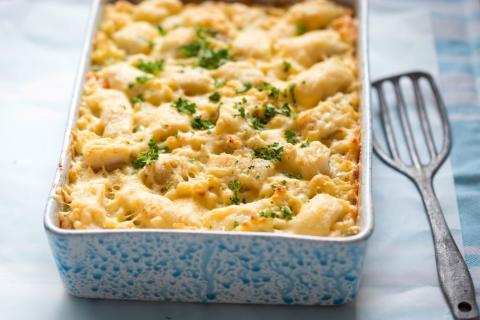
  1. Preheat the oven to 180°C / 160°C fan oven / 360°F / gas mark 4.
  2. Peel and chop onion and carrots, place in a large pan with a mug of cold water and bring to the boil then simmer gently.
  3. With hands break the cauliflower and broccoli into small florets. After 2 minutes of simmering add them to the pan with the onion and carrot.
  4. Cover the pan with a lid allowing the vegetables to steam gently. Add more water if the pan boils dry.
  5. Deseed the pepper and dice. Slice the leek and grate the cheese.
  6. Mix the cornflour in a teacup with a small amount of the milk to make a paste.
  7. Once the cauliflower is tender (test with a knife). Transfer the vegetables to a oven proof dish along with the pepper, leek and frozen vegetables, leave cooking water in the pan.
  8. Pour the cornflour paste into the pan used to cook the vegetables and return to heat. Gradually add the remaining milk, stirring all the time with a wooden spoon until the mixture boils and thickens.
  9. Remove the sauce from the heat and stir in half the grated cheese and the mustard. Add black pepper to taste. Pour sauce over the vegetables.
  10. Slice the tomatoes and place on top of the vegetables and sauce. Mix breadcrumbs and remaining cheese together and sprinkle over the tomatoes.
  11. Bake in the oven for approximately 30-35 minutes until bubbling and golden. While baking wash new potatoes and boil for approximately 10 minutes and serve with the bake.

Time Saver Tips

Can be made in advance and baked when required. Once cooled can be kept in the fridge for another day.

Cost Saver Tips

Can be frozen after cooling. Defrost throughly before reheating. Can be made with left over vegetables.

Tips for Kids

Use their favourite vegetables.

Nutritional Information

Based on a single serving of 632g (% of an adult's reference intake)

Energy

550 kcals ( 28 %)

2,309 kJ ( 28 %)

Fat

4.4 g ( 22 %)

Saturates

92.9 g ( %)

Sugar

19.5 g ( 22 %)

Salt

1.8 g ( 30 %)

Detailed nutritional information

Per 100g Per 632g serving
Energy Kcals 87 550
Energy Kj 365 2,309
Protein 4.5 g 28.4 g
Total Fat g g
Saturated Fat 0.7 g 4.4 g
Carbohydrates 14.7 g 92.9 g
Total Sugars 3.1 g 19.5 g
NSP Fibre 1.4 g 8.8 g
Sodium 115 mg 727 mg
Salt 0.3 g 1.8 g

Find out about nutritional labelling

Nutrition labels on the front of packaging

  • Most of the big supermarkets and many food manufacturers display nutritional information on the front of pre-packed food.
  • Front of pack nutrition labels provide information on the number of grams of fat, saturated fat, sugars and salt and the amount of energy (in kJ and kcal) in a serving or portion of a recipe.
  • The labels also include information about reference intakes (expressed as a percentage) which are guidelines about the approximate amount of particular nutrients and energy required for a healthy diet.
  • The colour coding tells you at a glance if the food has high (red), medium (amber) or low (green) amounts of fat, saturated fat, sugars and salt.
  • The more greens on the label, the healthier the choice
  • Amber means neither high nor low, so you can eat foods with all or mostly ambers on the label most of the time.
  • Reds on the label means the food is high in that nutrient and these are the foods we should cut down on. Try to eat these foods less often and in small amounts.

Food shopping tips

If you’re trying to decide which product to choose, check to see if there's a nutrition label on the front of the pack. This will help you to quickly assess how your choices stack up. You will often find a mixture of red, amber and green colour coding for the nutrients. So when you're choosing between similar products, try to go for more greens and ambers and fewer reds if you want to make a healthier choice.

Back to top

Ingredients

  • 2 Medium sized (170g) Tomatoes
  • 1 Small sized (60g) Red onion
  • ¼ (120g) Cucumber
  • 1 Tablespoon (1g) Fresh Coriander
  • 1 Tablespoon (10g) Vegetable Oil
  • 4 (160g) Wheat Flour Tortillas
  • 6 Tablespoons (60g) Reduced Fat Cheddar Cheese
  • To taste Ground Black Pepper

This recipe has been added to your Meal Planner.

Allergy Disclaimer

Always check the label of each ingredient for allergy warnings.

Method

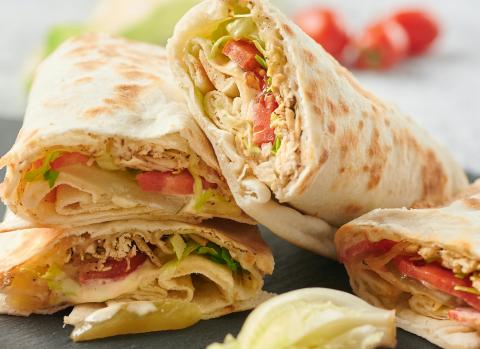
  1. Grate the cheese and set to one side then peel and finely dice the onion. Finely dice the tomatoes and cucumber. Finely chop the coriander and then mix with onion, tomatoes and cucumber to make the salsa.
  2. Heat a few drops of oil in a large frying pan. Add one of the tortillas to the pan and then turn it over so it is lightly oiled.
  3. Add a quater of the salsa mixture and spread over the tortilla. Add a quarter of the cheese and sprinkle with black pepper.
  4. Cook over a medium heat for 1-2 minutes, until the cheese starts to melt and the tortilla browns slightly.
  5. Fold the tortilla in half and wrap in tin foil to keep warm while cooking the remaining tortillas.
  6. Slice in half and serve while hot.

Time Saver Tips

Salsa can be made in advance. Buy pre grated cheese and salsa.

Cost Saver Tips

White onions can be used if you don't have any red onions.

Tips for Kids

Why not let them help to prepare the salsa?

Nutritional Information

Based on a single serving of 130g (% of an adult's reference intake)

Energy

183 kcals ( 9 %)

770 kJ ( 9 %)

Fat

1.8 g ( 9 %)

Saturates

26.9 g ( %)

Sugar

3 g ( 3 %)

Salt

0.9 g ( 15 %)

Detailed nutritional information

Per 100g Per 130g serving
Energy Kcals 140 183
Energy Kj 593 770
Protein 6.4 g 8.3 g
Total Fat g g
Saturated Fat 1.4 g 1.8 g
Carbohydrates 20.7 g 26.9 g
Total Sugars 2.3 g 3 g
NSP Fibre 1.4 g 1.8 g
Sodium 169 mg 220 mg
Salt 0.7 g 0.9 g

Find out about nutritional labelling

Nutrition labels on the front of packaging

  • Most of the big supermarkets and many food manufacturers display nutritional information on the front of pre-packed food.
  • Front of pack nutrition labels provide information on the number of grams of fat, saturated fat, sugars and salt and the amount of energy (in kJ and kcal) in a serving or portion of a recipe.
  • The labels also include information about reference intakes (expressed as a percentage) which are guidelines about the approximate amount of particular nutrients and energy required for a healthy diet.
  • The colour coding tells you at a glance if the food has high (red), medium (amber) or low (green) amounts of fat, saturated fat, sugars and salt.
  • The more greens on the label, the healthier the choice
  • Amber means neither high nor low, so you can eat foods with all or mostly ambers on the label most of the time.
  • Reds on the label means the food is high in that nutrient and these are the foods we should cut down on. Try to eat these foods less often and in small amounts.

Food shopping tips

If you’re trying to decide which product to choose, check to see if there's a nutrition label on the front of the pack. This will help you to quickly assess how your choices stack up. You will often find a mixture of red, amber and green colour coding for the nutrients. So when you're choosing between similar products, try to go for more greens and ambers and fewer reds if you want to make a healthier choice.

Back to top

Ingredients

  • 4 Medium Fillets (600g) White Fish, eg Pollock
  • 4 Medium (340g) Tomatoes
  • ½ Pot (250g) Low Fat Natural Yoghurt
  • 6 (60g) Spring Onions
  • 10 Tablespoons (100g) Cheddar Cheese (choose reduced fat whenever possible)
  • 16 (640g) New Potatoes
  • 4 Medium (320g) Carrots
  • 8 Tablespoons (240g) Frozen Green Peas

This recipe has been added to your Meal Planner.

Allergy Disclaimer

Always check the label of each ingredient for allergy warnings.

Method

  1. Preheat the oven to 180°C / 160°C fan oven / 350°F / gas mark 4.
  2. Place the fish in a single layer in a lightly greased ovenproof dish.
  3. Wash and slice the tomatoes and place on top of the fish.
  4. Wash and finely chop the spring onions and grate the cheese.
  5. Mix together the yogurt, spring onions and half of the cheese.
  6. Spoon this over the fish and tomatoes and sprinkle the remaining cheese on top.
  7. Bake in the oven for 20 minutes until golden.
  8. While the fish is cooking, wash and chop the potatoes and carrots.
  9. Cook the potatoes in boiling water for around 15 minutes and the carrots for 6-8 minutes.
  10. Heat the frozen peas as per instructions on the bag and serve with the fish bake, potatoes and carrots.

Time Saver Tips

For this recipe you don't have to peel the potatoes – much quicker! And save even more time by using cheese that's already been grated.

Cost Saver Tips

Any kind of white fish or cheese can be used, so why not choose whatever’s on offer? Frozen fish may be cheaper than fresh. Any type of potatoes can be used, too – boiled, baked or mashed. If you don’t have natural yogurt, no worries – any plain yogurt or crème fraîche works well. Try to go for low-fat ones as a healthier option.

Tips for Kids

Little ones might prefer a milder cheese, and it’s all good to leave out the spring onions if they prefer it that way. It’s extra tasty served with any of their favourite vegetables – fresh, frozen or out of a tin.

Nutritional Information

Based on a single serving of 609g (% of an adult's reference intake)

Energy

410 kcals ( 21 %)

1,741 kJ ( 21 %)

Fat

4.4 g ( 22 %)

Saturates

43.3 g ( %)

Sugar

17.2 g ( 19 %)

Salt

0.9 g ( 15 %)

Detailed nutritional information

Per 100g Per 609g serving
Energy Kcals 67 410
Energy Kj 256 1,741
Protein 6.9 g 41.8 g
Total Fat g g
Saturated Fat 0.7 g 4.4 g
Carbohydrates 7.1 g 43.3 g
Total Sugars 2.8 g 17.2 g
NSP Fibre 1.5 g 9.3 g
Sodium 58 mg 354 mg
Salt 0.1 g 0.9 g

Find out about nutritional labelling

Nutrition labels on the front of packaging

  • Most of the big supermarkets and many food manufacturers display nutritional information on the front of pre-packed food.
  • Front of pack nutrition labels provide information on the number of grams of fat, saturated fat, sugars and salt and the amount of energy (in kJ and kcal) in a serving or portion of a recipe.
  • The labels also include information about reference intakes (expressed as a percentage) which are guidelines about the approximate amount of particular nutrients and energy required for a healthy diet.
  • The colour coding tells you at a glance if the food has high (red), medium (amber) or low (green) amounts of fat, saturated fat, sugars and salt.
  • The more greens on the label, the healthier the choice
  • Amber means neither high nor low, so you can eat foods with all or mostly ambers on the label most of the time.
  • Reds on the label means the food is high in that nutrient and these are the foods we should cut down on. Try to eat these foods less often and in small amounts.

Food shopping tips

If you’re trying to decide which product to choose, check to see if there's a nutrition label on the front of the pack. This will help you to quickly assess how your choices stack up. You will often find a mixture of red, amber and green colour coding for the nutrients. So when you're choosing between similar products, try to go for more greens and ambers and fewer reds if you want to make a healthier choice.

Back to top

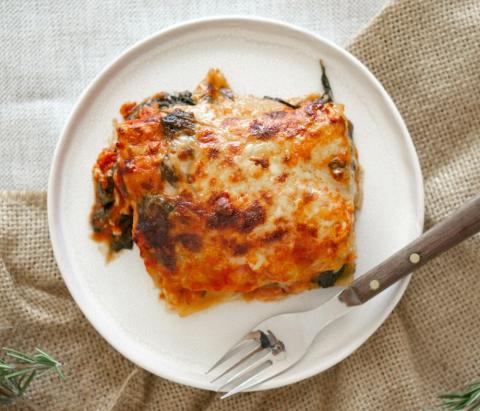
Ingredients

  • 8 (400g) Reduced Fat Pork Sausages
  • ¼ Bag (200g) Frozen Spinach
  • 1 Pot (200g) Reduced Fat Crème Fraîche
  • 1 Tablespoon (10g) Vegetable Oil
  • 1 (150g) Onion
  • 2 (6g) Garlic Cloves
  • 6 (120g) Lasagne Sheets
  • ½ Pot (250g) Passata
  • 2 Tablespoons (30g) Tomato Puree
  • 1 Teaspoon (1g) Dried Mixed Herbs
  • 5 Tablespoons (50g) Grated Reduced Fat Mature Cheddar

This recipe has been added to your Meal Planner.

Allergy Disclaimer

Always check the label of each ingredient for allergy warnings.

Method

  1. Set the oven to 180°C / 160°C fan oven / 350°F / gas mark 4.
  2. Split the sausages along their length and remove the skins.
  3. Peel and finely chop the onion and garlic.
  4. Heat the oil in a pan and add the sausages. Break up and mash the meat with a wooden spoon whilst frying for 5-10 minutes until brown.
  5. Add the onions and garlic to the pan and fry for around 5 minutes until softened, stirring occasionally.
  6. Stir in the spinach and crème fraîche.
  7. Place the lasagne sheets in a baking tray or large bowl (in a single layer if possible), cover them with boiling water and allow them to soften for about 5 minutes. Don't let the sheets overlap and stick together.
  8. While the lasagne sheets are soaking, mix together the passata, tomato puree and mixed herbs in a large jug.
  9. Grate the cheese.
  10. Drain the lasagne sheets.
  11. Put half of the tomato mixture in the bottom of an ovenproof dish, then a layer of lasagne sheets, followed by a layer of the sausage and spinach mixture.  Repeat these layers and finish with a sprinkle of cheese.  
  12. Bake in the preheated oven for 25-30 minutes, and serve hot.

Try wholemeal lasagne to increase fibre content and add some other vegetables to boost your 5 a day.

Time Saver Tips

Prepare in advance and bake in the oven when required for around 40 minutes.

Cost Saver Tips

You could also use low-fat plain yoghurt if you don’t have any crème fraîche. If you don't have passata try using drained tinned tomatoes instead.

Tips for Kids

Why not let your wee one pick which green veggies to go in this? Things like cabbage, peas or broccoli (cut into small bits) are all just as tasty instead of spinach. If they get to pick, they might even be more likely to eat it!

Nutritional Information

Based on a single serving of 342g (% of an adult's reference intake)

Energy

462 kcals ( 23 %)

1,937 kJ ( 23 %)

Fat

8.1 g ( 41 %)

Saturates

40.8 g ( %)

Sugar

8.7 g ( 10 %)

Salt

1.6 g ( 26 %)

Detailed nutritional information

Per 100g Per 342g serving
Energy Kcals 135 462
Energy Kj 566 1,937
Protein 9.5 g 32.5 g
Total Fat g g
Saturated Fat 2.4 g 8.1 g
Carbohydrates 11.9 g 40.8 g
Total Sugars 2.5 g 8.7 g
NSP Fibre 1 g 3.4 g
Sodium 184 mg 629 mg
Salt 0.5 g 1.6 g

Find out about nutritional labelling

Nutrition labels on the front of packaging

  • Most of the big supermarkets and many food manufacturers display nutritional information on the front of pre-packed food.
  • Front of pack nutrition labels provide information on the number of grams of fat, saturated fat, sugars and salt and the amount of energy (in kJ and kcal) in a serving or portion of a recipe.
  • The labels also include information about reference intakes (expressed as a percentage) which are guidelines about the approximate amount of particular nutrients and energy required for a healthy diet.
  • The colour coding tells you at a glance if the food has high (red), medium (amber) or low (green) amounts of fat, saturated fat, sugars and salt.
  • The more greens on the label, the healthier the choice
  • Amber means neither high nor low, so you can eat foods with all or mostly ambers on the label most of the time.
  • Reds on the label means the food is high in that nutrient and these are the foods we should cut down on. Try to eat these foods less often and in small amounts.

Food shopping tips

If you’re trying to decide which product to choose, check to see if there's a nutrition label on the front of the pack. This will help you to quickly assess how your choices stack up. You will often find a mixture of red, amber and green colour coding for the nutrients. So when you're choosing between similar products, try to go for more greens and ambers and fewer reds if you want to make a healthier choice.

Back to top

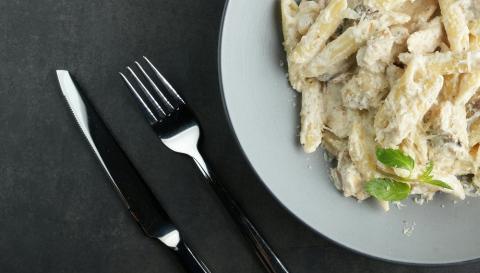
Ingredients

  • 4 Cups (300g) Macaroni
  • 1 Pinch (1g) Ground Black Pepper
  • 4 Tablespoons (60g) Low Fat Spread
  • 2 ½ Tablespoons (50g) Plain Flour
  • 3 Cups (568ml) Semi-Skimmed Milk
  • 5 Reduced Fat Tablespoons (120g) Cheddar Cheese
  • 8 Spears (360g) Broccoli

This recipe has been added to your Meal Planner.

Allergy Disclaimer

Always check the label of each ingredient for allergy warnings.

Method

  1. Cook macaroni as per instructions on the pack.
  2. Wash and chop broccoli and boil for 5-10 minutes.
  3. Melt low fat spread in a pan, remove from heat and stir in flour to make a paste. Heat again for 1 minute and then gradually add the milk, stirring continuously until the sauce thickens. Add grated cheese and black pepper.
  4. Drain macaroni and mix with sauce. Once heated through serve with broccoli.

Cost Saver Tips

Serve with your favourite vegetable in season.

Tips for Kids

Can make this with different shaped pasta and serve with their favourite vegetable.

Nutritional Information

Based on a single serving of 420g (% of an adult's reference intake)

Energy

407 kcals ( 20 %)

1,697 kJ ( 20 %)

Fat

6.3 g ( 32 %)

Saturates

48.3 g ( %)

Sugar

8.4 g ( 9 %)

Salt

0.8 g ( 13 %)

Detailed nutritional information

Per 100g Per 420g serving
Energy Kcals 97 407
Energy Kj 407 1,697
Protein 5.8 g 24.4 g
Total Fat g g
Saturated Fat 1.5 g 6.3 g
Carbohydrates 11.5 g 48.3 g
Total Sugars 2 g 8.4 g
NSP Fibre 0.9 g 3.8 g
Sodium 91 mg 382 mg
Salt 0.2 g 0.8 g

Find out about nutritional labelling

Nutrition labels on the front of packaging

  • Most of the big supermarkets and many food manufacturers display nutritional information on the front of pre-packed food.
  • Front of pack nutrition labels provide information on the number of grams of fat, saturated fat, sugars and salt and the amount of energy (in kJ and kcal) in a serving or portion of a recipe.
  • The labels also include information about reference intakes (expressed as a percentage) which are guidelines about the approximate amount of particular nutrients and energy required for a healthy diet.
  • The colour coding tells you at a glance if the food has high (red), medium (amber) or low (green) amounts of fat, saturated fat, sugars and salt.
  • The more greens on the label, the healthier the choice
  • Amber means neither high nor low, so you can eat foods with all or mostly ambers on the label most of the time.
  • Reds on the label means the food is high in that nutrient and these are the foods we should cut down on. Try to eat these foods less often and in small amounts.

Food shopping tips

If you’re trying to decide which product to choose, check to see if there's a nutrition label on the front of the pack. This will help you to quickly assess how your choices stack up. You will often find a mixture of red, amber and green colour coding for the nutrients. So when you're choosing between similar products, try to go for more greens and ambers and fewer reds if you want to make a healthier choice.

Back to top

Ingredients

For the pancakes:

  • 5 Tablespoons (100g) Plain Flour
  • 2 Eggs
  • ½ Pint (250ml) Semi-Skimmed Milk
  • 1 Tablespoon (10g) Vegetable Oil

For the filling:

  • 1 Tablespoon (10g) Vegetable Oil
  • 6 Tablespoons (250g) Spinach
  • 2 (120g) Onions
  • 1 (1g) Ground Nutmeg
  • 20 (200g) Mushrooms

For the cheese sauce:

  • 2 Level Tablespoons (50g) Plain Flour
  • 1 Pint (500ml) Semi-Skimmed Milk
  • 5 Tablespoons (50g) Grated Cheddar Cheese
  • ½ Teaspoon Mustard
  • 1 Pinch (1g) Ground Black Pepper

This recipe has been added to your Meal Planner.

Allergy Disclaimer

Always check the label of each ingredient for allergy warnings.

Method

  1. Place the pancake ingredients into a mixing bowl and whisk (a fork can be used) until the mixture is completely smooth, then allow to rest for 10 minutes.
  2. Heat a frying pan on a fairly high heat and carefully add half the oil for the pancakes add the other half after you have cooked two pancakes.
  3. Add approximately 1 1/2 tbsp of the batter to the pan and swirl it around by tipping the pan slightly so the mixture covers the bottom.
  4. Allow to cook for 45 seconds to 1 minute until the underneath is golden brown then flip to cook the other side for the same amout of time.
  5. Lift the pancake out of the pan on to a square of greaseproof paper, once the next pancake is cooked place it on top of the other pancake with greaseproof paper between them, continue untill all pancakes have been cooked then place them to one side, covered with greaseproof paper.
  6. Peel and dice the onions then heat the oil for the filling in the frying pan on a moderate heat and add the onions for 2-3 minutes until they soften.
  7. Slice and dice the mushrooms and add to the pan cooking for a further 2-3 minutes. Chop the spinach and add that to the pan with the nutmeg.
  8. After another 2-3 minutes allow the filling to cool for 5 minutes, then share between the pancakes to the thickness of your thumb and fold the pancake in half or roll.
  9. Heat the margarine for the sauce in a pan until melted. Take the pan off the heat and add the flour, mix together to form a paste then gradually add the milk placing the pan back on a gentle heat. Add cheese, mustard and black pepper to heat once the sauce thickens.
  10. Serve pancakes with sauce.

Time Saver Tips

Make the sauce at the same time as the filling for the pancakes.

Tips for Kids

They will enjoy tossing the pancakes and adding in the filling.

Nutritional Information

Based on a single serving of 343g (% of an adult's reference intake)

Energy

405 kcals ( 20 %)

1,701 kJ ( 20 %)

Fat

5.8 g ( 29 %)

Saturates

41.5 g ( %)

Sugar

12 g ( 13 %)

Salt

1 g ( 17 %)

Detailed nutritional information

Per 100g Per 343g serving
Energy Kcals 118 405
Energy Kj 496 1,701
Protein 6 g 20.6 g
Total Fat g g
Saturated Fat 1.7 g 5.8 g
Carbohydrates 12.1 g 41.5 g
Total Sugars 3.5 g 12 g
NSP Fibre 0.9 g 3.1 g
Sodium 112 mg 384 mg
Salt 0.3 g 1 g

Find out about nutritional labelling

Nutrition labels on the front of packaging

  • Most of the big supermarkets and many food manufacturers display nutritional information on the front of pre-packed food.
  • Front of pack nutrition labels provide information on the number of grams of fat, saturated fat, sugars and salt and the amount of energy (in kJ and kcal) in a serving or portion of a recipe.
  • The labels also include information about reference intakes (expressed as a percentage) which are guidelines about the approximate amount of particular nutrients and energy required for a healthy diet.
  • The colour coding tells you at a glance if the food has high (red), medium (amber) or low (green) amounts of fat, saturated fat, sugars and salt.
  • The more greens on the label, the healthier the choice
  • Amber means neither high nor low, so you can eat foods with all or mostly ambers on the label most of the time.
  • Reds on the label means the food is high in that nutrient and these are the foods we should cut down on. Try to eat these foods less often and in small amounts.

Food shopping tips

If you’re trying to decide which product to choose, check to see if there's a nutrition label on the front of the pack. This will help you to quickly assess how your choices stack up. You will often find a mixture of red, amber and green colour coding for the nutrients. So when you're choosing between similar products, try to go for more greens and ambers and fewer reds if you want to make a healthier choice.

Back to top

Ingredients

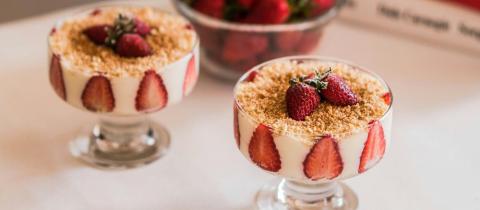
  • 8 (96g) Strawberries
  • 2 (30g) Digestive Biscuits
  • 4 Tablespoon (160g) Ricotta Cheese
This recipe has been added to your Meal Planner.

Allergy Disclaimer

Always check the label of each ingredient for allergy warnings.

Method

  1. Wash strawberries and then chop into small pieces
  2. In a bowl mix ricotta cheese and strawberries together gently.
  3. Divide into portions and crumble digestive biscuit on top then serve.


Time Saver Tips

Prepare in advance and kee refrigerated until ready to serve

Cost Saver Tips

Use any soft fruit available and in season

Tips for Kids

Try with their favourite fruit. Fruit can be served on top or on the side if preferred. As this recipe contains added sugar it’s best kept to mealtimes.

Nutritional Information

Based on a single serving of 71g (% of an adult's reference intake)
Energy

99 kcals ( 5 %)

417 kJ ( 5 %)

Fat

3.5 g ( 17 %)

Saturates

7.4 g ( %)

Sugar

3.2 g ( 4 %)

Salt

0.2 g ( 4 %)

Detailed nutritional information

Per 100g Per 71g serving
Energy Kcals 140 99
Energy Kj 588 417
Protein 6.3 g 4.5 g
Total Fat g g
Saturated Fat 4.9 g 3.5 g
Carbohydrates 10.4 g 7.4 g
Total Sugars 4.5 g 3.2 g
NSP Fibre 0.6 g 0.4 g
Sodium 123 mg 87 mg
Salt 0.3 g 0.2 g

Find out about nutritional labelling

Nutrition labels on the front of packaging

  • Most of the big supermarkets and many food manufacturers display nutritional information on the front of pre-packed food.
  • Front of pack nutrition labels provide information on the number of grams of fat, saturated fat, sugars and salt and the amount of energy (in kJ and kcal) in a serving or portion of a recipe.
  • The labels also include information about reference intakes (expressed as a percentage) which are guidelines about the approximate amount of particular nutrients and energy required for a healthy diet.
  • The colour coding tells you at a glance if the food has high (red), medium (amber) or low (green) amounts of fat, saturated fat, sugars and salt.
  • The more greens on the label, the healthier the choice
  • Amber means neither high nor low, so you can eat foods with all or mostly ambers on the label most of the time.
  • Reds on the label means the food is high in that nutrient and these are the foods we should cut down on. Try to eat these foods less often and in small amounts.

Food shopping tips

If you’re trying to decide which product to choose, check to see if there's a nutrition label on the front of the pack. This will help you to quickly assess how your choices stack up. You will often find a mixture of red, amber and green colour coding for the nutrients. So when you're choosing between similar products, try to go for more greens and ambers and fewer reds if you want to make a healthier choice.

Back to top

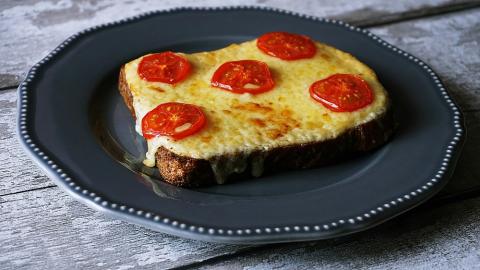
Ingredients

  • 8 Medium Slices Wholemeal Bread
  • ½ Pack (200g) Cheddar Cheese (choose reduced fat whenever possible)
  • 4 (340g) Tomatoes

This recipe has been added to your Meal Planner.

Allergy Disclaimer

Always check the label of each ingredient for allergy warnings.

Method

  1. Toast the bread on one side under a grill.
  2. Chop the tomatoes into thin slices and grate the cheese.
  3. Flip the bread over and sprinkle the cheese onto the untoasted side and top with slices of tomatoes.
  4. Place under the grill until the cheese is bubbling and starting to brown. Be careful not to burn the edges of the toast.

Time Saver Tips

Make this even faster – buy cheese that's already been grated or slice the cheese instead of grating.

Cost Saver Tips

You can try this with a variety of breads and other vegetables, such as finely chopped onions or spring onions.

Tips for Kids

Get the kids involved – let them help with the toppings on the toast. Add a dash of Worcestershire sauce or a sprinkle of herbs or chilli powder for a different taste.

Nutritional Information

Based on a single serving of 197g (% of an adult's reference intake)

Energy

327 kcals ( 16 %)

1,375 kJ ( 16 %)

Fat

7.3 g ( 37 %)

Saturates

33.4 g ( %)

Sugar

4.6 g ( 5 %)

Salt

1.6 g ( 27 %)

Detailed nutritional information

Per 100g Per 197g serving
Energy Kcals 167 327
Energy Kj 702 1,375
Protein 10.9 g 21.3 g
Total Fat g g
Saturated Fat 3.7 g 7.3 g
Carbohydrates 17 g 33.4 g
Total Sugars 2.3 g 4.6 g
NSP Fibre 3 g 5.9 g
Sodium 333 mg 653 mg
Salt 0.8 g 1.6 g

Find out about nutritional labelling

Nutrition labels on the front of packaging

  • Most of the big supermarkets and many food manufacturers display nutritional information on the front of pre-packed food.
  • Front of pack nutrition labels provide information on the number of grams of fat, saturated fat, sugars and salt and the amount of energy (in kJ and kcal) in a serving or portion of a recipe.
  • The labels also include information about reference intakes (expressed as a percentage) which are guidelines about the approximate amount of particular nutrients and energy required for a healthy diet.
  • The colour coding tells you at a glance if the food has high (red), medium (amber) or low (green) amounts of fat, saturated fat, sugars and salt.
  • The more greens on the label, the healthier the choice
  • Amber means neither high nor low, so you can eat foods with all or mostly ambers on the label most of the time.
  • Reds on the label means the food is high in that nutrient and these are the foods we should cut down on. Try to eat these foods less often and in small amounts.

Food shopping tips

If you’re trying to decide which product to choose, check to see if there's a nutrition label on the front of the pack. This will help you to quickly assess how your choices stack up. You will often find a mixture of red, amber and green colour coding for the nutrients. So when you're choosing between similar products, try to go for more greens and ambers and fewer reds if you want to make a healthier choice.

Back to top

Ingredients

  • 20 (300g) Cherry Tomatoes
  • 4 Tablespoons (120g) Reduced Fat Cream Cheese
  • 4 Teaspoons (4g) Chopped Herbs e.g. Basil or Chives

This recipe has been added to your Meal Planner.

Allergy Disclaimer

Always check the label of each ingredient for allergy warnings.

Method

  1. Wash and dry tomatoes. Cut in half using a sharp knife.
  2. Dividing evenly, top each half of tomato with cream cheese and sprinkle the herbs on top.

Time Saver Tips

Choose a herb flavoured cream cheese.

Cost Saver Tips

Choose a herb flavoured cream cheese.

Tips for Kids

They may prefer without herbs. Let them make their own.

Nutritional Information

Based on a single serving of 106g (% of an adult's reference intake)

Energy

63 kcals ( 3 %)

263 kJ ( 3 %)

Fat

2.3 g ( 12 %)

Saturates

3.8 g ( %)

Sugar

3.7 g ( 4 %)

Salt

0.2 g ( 3 %)

Detailed nutritional information

Per 100g Per 106g serving
Energy Kcals 59 63
Energy Kj 248 263
Protein 3.6 g 3.8 g
Total Fat g g
Saturated Fat 2.2 g 2.3 g
Carbohydrates 3.6 g 3.8 g
Total Sugars 3.5 g 3.7 g
NSP Fibre 0.8 g 0.8 g
Sodium 79 mg 84 mg
Salt 0.2 g 0.2 g

Find out about nutritional labelling

Nutrition labels on the front of packaging

  • Most of the big supermarkets and many food manufacturers display nutritional information on the front of pre-packed food.
  • Front of pack nutrition labels provide information on the number of grams of fat, saturated fat, sugars and salt and the amount of energy (in kJ and kcal) in a serving or portion of a recipe.
  • The labels also include information about reference intakes (expressed as a percentage) which are guidelines about the approximate amount of particular nutrients and energy required for a healthy diet.
  • The colour coding tells you at a glance if the food has high (red), medium (amber) or low (green) amounts of fat, saturated fat, sugars and salt.
  • The more greens on the label, the healthier the choice
  • Amber means neither high nor low, so you can eat foods with all or mostly ambers on the label most of the time.
  • Reds on the label means the food is high in that nutrient and these are the foods we should cut down on. Try to eat these foods less often and in small amounts.

Food shopping tips

If you’re trying to decide which product to choose, check to see if there's a nutrition label on the front of the pack. This will help you to quickly assess how your choices stack up. You will often find a mixture of red, amber and green colour coding for the nutrients. So when you're choosing between similar products, try to go for more greens and ambers and fewer reds if you want to make a healthier choice.

Back to top
Subscribe to Cheese