This article was created with

eat-better-feel-better-logo-2.png

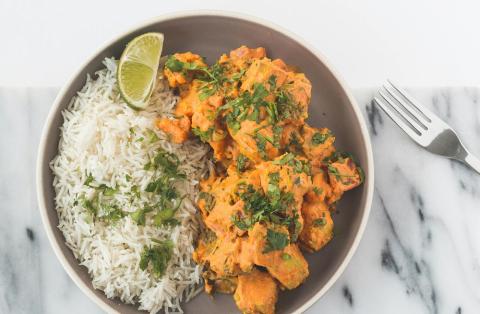
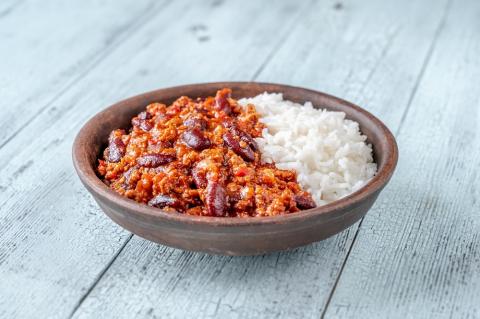
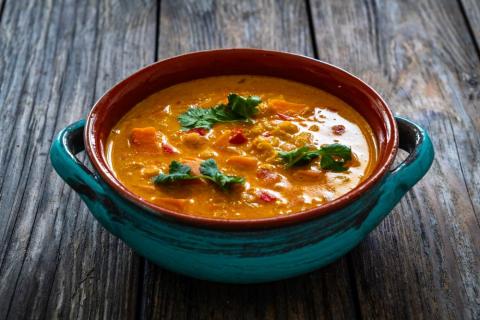
Ingredients

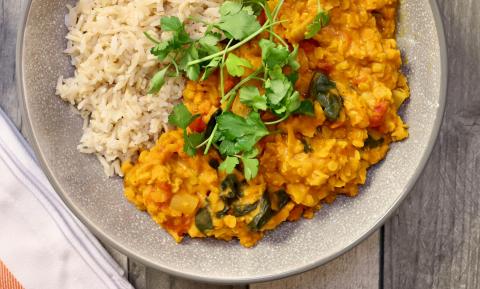
  • 1 Medium Sized (150g) Onion
  • 3 Medium Sized (600g) Sweet Potatoes
  • 1 Can (400g) Pineapple Chunks In Juice
  • 2 Tablespoons (20ml) Vegetable Oil
  • 1 Medium Heat Tablespoons (30g) Curry Paste
  • ½ Cups (100g) Red Lentils
  • 2 Dried Teaspoons (5g) Coriander
  • 2 Cups (250ml) Water
  • 2 Cups (300g) Easy Cook Rice

This recipe has been added to your Meal Planner.

Allergy Disclaimer

Always check the label of each ingredient for allergy warnings.

Method

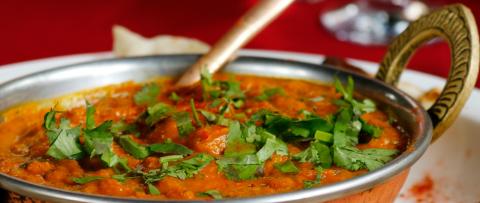
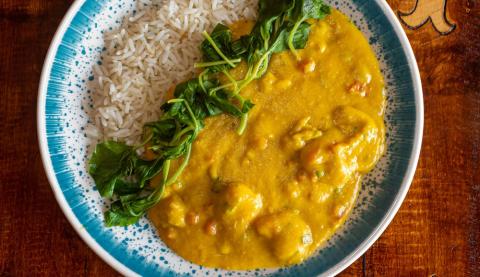
  1. Peel the sweet potatoes and cut them into bite size cubes. Then slice the onion.
  2. Heat oil on hob in a pan, fry the onion until golden. Stir in the curry paste and sweet potato.
  3. Add the pineapple and juice
  4. Rinse the lentils and add to pan with water and the coriander.
  5. Bring to boil and then simmer on a low heat for 20 minutes until the sweet potato is cooked through and the sauce thickens.
  6. Cook the rice as per the instructions on the packet and serve with curry.

Time Saver Tips

This dish can be prepared in advanced and then reheated and rice cooked when required.

Nutritional Information

Based on a single serving of 520g (% of an adult's reference intake)

Energy

608 kcals ( 30 %)

2,553 kJ ( 30 %)

Fat

1.6 g ( 8 %)

Saturates

122.2 g ( %)

Sugar

122.2 g ( 25 %)

Salt

0.5 g ( 8 %)

Detailed nutritional information

Per 100g Per 520g serving
Energy Kcals 117 608
Energy Kj 491 2,553
Protein 2.7 g 14 g
Total Fat g g
Saturated Fat 0.3 g 1.6 g
Carbohydrates 23.5 g 122.2 g
Total Sugars 4.3 g 122.2 g
NSP Fibre 1.1 g 5.7 g
Sodium 31 mg 161 mg
Salt 0.1 g 0.5 g

Find out about nutritional labelling

Nutrition labels on the front of packaging

  • Most of the big supermarkets and many food manufacturers display nutritional information on the front of pre-packed food.
  • Front of pack nutrition labels provide information on the number of grams of fat, saturated fat, sugars and salt and the amount of energy (in kJ and kcal) in a serving or portion of a recipe.
  • The labels also include information about reference intakes (expressed as a percentage) which are guidelines about the approximate amount of particular nutrients and energy required for a healthy diet.
  • The colour coding tells you at a glance if the food has high (red), medium (amber) or low (green) amounts of fat, saturated fat, sugars and salt.
  • The more greens on the label, the healthier the choice
  • Amber means neither high nor low, so you can eat foods with all or mostly ambers on the label most of the time.
  • Reds on the label means the food is high in that nutrient and these are the foods we should cut down on. Try to eat these foods less often and in small amounts.

Food shopping tips

If you’re trying to decide which product to choose, check to see if there's a nutrition label on the front of the pack. This will help you to quickly assess how your choices stack up. You will often find a mixture of red, amber and green colour coding for the nutrients. So when you're choosing between similar products, try to go for more greens and ambers and fewer reds if you want to make a healthier choice.
Back to top

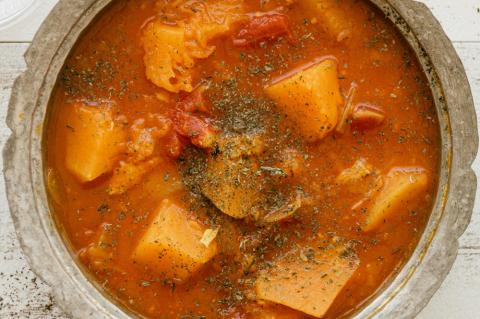
Ingredients

  • 1 Medium (150g) Onion
  • 2 Medium (600g) Sweet Potatoes
  • 1 (3g) Garlic Clove
  • 2 (160g) Carrots
  • 1 (160g) Red Pepper
  • 1 Tablespoons (10g) Vegetable Oil
  • 1 Tins (400g) Chopped Tomatoes
  • 1 Tins (300g) Cannellini Beans
  • 1 Tins (400g) Red Kidney Beans
  • ½ Teaspoons (2g) Chilli Powder
  • 1 Mug (260ml) Boiling Water
  • 1 Reduced Salt Vegetable Stock Cube
  • ½ (200g) French Stick

This recipe has been added to your Meal Planner.

Allergy Disclaimer

Always check the label of each ingredient for allergy warnings.

Method

  1. Peel the potatoes, onions, garlic and carrots. Chop the potatoes and carrots into cubes and slice the onions and peppers. Finely chop or crush the garlic.
  2. Heat the oil in a large pan, add the onion and chilli powder and fry until the onions are soft. Then add the garlic and red pepper and fry for a further 2 minutes.
  3. Add the potatoes, carrots and chopped tomatoes. Dissolve the stock cube in the water and then add the stock to the pan.
  4. Bring to the boil and then simmer for around 30 minutes. Meanwhile drain the kidney and cannellini beans and rinse with cold water.
  5. Add the beans to the pan and cook for a further 5 minutes until the potatoes have softened. A tablespoon of cornflour could be added if the stew needs to be thickened.
  6. Serve the stew with bread.
Time Saver Tips

Save yourself a few minutes – don't peel the carrots.
Cost Saver Tips

You can make extra and freeze the rest for another day.

Tips for Kids

Use their favourite vegetables and get them closer to their 5 a day.

Nutritional Information

Based on a single serving of 525g (% of an adult's reference intake)

Energy

457 kcals ( 23 %)

1,916 kJ ( 23 %)

Fat

1.1 g ( 6 %)

Saturates

89.8 g ( %)

Sugar

23.1 g ( 26 %)

Salt

1.6 g ( 27 %)

Detailed nutritional information

Per 100g Per 525g serving
Energy Kcals 87 457
Energy Kj 365 1,916
Protein 365 g 1,916 g
Total Fat g g
Saturated Fat 0.2 g 1.1 g
Carbohydrates 17.1 g 89.8 g
Total Sugars 4.4 g 23.1 g
NSP Fibre 2.6 g 13.7 g
Sodium 130 mg 683 mg
Salt 0.3 g 1.6 g

Find out about nutritional labelling

Nutrition labels on the front of packaging

  • Most of the big supermarkets and many food manufacturers display nutritional information on the front of pre-packed food.
  • Front of pack nutrition labels provide information on the number of grams of fat, saturated fat, sugars and salt and the amount of energy (in kJ and kcal) in a serving or portion of a recipe.
  • The labels also include information about reference intakes (expressed as a percentage) which are guidelines about the approximate amount of particular nutrients and energy required for a healthy diet.
  • The colour coding tells you at a glance if the food has high (red), medium (amber) or low (green) amounts of fat, saturated fat, sugars and salt.
  • The more greens on the label, the healthier the choice
  • Amber means neither high nor low, so you can eat foods with all or mostly ambers on the label most of the time.
  • Reds on the label means the food is high in that nutrient and these are the foods we should cut down on. Try to eat these foods less often and in small amounts.

Food shopping tips

If you’re trying to decide which product to choose, check to see if there's a nutrition label on the front of the pack. This will help you to quickly assess how your choices stack up. You will often find a mixture of red, amber and green colour coding for the nutrients. So when you're choosing between similar products, try to go for more greens and ambers and fewer reds if you want to make a healthier choice.

Back to top

Ingredients

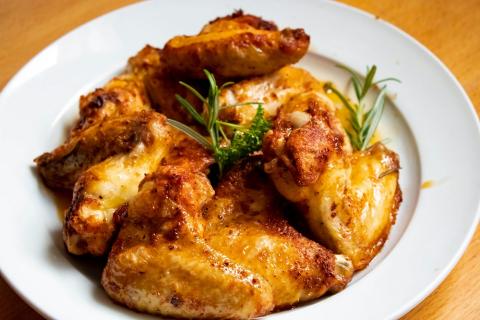
  • 6 (540g) Chicken Drumsticks
  • 6 (450g) Chicken Thighs
  • 8 Teaspoons (24g) Curry Powder
  • 5 Tablespoons (200g) Low Fat Natural Yoghurt
  • 3 medium sized onions (450g) Onions
  • 2 medium sized carrots (160g) Carrots
  • 1 medium sized parsnip (90g) Parsnip
  • 8 medium sized potatoes (480g) Potatoes
  • 1 (160g) Red Pepper

This recipe has been added to your Meal Planner.

Allergy Disclaimer

Always check the label of each ingredient for allergy warnings.

Method


  1. Preheat the oven to 200°C / 180°C fan oven / 425°F / gas mark 7.
  2. Using a sharp knife remove the skin from the chicken drumsticks and thighs then put two slashes into each piece of chicken, cutting through to the bone.
  3. Peel onion and deseed the pepper. Chop all vegetables into chunks. To ensure the vegetables cook at the same time the potatoes and carrots should be smaller chunks compared to the other vegetables. You don't need to peel the potatoes and carrots.
  4. In a large bowl mix the curry powder and yoghurt together. Add the vegetables and chicken to the bowl and coat everything with the yoghurt.
  5. On a baking tray evenly arrange all the vegetables and then place the chicken on top.
  6. Roast in the oven for 15 minutes then mix and turn the chicken pieces over. Continue to roast for a further 10-15 minutes.
  7. Remove from the oven and mix the vegetables and chicken together before serving.


Time Saver Tips

Buy skinless chicken.

Cost Saver Tips

Can be made with any leftover vegetables. Just remember to cut harder vegetables into smaller pieces than softer ones.

Tips for Kids

Make with their favourite vegetables. They will enjoy coating the vegetables and chicken in yoghurt.

Nutritional Information

Based on a single serving of 470g (% of an adult's reference intake)

Energy

461 kcals ( 23 %)

1,936 kJ ( 23 %)

Fat

3.3 g ( 16 %)

Saturates

40.4 g ( %)

Sugar

16.9 g ( 19 %)

Salt

0.5 g ( 8 %)

Detailed nutritional information

Per 100g Per 470g serving
Energy Kcals 98 461
Energy Kj 412 1,936
Protein 10.3 g 48.4 g
Total Fat g g
Saturated Fat 0.7 g 3.3 g
Carbohydrates 8.6 g 40.4 g
Total Sugars 3.8 g 16.9 g
NSP Fibre 1.4 g 6.6 g
Sodium 56 mg 263 mg
Salt 0.1 g 0.5 g

Find out about nutritional labelling

Nutrition labels on the front of packaging

  • Most of the big supermarkets and many food manufacturers display nutritional information on the front of pre-packed food.
  • Front of pack nutrition labels provide information on the number of grams of fat, saturated fat, sugars and salt and the amount of energy (in kJ and kcal) in a serving or portion of a recipe.
  • The labels also include information about reference intakes (expressed as a percentage) which are guidelines about the approximate amount of particular nutrients and energy required for a healthy diet.
  • The colour coding tells you at a glance if the food has high (red), medium (amber) or low (green) amounts of fat, saturated fat, sugars and salt.
  • The more greens on the label, the healthier the choice
  • Amber means neither high nor low, so you can eat foods with all or mostly ambers on the label most of the time.
  • Reds on the label means the food is high in that nutrient and these are the foods we should cut down on. Try to eat these foods less often and in small amounts.

Food shopping tips

If you’re trying to decide which product to choose, check to see if there's a nutrition label on the front of the pack. This will help you to quickly assess how your choices stack up. You will often find a mixture of red, amber and green colour coding for the nutrients. So when you're choosing between similar products, try to go for more greens and ambers and fewer reds if you want to make a healthier choice.

Back to top

Ingredients

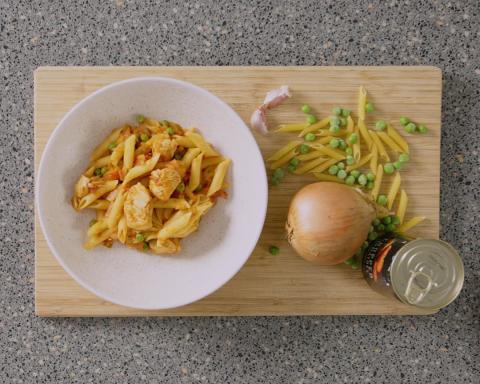
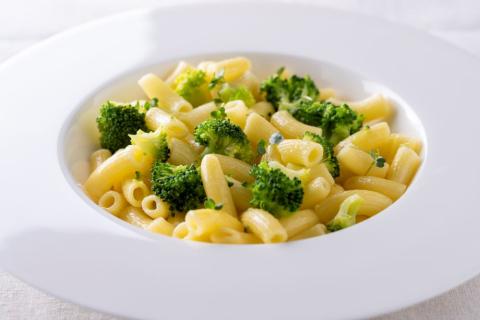
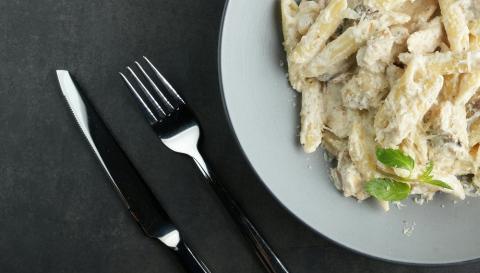
  • (350g) Dried Pasta
  • 11 Tablespoons (330g) Frozen Green Peas
  • 2 Smoked Packs (220g) Trout Fillets
  • 1 Pinch (1g) Ground Black Pepper
  • 6 Tablespoons (240g) 0% Fat Greek Yoghurt
  • 4 Teaspoons (20g) Horseradish Sauce

This recipe has been added to your Meal Planner.

Allergy Disclaimer

Always check the label of each ingredient for allergy warnings.

Method

  1. Cook the pasta in a large pan of boiling water according to the instructions on the packet
  2. Add the peas to the pan of pasta for the last 3 minutes of cooking
  3. While the pasta is cooking, break up the trout into flakes and set aside
  4. Mix the yogurt with the horseradish and black pepper
  5. Drain the pasta and peas and return to the pan
  6. Stir in the trout and yogurt mix and let the heat of the pasta warm the sauce - this takes less than a minute
  7. Enjoy hot!

Time Saver Tips

Buy ready to eat smoked trout flakes

Tips for Kids

Choose their favourite pasta shapes. Get them involved in mixing the sauce ingredients together. Horseradish sauce has quite a strong taste, so start off with a small amount in case they don't like it.

Nutritional Information

Based on a single serving of 397g (% of an adult's reference intake)

Energy

479 kcals ( 24 %)

2,023 kJ ( 24 %)

Fat

1.2 g ( 6 %)

Saturates

71.7 g ( %)

Sugar

10.9 g ( 12 %)

Salt

0.4 g ( 6 %)

Detailed nutritional information

Per 100g Per 397g serving
Energy Kcals 121 479
Energy Kj 515 2,023
Protein 7.9 g 31.2 g
Total Fat g g
Saturated Fat 0.3 g 1.2 g
Carbohydrates 18.1 g 71.7 g
Total Sugars 2.8 g 10.9 g
NSP Fibre 2.2 g 8.7 g
Sodium 63 mg 152 mg
Salt 0.1 g 0.4 g

Find out about nutritional labelling

Nutrition labels on the front of packaging

  • Most of the big supermarkets and many food manufacturers display nutritional information on the front of pre-packed food.
  • Front of pack nutrition labels provide information on the number of grams of fat, saturated fat, sugars and salt and the amount of energy (in kJ and kcal) in a serving or portion of a recipe.
  • The labels also include information about reference intakes (expressed as a percentage) which are guidelines about the approximate amount of particular nutrients and energy required for a healthy diet.
  • The colour coding tells you at a glance if the food has high (red), medium (amber) or low (green) amounts of fat, saturated fat, sugars and salt.
  • The more greens on the label, the healthier the choice
  • Amber means neither high nor low, so you can eat foods with all or mostly ambers on the label most of the time.
  • Reds on the label means the food is high in that nutrient and these are the foods we should cut down on. Try to eat these foods less often and in small amounts.

Food shopping tips

If you’re trying to decide which product to choose, check to see if there's a nutrition label on the front of the pack. This will help you to quickly assess how your choices stack up. You will often find a mixture of red, amber and green colour coding for the nutrients. So when you're choosing between similar products, try to go for more greens and ambers and fewer reds if you want to make a healthier choice.

Back to top

Ingredients

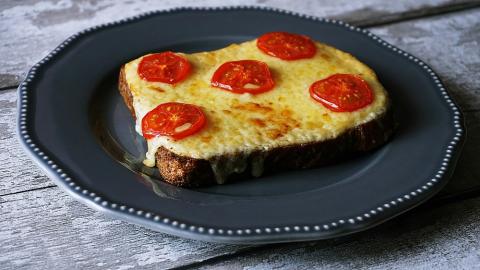
  • 8 Medium Slices Wholemeal Bread
  • ½ Pack (200g) Cheddar Cheese (choose reduced fat whenever possible)
  • 4 (340g) Tomatoes

This recipe has been added to your Meal Planner.

Allergy Disclaimer

Always check the label of each ingredient for allergy warnings.

Method

  1. Toast the bread on one side under a grill.
  2. Chop the tomatoes into thin slices and grate the cheese.
  3. Flip the bread over and sprinkle the cheese onto the untoasted side and top with slices of tomatoes.
  4. Place under the grill until the cheese is bubbling and starting to brown. Be careful not to burn the edges of the toast.

Time Saver Tips

Make this even faster – buy cheese that's already been grated or slice the cheese instead of grating.

Cost Saver Tips

You can try this with a variety of breads and other vegetables, such as finely chopped onions or spring onions.

Tips for Kids

Get the kids involved – let them help with the toppings on the toast. Add a dash of Worcestershire sauce or a sprinkle of herbs or chilli powder for a different taste.

Nutritional Information

Based on a single serving of 197g (% of an adult's reference intake)

Energy

327 kcals ( 16 %)

1,375 kJ ( 16 %)

Fat

7.3 g ( 37 %)

Saturates

33.4 g ( %)

Sugar

4.6 g ( 5 %)

Salt

1.6 g ( 27 %)

Detailed nutritional information

Per 100g Per 197g serving
Energy Kcals 167 327
Energy Kj 702 1,375
Protein 10.9 g 21.3 g
Total Fat g g
Saturated Fat 3.7 g 7.3 g
Carbohydrates 17 g 33.4 g
Total Sugars 2.3 g 4.6 g
NSP Fibre 3 g 5.9 g
Sodium 333 mg 653 mg
Salt 0.8 g 1.6 g

Find out about nutritional labelling

Nutrition labels on the front of packaging

  • Most of the big supermarkets and many food manufacturers display nutritional information on the front of pre-packed food.
  • Front of pack nutrition labels provide information on the number of grams of fat, saturated fat, sugars and salt and the amount of energy (in kJ and kcal) in a serving or portion of a recipe.
  • The labels also include information about reference intakes (expressed as a percentage) which are guidelines about the approximate amount of particular nutrients and energy required for a healthy diet.
  • The colour coding tells you at a glance if the food has high (red), medium (amber) or low (green) amounts of fat, saturated fat, sugars and salt.
  • The more greens on the label, the healthier the choice
  • Amber means neither high nor low, so you can eat foods with all or mostly ambers on the label most of the time.
  • Reds on the label means the food is high in that nutrient and these are the foods we should cut down on. Try to eat these foods less often and in small amounts.

Food shopping tips

If you’re trying to decide which product to choose, check to see if there's a nutrition label on the front of the pack. This will help you to quickly assess how your choices stack up. You will often find a mixture of red, amber and green colour coding for the nutrients. So when you're choosing between similar products, try to go for more greens and ambers and fewer reds if you want to make a healthier choice.

Back to top

Ingredients

  • 4 (288g) Toasting Muffins
  • 4 Medium Sized (400g) Bananas

This recipe has been added to your Meal Planner.

Allergy Disclaimer

Always check the label of each ingredient for allergy warnings.

Method

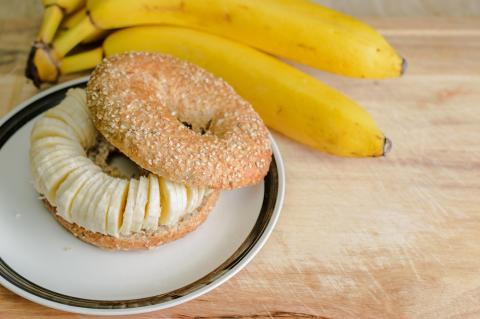
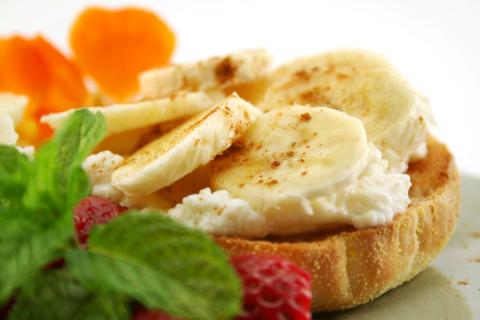
  1. Slice the muffins in half and toast.
  2. Slice or mash the bananas and place on top of each half of muffin then serve.

Tips for Kids

Kids will love mashing bananas.

Nutritional Information

Based on a single serving of 168g (% of an adult's reference intake)

Energy

272 kcals ( 14 %)

1,142 kJ ( 14 %)

Fat

0.4 g ( 2 %)

Saturates

57.9 g ( %)

Sugar

23.5 g ( 26 %)

Salt

0.8 g ( 14 %)

Detailed nutritional information

Per 100g Per 168g serving
Energy Kcals 168 272
Energy Kj 680 1,142
Protein 5.3 g 8.9 g
Total Fat g g
Saturated Fat 0.2 g 0.4 g
Carbohydrates 34.5 g 57.9 g
Total Sugars 14 g 23.5 g
NSP Fibre 1.5 g 2.6 g
Sodium 200 mg 336 mg
Salt 0.5 g 0.8 g

Find out about nutritional labelling

Nutrition labels on the front of packaging

  • Most of the big supermarkets and many food manufacturers display nutritional information on the front of pre-packed food.
  • Front of pack nutrition labels provide information on the number of grams of fat, saturated fat, sugars and salt and the amount of energy (in kJ and kcal) in a serving or portion of a recipe.
  • The labels also include information about reference intakes (expressed as a percentage) which are guidelines about the approximate amount of particular nutrients and energy required for a healthy diet.
  • The colour coding tells you at a glance if the food has high (red), medium (amber) or low (green) amounts of fat, saturated fat, sugars and salt.
  • The more greens on the label, the healthier the choice
  • Amber means neither high nor low, so you can eat foods with all or mostly ambers on the label most of the time.
  • Reds on the label means the food is high in that nutrient and these are the foods we should cut down on. Try to eat these foods less often and in small amounts.

Food shopping tips

If you’re trying to decide which product to choose, check to see if there's a nutrition label on the front of the pack. This will help you to quickly assess how your choices stack up. You will often find a mixture of red, amber and green colour coding for the nutrients. So when you're choosing between similar products, try to go for more greens and ambers and fewer reds if you want to make a healthier choice.

Back to top

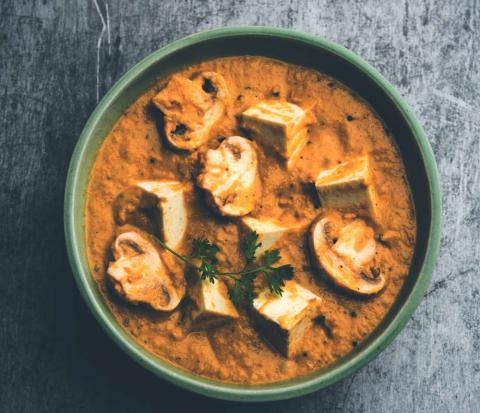
Ingredients

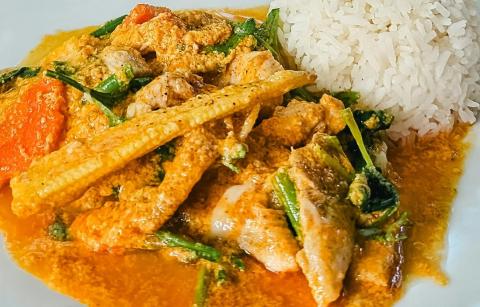
  • 1 (Firm) Pack (400g) Tofu
  • 1 Medium Sized (150g) Onion
  • 2 (6g) Garlic Cloves
  • 2 Tablespoons (20g) Vegetable Oil
  • 1 Teaspoons (3g) Ground Ginger
  • 25 Medium Sized (250g) Mushrooms
  • 1 (5g) Green Chilli
  • 1 Teaspoons (3g) Ground Turmeric
  • 1 Tablespoons (9g) Garam Masala
  • 1 Can (400g) Coconut Milk
  • 1 Reduced Salt (7g) Vegetable Stock Cube
  • 1 (1g) Ground Black Pepper
  • 6 ½ Tablespoons (260g) White Rice

This recipe has been added to your Meal Planner.

Allergy Disclaimer

Always check the label of each ingredient for allergy warnings.

Method

  1. Cut the tofu into 2cm cubes.
  2. Peel and chop the onion and garlic. Rinse or wipe the mushrooms and cut them in half.
  3. Wash the chilli and cut in half along the length of the chilli. Remove the seeds and the white bit that surrounds them and then finely chop the chillies. Wash hands immediately afterwards.
  4. Heat the oil in a large pan and gently fry the onion until soft and golden. Add the garlic and ginger and cook for 1 minute.
  5. Turn up the heat and add the mushrooms. Cook until slightly golden.
  6. Add the chilli, turmeric, garam masala and tofu then add the coconut milk and stir.
  7. Crumble the stock cube into the pan with the black pepper and stir. Simmer for about 20 minutes until curry begins to thicken.
  8. Cook the rice according to the instructions on the packet and serve hot with the curry.

Cost Saver Tips

Use curry powder instead of buying the individual spices.

Tips for Kids

Use less chilli or spices as necessary.

Nutritional Information

Based on a single serving of 399g (% of an adult's reference intake)

Energy

429 kcals ( 21 %)

1,807 kJ ( 21 %)

Fat

1.9 g ( 10 %)

Saturates

60.5 g ( %)

Sugar

7.3 g ( 8 %)

Salt

0.7 g ( 11 %)

Detailed nutritional information

Per 100g Per 399g serving
Energy Kcals 108 429
Energy Kj 453 1,807
Protein 4.3 g 17.1 g
Total Fat g g
Saturated Fat 0.5 g 1.9 g
Carbohydrates 15.2 g 60.5 g
Total Sugars 1.8 g 7.3 g
NSP Fibre 0.4 g 1.8 g
Sodium 67 mg 267 mg
Salt 0.2 g 0.7 g

Find out about nutritional labelling

Nutrition labels on the front of packaging

  • Most of the big supermarkets and many food manufacturers display nutritional information on the front of pre-packed food.
  • Front of pack nutrition labels provide information on the number of grams of fat, saturated fat, sugars and salt and the amount of energy (in kJ and kcal) in a serving or portion of a recipe.
  • The labels also include information about reference intakes (expressed as a percentage) which are guidelines about the approximate amount of particular nutrients and energy required for a healthy diet.
  • The colour coding tells you at a glance if the food has high (red), medium (amber) or low (green) amounts of fat, saturated fat, sugars and salt.
  • The more greens on the label, the healthier the choice
  • Amber means neither high nor low, so you can eat foods with all or mostly ambers on the label most of the time.
  • Reds on the label means the food is high in that nutrient and these are the foods we should cut down on. Try to eat these foods less often and in small amounts.

Food shopping tips

If you’re trying to decide which product to choose, check to see if there's a nutrition label on the front of the pack. This will help you to quickly assess how your choices stack up. You will often find a mixture of red, amber and green colour coding for the nutrients. So when you're choosing between similar products, try to go for more greens and ambers and fewer reds if you want to make a healthier choice.

Back to top

Ingredients

  • 1 (200g) Baguette
  • 8 (680g) Tomatoes
  • 1 (150g) Onion
  • 2 (6g) Garlic Cloves
  • 2 Teaspoons (2g) Basil
  • 2 Tablespoons (20g) Olive Oil
  • 1 For Taste Pinch Ground Black Pepper

This recipe has been added to your Meal Planner.

Allergy Disclaimer

Always check the label of each ingredient for allergy warnings.

Method

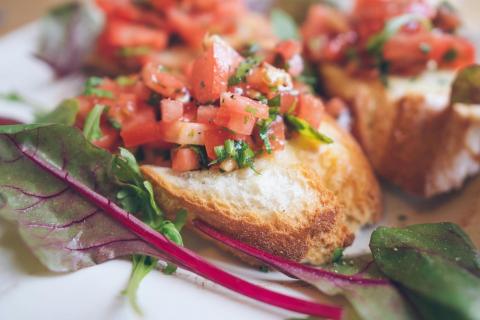
  1. Peel the onion and garlic. Dice the onions and tomatoes and finely chop the garlic.
  2. Mix the onions, tomatoes and garlic with the oil, basil and black pepper in a bowl.
  3. Cover with cling film and place in fridge for about an hour. Remove 1 hour before serving if prefer it at room temperature.
  4. Cut the bread diagonally into 8 slices of about 2 cm thickness and lightly toast both sides.
  5. Serve mixture on warm toast.

Time Saver Tips

You can prepare this in advance and keep it in the fridge until you're ready to serve it up.

Nutritional Information

Based on a single serving of 265g (% of an adult's reference intake)

Energy

223 kcals ( 11 %)

935 kJ ( 11 %)

Fat

1.1 g ( 5 %)

Saturates

37.1 g ( %)

Sugar

8.7 g ( 10 %)

Salt

0.8 g ( 13 %)

Detailed nutritional information

Per 100g Per 265g serving
Energy Kcals 84 223
Energy Kj 353 935
Protein 2.4 g 6.2 g
Total Fat g g
Saturated Fat 0.4 g 1.1 g
Carbohydrates 14 g 37.1 g
Total Sugars 3.3 g 8.7 g
NSP Fibre 1.3 g 3.4 g
Sodium 124 mg 329 mg
Salt 0.3 g 0.8 g

Find out about nutritional labelling

Nutrition labels on the front of packaging

  • Most of the big supermarkets and many food manufacturers display nutritional information on the front of pre-packed food.
  • Front of pack nutrition labels provide information on the number of grams of fat, saturated fat, sugars and salt and the amount of energy (in kJ and kcal) in a serving or portion of a recipe.
  • The labels also include information about reference intakes (expressed as a percentage) which are guidelines about the approximate amount of particular nutrients and energy required for a healthy diet.
  • The colour coding tells you at a glance if the food has high (red), medium (amber) or low (green) amounts of fat, saturated fat, sugars and salt.
  • The more greens on the label, the healthier the choice
  • Amber means neither high nor low, so you can eat foods with all or mostly ambers on the label most of the time.
  • Reds on the label means the food is high in that nutrient and these are the foods we should cut down on. Try to eat these foods less often and in small amounts.

Food shopping tips

If you’re trying to decide which product to choose, check to see if there's a nutrition label on the front of the pack. This will help you to quickly assess how your choices stack up. You will often find a mixture of red, amber and green colour coding for the nutrients. So when you're choosing between similar products, try to go for more greens and ambers and fewer reds if you want to make a healthier choice.

Back to top

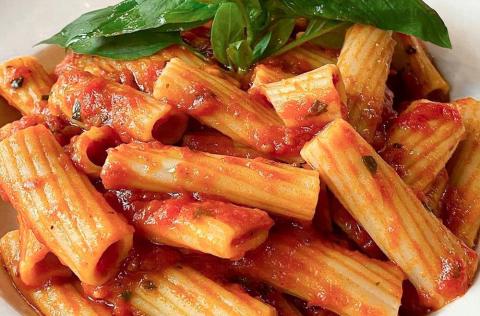
Ingredients

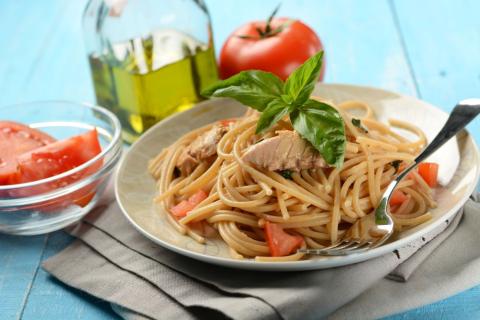
  • 2 Tins (800g) Chopped or Plum Tomatoes
  • 1 Medium Sized (150g) Onion
  • 1 (3g) Garlic Clove or 1 Teaspoon Garlic Puree
  • 1 Teaspoon (1g) Mixed Herbs
  • 2 Cups (300g) Dried Pasta
  • 4 Heaped tablespoons (80g) Reduced Fat Cheese (grated)
  • 1 Tablespoon (10g) Vegetable Oil

This recipe has been added to your Meal Planner.

Allergy Disclaimer

Always check the label of each ingredient for allergy warnings.

Method

  1. In a large saucepan cook the pasta according to instructions on the packet.
  2. Peel and chop the onions and finely chop or crush peeled garlic.
  3. Heat the oil in a medium saucepan and add onion and garlic.
  4. Gently fry over medium heat until soft.
  5. Add the tinned tomatoes and herbs and simmer gently for 6-8 minutes. If using plum tomatoes, chop them up using a spoon when in the pan.
  6. Drain the pasta, add to the sauce and sprinkle the grated cheese on top.

Time Saver Tips

You could make this sauce in advance and reheat it to make life easier. You could also use a ready made tomato or vegetable sauce if you're in a hurry.

Cost Saver Tips

Why not see what veggies you have in your fridge or freezer? This dish is great if you add things like sliced mushrooms, a red pepper or a couple of carrots just before you put in the tinned tomatoes – then just cook it for three minutes. To save cooking time, you could try grating the carrot. Or feel free to add chicken. You can also make the sauce in bulk and either use it within 24 hours or freeze it for later. Remember to only reheat it once though.

Tips for Kids

How about seeing if your wee one likes this with their favourite shaped pasta and vegetables? If they’re not keen on veg, you could try adding extra to the sauce, then blending it until the sauce is smooth – and the veggies are less obvious! If they don't like lumps, you could also try using passata instead of chopped or plum tomatoes for a smoother sauce. To up their fibre intake, try using wholemeal pasta. If they like things spicy, you could pep it up with some chilli powder.

Nutritional Information

Based on a single serving of 382g (% of an adult's reference intake)

Energy

362 kcals ( 18 %)

1,373 kJ ( 18 %)

Fat

3.1 g ( 16 %)

Saturates

61.1 g ( %)

Sugar

11.3 g ( 13 %)

Salt

0.4 g ( 7 %)

Detailed nutritional information

Per 100g Per 382g serving
Energy Kcals 95 362
Energy Kj 359 1,373
Protein 4 g 15.3 g
Total Fat g g
Saturated Fat 0.8 g 3.1 g
Carbohydrates 16 g 61.1 g
Total Sugars 3 g 11.3 g
NSP Fibre 1.5 g 5.5 g
Sodium 42 mg 160 mg
Salt 0.1 g 0.4 g

Find out about nutritional labelling

Nutrition labels on the front of packaging

  • Most of the big supermarkets and many food manufacturers display nutritional information on the front of pre-packed food.
  • Front of pack nutrition labels provide information on the number of grams of fat, saturated fat, sugars and salt and the amount of energy (in kJ and kcal) in a serving or portion of a recipe.
  • The labels also include information about reference intakes (expressed as a percentage) which are guidelines about the approximate amount of particular nutrients and energy required for a healthy diet.
  • The colour coding tells you at a glance if the food has high (red), medium (amber) or low (green) amounts of fat, saturated fat, sugars and salt.
  • The more greens on the label, the healthier the choice
  • Amber means neither high nor low, so you can eat foods with all or mostly ambers on the label most of the time.
  • Reds on the label means the food is high in that nutrient and these are the foods we should cut down on. Try to eat these foods less often and in small amounts.

Food shopping tips

If you’re trying to decide which product to choose, check to see if there's a nutrition label on the front of the pack. This will help you to quickly assess how your choices stack up. You will often find a mixture of red, amber and green colour coding for the nutrients. So when you're choosing between similar products, try to go for more greens and ambers and fewer reds if you want to make a healthier choice.

Back to top

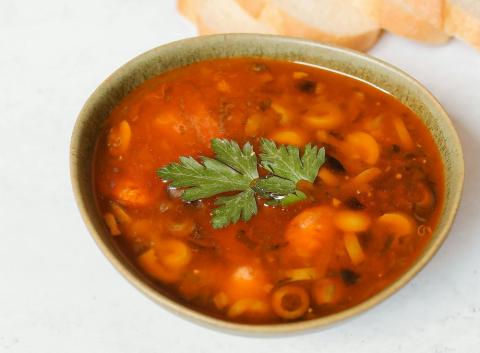
Ingredients

  • 4 Small Sized (240g) Onions
  • 3 (9g) Garlic Cloves
  • 2 Sticks (60g) Celery
  • 3 Tins (400g) Chopped Tomatoes
  • 1 Reduced Salt (7g) Vegetable Stock Cube
  • (500ml) Water

This recipe has been added to your Meal Planner.

Allergy Disclaimer

Always check the label of each ingredient for allergy warnings.

Method

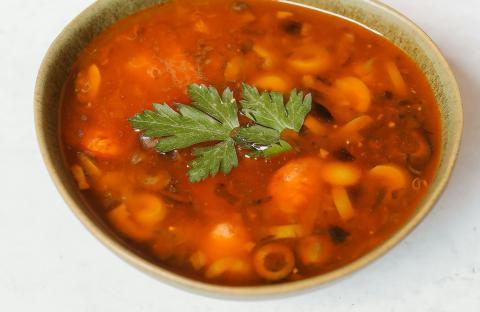
  1. Peel and chop the onions, garlic and celery.
  2. Dissolve the stock cube in boiling water.
  3. Add the vegetables, tomatoes and stock to a saucepan. Stir, and leave to simmer for about 15 minutes.
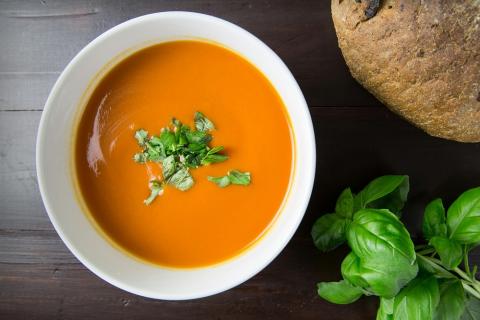
  4. Blend the soup or serve chunky if preferred.

Time Saver Tips

Soup can be prepared in advance and heated when required. Cool before putting in the fridge or freezing.

Cost Saver Tips

Why not make double the amount and freeze some for later?

Tips for Kids

Blend the soup so that the vegetables are hidden.

Nutritional Information

Based on a single serving of 400g (% of an adult's reference intake)

Energy

86 kcals ( 4 %)

361 kJ ( 4 %)

Fat

0.0 g ( 1 %)

Saturates

14 g ( %)

Sugar

11.4 g ( 13 %)

Salt

0.7 g ( 11 %)

Detailed nutritional information

Per 100g Per 400g serving
Energy Kcals 21 86
Energy Kj 90 361
Protein 1 g 4.1 g
Total Fat g g
Saturated Fat 0.0 g 0.0 g
Carbohydrates 3.5 g 14 g
Total Sugars 2.8 g 11.4 g
NSP Fibre 0.8 g 3.2 g
Sodium 68 mg 270 mg
Salt 0.2 g 0.7 g

Find out about nutritional labelling

Nutrition labels on the front of packaging

  • Most of the big supermarkets and many food manufacturers display nutritional information on the front of pre-packed food.
  • Front of pack nutrition labels provide information on the number of grams of fat, saturated fat, sugars and salt and the amount of energy (in kJ and kcal) in a serving or portion of a recipe.
  • The labels also include information about reference intakes (expressed as a percentage) which are guidelines about the approximate amount of particular nutrients and energy required for a healthy diet.
  • The colour coding tells you at a glance if the food has high (red), medium (amber) or low (green) amounts of fat, saturated fat, sugars and salt.
  • The more greens on the label, the healthier the choice
  • Amber means neither high nor low, so you can eat foods with all or mostly ambers on the label most of the time.
  • Reds on the label means the food is high in that nutrient and these are the foods we should cut down on. Try to eat these foods less often and in small amounts.

Food shopping tips

If you’re trying to decide which product to choose, check to see if there's a nutrition label on the front of the pack. This will help you to quickly assess how your choices stack up. You will often find a mixture of red, amber and green colour coding for the nutrients. So when you're choosing between similar products, try to go for more greens and ambers and fewer reds if you want to make a healthier choice.

Back to top
Subscribe to Eat Better Feel Better