This article was created with

eat-better-feel-better-logo-2.png

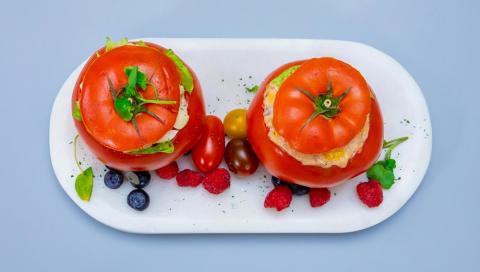
Ingredients

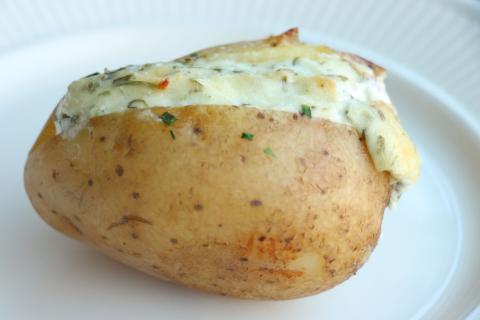
  • 20 (300g) Cherry Tomatoes
  • 4 Tablespoons (120g) Reduced Fat Cream Cheese
  • 4 Teaspoons (4g) Chopped Herbs e.g. Basil or Chives

This recipe has been added to your Meal Planner.

Allergy Disclaimer

Always check the label of each ingredient for allergy warnings.

Method

  1. Wash and dry tomatoes. Cut in half using a sharp knife.
  2. Dividing evenly, top each half of tomato with cream cheese and sprinkle the herbs on top.

Time Saver Tips

Choose a herb flavoured cream cheese.

Cost Saver Tips

Choose a herb flavoured cream cheese.

Tips for Kids

They may prefer without herbs. Let them make their own.

Nutritional Information

Based on a single serving of 106g (% of an adult's reference intake)

Energy

63 kcals ( 3 %)

263 kJ ( 3 %)

Fat

2.3 g ( 12 %)

Saturates

3.8 g ( %)

Sugar

3.7 g ( 4 %)

Salt

0.2 g ( 3 %)

Detailed nutritional information

Per 100g Per 106g serving
Energy Kcals 59 63
Energy Kj 248 263
Protein 3.6 g 3.8 g
Total Fat g g
Saturated Fat 2.2 g 2.3 g
Carbohydrates 3.6 g 3.8 g
Total Sugars 3.5 g 3.7 g
NSP Fibre 0.8 g 0.8 g
Sodium 79 mg 84 mg
Salt 0.2 g 0.2 g

Find out about nutritional labelling

Nutrition labels on the front of packaging

  • Most of the big supermarkets and many food manufacturers display nutritional information on the front of pre-packed food.
  • Front of pack nutrition labels provide information on the number of grams of fat, saturated fat, sugars and salt and the amount of energy (in kJ and kcal) in a serving or portion of a recipe.
  • The labels also include information about reference intakes (expressed as a percentage) which are guidelines about the approximate amount of particular nutrients and energy required for a healthy diet.
  • The colour coding tells you at a glance if the food has high (red), medium (amber) or low (green) amounts of fat, saturated fat, sugars and salt.
  • The more greens on the label, the healthier the choice
  • Amber means neither high nor low, so you can eat foods with all or mostly ambers on the label most of the time.
  • Reds on the label means the food is high in that nutrient and these are the foods we should cut down on. Try to eat these foods less often and in small amounts.

Food shopping tips

If you’re trying to decide which product to choose, check to see if there's a nutrition label on the front of the pack. This will help you to quickly assess how your choices stack up. You will often find a mixture of red, amber and green colour coding for the nutrients. So when you're choosing between similar products, try to go for more greens and ambers and fewer reds if you want to make a healthier choice.
Back to top

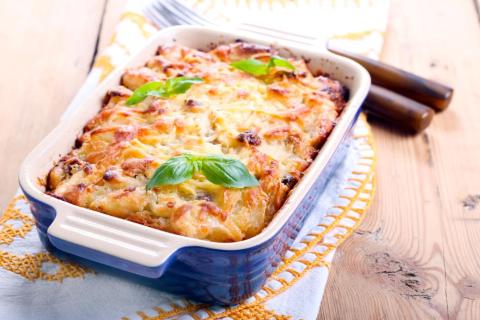
Ingredients

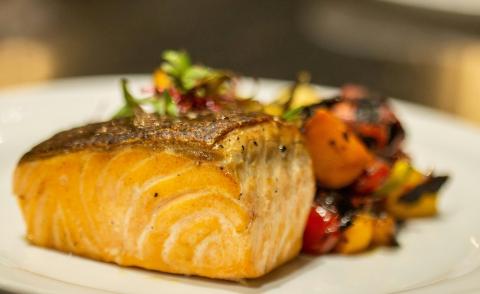
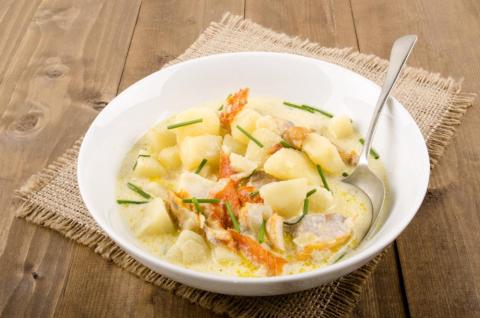
  • 4 (310g) Trout Fillets
  • 1 Cups (140ml) Semi-Skimmed Milk
  • 3 Frozen Cups (320g) Mixed Vegetables
  • 6 Reduced Fat, Grated Tablespoons (150g) Cheddar Cheese
  • ½ Cups (50g) Porridge Oats
  • 20 (800g) New Potatoes
This recipe has been added to your Meal Planner.

Allergy Disclaimer

Always check the label of each ingredient for allergy warnings.

Method

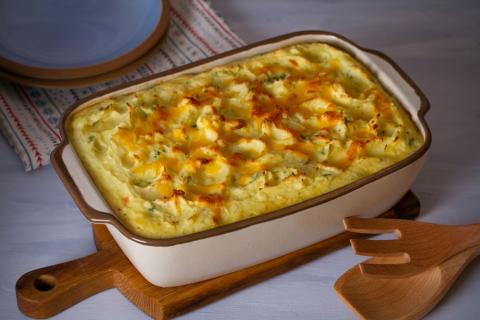
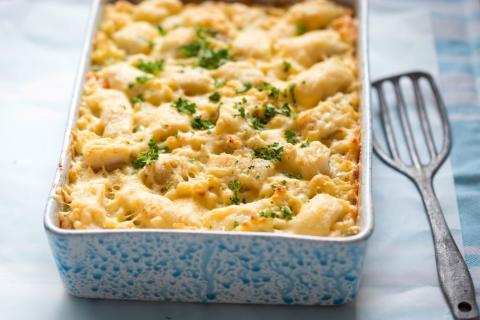
  1. Preheat the oven to 200oC / 180oC fan oven / 400oF / gas mark 6.
  2. Place the trout in a pan with the milk and simmer gently for 5 minutes. Boil the mixed vegetables for 2-3 minutes in a separate pan.
  3. Drain the mixed vegetables and place in an oven proof dish. If the trout still has skin on it,  remove it and then flake the fish into chunks.
  4. Add the fish to the vegetables with a small amount of  milk (1-2 tablespoons). Stir the mixture then top with the oats and grated cheese.
  5. Bake in the oven for 20 minutes until golden brown on top.
  6. While the bake is cooking, wash the potatoes and cut into smaller pieces if required then boil for 15 minutes. Serve bake and new potatoes together.
Time Saver Tips

Did you know that filleted and skinless fish is quicker to prepare? Then you can save even more time by preparing the bake in advance and heating it when you want to eat it. Remember, additional cooking time will be needed if you're cooking it from chilled.

Cost Saver Tips

Whole trout is usually cheaper – you can ask the fishmonger to fillet it for you.

Tips for Kids

Take them on a trip to your fishmonger. Let them help with assembling bake.

Nutritional Information

Based on a single serving of 430g (% of an adult's reference intake)

Energy

434 kcals ( 22 %)

1,823 kJ ( 22 %)

Fat

5.2 g ( 26 %)

Saturates

50.7 g ( %)

Sugar

6.5 g ( 7 %)

Salt

0.9 g ( 8 %)

Detailed nutritional information

Per 100g Per 430g serving
Energy Kcals 101 434
Energy Kj 424 1,823
Protein 7.6 g 32.7 g
Total Fat g g
Saturated Fat 1.2 g 5.2 g
Carbohydrates 11.8 g 50.7 g
Total Sugars 1.5 g 6.5 g
NSP Fibre 1.6 g 6.9 g
Sodium 78 mg 335 mg
Salt 0.2 g 0.9 g

Find out about nutritional labelling

Nutrition labels on the front of packaging

  • Most of the big supermarkets and many food manufacturers display nutritional information on the front of pre-packed food.
  • Front of pack nutrition labels provide information on the number of grams of fat, saturated fat, sugars and salt and the amount of energy (in kJ and kcal) in a serving or portion of a recipe.
  • The labels also include information about reference intakes (expressed as a percentage) which are guidelines about the approximate amount of particular nutrients and energy required for a healthy diet.
  • The colour coding tells you at a glance if the food has high (red), medium (amber) or low (green) amounts of fat, saturated fat, sugars and salt.
  • The more greens on the label, the healthier the choice
  • Amber means neither high nor low, so you can eat foods with all or mostly ambers on the label most of the time.
  • Reds on the label means the food is high in that nutrient and these are the foods we should cut down on. Try to eat these foods less often and in small amounts.

Food shopping tips

If you’re trying to decide which product to choose, check to see if there's a nutrition label on the front of the pack. This will help you to quickly assess how your choices stack up. You will often find a mixture of red, amber and green colour coding for the nutrients. So when you're choosing between similar products, try to go for more greens and ambers and fewer reds if you want to make a healthier choice.

Back to top

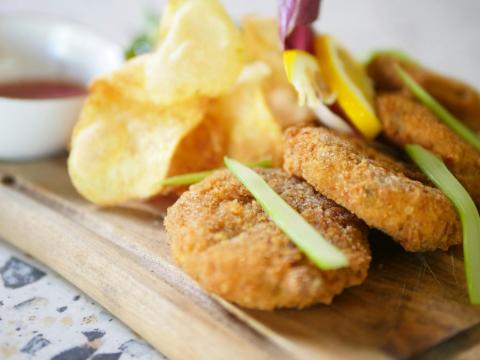
Ingredients

  • 2 Tins (185g) Tuna In Brine
  • 6 Medium Sized (720g) Potatoes
  • 1 Frozen Cups (160g) Peas
  • 2 Eggs
  • 3 Cups (160g) Breadcrumbs
  • 8 Leaves (40g) Lettuce
  • 4 (340g) Tomatoes
  • ½ (180g) Cucumber
  • 1 (160g) Red Pepper

This recipe has been added to your Meal Planner.

Allergy Disclaimer

Always check the label of each ingredient for allergy warnings.

Method

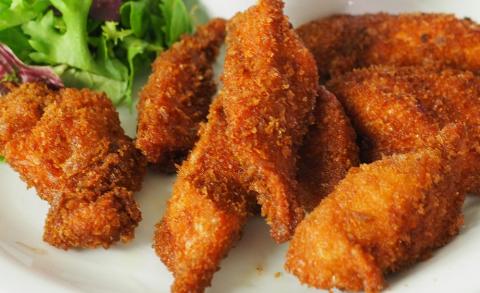
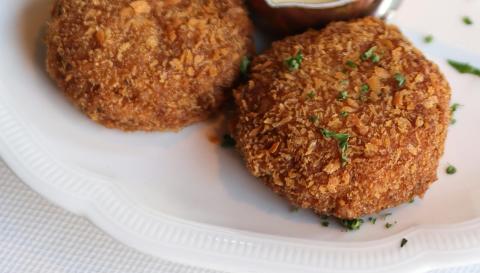
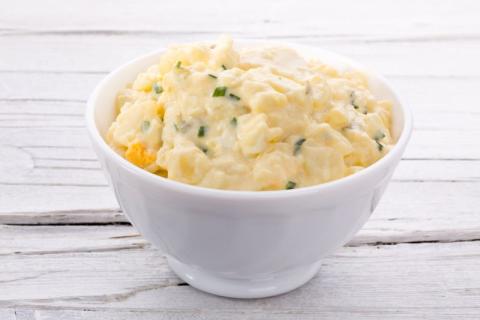
  1. Peel the potatoes and cut them into cubes. Boil them until they're soft then mash them. Allow to cool.
  2. Drain the tuna and, with the peas, add to the mash. Beat the eggs in a bowl and gradually add to the mash mixture to bind it together. Leave some egg in the bowl to coat the fish cakes.
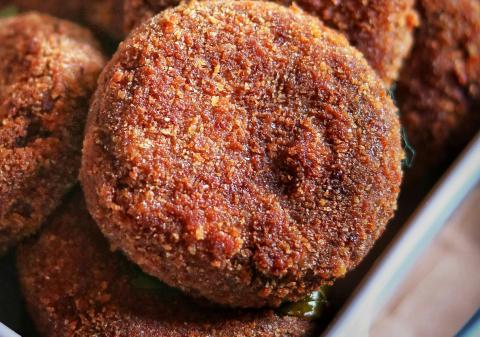
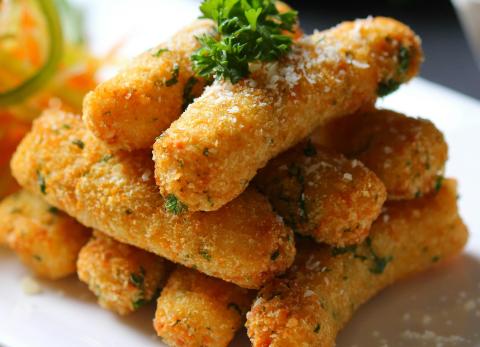
  3. Divide the mixture into 8 and shape into a ball then flatten.
  4. Place breadcrumbs on a plate.
  5. Coat each fish cake in the remaining egg and roll in the breadcrumbs.
  6. Grill on each side for 5 minutes until golden brown and hot throughout.
  7. Wash and prepare salad and serve with fishcakes.

Time Saver Tips

It'll be quicker to buy ready made breadcrumbs than make them yourself. You can also save time by preparing the fish cakes in advance. They can be stored in the fridge for a day before cooking or you can always freeze them.

Cost Saver Tips

You can make a large batch of these and freeze them for a day when you're short on time – just pop them in the oven.

Tips for Kids

Why not involve the kids in shaping and coating the fish cakes? They love getting their hands messy!

Nutritional Information

Based on a single serving of 495g (% of an adult's reference intake)

Energy

430 kcals ( 22 %)

1,806 kJ ( 22 %)

Fat

1 g ( 5 %)

Saturates

71.8 g ( %)

Sugar

9.4 g ( 10 %)

Salt

1.5 g ( 25 %)

Detailed nutritional information

Per 100g Per 495g serving
Energy Kcals 87 430
Energy Kj 365 1,806
Protein 5.7 g 28.2 g
Total Fat g g
Saturated Fat 0.2 g 1 g
Carbohydrates 14.5 g 71.8 g
Total Sugars 1.9 g 9.4 g
NSP Fibre 1.4 g 6.9 g
Sodium 115 mg 569 mg
Salt 0.3 g 1.5 g

Find out about nutritional labelling

Nutrition labels on the front of packaging

  • Most of the big supermarkets and many food manufacturers display nutritional information on the front of pre-packed food.
  • Front of pack nutrition labels provide information on the number of grams of fat, saturated fat, sugars and salt and the amount of energy (in kJ and kcal) in a serving or portion of a recipe.
  • The labels also include information about reference intakes (expressed as a percentage) which are guidelines about the approximate amount of particular nutrients and energy required for a healthy diet.
  • The colour coding tells you at a glance if the food has high (red), medium (amber) or low (green) amounts of fat, saturated fat, sugars and salt.
  • The more greens on the label, the healthier the choice
  • Amber means neither high nor low, so you can eat foods with all or mostly ambers on the label most of the time.
  • Reds on the label means the food is high in that nutrient and these are the foods we should cut down on. Try to eat these foods less often and in small amounts.

Food shopping tips

If you’re trying to decide which product to choose, check to see if there's a nutrition label on the front of the pack. This will help you to quickly assess how your choices stack up. You will often find a mixture of red, amber and green colour coding for the nutrients. So when you're choosing between similar products, try to go for more greens and ambers and fewer reds if you want to make a healthier choice.

Back to top

Ingredients

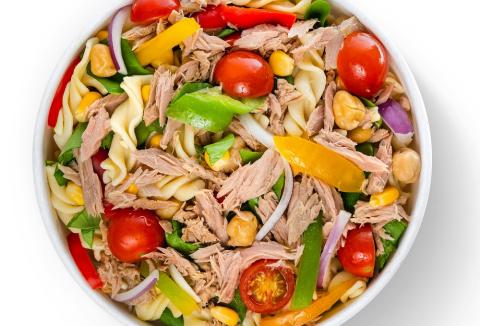
  • 4 Cups (300g) Dried Pasta
  • 2 Tins (320g) Tuna In Brine
  • 1 Small Tin (200g) Sweetcorn
  • 1 (160g) Red Pepper
  • ½ (180g) Cucumber
  • 4 (40g) Spring Onions
  • 6 Tablespoons (90g) Mayonnaise (choose light mayo whenever possible)
  • 1 Pinch Black Pepper to taste

This recipe has been added to your Meal Planner.

Allergy Disclaimer

Always check the label of each ingredient for allergy warnings.

Method

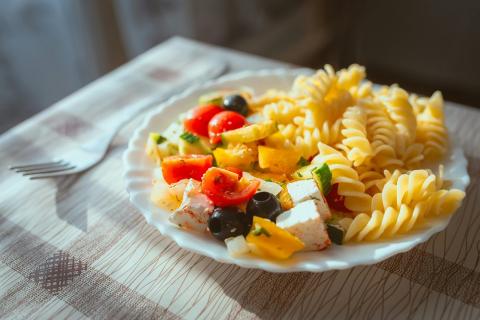
  1. Cook the pasta as per the instructions on the packet then rinse with cold water.
  2. Drain the tuna and sweetcorn.
  3. Chop pepper, cucumber and spring onions into small pieces.
  4. Mix the vegetables, tuna and pasta together with mayonnaise.
  5. Add black pepper to taste then serve.

Time Saver Tips

Why not cook some extra and keep it handy in the fridge?

Tips for Kids

Little ones will love to help, using a table knife to chop softer vegetables then mixing them all up together. Try using their favourite pasta shapes to make mealtimes extra fun. You could even see what it tastes like to swap in some different vegetables or wholemeal pasta. Remember wholemeal pasta takes 2-4 minutes longer to cook.

Nutritional Information

Based on a single serving of 340g (% of an adult's reference intake)

Energy

427 kcals ( 21 %)

1,803 kJ ( 21 %)

Fat

0.9 g ( 5 %)

Saturates

69 g ( %)

Sugar

8.1 g ( 9 %)

Salt

0.3 g ( 5 %)

Detailed nutritional information

Per 100g Per 340g serving
Energy Kcals 125 427
Energy Kj 527 1,803
Protein 6.3 g 21.6 g
Total Fat g g
Saturated Fat 0.3 g 0.9 g
Carbohydrates 20.2 g 69 g
Total Sugars 2.4 g 8.1 g
NSP Fibre 1.8 g 6.2 g
Sodium 39 mg 132 mg
Salt 0.1 g 0.3 g

Find out about nutritional labelling

Nutrition labels on the front of packaging

  • Most of the big supermarkets and many food manufacturers display nutritional information on the front of pre-packed food.
  • Front of pack nutrition labels provide information on the number of grams of fat, saturated fat, sugars and salt and the amount of energy (in kJ and kcal) in a serving or portion of a recipe.
  • The labels also include information about reference intakes (expressed as a percentage) which are guidelines about the approximate amount of particular nutrients and energy required for a healthy diet.
  • The colour coding tells you at a glance if the food has high (red), medium (amber) or low (green) amounts of fat, saturated fat, sugars and salt.
  • The more greens on the label, the healthier the choice
  • Amber means neither high nor low, so you can eat foods with all or mostly ambers on the label most of the time.
  • Reds on the label means the food is high in that nutrient and these are the foods we should cut down on. Try to eat these foods less often and in small amounts.

Food shopping tips

If you’re trying to decide which product to choose, check to see if there's a nutrition label on the front of the pack. This will help you to quickly assess how your choices stack up. You will often find a mixture of red, amber and green colour coding for the nutrients. So when you're choosing between similar products, try to go for more greens and ambers and fewer reds if you want to make a healthier choice.

Back to top

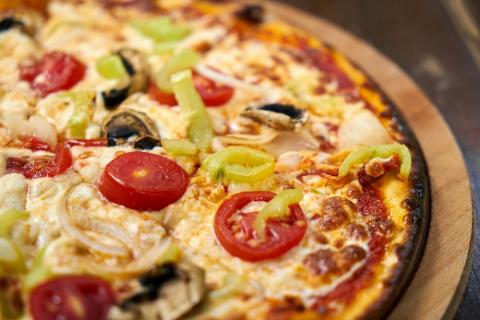
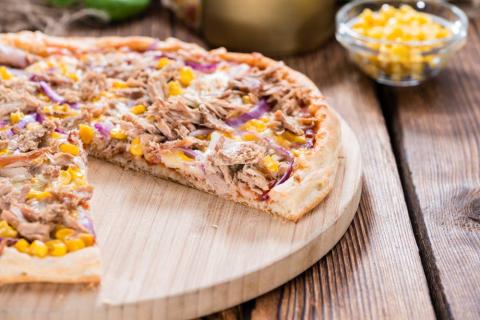
Ingredients

  • 2 Wholemeal (600g) Plain Ready Made Pizza Base (choose wholemeal whenever possible)
  • 1 Tin (400g) Chopped or Plum Tomatoes
  • 1 Tablespoon (15g) Tomato Puree
  • 1 Teaspoon (1g) Dried Mixed Herbs
  • 2 Tins (320g) Tuna In Brine
  • 4 Tablespoons (120g) Tinned Sweetcorn
  • 2 Small (120g) Red Onions
  • 2 Tablespoons (20g) Grated Mature Cheddar Cheese (choose reduced fat whenever possible)

This recipe has been added to your Meal Planner.

Allergy Disclaimer

Always check the label of each ingredient for allergy warnings.

Method

  1. Heat the oven to 190°C / 375°F / 170°C fan oven / gasmark 5 - follow the temperature instructions on the back of the pizza base box.
  2. Drain the chopped tomatoes of some juice and add to the pan with the tomato puree and dried mixed herbs. If using plum tomatoes, chop them up using a spoon when in the pan. Simmer over a low heat until slightly thickened.
  3. While the sauce is simmering, drain the tuna and break the fish up with a fork. Peel and chop the red onions and grate the cheese.
  4. Spread the tomato sauce onto the plain pizza bases and dress the pizzas with the tuna, sweetcorn and red onion.
  5. Finish with a thin layer of grated mature cheddar cheese.
  6. Bake in the oven for 15-20 minutes and enjoy hot.

Time Saver Tips

You could buy a pre-made cheese and tomato pizza and add your own toppings. Quicker still, why not buy cheese that's already been grated?

Cost Saver Tips

Use mature cheddar cheese so you dont need to use much to get full flavour. Alternatively, you could use reduced fat cheddar cheese. Other suggested toppings include mushrooms, peppers, pineapple or prawns.

Tips for Kids

Choose their favourite toppings and get them to decorate the pizzas before they go in the oven. Serve with a side salad for extra greens.

Nutritional Information

Based on a single serving of 302g (% of an adult's reference intake)

Energy

555 kcals ( 28 %)

2,268 kJ ( 28 %)

Fat

1.3 g ( 7 %)

Saturates

96.4 g ( %)

Sugar

13 g ( 14 %)

Salt

1.9 g ( 32 %)

Detailed nutritional information

Per 100g Per 302g serving
Energy Kcals 184 555
Energy Kj 751 2,268
Protein 8.6 g 26 g
Total Fat g g
Saturated Fat 0.4 g 1.3 g
Carbohydrates 31.9 g 96.4 g
Total Sugars 4.3 g 13 g
NSP Fibre 1.8 g 5.3 g
Sodium 254 mg 768 mg
Salt 0.6 g 1.9 g

Find out about nutritional labelling

Nutrition labels on the front of packaging

  • Most of the big supermarkets and many food manufacturers display nutritional information on the front of pre-packed food.
  • Front of pack nutrition labels provide information on the number of grams of fat, saturated fat, sugars and salt and the amount of energy (in kJ and kcal) in a serving or portion of a recipe.
  • The labels also include information about reference intakes (expressed as a percentage) which are guidelines about the approximate amount of particular nutrients and energy required for a healthy diet.
  • The colour coding tells you at a glance if the food has high (red), medium (amber) or low (green) amounts of fat, saturated fat, sugars and salt.
  • The more greens on the label, the healthier the choice
  • Amber means neither high nor low, so you can eat foods with all or mostly ambers on the label most of the time.
  • Reds on the label means the food is high in that nutrient and these are the foods we should cut down on. Try to eat these foods less often and in small amounts.

Food shopping tips

If you’re trying to decide which product to choose, check to see if there's a nutrition label on the front of the pack. This will help you to quickly assess how your choices stack up. You will often find a mixture of red, amber and green colour coding for the nutrients. So when you're choosing between similar products, try to go for more greens and ambers and fewer reds if you want to make a healthier choice.

Back to top

Ingredients

  • 1 Tablespoon (10g) Vegetable Oil
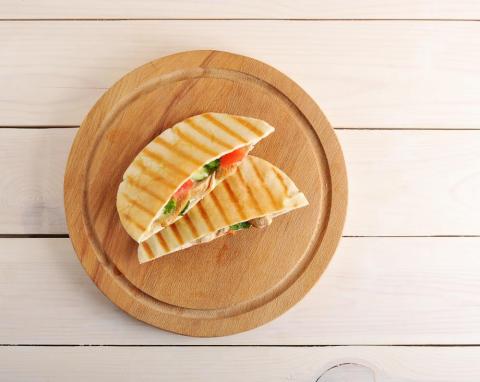
  • (Small Pack) (200g) Turkey Breasts
  • (Optional) (1g) Chilli Flakes
  • 1 (160g) Red Pepper
  • 1 (160g) Yellow Pepper
  • 1 (Medium) (145g) Avocado
  • (Handful) (10g) Fresh Coriander
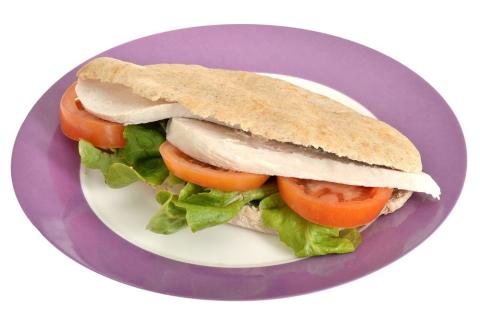
  • 2 (150g) Wholemeal Pitta Breads
  • 3 Heaped tablespoons (90g) Half Fat Crème Fraîche

This recipe has been added to your Meal Planner.

Allergy Disclaimer

Always check the label of each ingredient for allergy warnings.

Method

  1. Cut the turkey into strips, approximately 1cm thick.
  2. Heat the oil in a wok or large frying pan and fry the turkey (and chilli flakes if using) for 5-6 minutes. Stir the turkey every now and then as it is cooking to ensure it browns evenly.
  3. Wash the peppers, cut them in half and remove the seeds by placing skin side up and tapping gently. Cut into 1 cm strips.
  4. If using spring onions; trim the tops and tails then remove the outer layer then slice.
  5. Add the peppers and spring onions to the pan and fry until the turkey is cooked through but the peppers still have crunch.
  6. Place the tip of a sharp knife into the avocado until it touches the stone, then gradually cut it in half keeping the knife against the stone. It should then pull apart and the stone can be removed. Using a dessert or table spoon remove the flesh by easing the spoon between the flesh and the skin. Once the flesh has been removed cut into slices.
  7. Cut the pitta bread in half and then open each half to allow them to be filled. Wash the coriander and finely chop.
  8. Divide the avocado and coriander between the pitta halves then spoon in the turkey mix. Top with creme fraiche.

Time Saver Tips

Miss out the cooking by using cooked turkey.

Cost Saver Tips

Leftover turkey could be used.

Tips for Kids

Let them put their own pitta together.

Nutritional Information

Based on a single serving of 216g (% of an adult's reference intake)

Energy

261 kcals ( 13 %)

1,097 kJ ( 13 %)

Fat

4.3 g ( 22 %)

Saturates

22 g ( %)

Sugar

5.4 g ( 6 %)

Salt

0.2 g ( 3 %)

Detailed nutritional information

Per 100g Per 216g serving
Energy Kcals 121 261
Energy Kj 508 1,097
Protein 9 g 19.4 g
Total Fat g g
Saturated Fat 2 g 4.3 g
Carbohydrates 10.2 g 22 g
Total Sugars 2.5 g 5.4 g
NSP Fibre 2 g 4.3 g
Sodium 53 mg 114 mg
Salt 0.1 g 0.2 g

Find out about nutritional labelling

Nutrition labels on the front of packaging

  • Most of the big supermarkets and many food manufacturers display nutritional information on the front of pre-packed food.
  • Front of pack nutrition labels provide information on the number of grams of fat, saturated fat, sugars and salt and the amount of energy (in kJ and kcal) in a serving or portion of a recipe.
  • The labels also include information about reference intakes (expressed as a percentage) which are guidelines about the approximate amount of particular nutrients and energy required for a healthy diet.
  • The colour coding tells you at a glance if the food has high (red), medium (amber) or low (green) amounts of fat, saturated fat, sugars and salt.
  • The more greens on the label, the healthier the choice
  • Amber means neither high nor low, so you can eat foods with all or mostly ambers on the label most of the time.
  • Reds on the label means the food is high in that nutrient and these are the foods we should cut down on. Try to eat these foods less often and in small amounts.

Food shopping tips

If you’re trying to decide which product to choose, check to see if there's a nutrition label on the front of the pack. This will help you to quickly assess how your choices stack up. You will often find a mixture of red, amber and green colour coding for the nutrients. So when you're choosing between similar products, try to go for more greens and ambers and fewer reds if you want to make a healthier choice.

Back to top

Ingredients

  • 4 (400g) Turkey Breast Steaks
  • 2 Tablespoons (20ml) Vegetable Oil
  • 1 For Taste Pinch Ground Black Pepper
  • 4 Large (1kg) Potatoes
  • 2 (280g) Carrots
  • ½ (500g) Swede
  • 8 Spears (360g) Broccoli
  • ½ Cups (300ml) Semi-Skimmed Milk
  • 1 Teaspoons (5g) Low Fat Spread
  • 2 Reduced Salt Tablespoons (30g) Gravy Granules
  • 2 Cups (300ml) Water

This recipe has been added to your Meal Planner.

Allergy Disclaimer

Always check the label of each ingredient for allergy warnings.

Method

  1. Peel and dice the potato and swede. Peel and slice the carrots. Wash and divide the broccoli spears.
  2. In a large pan boil the potatoes until soft, approximately 20 minutes.
  3. In another pan boil the swede until soft, appromately 15 minutes.
  4. After 5 minutes add the broccoli and carrots to the swede until softened, approximately 5-10 minutes.
  5. Heat grill on a high heat, drizzle the oil and sprinkle the black pepper over both sides of the turkey steaks. Cook under the grill for approximately 8-10 minutes turning occasionally.
  6. Once the potato is soft, drain and then mash it using a fork or masher, adding milk and spread. Once the vegetables are soft, drain the water and keep to make the gravy. Remove the broccoli and carrots from the pan and then mash the swede with a fork or masher.
  7. Dissolve the gravy granules in water, mixing well.
  8. Serve the turkey, mashed potato and vegetables with gravy.

Time Saver Tips

You don't need to peel the carrots for this recipe – 5 more minutes to yourself!

Cost Saver Tips

This recipe is especially tasty with veg that's in season, which is often cheaper. It's worth looking out for what's on offer too.

Tips for Kids

Ensure they scrape the plate – use their favourite vegetables.

Nutritional Information

Based on a single serving of 635g (% of an adult's reference intake)

Energy

457 kcals ( 23 %)

1,918 kJ ( 23 %)

Fat

3.2 g ( 16 %)

Saturates

54.6 g ( %)

Sugar

15.9 g ( 18 %)

Salt

1.3 g ( 22 %)

Detailed nutritional information

Per 100g Per 635g serving
Energy Kcals 72 457
Energy Kj 302 1,918
Protein 5.9 g 37.5 g
Total Fat g g
Saturated Fat 0.5 g 3.2 g
Carbohydrates 8.6 g 54.6 g
Total Sugars 2.5 g 15.9 g
NSP Fibre 1.3 g 8.3 g
Sodium 75 mg 476 mg
Salt 0.2 g 1.3 g

Find out about nutritional labelling

Nutrition labels on the front of packaging

  • Most of the big supermarkets and many food manufacturers display nutritional information on the front of pre-packed food.
  • Front of pack nutrition labels provide information on the number of grams of fat, saturated fat, sugars and salt and the amount of energy (in kJ and kcal) in a serving or portion of a recipe.
  • The labels also include information about reference intakes (expressed as a percentage) which are guidelines about the approximate amount of particular nutrients and energy required for a healthy diet.
  • The colour coding tells you at a glance if the food has high (red), medium (amber) or low (green) amounts of fat, saturated fat, sugars and salt.
  • The more greens on the label, the healthier the choice
  • Amber means neither high nor low, so you can eat foods with all or mostly ambers on the label most of the time.
  • Reds on the label means the food is high in that nutrient and these are the foods we should cut down on. Try to eat these foods less often and in small amounts.

Food shopping tips

If you’re trying to decide which product to choose, check to see if there's a nutrition label on the front of the pack. This will help you to quickly assess how your choices stack up. You will often find a mixture of red, amber and green colour coding for the nutrients. So when you're choosing between similar products, try to go for more greens and ambers and fewer reds if you want to make a healthier choice.

Back to top

Ingredients

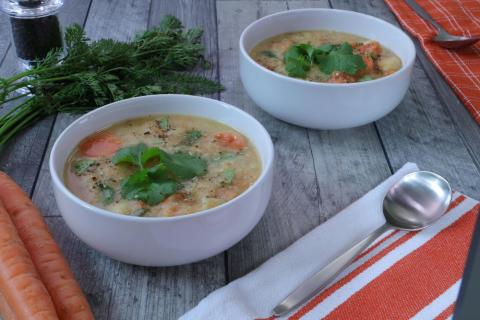
  • 1 Tablespoon (10g) Vegetable Oil
  • 1 Medium Sized (150g) Onion
  • 3 Medium Sized (240g) Carrots
  • 3 Medium Sized (240g) Parsnips
  • 2 (6g) Garlic Cloves
  • 1 (7g) Chicken Or Vegetable Reduced Salt Stock Cube
  • 1 For The Stock Cube Pint (500ml) Water
  • 1 Tin (400g) Chopped Tomatoes
  • ¼ Pint (150ml) Water
  • 1 Tin (400g) Chickpeas In Unsalted Water
  • 15 Thin Slices (300g) Leftover Cooked Turkey
  • 2 Teaspoons (2g) Dried Coriander
  • ¾ Pack (400g) Couscous

This recipe has been added to your Meal Planner.

Allergy Disclaimer

Always check the label of each ingredient for allergy warnings.

Method

  1. Peel and slice onion, carrots, parsnips and garlic.
  2. Heat oil in a large saucepan then add onion, carrots and parsnips for 5 minutes and then garlic for a further 1 minute.
  3. Dissolve stock cube in boiling water and add to pan with the tomatoes and chickpeas (drained).
  4. Bring to the boil and then simmer for 25-30 minutes.
  5. If the pieces of turkey are large you may want to cut. Add turkey to the pan with coriander. Heat for a further 5 minutes adding extra water if becoming too thick.
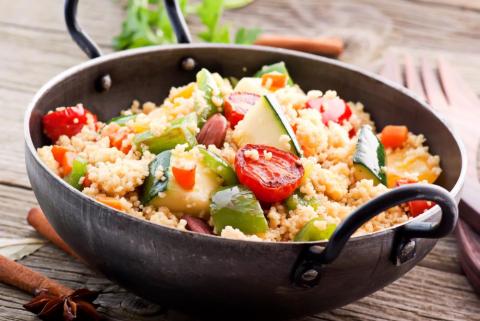
  6. Meanwhile cook the cous cous as per manufacturers' instructions and serve with the tagine.

Time Saver Tips

Make in advance, then reheat and add the turkey when required.

Cost Saver Tips

You could try this with other leftover meats or even just on its own.

Tips for Kids

Let them help to prepare the vegetables.

Nutritional Information

Based on a single serving of 686g (% of an adult's reference intake)

Energy

652 kcals ( 33 %)

2,737 kJ ( 33 %)

Fat

2.1 g ( 11 %)

Saturates

104.3 g ( %)

Sugar

13.7 g ( 15 %)

Salt

0.7 g ( 11 %)

Detailed nutritional information

Per 100g Per 686g serving
Energy Kcals 95 652
Energy Kj 399 2,737
Protein 6.8 g 46.6 g
Total Fat g g
Saturated Fat 0.3 g 2.1 g
Carbohydrates 15.2 g 104.3 g
Total Sugars 2 g 13.7 g
NSP Fibre 1.5 g 10.3 g
Sodium 53 mg 364 mg
Salt 0.1 g 0.7 g

Find out about nutritional labelling

Nutrition labels on the front of packaging

  • Most of the big supermarkets and many food manufacturers display nutritional information on the front of pre-packed food.
  • Front of pack nutrition labels provide information on the number of grams of fat, saturated fat, sugars and salt and the amount of energy (in kJ and kcal) in a serving or portion of a recipe.
  • The labels also include information about reference intakes (expressed as a percentage) which are guidelines about the approximate amount of particular nutrients and energy required for a healthy diet.
  • The colour coding tells you at a glance if the food has high (red), medium (amber) or low (green) amounts of fat, saturated fat, sugars and salt.
  • The more greens on the label, the healthier the choice
  • Amber means neither high nor low, so you can eat foods with all or mostly ambers on the label most of the time.
  • Reds on the label means the food is high in that nutrient and these are the foods we should cut down on. Try to eat these foods less often and in small amounts.

Food shopping tips

If you’re trying to decide which product to choose, check to see if there's a nutrition label on the front of the pack. This will help you to quickly assess how your choices stack up. You will often find a mixture of red, amber and green colour coding for the nutrients. So when you're choosing between similar products, try to go for more greens and ambers and fewer reds if you want to make a healthier choice.

Back to top

Ingredients

  • 1 ½ Cups (150g) Dried Pasta
  • 1 Tablespoon (10g) Vegetable Oil
  • 2 Small Sized (120g) Onions
  • 2 Medium Sized (200g) Courgettes
  • 2 Medium Sized (160g) Carrots
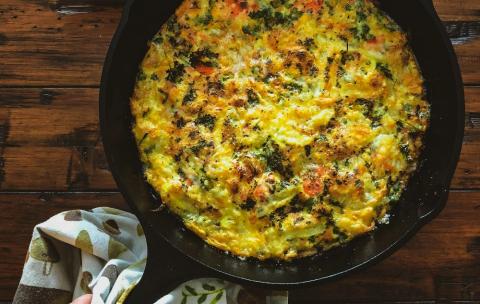
  • 4 (200g) Eggs
  • 8 Tablespoons (80g) Reduced Fat Cheddar Cheese
  • 2 Teaspoons (2g) Dried Mixed Herbs
  • To Taste Ground Black Pepper

This recipe has been added to your Meal Planner.

Allergy Disclaimer

Always check the label of each ingredient for allergy warnings.

Method


  1. Cook the pasta shapes as per manufacturers' instructions then drain and rinse with cold water.
  2. Peel and chop onions, peel and grate courgettes and carrots. Grate the cheese.
  3. Heat oil in a large frying pan and then cook onions for 3-4 minutes. Remove from the heat and add courgettes, carrots and pasta. Mix well.
  4. Crack the eggs and beat together in a bowl and then add the cheese. Stir in herbs and add pepper to taste.
  5. Add eggs to the frying pan with vegetables and pasta then cook on a low heat for 4-5 minutes without stirring to allow base to set. Meanwhile, heat the grill on a medium to high heat.
  6. Put the frying pan under the grill and cook for 4-5 minutes until set and golden brown.
  7. Cut into wedges and serve or alternatively allow to cool completely and then wrap wedges in clingfilm and keep in fridge until needed. 

Time Saver Tips

Wedges can be made the day before and used in a packed lunch.

Cost Saver Tips

A great way to use any left over pasta.

Tips for Kids

They will enjoy cracking and beating the eggs.

Nutritional Information

Based on a single serving of 4g (% of an adult's reference intake)

Energy

330 kcals ( 17 %)

1,387 kJ ( 17 %)

Fat

4.3 g ( 22 %)

Saturates

35.3 g ( %)

Sugar

5.3 g ( 6 %)

Salt

0.5 g ( 8 %)

Detailed nutritional information

Per 100g Per 4g serving
Energy Kcals 130 330
Energy Kj 546 1,387
Protein 7.8 g 19.8 g
Total Fat g g
Saturated Fat 1.7 g 4.3 g
Carbohydrates 13.9 g 35.3 g
Total Sugars 2.1 g 5.3 g
NSP Fibre 1.6 g 4.1 g
Sodium 95 mg 241 mg
Salt 0.2 g 0.5 g

Find out about nutritional labelling

Nutrition labels on the front of packaging

  • Most of the big supermarkets and many food manufacturers display nutritional information on the front of pre-packed food.
  • Front of pack nutrition labels provide information on the number of grams of fat, saturated fat, sugars and salt and the amount of energy (in kJ and kcal) in a serving or portion of a recipe.
  • The labels also include information about reference intakes (expressed as a percentage) which are guidelines about the approximate amount of particular nutrients and energy required for a healthy diet.
  • The colour coding tells you at a glance if the food has high (red), medium (amber) or low (green) amounts of fat, saturated fat, sugars and salt.
  • The more greens on the label, the healthier the choice
  • Amber means neither high nor low, so you can eat foods with all or mostly ambers on the label most of the time.
  • Reds on the label means the food is high in that nutrient and these are the foods we should cut down on. Try to eat these foods less often and in small amounts.

Food shopping tips

If you’re trying to decide which product to choose, check to see if there's a nutrition label on the front of the pack. This will help you to quickly assess how your choices stack up. You will often find a mixture of red, amber and green colour coding for the nutrients. So when you're choosing between similar products, try to go for more greens and ambers and fewer reds if you want to make a healthier choice.

Back to top

Ingredients

  • 3 Tablespoons (30g) Vegetable Oil
  • 2 Tablespoons (18g) Medium Curry Powder
  • 2 Tablespoons (18g) Ground Garam Masala
  • 2 (300g) Onions
  • 2 (6g) Garlic Cloves
  • 2 (280g) Carrots
  • 5 (450g) Potatoes
  • 1 (700g) Cauliflower
  • 5 (425g) Tomatoes
  • 2 Tablespoons (30g) Tomato Puree
  • 1 (7g) Reduced Salt Vegetable Stock Cube
  • boiling (340ml) Water
  • 3 Teaspoons (15g) Low Fat Spread
  • (175g) Frozen Spinach
  • 50 (50g) Whole Unsalted Cashew Nuts

This recipe has been added to your Meal Planner.

Allergy Disclaimer

Always check the label of each ingredient for allergy warnings.

Method

  1. Set the oven to 180°C / 160°C fan oven / 350°F / gas mark 4.
  2. Spread out the cashew nuts in a single layer on a baking sheet and toast in the oven until golden for around 10-15 minutes.
  3. Meanwhile, peel and finely chop the onions and garlic. Wash and peel the carrots and potatoes. Slice the carrots and cut the potatoes into large cubes. Cut the cauliflower into florets and chop the tomatoes.
  4. Heat the oil in a large saucepan. Add the curry powder and garam masala and fry for around 5 minutes, stirring occasionally.
  5. Add the onions and garlic to the pan and fry for around 5 minutes until softened, stirring occasionally.
  6. Dissolve the stock cube in the boiling water and add to the pan with the carrots, potatoes, cauliflower, tomatoes, tomato puree and low fat spread. Bring to the boil, reduce the heat, cover and simmer for 20-25 minutes or until the vegetables are tender. Stir occasionally to stop the balti from sticking.
  7. Stir in the toasted cashew nuts and spinach and heat for 4-5 minutes.
  8. Serve hot.

Time Saver Tips

Don't peel the carrots or potatoes.

Cost Saver Tips

A good use of leftover vegetables! Choose the vegetables that are on offer.

Tips for Kids

Choose vegetables that they like, and don't use too much curry powder and garam masala. Get the children to spread the nuts out on the baking sheet ready to toast.

Nutritional Information

Based on a single serving of 549g (% of an adult's reference intake)

Energy

402 kcals ( 20 %)

1,681 kJ ( 20 %)

Fat

2.8 g ( 14 %)

Saturates

41.5 g ( %)

Sugar

18.3 g ( 20 %)

Salt

0.8 g ( 14 %)

Detailed nutritional information

Per 100g Per 549g serving
Energy Kcals 73 402
Energy Kj 306 1,681
Protein 2.3 g 12.7 g
Total Fat g g
Saturated Fat 0.5 g 2.8 g
Carbohydrates 7.6 g 41.5 g
Total Sugars 3.3 g 18.3 g
NSP Fibre 1.7 g 9.3 g
Sodium 60 mg 331 mg
Salt 0.2 g 0.8 g

Find out about nutritional labelling

Nutrition labels on the front of packaging

  • Most of the big supermarkets and many food manufacturers display nutritional information on the front of pre-packed food.
  • Front of pack nutrition labels provide information on the number of grams of fat, saturated fat, sugars and salt and the amount of energy (in kJ and kcal) in a serving or portion of a recipe.
  • The labels also include information about reference intakes (expressed as a percentage) which are guidelines about the approximate amount of particular nutrients and energy required for a healthy diet.
  • The colour coding tells you at a glance if the food has high (red), medium (amber) or low (green) amounts of fat, saturated fat, sugars and salt.
  • The more greens on the label, the healthier the choice
  • Amber means neither high nor low, so you can eat foods with all or mostly ambers on the label most of the time.
  • Reds on the label means the food is high in that nutrient and these are the foods we should cut down on. Try to eat these foods less often and in small amounts.

Food shopping tips

If you’re trying to decide which product to choose, check to see if there's a nutrition label on the front of the pack. This will help you to quickly assess how your choices stack up. You will often find a mixture of red, amber and green colour coding for the nutrients. So when you're choosing between similar products, try to go for more greens and ambers and fewer reds if you want to make a healthier choice.

Back to top
Subscribe to Eat Better Feel Better