This article was created with

eat-better-feel-better-logo-2.png

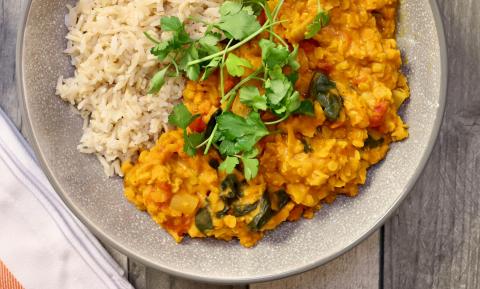
Ingredients

  • 1 (240g) Onion
  • (90g) Curry Paste
  • (750g) Frozen Mixed Vegetables
  • 2 Pints (1L) Semi-Skimmed Milk
  • 1 Mug (300g) White Rice

This recipe has been added to your Meal Planner.

Allergy Disclaimer

Always check the label of each ingredient for allergy warnings.

Method

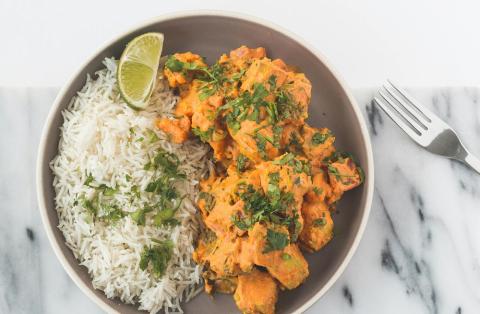
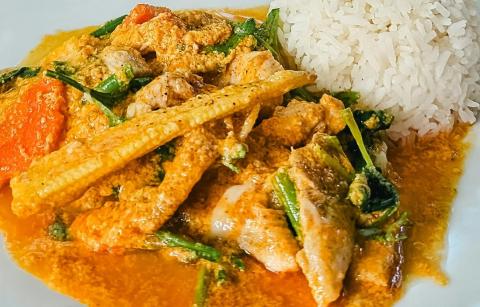
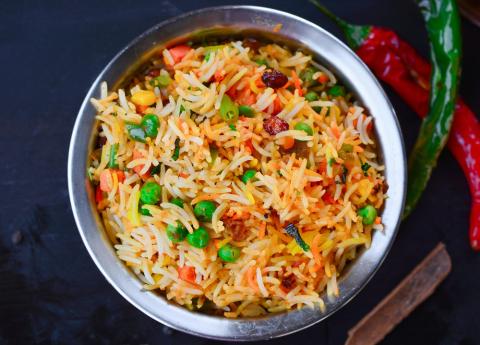
  1. Peel and finely dice the onion. Rinse the rive with cold water using a seive.
  2. In a large saucepan add the onion and curry paste and fry for approximately 5 minutes. Stir continuously to prevent the paste sticking and if necessary add a little water
  3. Add rice, vegetables and half of the milk  to the pan, making sure the vegetables are covered. Bring to the boil and then simmer gently, approximately 20 minutes.
  4. Occasionally stir the biryani, adding milk as it is absorbed by the rice.
  5. It is ready to serve once the rice is soft to the bite. Add black pepper and coriander if desired.

Cost Saver Tips

Use any leftover vegetables.

Tips for Kids

Make with their favourite vegetables.

Nutritional Information

Based on a single serving of 566g (% of an adult's reference intake)

Energy

543 kcals ( 27 %)

2,298 kJ ( 27 %)

Fat

3.4 g ( 17 %)

Saturates

86 g ( %)

Sugar

23.7 g ( 26 %)

Salt

1.2 g ( 20 %)

Detailed nutritional information

Per 100g Per 566g serving
Energy Kcals 96 543
Energy Kj 406 2,298
Protein 4 g 22.6 g
Total Fat g g
Saturated Fat 0.6 g 3.4 g
Carbohydrates 15.2 g 86 g
Total Sugars 4.2 g 23.7 g
NSP Fibre 0.3 g 1.7 g
Sodium 86 mg 487 mg
Salt 0.2 g 1.2 g

Find out about nutritional labelling

Nutrition labels on the front of packaging

  • Most of the big supermarkets and many food manufacturers display nutritional information on the front of pre-packed food.
  • Front of pack nutrition labels provide information on the number of grams of fat, saturated fat, sugars and salt and the amount of energy (in kJ and kcal) in a serving or portion of a recipe.
  • The labels also include information about reference intakes (expressed as a percentage) which are guidelines about the approximate amount of particular nutrients and energy required for a healthy diet.
  • The colour coding tells you at a glance if the food has high (red), medium (amber) or low (green) amounts of fat, saturated fat, sugars and salt.
  • The more greens on the label, the healthier the choice
  • Amber means neither high nor low, so you can eat foods with all or mostly ambers on the label most of the time.
  • Reds on the label means the food is high in that nutrient and these are the foods we should cut down on. Try to eat these foods less often and in small amounts.

Food shopping tips

If you’re trying to decide which product to choose, check to see if there's a nutrition label on the front of the pack. This will help you to quickly assess how your choices stack up. You will often find a mixture of red, amber and green colour coding for the nutrients. So when you're choosing between similar products, try to go for more greens and ambers and fewer reds if you want to make a healthier choice.
Back to top

Ingredients

  • 3 Tablespoons (50g) Broth (Soup) Mix
  • 2 (14g) Vegetable Stock Cubes (use reduced salt when possible)
  • 2 Pints (1L) Water
  • 1 Medium Sized (150g) Onion
  • 2 Medium Sized (160g) Carrots
  • 1 (160g) Leek
  • ½ (50g) Turnip
  • 1 Pinch Black Pepper to taste

This recipe has been added to your Meal Planner.

Allergy Disclaimer

Always check the label of each ingredient for allergy warnings.

Method

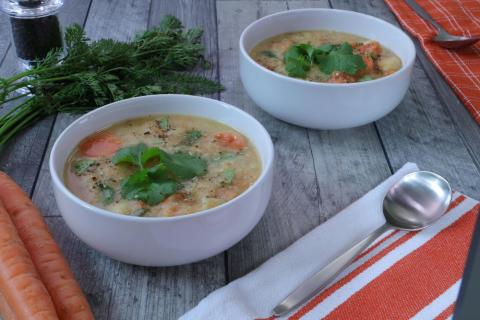
  1. Unless you are using quick cook broth mix you will need to soak it overnight (10 hours). Place the broth mix in a bowl and add the water until just covering the mix then leave to soak.
  2. Add boiling water and stock cubes to a pan and once its dissolved add the broth mix. Bring to boil, then simmer for 1 hour.
  3. Finely chop the onions and leek and add to pan, simmer for 20 minutes.
  4. Peel and grate the carrots and turnip then add to pan and simmer for a further 10 minutes.
  5. Add pepper to taste and serve once the vegetables are soft.

Time Saver Tips

Soup can be prepared in advance and kept in the fridge to be used within 24 hours. Or you can pop it in the freezer for later. Look for a quick cook broth mix to avoid soaking overnight.

Cost Saver Tips

You could swap the vegetable stock cube for reduced salt stock granules if that’s what you have in – just check the label for the amount you’ll need for 1 litre of water. Why not try batch cooking this soup? You could even freeze some so it’s ready for an easy meal any time – just cool it before putting it in the freezer and make sure it's steaming hot when you reheat it. You can use any vegetables in this, for example celery or potatoes – look for whatever’s on offer or available in the fridge to pop in the pot. If you don't have a grater you can chop the turnip and carrot into small cubes instead. If you don’t have broth mix, you could always use up any dried lentils, pearl barley or split peas you have at the back of your cupboard.

Tips for Kids

If your child isn’t too keen on vegetables why not blend them for a smoother consistency and to make them less obvious? Your wee one will love to help you prepare and chop the softer vegetables (with a table knife). After helping make it, they might even be more likely to want to eat it! Letting them choose which vegetables to use can also help them to clear their plate.

Nutritional Information

Based on a single serving of 340g (% of an adult's reference intake)

Energy

76 kcals ( 4 %)

323 kJ ( 4 %)

Fat

0.0 g ( 1 %)

Saturates

14.3 g ( %)

Sugar

5.7 g ( 6 %)

Salt

1.5 g ( 25 %)

Detailed nutritional information

Per 100g Per 340g serving
Energy Kcals 22 76
Energy Kj 95 323
Protein 1 g 3.5 g
Total Fat g g
Saturated Fat 0 g 0.0 g
Carbohydrates 4.2 g 14.3 g
Total Sugars 1.7 g 5.7 g
NSP Fibre 1.3 g 4.6 g
Sodium 177 mg 603 mg
Salt 0.4 g 1.5 g

Find out about nutritional labelling

Nutrition labels on the front of packaging

  • Most of the big supermarkets and many food manufacturers display nutritional information on the front of pre-packed food.
  • Front of pack nutrition labels provide information on the number of grams of fat, saturated fat, sugars and salt and the amount of energy (in kJ and kcal) in a serving or portion of a recipe.
  • The labels also include information about reference intakes (expressed as a percentage) which are guidelines about the approximate amount of particular nutrients and energy required for a healthy diet.
  • The colour coding tells you at a glance if the food has high (red), medium (amber) or low (green) amounts of fat, saturated fat, sugars and salt.
  • The more greens on the label, the healthier the choice
  • Amber means neither high nor low, so you can eat foods with all or mostly ambers on the label most of the time.
  • Reds on the label means the food is high in that nutrient and these are the foods we should cut down on. Try to eat these foods less often and in small amounts.

Food shopping tips

If you’re trying to decide which product to choose, check to see if there's a nutrition label on the front of the pack. This will help you to quickly assess how your choices stack up. You will often find a mixture of red, amber and green colour coding for the nutrients. So when you're choosing between similar products, try to go for more greens and ambers and fewer reds if you want to make a healthier choice.

Back to top

Ingredients

  • 1 Medium (150g) Onion
  • 1 Tin (400g) Chopped or Plum Tomatoes
  • 2 Tablespoons (30g) Tomato Puree
  • 2 Teaspoons (6g) Chilli Powder
  • 1 (160g) Green Pepper
  • 1 (160g) Red Pepper
  • 6 Medium (60g) Mushrooms
  • 1 Medium (100g) Courgette
  • 1 Tin (400g) Kidney Beans
  • 1 Tablespoon (10g) Vegetable Oil
  • 1 Pinch Black Pepper to taste
  • 1 Mug (300g) Rice

This recipe has been added to your Meal Planner.

Allergy Disclaimer

Always check the label of each ingredient for allergy warnings.

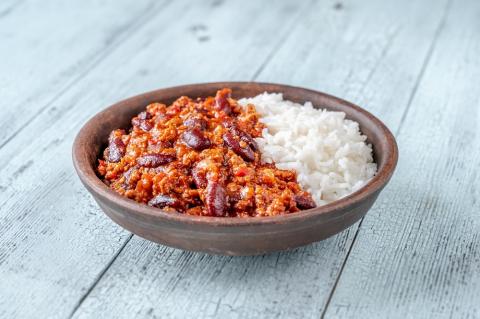
Method

  1. Peel and chop the onions, slice the mushrooms, courgette and peppers. Drain and rinse the kidney beans.
  2. Heat oil in a pan and add the onion. When the onion starts to turn brown add the mushrooms, courgette and peppers and cook for 5 minutes.
  3. Add the kidney beans, tomato puree, chopped tomatoes and chilli powder, bring the sauce to the boil, then cover and lower the heat and simmer gently for 5- 10 minutes. If using plum tomatoes, chop them up using a spoon when in the pan. Give it a good stir from time to time.
  4. Meanwhile boil the rice using the instructions on the packet.
  5. Add black pepper to taste and serve with rice.

Cost Saver Tips

You could always make double the amount and freeze it for later on in the week. You can try this recipe with different vegetables - it's a good way to use up any leftovers.

Tips for Kids

Chop vegetables into small pieces so they're easier for the kids to eat. (Or, for the fussy eaters around, they're easier to hide!) You could also try using brown rice to up the fibre content.

Nutritional Information

Based on a single serving of 460g (% of an adult's reference intake)

Energy

419 kcals ( 21 %)

1,697 kJ ( 21 %)

Fat

0.5 g ( 3 %)

Saturates

88.6 g ( %)

Sugar

10 g ( 11 %)

Salt

0.1 g ( 2 %)

Detailed nutritional information

Per 100g Per 460g serving
Energy Kcals 91 419
Energy Kj 369 1,697
Protein 2.7 g 12.6 g
Total Fat g g
Saturated Fat 0.1 g 0.5 g
Carbohydrates 19.3 g 88.6 g
Total Sugars 2.2 g 10 g
NSP Fibre 1.4 g 6.6 g
Sodium 12 mg 55 mg
Salt 0 g 0.1 g

Find out about nutritional labelling

Nutrition labels on the front of packaging

  • Most of the big supermarkets and many food manufacturers display nutritional information on the front of pre-packed food.
  • Front of pack nutrition labels provide information on the number of grams of fat, saturated fat, sugars and salt and the amount of energy (in kJ and kcal) in a serving or portion of a recipe.
  • The labels also include information about reference intakes (expressed as a percentage) which are guidelines about the approximate amount of particular nutrients and energy required for a healthy diet.
  • The colour coding tells you at a glance if the food has high (red), medium (amber) or low (green) amounts of fat, saturated fat, sugars and salt.
  • The more greens on the label, the healthier the choice
  • Amber means neither high nor low, so you can eat foods with all or mostly ambers on the label most of the time.
  • Reds on the label means the food is high in that nutrient and these are the foods we should cut down on. Try to eat these foods less often and in small amounts.

Food shopping tips

If you’re trying to decide which product to choose, check to see if there's a nutrition label on the front of the pack. This will help you to quickly assess how your choices stack up. You will often find a mixture of red, amber and green colour coding for the nutrients. So when you're choosing between similar products, try to go for more greens and ambers and fewer reds if you want to make a healthier choice.

Back to top

Ingredients

  • 1 Medium Sized (150g) Onion
  • 6 Medium Sized (60g) Mushrooms
  • 1 Tablespoons (10ml) Vegetable Oil
  • 1 (160g) Green Pepper
  • 1 (160g) Red Pepper
  • 1 Tins (400g) Red Kidney Beans
  • 1 Tins (400g) Chopped Tomatoes
  • 1 Teaspoons (3g) Chilli Powder
  • 1 Pinch (1g) Ground Black Pepper
  • 8 (480g) Wheat Tortillas
  • 0.2 Large Tub Tubs (100ml) Natural Yogurt

This recipe has been added to your Meal Planner.

Allergy Disclaimer

Always check the label of each ingredient for allergy warnings.

Method

  1. Wash and slice all the vegetables. Drain and rinse the kidney beans.
  2. Heat oil in a pan, fry the onions until golden then add the mushrooms for 2 minutes, then the peppers for a further 2 minutes
  3. Stir in the chopped tomatoes and kidney beans. Add the chilli powder and black pepper.
  4. Bring to boil and then simmer on a low heat for 10- 15 minutes.
  5. For each tortilla place the vegetable mixture down the centre and top with natural yogurt. Fold as per instructions on the packet.
  6. Repeat for each tortilla and serve.
 

Tips for Kids

Let the kids get hands on – they'll love spooning in the ingredients and putting the tortillas together.

Nutritional Information

Based on a single serving of 390g (% of an adult's reference intake)

Energy

472 kcals ( 24 %)

1,981 kJ ( 24 %)

Fat

0.8 g ( 4 %)

Saturates

95.2 g ( %)

Sugar

12.9 g ( 14 %)

Salt

1.6 g ( 3 %)

Detailed nutritional information

Per 100g Per 390g serving
Energy Kcals 121 472
Energy Kj 508 1,981
Protein 4.1 g 16 g
Total Fat g g
Saturated Fat 0.2 g 0.8 g
Carbohydrates 24.7 g 95.2 g
Total Sugars 3.3 g 12.9 g
NSP Fibre 2.1 g 8.2 g
Sodium 153 mg 597 mg
Salt 0.4 g 1.6 g

Find out about nutritional labelling

Nutrition labels on the front of packaging

  • Most of the big supermarkets and many food manufacturers display nutritional information on the front of pre-packed food.
  • Front of pack nutrition labels provide information on the number of grams of fat, saturated fat, sugars and salt and the amount of energy (in kJ and kcal) in a serving or portion of a recipe.
  • The labels also include information about reference intakes (expressed as a percentage) which are guidelines about the approximate amount of particular nutrients and energy required for a healthy diet.
  • The colour coding tells you at a glance if the food has high (red), medium (amber) or low (green) amounts of fat, saturated fat, sugars and salt.
  • The more greens on the label, the healthier the choice
  • Amber means neither high nor low, so you can eat foods with all or mostly ambers on the label most of the time.
  • Reds on the label means the food is high in that nutrient and these are the foods we should cut down on. Try to eat these foods less often and in small amounts.

Food shopping tips

If you’re trying to decide which product to choose, check to see if there's a nutrition label on the front of the pack. This will help you to quickly assess how your choices stack up. You will often find a mixture of red, amber and green colour coding for the nutrients. So when you're choosing between similar products, try to go for more greens and ambers and fewer reds if you want to make a healthier choice.

Back to top

Ingredients

  • 1 Box (250g) Lasagne Sheets
  • 2 Tablespoons (20ml) Vegetable Oil
  • 1 Medium Sized (150g) Onion
  • 2 (5g) Garlic Cloves
  • 1 (160g) Red Pepper
  • 5 Medium Sized (50g) Mushrooms
  • 1 Medium Sized (100g) Courgette
  • 2 Sticks (60g) Celery
  • 2 Tablespoons (30g) Tomato Puree
  • 1 Can (400g) Chopped Tomatoes
  • 2 Teaspoons (2g) Mixed Herbs
  • 1 Pinch Ground Black Pepper
  • 4 Tablespoons (60g) Low Fat Spread
  • 2 ½ Tablespoons (50g) Plain Flour
  • 3 Cups (568ml) Semi-Skimmed Milk
  • 3 Tablespoons (75g) Cheddar Cheese

This recipe has been added to your Meal Planner.

Allergy Disclaimer

Always check the label of each ingredient for allergy warnings.

Method

  1. Preheat the oven to 180°C / 160°C fan oven / 350°F / gas mark 4.
  2. Wash and slice all the vegetables. Finely chop or crush the garlic.
  3. Heat the oil in a pan then add the chopped onion and garlic and cook for 5 minutes.
  4. Add the other vegetables and fry for a further 2 minutes, then stir in the tomato puree and chopped tomatoes. Add herbs and black pepper to taste.
  5. Bring to boil and simmer gently while making the sauce.
  6. Melt the low fat spread in a pan, remove from heat and stir in flour to make a paste. Heat again for 1 minute and then gradually add the milk, stirring continuously until the sauce thickens.
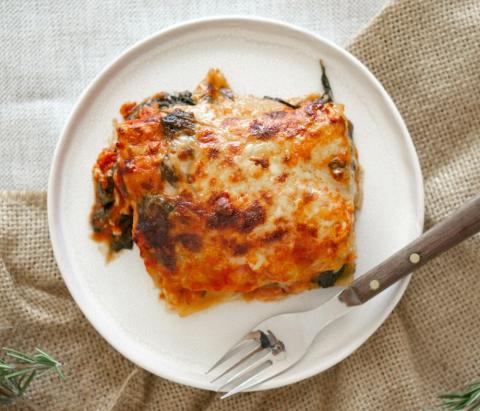
  7. In an ovenproof dish build lasagne in layers: vegetables, lasagne sheets, then sauce. End with a layer of sauce and top with grated cheese. Depending on the size of dish there will be two or three layers.
  8. Bake in oven for 30 - 40minutes until golden brown. Remove from oven and serve.

Time Saver Tips

You could try preparing this dish ahead of time and put it in the fridge when it’s cooled down. That way you can just pop it into the oven later. Just remember it takes a bit longer to cook from chilled.

Cost Saver Tips

This is a great way to turn any leftover veggies you have in the fridge or freezer into a really tasty meal.

Tips for Kids

Why not get your little one to help build up the layers? They might even enjoy stacking in some of their favourite veg. How about giving wholemeal lasagne sheets a go? It’s a really no-fuss way to help get them eating a bit more fibre. You could also try adding some extra vegetables to give their 5 a day a boost, too.

Nutritional Information

Based on a single serving of 420g (% of an adult's reference intake)

Energy

433 kcals ( 22 %)

1,819 kJ ( 22 %)

Fat

5.9 g ( 29 %)

Saturates

47.9 g ( %)

Sugar

16 g ( 18 %)

Salt

0.8 g ( 13 %)

Detailed nutritional information

Per 100g Per 420g serving
Energy Kcals 103 433
Energy Kj 433 1,819
Protein 4.9 g 20.6 g
Total Fat g g
Saturated Fat 1.4 g 5.9 g
Carbohydrates 11.4 g 47.9 g
Total Sugars 3.8 g 16 g
NSP Fibre 1 g 4.2 g
Sodium 93 mg 391 mg
Salt 0.2 g 0.8 g

Find out about nutritional labelling

Nutrition labels on the front of packaging

  • Most of the big supermarkets and many food manufacturers display nutritional information on the front of pre-packed food.
  • Front of pack nutrition labels provide information on the number of grams of fat, saturated fat, sugars and salt and the amount of energy (in kJ and kcal) in a serving or portion of a recipe.
  • The labels also include information about reference intakes (expressed as a percentage) which are guidelines about the approximate amount of particular nutrients and energy required for a healthy diet.
  • The colour coding tells you at a glance if the food has high (red), medium (amber) or low (green) amounts of fat, saturated fat, sugars and salt.
  • The more greens on the label, the healthier the choice
  • Amber means neither high nor low, so you can eat foods with all or mostly ambers on the label most of the time.
  • Reds on the label means the food is high in that nutrient and these are the foods we should cut down on. Try to eat these foods less often and in small amounts.

Food shopping tips

If you’re trying to decide which product to choose, check to see if there's a nutrition label on the front of the pack. This will help you to quickly assess how your choices stack up. You will often find a mixture of red, amber and green colour coding for the nutrients. So when you're choosing between similar products, try to go for more greens and ambers and fewer reds if you want to make a healthier choice.

Back to top

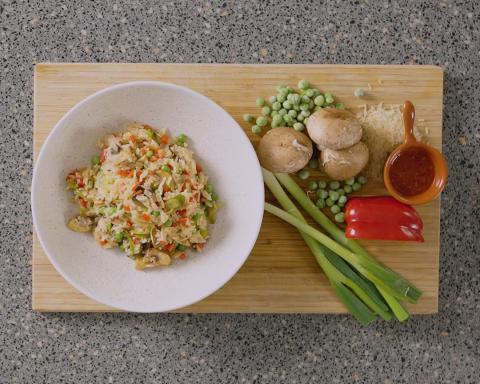
Ingredients

  • 1 Tablespoons (10g) Vegetable Oil
  • 4 (40g) Spring Onions
  • 2 (6g) Garlic Cloves
  • 25 (250g) Mushrooms
  • 2 Sticks (60g) Celery
  • 1 Level Spoonful Teaspoons (1g) Mixed Herbs
  • (300g) Risotto Rice
  • 2.3 Cups (450ml) Semi-Skimmed Milk
  • 1 Reduced Salt (7g) Vegetable Stock Cube
  • Or Grana Padano Or A Similar Cheese (50g) Parmesan Cheese
  • 2.3 Cups (450ml) Water

This recipe has been added to your Meal Planner.

Allergy Disclaimer

Always check the label of each ingredient for allergy warnings.

Method

  1. Peel and chop the garlic.
  2. Wash the spring onions, mushrooms and celery and cut into small pieces.
  3. In a large pan fry the garlic and celery in the oil until they start to soften then add the mushrooms and fry for a further 2 minutes.
  4. Add the spring onions, herbs and rice to the pan.
  5. Boil the water and dissolve the stock cube in it.
  6. Add the hot stock and milk to the pan.
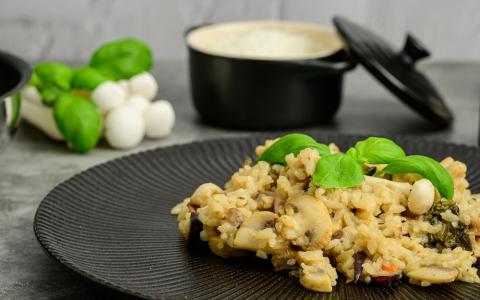
  7. Bring to the boil then turn down the heat and simmer for 45 minutes with the lid on. Stir the risotto every so often to ensure it does not stick to the pan. Once rice has softened, remove the lid and turn up the heat to ensure all excess stock has been absorbed.
  8. Grate or shave the cheese. Either stir it into the rice or sprinkle on top of the risotto once served.

Tips for Kids

Why not make this risotto with their favourite vegetables?

Nutritional Information

Based on a single serving of 265g (% of an adult's reference intake)

Energy

411 kcals ( 21 %)

1,735 kJ ( 21 %)

Fat

4.2 g ( 21 %)

Saturates

63.8 g ( %)

Sugar

6.1 g ( 7 %)

Salt

0.9 g ( 15 %)

Detailed nutritional information

Per 100g Per 265g serving
Energy Kcals 155 411
Energy Kj 655 1,735
Protein 6.2 g 16.4 g
Total Fat g g
Saturated Fat 1.6 g 4.2 g
Carbohydrates 24.1 g 63.8 g
Total Sugars 2.3 g 6.1 g
NSP Fibre 0.6 g 1.7 g
Sodium 133 mg 352 mg
Salt 0.3 g 0.9 g

Find out about nutritional labelling

Nutrition labels on the front of packaging

  • Most of the big supermarkets and many food manufacturers display nutritional information on the front of pre-packed food.
  • Front of pack nutrition labels provide information on the number of grams of fat, saturated fat, sugars and salt and the amount of energy (in kJ and kcal) in a serving or portion of a recipe.
  • The labels also include information about reference intakes (expressed as a percentage) which are guidelines about the approximate amount of particular nutrients and energy required for a healthy diet.
  • The colour coding tells you at a glance if the food has high (red), medium (amber) or low (green) amounts of fat, saturated fat, sugars and salt.
  • The more greens on the label, the healthier the choice
  • Amber means neither high nor low, so you can eat foods with all or mostly ambers on the label most of the time.
  • Reds on the label means the food is high in that nutrient and these are the foods we should cut down on. Try to eat these foods less often and in small amounts.

Food shopping tips

If you’re trying to decide which product to choose, check to see if there's a nutrition label on the front of the pack. This will help you to quickly assess how your choices stack up. You will often find a mixture of red, amber and green colour coding for the nutrients. So when you're choosing between similar products, try to go for more greens and ambers and fewer reds if you want to make a healthier choice.

Back to top

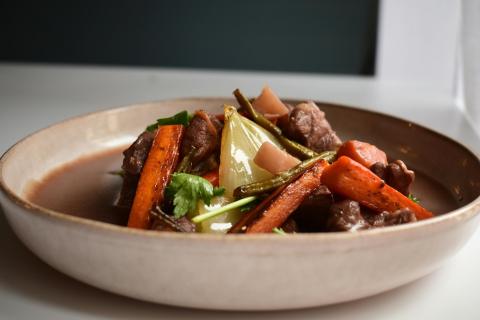
Ingredients

  • 1 diced Pack (400g) Venison
  • 2 Tablespoons (20g) Vegetable Oil
  • 2 medium sized (300g) Onions
  • 1 (3g) Garlic Clove
  • 2 Tablespoons (30g) Worcestershire Sauce
  • 2 Teaspoons (2g) Dried Thyme
  • 1 (1g) Bay Leaf
  • ½ Pint (300ml) Water
  • 3 large sized (600g) Potatoes
  • ½ (300g) Swede
  • 2 (280g) Parsnip
  • 2 medium sized (160g) Carrots
  • 1 heaped tablespoon Tablespoon (30g) Plain Flour

This recipe has been added to your Meal Planner.

Allergy Disclaimer

Always check the label of each ingredient for allergy warnings.

Method


  1. In a large pan heat the oil and then add venison until it turns brown.
  2. Peel and dice the onions and garlic and add to the pan and fry for another 5 minutes.
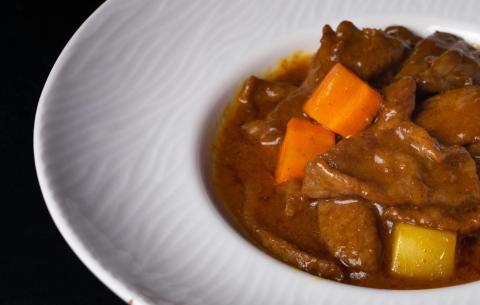
  3. Peel and dice the swede, carrots, parsnips and potatoes. Add Worcestershire sauce, thyme and bay leaf along with vegetables and water to the pan.
  4. Bring the pan to the boil then reduce the heat and cover a lid, simmering until the vegetables are tender.
  5. Mix the flour with 2 tablespoons of water then stir into the pan to thicken the stew.
  6. Remove the bay leaf before serving.

Time Saver Tips

Can be made in advance and heated through when ready to serve.

Cost Saver Tips

Can be made with other red meat such as lamb or beef. Look for offers!

Tips for Kids

They will enjoy helping to prepare the vegetables.

Nutritional Information

Based on a single serving of 440g (% of an adult's reference intake)

Energy

405 kcals ( 20 %)

1,698 kJ ( 20 %)

Fat

1.8 g ( 9 %)

Saturates

50.2 g ( %)

Sugar

13.6 g ( 15 %)

Salt

0.4 g ( 7 %)

Detailed nutritional information

Per 100g Per 440g serving
Energy Kcals 92 405
Energy Kj 386 1,698
Protein 7.5 g 33 g
Total Fat g g
Saturated Fat 0.4 g 1.8 g
Carbohydrates 11.4 g 50.2 g
Total Sugars 3.1 g 13.6 g
NSP Fibre 1.7 g 7.5 g
Sodium 48 mg 211 mg
Salt 0.1 g 0.4 g

Find out about nutritional labelling

Nutrition labels on the front of packaging

  • Most of the big supermarkets and many food manufacturers display nutritional information on the front of pre-packed food.
  • Front of pack nutrition labels provide information on the number of grams of fat, saturated fat, sugars and salt and the amount of energy (in kJ and kcal) in a serving or portion of a recipe.
  • The labels also include information about reference intakes (expressed as a percentage) which are guidelines about the approximate amount of particular nutrients and energy required for a healthy diet.
  • The colour coding tells you at a glance if the food has high (red), medium (amber) or low (green) amounts of fat, saturated fat, sugars and salt.
  • The more greens on the label, the healthier the choice
  • Amber means neither high nor low, so you can eat foods with all or mostly ambers on the label most of the time.
  • Reds on the label means the food is high in that nutrient and these are the foods we should cut down on. Try to eat these foods less often and in small amounts.

Food shopping tips

If you’re trying to decide which product to choose, check to see if there's a nutrition label on the front of the pack. This will help you to quickly assess how your choices stack up. You will often find a mixture of red, amber and green colour coding for the nutrients. So when you're choosing between similar products, try to go for more greens and ambers and fewer reds if you want to make a healthier choice.

Back to top

Ingredients

  • 1 (Medium) Pot (200g) Low Fat Plain Yoghurt
  • ½ (200g) Cucumber
  • 2 Teaspoons (10g) Lemon Juice
  • 1 Teaspoon (1g) Dried Or Fresh Mint
  • 1 (Optional) (40g) Green Chilli
  • 16 (80g) Breadsticks

This recipe has been added to your Meal Planner.

Allergy Disclaimer

Always check the label of each ingredient for allergy warnings.

Method

  1. Grate the cucumber onto a clean tea towel then squeeze out any excess water.
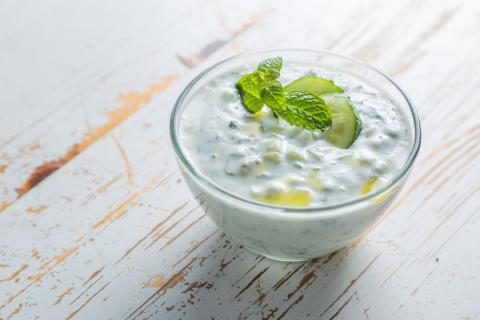
  2. In a bowl mix the cucumber, yoghurt, lemon juice, mint and chilli if using.
  3. Serve dip with breadsticks.

Time Saver Tips

Make in advance and store in the fridge.

Cost Saver Tips

Try flavouring with herbs you already have.

Tips for Kids

Let them help squeeze the cucumber and mix the dip together. Use their favourite veg sticks as dippers too.

Nutritional Information

Based on a single serving of 107g (% of an adult's reference intake)

Energy

111 kcals ( 6 %)

468 kJ ( 6 %)

Fat

1.5 g ( 7 %)

Saturates

19.2 g ( %)

Sugar

0.7 g ( %)

Salt

0.5 g ( 8 %)

Detailed nutritional information

Per 100g Per 107g serving
Energy Kcals 104 111
Energy Kj 437 468
Protein 4.8 g 5.1 g
Total Fat g g
Saturated Fat 1.4 g 1.5 g
Carbohydrates 1.9 g 19.2 g
Total Sugars 4.8 g 0.7 g
NSP Fibre 0.7 g 0.7 g
Sodium 194 mg 208 mg
Salt 0.5 g 0.5 g

Find out about nutritional labelling

Nutrition labels on the front of packaging

  • Most of the big supermarkets and many food manufacturers display nutritional information on the front of pre-packed food.
  • Front of pack nutrition labels provide information on the number of grams of fat, saturated fat, sugars and salt and the amount of energy (in kJ and kcal) in a serving or portion of a recipe.
  • The labels also include information about reference intakes (expressed as a percentage) which are guidelines about the approximate amount of particular nutrients and energy required for a healthy diet.
  • The colour coding tells you at a glance if the food has high (red), medium (amber) or low (green) amounts of fat, saturated fat, sugars and salt.
  • The more greens on the label, the healthier the choice
  • Amber means neither high nor low, so you can eat foods with all or mostly ambers on the label most of the time.
  • Reds on the label means the food is high in that nutrient and these are the foods we should cut down on. Try to eat these foods less often and in small amounts.

Food shopping tips

If you’re trying to decide which product to choose, check to see if there's a nutrition label on the front of the pack. This will help you to quickly assess how your choices stack up. You will often find a mixture of red, amber and green colour coding for the nutrients. So when you're choosing between similar products, try to go for more greens and ambers and fewer reds if you want to make a healthier choice.

Back to top

Ingredients

  • 8 Slices (200g) Back Bacon
  • 2 (320g) Leeks
  • 4 Medium sized (320g) Carrots
  • 1 Pint (500ml) Water
  • 2 Tablespoons (30g) Tomato Puree
  • 1 Cup (100g) Pasta
  • 2 Teaspoons (2g) Dried Parsley
  • 1 Can (400g) Mixed Beans
  • 1 (7g) Reduced Salt Stock Cube (Vegetable Or Chicken)

This recipe has been added to your Meal Planner.

Allergy Disclaimer

Always check the label of each ingredient for allergy warnings.

Method

  1. Trim the fat off the bacon and cut into small squares. Fry it in a large pan and once it starts to brown drain off any excess fat
  2. Peel the carrots and cut in half lengthways then slice. Remove outer layers of the leeks then half lengthways and slice. Add both to the pan with bacon and cook for 5 minutes with the lid on
  3. Drain and rinse the beans. Dissolve stock cube in boiling water. Add beans, stock tomato puree and pasta to the pan and simmer until the pasta is cooked, approximately 10 minutes
  4. Once the pasta is cooked, stir through the parsely and serve

Time Saver Tips

Prepare soup in advance and when required add the pasta and cook

Cost Saver Tips

Make in bulk for another day

Tips for Kids

Let them add their favourite pasta shapes

Nutritional Information

Based on a single serving of 386g (% of an adult's reference intake)

Energy

328 kcals ( 16 %)

1,378 kJ ( 16 %)

Fat

3.5 g ( 17 %)

Saturates

38.6 g ( %)

Sugar

8.1 g ( 9 %)

Salt

2.3 g ( 38 %)

Detailed nutritional information

Per 100g Per 386g serving
Energy Kcals 85 328
Energy Kj 357 1,378
Protein 5 g 19.3 g
Total Fat g g
Saturated Fat 0.9 g 3.5 g
Carbohydrates 10 g 38.6 g
Total Sugars 2.1 g 8.1 g
NSP Fibre 2.3 g 8.9 g
Sodium 258 mg 996 mg
Salt 0.6 g 2.3 g

Find out about nutritional labelling

Nutrition labels on the front of packaging

  • Most of the big supermarkets and many food manufacturers display nutritional information on the front of pre-packed food.
  • Front of pack nutrition labels provide information on the number of grams of fat, saturated fat, sugars and salt and the amount of energy (in kJ and kcal) in a serving or portion of a recipe.
  • The labels also include information about reference intakes (expressed as a percentage) which are guidelines about the approximate amount of particular nutrients and energy required for a healthy diet.
  • The colour coding tells you at a glance if the food has high (red), medium (amber) or low (green) amounts of fat, saturated fat, sugars and salt.
  • The more greens on the label, the healthier the choice
  • Amber means neither high nor low, so you can eat foods with all or mostly ambers on the label most of the time.
  • Reds on the label means the food is high in that nutrient and these are the foods we should cut down on. Try to eat these foods less often and in small amounts.

Food shopping tips

If you’re trying to decide which product to choose, check to see if there's a nutrition label on the front of the pack. This will help you to quickly assess how your choices stack up. You will often find a mixture of red, amber and green colour coding for the nutrients. So when you're choosing between similar products, try to go for more greens and ambers and fewer reds if you want to make a healthier choice.

Back to top

Ingredients

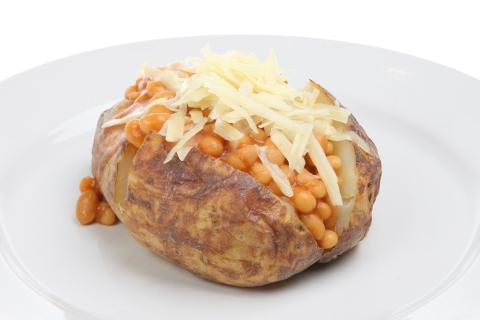
  • 4 Medium (720g) Baking Potatoes
  • 2 Tins (800g) Baked Beans (choose reduced salt & sugar whenever possible)
  • 4 Heaped tablespoons (80g) Reduced Fat Cheddar Cheese (grated)
  • 4 Teaspoons (12g) Vegetable Oil

This recipe has been added to your Meal Planner.

Allergy Disclaimer

Always check the label of each ingredient for allergy warnings.

Method

  1. Set the oven to 200°C / 180°C fan oven / 400°F / gas mark 6.
  2. Wash the potatoes and use a fork to prick each one all over.
  3. Using your hands, cover each potato in a teaspoon of oil.
  4. Place each potato on a foil covered tray and cook for between 1¼ and 1½ hours. When cooked, the skin should be golden brown and crisp, and the potato should give a little when squeezed.
  5. Grate the cheese.
  6. Gently heat the baked beans in a saucepan for 3-5 minutes until hot, stirring continuously. Do not allow them to boil.
  7. Cut the potatoes in half, spoon the baked beans over them and sprinkle the cheese on top. Enjoy hot.

Time Saver Tips

You can always heat the potatoes in the microwave instead. Simply, cook all potatoes on full power for 10 minutes then turn them over and cook for another 5 minutes. If they're still hard, cook for another minute at a time until they’re soft all the way through. (The length of cooking time will depend on the number of potatoes you cook at once and the power of your microwave.)

Tips for Kids

Kids can help by washing and pricking the potatoes with a fork. If your little one isn’t a fan of the skins, why not scoop out the potato once cooked and mix it with the filling? You could try to encourage them to eat a little bit of potato skin, but don’t let it put them off the whole meal! For added greens, try adding chopped spring onions to the beans, or serving with a side salad. Why not try adding chopped spring onions to the beans, or serve with a salad to help towards your little one’s five a day?

Nutritional Information

Based on a single serving of 403g (% of an adult's reference intake)

Energy

426 kcals ( 21 %)

1,801 kJ ( 21 %)

Fat

3.3 g ( 17 %)

Saturates

70.8 g ( %)

Sugar

12.1 g ( 13 %)

Salt

1.7 g ( 28 %)

Detailed nutritional information

Per 100g Per 403g serving
Energy Kcals 106 426
Energy Kj 447 1,801
Protein 5 g 20.1 g
Total Fat g g
Saturated Fat 0.8 g 3.3 g
Carbohydrates 17.6 g 70.8 g
Total Sugars 3 g 12.1 g
NSP Fibre 3.4 g 13.6 g
Sodium 166 mg 667 mg
Salt 0.4 g 1.7 g

Find out about nutritional labelling

Nutrition labels on the front of packaging

  • Most of the big supermarkets and many food manufacturers display nutritional information on the front of pre-packed food.
  • Front of pack nutrition labels provide information on the number of grams of fat, saturated fat, sugars and salt and the amount of energy (in kJ and kcal) in a serving or portion of a recipe.
  • The labels also include information about reference intakes (expressed as a percentage) which are guidelines about the approximate amount of particular nutrients and energy required for a healthy diet.
  • The colour coding tells you at a glance if the food has high (red), medium (amber) or low (green) amounts of fat, saturated fat, sugars and salt.
  • The more greens on the label, the healthier the choice
  • Amber means neither high nor low, so you can eat foods with all or mostly ambers on the label most of the time.
  • Reds on the label means the food is high in that nutrient and these are the foods we should cut down on. Try to eat these foods less often and in small amounts.

Food shopping tips

If you’re trying to decide which product to choose, check to see if there's a nutrition label on the front of the pack. This will help you to quickly assess how your choices stack up. You will often find a mixture of red, amber and green colour coding for the nutrients. So when you're choosing between similar products, try to go for more greens and ambers and fewer reds if you want to make a healthier choice.

Back to top
Subscribe to Eat Better Feel Better