This article was created with

eat-better-feel-better-logo-2.png

Ingredients

  • 4 Wooden Skewers
  • 4 Large (380g) Pitta Breads
  • 4 Medium (520g) Chicken Breasts
  • 2 Medium (300g) Onions
  • 1 (160g) Red Pepper
  • 1 (160g) Green Pepper
  • 1 Juiced (20g) Lemon
  • 1 Tablespoon (10g) Vegetable Oil
  • 2 (6g) Garlic Cloves
  • 1 Teaspoon (1g) Mixed Herbs
  • 2 Small Pots (180ml) Natural Yogurt
  • ½ (180g) Cucumber

This recipe has been added to your Meal Planner.

Allergy Disclaimer

Always check the label of each ingredient for allergy warnings.

Method

  1. Soak the wooden skewers in a bowl of water.
  2. To make the marinade, peel and finely chop the garlic and add to a bowl with lemon juice, oil and mixed herbs then mix well.
  3. Cut chicken into cubes and add to sauce. Leave in bottom shelf of the fridge for at least 30 minutes to marinade.
  4. Peel the onion and chop it into chunky slices. Chop the peppers into chunks.
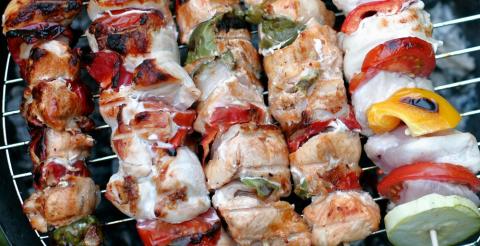
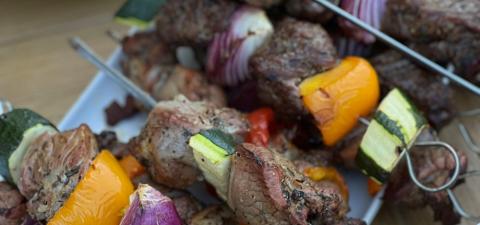
  5. Preheat grill then alternate chicken, pepper and onion on skewers to make kebabs.
  6. Place kebabs under grill for 10-15 minutes turning every few minutes to cook evenly. Chicken will be cooked when it is white all the way through.
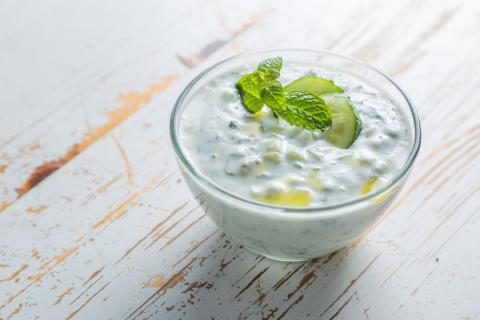
  7. Grate cucumber and mix in a bowl with yogurt and chopped mint leaves.
  8. Remove from skewers and serve with sauce and pitta bread.

Time Saver Tips

You could marinade the chicken earlier in the day or even the night before and keep it covered in the fridge. Not only is this handy when you come to make the rest later, it might even taste better! Why not make the cucumber yoghurt beforehand and pop it in the fridge? That’s one less thing to worry about later.

Cost Saver Tips

This works great with any meat or fish, so it’s good to keep your eyes peeled for any bargains – whether that’s diced lamb, pork, haddock or salmon. You could even use tofu as a vegetarian alternative if you’ve got any in. A really easy way to make this go further is to bulk it out with any vegetables you have in, like courgette, mushrooms, and onions. You could even try using less meat and pop some extra veg in it instead. No worries if you don’t have pitta bread in. You could always have this with rice (260g serves four people) – either white or brown. If you don’t have skewers, you could try grilling the vegetables and meat/fish on a baking tray instead.

Tips for Kids

Why not let your little one choose their favourite vegetables for their kebab and challenge them to see how colourful they can make it? You could even see if they can make a kebab rainbow! Don’t forget to give those hands a good wash after touching any raw meat or fish.

Nutritional Information

Based on a single serving of 430g (% of an adult's reference intake)

Energy

495 kcals ( 25 %)

2,077 kJ ( 25 %)

Fat

1.3 g ( 7 %)

Saturates

67.5 g ( %)

Sugar

14.2 g ( 16 %)

Salt

1.4 g ( 23 %)

Detailed nutritional information

Per 100g Per 430g serving
Energy Kcals 115 495
Energy Kj 483 2,077
Protein 10.6 g 45.6 g
Total Fat g g
Saturated Fat 0.3 g 1.3 g
Carbohydrates 15.7 g 67.5 g
Total Sugars 3.3 g 14.2 g
NSP Fibre 1.1 g 4.7 g
Sodium 130 mg 559 mg
Salt 0.3 g 1.4 g

Find out about nutritional labelling

Nutrition labels on the front of packaging

  • Most of the big supermarkets and many food manufacturers display nutritional information on the front of pre-packed food.
  • Front of pack nutrition labels provide information on the number of grams of fat, saturated fat, sugars and salt and the amount of energy (in kJ and kcal) in a serving or portion of a recipe.
  • The labels also include information about reference intakes (expressed as a percentage) which are guidelines about the approximate amount of particular nutrients and energy required for a healthy diet.
  • The colour coding tells you at a glance if the food has high (red), medium (amber) or low (green) amounts of fat, saturated fat, sugars and salt.
  • The more greens on the label, the healthier the choice
  • Amber means neither high nor low, so you can eat foods with all or mostly ambers on the label most of the time.
  • Reds on the label means the food is high in that nutrient and these are the foods we should cut down on. Try to eat these foods less often and in small amounts.

Food shopping tips

If you’re trying to decide which product to choose, check to see if there's a nutrition label on the front of the pack. This will help you to quickly assess how your choices stack up. You will often find a mixture of red, amber and green colour coding for the nutrients. So when you're choosing between similar products, try to go for more greens and ambers and fewer reds if you want to make a healthier choice.
Back to top

Ingredients

  • 4 (200g) Eggs
  • 4 small or 2 large (400g) Mackerel
  • 4 Mugs (225g) Rice
  • 2 Tablespoons (20g) Vegetable Oil
  • 1 medium sized onion (150g) Onion
  • 4 (12g) Garlic Cloves
  • 1 Tin (400g) Chopped Tomatoes
  • Juice Of 2 Lemons
  • 2 handfuls (40g) Fresh Coriander
  • 2 Teaspoons (12g) Curry Powder

This recipe has been added to your Meal Planner.

Allergy Disclaimer

Always check the label of each ingredient for allergy warnings.

Method

  1. Cook rice as per manufacturer's instructions.
  2. Meanwhile, using a sharp knife, remove the skin from the mackerel and break it into large pieces.
  3. Peel the onion and garlic then dice.
  4. Heat oil in a large frying pan and fry onion and garlic for 5 minutes until they soften.
  5. Add curry powder to the pan and fry for a further 2 minutes.
  6. Meanwhile poach the eggs in a large pan of boiling water. Swirl the water with a spoon just before adding each egg to the water. Remove after 4-5 minutes.
  7. While eggs are poaching stir tomatoes into the frying pan and simmer for 5 minutes then add the lemon juice.
  8. Roughly chop the coriander.
  9. Drain the rice, add to the pan with the fish and heat through, stirring continuously. Add the coriander just before serving
  10. Serve rice and fish mixture with a warm poached egg on top.


Time Saver Tips

Buy skinless mackerel or even try canned mackerel. A great use of leftover rice but remember rice should be cooled within 2 hours and only reheated once.

Cost Saver Tips

Canned mackerel is cheaper or try with other frozen or fresh fish. Just add raw fish to the frying pan for a couple of minutes before the rice to ensure it is cooked.

Tips for Kids

They will enjoy a trip to your local fishmonger.

Nutritional Information

Based on a single serving of 430g (% of an adult's reference intake)

Energy

684 kcals ( 34 %)

2,872 kJ ( 34 %)

Fat

8.2 g ( 41 %)

Saturates

52 g ( %)

Sugar

4.7 g ( 5 %)

Salt

2.2 g ( 36 %)

Detailed nutritional information

Per 100g Per 430g serving
Energy Kcals 159 684
Energy Kj 668 2,872
Protein 6.8 g 29.2 g
Total Fat g g
Saturated Fat 1.9 g 8.2 g
Carbohydrates 12.1 g 52 g
Total Sugars 1.1 g 4.7 g
NSP Fibre 0.5 g 2.2 g
Sodium 191 mg 821 mg
Salt 0.5 g 2.2 g

Find out about nutritional labelling

Nutrition labels on the front of packaging

  • Most of the big supermarkets and many food manufacturers display nutritional information on the front of pre-packed food.
  • Front of pack nutrition labels provide information on the number of grams of fat, saturated fat, sugars and salt and the amount of energy (in kJ and kcal) in a serving or portion of a recipe.
  • The labels also include information about reference intakes (expressed as a percentage) which are guidelines about the approximate amount of particular nutrients and energy required for a healthy diet.
  • The colour coding tells you at a glance if the food has high (red), medium (amber) or low (green) amounts of fat, saturated fat, sugars and salt.
  • The more greens on the label, the healthier the choice
  • Amber means neither high nor low, so you can eat foods with all or mostly ambers on the label most of the time.
  • Reds on the label means the food is high in that nutrient and these are the foods we should cut down on. Try to eat these foods less often and in small amounts.

Food shopping tips

If you’re trying to decide which product to choose, check to see if there's a nutrition label on the front of the pack. This will help you to quickly assess how your choices stack up. You will often find a mixture of red, amber and green colour coding for the nutrients. So when you're choosing between similar products, try to go for more greens and ambers and fewer reds if you want to make a healthier choice.

Back to top

Ingredients

  • 6 ½ Heaped Spoonfuls Tablespoons (260g) White Rice
  • Leg Or Fillet (350g) Lamb
  • 3 Tablespoons (30g) Vegetable Oil
  • 2 Medium Sized (300g) Red Onions
  • 1 (3g) Garlic Clove
  • 5 Spears (225g) Broccoli
  • ½ Pack (100g) Sugar Snap Peas
  • 3 Tablespoons (45g) Sweet Chilli Sauce
  • 1 Tablespoons (15g) Soy Sauce
  • 1 Thumb Sized Piece (10g) Root Ginger
  • 2 Tablespoons (30g) Water

This recipe has been added to your Meal Planner.

Allergy Disclaimer

Always check the label of each ingredient for allergy warnings.

Method

  1. Cut the lamb into thin strips.
  2. Peel the red onions, garlic and ginger. Slice the red onions and finely chop the garlic and ginger. You can grate the ginger if you have a grater.
  3. Wash and cut the broccoli into bite sized pieces. Wash and halve the sugar snap peas lengthwise.
  4. Cook the rice according to the manufacturer’s instructions.
  5. While the rice is cooking, stir-fry the lamb in 1 tablespoon of oil in a wok or frying pan for 2-3 minutes. Transfer the meat onto a plate when brown.
  6. Heat the rest of the oil in the wok or frying pan and gently stir-fry the onions for 4-5 minutes to soften them.
  7. Turn up the heat and add the broccoli, sugar snap peas and garlic. Stir-fry until nearly tender, but crisp to the bite.
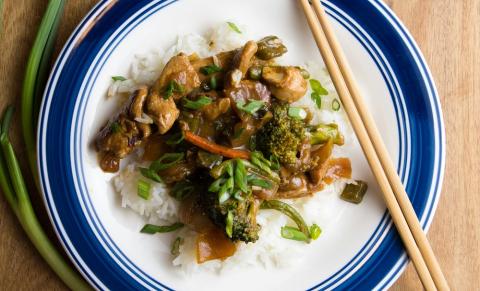
  8. Return the meat and any juices to the wok or frying pan. Add the chilli sauce, soy sauce, ginger and water. Stir until all meat and vegetables are coated and the meat is hot. Serve hot with the rice.

Cost Saver Tips

If you've got any veg left in the fridge, you can use it up in this stir-fry. And it doesn’t have to be lamb you use – mix it up and try chicken or turkey instead.

Tips for Kids

Chop vegetables into small pieces.

Nutritional Information

Based on a single serving of 412g (% of an adult's reference intake)

Energy

559 kcals ( 28 %)

2,349 kJ ( 28 %)

Fat

6 g ( 30 %)

Saturates

66.2 g ( %)

Sugar

7.9 g ( 9 %)

Salt

1.6 g ( 26 %)

Detailed nutritional information

Per 100g Per 412g serving
Energy Kcals 136 559
Energy Kj 570 2,349
Protein 6.6 g 27.1 g
Total Fat g g
Saturated Fat 1.5 g 6 g
Carbohydrates 16.1 g 66.2 g
Total Sugars 1.9 g 7.9 g
NSP Fibre 0.7 g 2.9 g
Sodium 153 mg 631 mg
Salt 0.4 g 1.6 g

Find out about nutritional labelling

Nutrition labels on the front of packaging

  • Most of the big supermarkets and many food manufacturers display nutritional information on the front of pre-packed food.
  • Front of pack nutrition labels provide information on the number of grams of fat, saturated fat, sugars and salt and the amount of energy (in kJ and kcal) in a serving or portion of a recipe.
  • The labels also include information about reference intakes (expressed as a percentage) which are guidelines about the approximate amount of particular nutrients and energy required for a healthy diet.
  • The colour coding tells you at a glance if the food has high (red), medium (amber) or low (green) amounts of fat, saturated fat, sugars and salt.
  • The more greens on the label, the healthier the choice
  • Amber means neither high nor low, so you can eat foods with all or mostly ambers on the label most of the time.
  • Reds on the label means the food is high in that nutrient and these are the foods we should cut down on. Try to eat these foods less often and in small amounts.

Food shopping tips

If you’re trying to decide which product to choose, check to see if there's a nutrition label on the front of the pack. This will help you to quickly assess how your choices stack up. You will often find a mixture of red, amber and green colour coding for the nutrients. So when you're choosing between similar products, try to go for more greens and ambers and fewer reds if you want to make a healthier choice.

Back to top

Ingredients

  • 1 Pack (400g) Minced Lamb
  • 1 (150g) Onion
  • 1 Tablespoon (10g) Vegetable Oil
  • 1 Can (400g) Chickpeas
  • 1 Teaspoon (5g) Curry Paste
  • 4 large, wholemeal (340g) Pitta Breads
  • 2 (170g) Tomatoes
  • 12 Slices (72g) Cucumber
  • 8 Leaves (40g) Lettuce
  • 4 Tablespoons (160g) Low Fat Natural Yoghurt

This recipe has been added to your Meal Planner.

Allergy Disclaimer

Always check the label of each ingredient for allergy warnings.

Method

  1. Peel and finely chop the onion.
  2. Heat the oil in a large saucepan and fry the onion for 5 minutes until lightly browned, then stir in the curry paste.
  3. Start heating the grill so that it is hot when required.
  4. Drain the chickpeas, then crush them with a fork or a potato masher.
  5. Mix the onion, lamb and chickpeas together.
  6. Shape the mix into 8 sausage shapes.
  7. Grill for 8-10 minutes, turning them once.  
  8. Meanwhile, wash and slice the tomatoes and cucumber, and wash and shred the lettuce.
  9. Toast the pitta breads then carefully slit each one open with a knife to make a pocket.
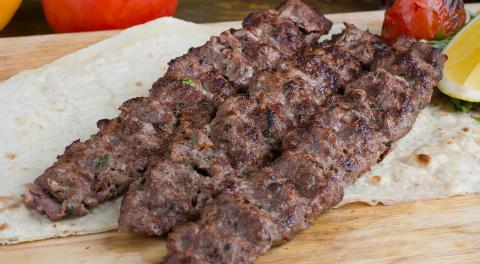
  10. Enjoy the kofte kebab hot, in the pitta bread, with salad and a spoonful of yoghurt.

Time Saver Tips

Why not try making this in bulk so you could keep some to have another day? Let it cool down then just pop it in the fridge or freezer.

Cost Saver Tips

You could even try serving this with rice if you’ve got that in. Or you could shape it into meatballs and cook in a tomato sauce and serve it with spaghetti. How about using different types of mince, such as turkey, or lean pork mince? Look for whatever’s on offer and you could keep it in the freezer so it’s handy to use later.

Tips for Kids

You could use their favourite salad in this. Things like cherry tomatoes or carrot sticks are easy for your little one to chomp on. For a milder curry, why not give korma paste a go instead of madras or jalfrezi?

Nutritional Information

Based on a single serving of 373g (% of an adult's reference intake)

Energy

533 kcals ( 27 %)

2,236 kJ ( 27 %)

Fat

7.2 g ( 36 %)

Saturates

50.3 g ( %)

Sugar

9 g ( 10 %)

Salt

1.7 g ( 29 %)

Detailed nutritional information

Per 100g Per 373g serving
Energy Kcals 142 533
Energy Kj 598 2,236
Protein 9.2 g 34.5 g
Total Fat g g
Saturated Fat 1.9 g 7.2 g
Carbohydrates 13.4 g 50.3 g
Total Sugars 2.4 g 9 g
NSP Fibre 2.6 g 9.9 g
Sodium 183 mg 684 mg
Salt 0.5 g 1.7 g

Find out about nutritional labelling

Nutrition labels on the front of packaging

  • Most of the big supermarkets and many food manufacturers display nutritional information on the front of pre-packed food.
  • Front of pack nutrition labels provide information on the number of grams of fat, saturated fat, sugars and salt and the amount of energy (in kJ and kcal) in a serving or portion of a recipe.
  • The labels also include information about reference intakes (expressed as a percentage) which are guidelines about the approximate amount of particular nutrients and energy required for a healthy diet.
  • The colour coding tells you at a glance if the food has high (red), medium (amber) or low (green) amounts of fat, saturated fat, sugars and salt.
  • The more greens on the label, the healthier the choice
  • Amber means neither high nor low, so you can eat foods with all or mostly ambers on the label most of the time.
  • Reds on the label means the food is high in that nutrient and these are the foods we should cut down on. Try to eat these foods less often and in small amounts.

Food shopping tips

If you’re trying to decide which product to choose, check to see if there's a nutrition label on the front of the pack. This will help you to quickly assess how your choices stack up. You will often find a mixture of red, amber and green colour coding for the nutrients. So when you're choosing between similar products, try to go for more greens and ambers and fewer reds if you want to make a healthier choice.

Back to top

Ingredients

  • (400g) Lamb
  • 3 Medium Sized (300g) Courgettes
  • 3 Tablespoons (45g) Tomato Puree
  • 1 (3g) Garlic Clove
  • 1 (20g) Lemon
  • 1 To Taste Pinch (1g) Ground Black Pepper
  • 6 Tablespoons (260g) White Rice
  • (8Array) Wooden Skewers

This recipe has been added to your Meal Planner.

Allergy Disclaimer

Always check the label of each ingredient for allergy warnings.

Method

  1. Cut the lamb into cubes, trimming any fat.
  2. Wash the courgette and cut into chunks. Peel and finely chop the garlic.
  3. Finely grate the peel of the lemon until you have around 1 teaspoon of it. Squeeze the lemon juice into a bowl or cup.
  4. In a bowl, mix the tomato puree, garlic, lemon rind and 2 tablespoons of the lemon juice.
  5. Add the lamb and black pepper to the bowl. Mix well and leave to marinate for 10 minutes if possible.
  6. Thread the lamb and courgettes onto the skewers and cook under a preheated grill (or barbecue) for 10-15 minutes until cooked through. Turn regularly so that the tomato paste does not burn.
  7. Cook the rice according to the manufacturer's instructions and serve hot with the lamb and courgette skewers.

Time Saver Tips

Can be made with beef, chicken or turkey so choose what is cheapest or on offer.

Tips for Kids

Get them to help thread the meat and vegetables onto the skewers. Other favourite vegetables like peppers or mushrooms can be added to the skewers.

Nutritional Information

Based on a single serving of 328g (% of an adult's reference intake)

Energy

422 kcals ( %)

1,778 kJ ( 23 %)

Fat

4.4 g ( 22 %)

Saturates

52.9 g ( %)

Sugar

2.8 g ( 3 %)

Salt

0.2 g ( 4 %)

Detailed nutritional information

Per 100g Per 328g serving
Energy Kcals 129 422
Energy Kj 542 1,778
Protein 8.3 g 27.1 g
Total Fat g g
Saturated Fat 1.3 g 4.4 g
Carbohydrates 16.1 g 52.9 g
Total Sugars 0.9 g 2.8 g
NSP Fibre 0.5 g 1.3 g
Sodium 30 mg 100 mg
Salt 0.1 g 0.2 g

Find out about nutritional labelling

Nutrition labels on the front of packaging

  • Most of the big supermarkets and many food manufacturers display nutritional information on the front of pre-packed food.
  • Front of pack nutrition labels provide information on the number of grams of fat, saturated fat, sugars and salt and the amount of energy (in kJ and kcal) in a serving or portion of a recipe.
  • The labels also include information about reference intakes (expressed as a percentage) which are guidelines about the approximate amount of particular nutrients and energy required for a healthy diet.
  • The colour coding tells you at a glance if the food has high (red), medium (amber) or low (green) amounts of fat, saturated fat, sugars and salt.
  • The more greens on the label, the healthier the choice
  • Amber means neither high nor low, so you can eat foods with all or mostly ambers on the label most of the time.
  • Reds on the label means the food is high in that nutrient and these are the foods we should cut down on. Try to eat these foods less often and in small amounts.

Food shopping tips

If you’re trying to decide which product to choose, check to see if there's a nutrition label on the front of the pack. This will help you to quickly assess how your choices stack up. You will often find a mixture of red, amber and green colour coding for the nutrients. So when you're choosing between similar products, try to go for more greens and ambers and fewer reds if you want to make a healthier choice.

Back to top

Ingredients

  • 1 Diced Pack (300g) Lamb
  • 1 Tablespoons (10g) Vegetable Oil
  • 1 Medium Sized (160g) Leek
  • 1 Medium Sized (150g) Onion
  • 2 Medium Sized (160g) Carrots
  • 2 Tablespoons (40g) Plain Flour
  • 3 Cups (500ml) Water
  • 1 Reduced Salt (7g) Stock Cube (Lamb Or Vegetable)
  • 5 Large Sized (1kg) Potatoes
  • ¼ Cups (40g) Red Lentils
  • 1 Tins (200g) Chopped Tomatoes
  • 1 Pinch (1g) Ground Black Pepper

This recipe has been added to your Meal Planner.

Allergy Disclaimer

Always check the label of each ingredient for allergy warnings.

Method

  1. Peel the onion, wash the leek and remove outer layer, wash the carrots and potatoes. Slice the onion, leek and carrot and dice potatoes. Rinse the lentils with cold water.
  2. Heat oil in a large pan then add the onions and fry for 2 minutes then add the leek and cook for a further 2 minutes. Coat the lamb in flour then add to pan and cook until it turns brown.
  3. Dissolve the stock cube in boiling water and add to pan with the carrots, potatoes, lentils and tomatoes
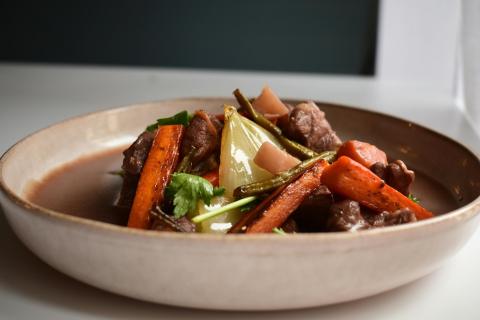
  4. Bring to the boil and then simmer for 30- 40 minutes until stew thickens and the vegetables are soft.
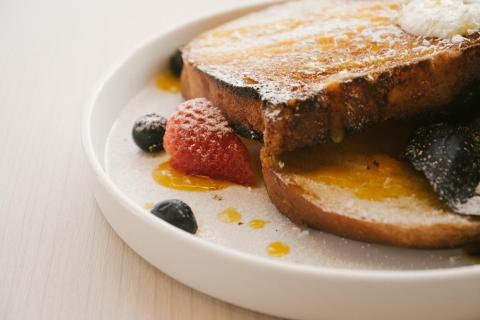
  5. Add black pepper to taste then serve.

Time Saver Tips

You can prepare this stew in advance and then reheat it when you want to eat it.
Cost Saver Tips

This stew is a great one for making use of leftover vegetables. You can make extra and freeze the rest and, to make it even cheaper, look out for inexpensive cuts of meat.
Tips for Kids

Let the kids help prepare vegetables – they can choose their favourites. And don't forget to chop the veg into bite-size chunks.

Nutritional Information

Based on a single serving of 510g (% of an adult's reference intake)

Energy

643 kcals ( 32 %)

2,699 kJ ( 32 %)

Fat

4.6 g ( 23 %)

Saturates

106.6 g ( %)

Sugar

11.7 g ( 13 %)

Salt

0.5 g ( 9 %)

Detailed nutritional information

Per 100g Per 510g serving
Energy Kcals 126 643
Energy Kj 529 2,699
Protein 6 g 30.1 g
Total Fat g g
Saturated Fat 0.9 g 4.6 g
Carbohydrates 20.9 g 106.6 g
Total Sugars 2.3 g 11.7 g
NSP Fibre 2.1 g 10.7 g
Sodium 28 mg 143 mg
Salt 0.1 g 0.5 g

Find out about nutritional labelling

Nutrition labels on the front of packaging

  • Most of the big supermarkets and many food manufacturers display nutritional information on the front of pre-packed food.
  • Front of pack nutrition labels provide information on the number of grams of fat, saturated fat, sugars and salt and the amount of energy (in kJ and kcal) in a serving or portion of a recipe.
  • The labels also include information about reference intakes (expressed as a percentage) which are guidelines about the approximate amount of particular nutrients and energy required for a healthy diet.
  • The colour coding tells you at a glance if the food has high (red), medium (amber) or low (green) amounts of fat, saturated fat, sugars and salt.
  • The more greens on the label, the healthier the choice
  • Amber means neither high nor low, so you can eat foods with all or mostly ambers on the label most of the time.
  • Reds on the label means the food is high in that nutrient and these are the foods we should cut down on. Try to eat these foods less often and in small amounts.

Food shopping tips

If you’re trying to decide which product to choose, check to see if there's a nutrition label on the front of the pack. This will help you to quickly assess how your choices stack up. You will often find a mixture of red, amber and green colour coding for the nutrients. So when you're choosing between similar products, try to go for more greens and ambers and fewer reds if you want to make a healthier choice.

Back to top

Ingredients

  • (200g) Raspberries
  • (200g) Blueberries
  • 1 Medium Sized (100g) Banana
  • 1 Large, Natural, Low Fat Pot (500g) Natural Yogurt
  • 8 No Added Sugar Tablespoons (120g) Muesli

This recipe has been added to your Meal Planner.

Allergy Disclaimer

Always check the label of each ingredient for allergy warnings.

Method

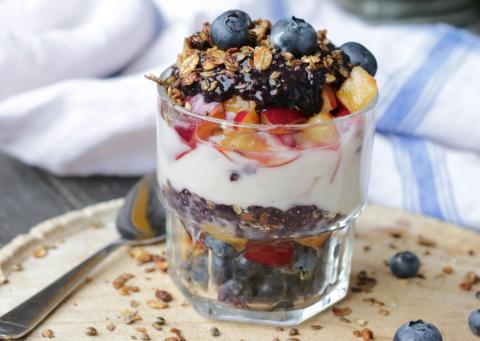
  1. Wash the fruit and peel and slice the banana. Mix the fruit together.
  2. Put alternate layers of fruit, yogurt and muesli in a clear glass, cup or bowl.
  3. Keep in the fridge until ready to serve.

Time Saver Tips

Can be made the night before and kept in the fridge until morning.

Cost Saver Tips

This breakfast can be made with any type of fruit (such as kiwi fruit or strawberries), including frozen or tinned fruit so check to see what is in season and on offer.

Tips for Kids

Can be made with your children’s favourite fruit. Ask them to help layer the ingredients into the glass.

Nutritional Information

Based on a single serving of 280g (% of an adult's reference intake)

Energy

245 kcals ( 12 %)

1,034 kJ ( 12 %)

Fat

1.4 g ( 7 %)

Saturates

38.1 g ( %)

Sugar

23.3 g ( 26 %)

Salt

0.2 g ( 4 %)

Detailed nutritional information

Per 100g Per 280g serving
Energy Kcals 88 245
Energy Kj 369 1,034
Protein 3.7 g 10.3 g
Total Fat g g
Saturated Fat 0.5 g 1.4 g
Carbohydrates 13.6 g 38.1 g
Total Sugars 8.3 g 23.3 g
NSP Fibre 1.7 g 4.8 g
Sodium 34 mg 96 mg
Salt 0.1 g 0.2 g

Find out about nutritional labelling

Nutrition labels on the front of packaging

  • Most of the big supermarkets and many food manufacturers display nutritional information on the front of pre-packed food.
  • Front of pack nutrition labels provide information on the number of grams of fat, saturated fat, sugars and salt and the amount of energy (in kJ and kcal) in a serving or portion of a recipe.
  • The labels also include information about reference intakes (expressed as a percentage) which are guidelines about the approximate amount of particular nutrients and energy required for a healthy diet.
  • The colour coding tells you at a glance if the food has high (red), medium (amber) or low (green) amounts of fat, saturated fat, sugars and salt.
  • The more greens on the label, the healthier the choice
  • Amber means neither high nor low, so you can eat foods with all or mostly ambers on the label most of the time.
  • Reds on the label means the food is high in that nutrient and these are the foods we should cut down on. Try to eat these foods less often and in small amounts.

Food shopping tips

If you’re trying to decide which product to choose, check to see if there's a nutrition label on the front of the pack. This will help you to quickly assess how your choices stack up. You will often find a mixture of red, amber and green colour coding for the nutrients. So when you're choosing between similar products, try to go for more greens and ambers and fewer reds if you want to make a healthier choice.

Back to top

Ingredients

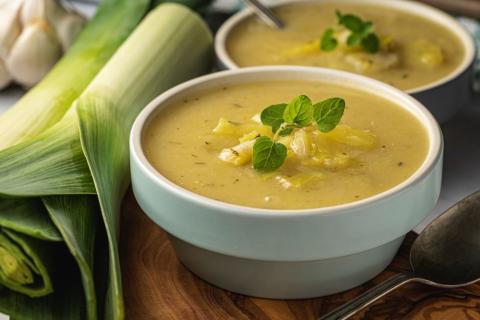
  • 3 Medium Sized (480g) Leeks
  • 5 Medium (425g) Potatoes
  • 2 (14g) Vegetable Stock Cubes (use reduced salt when possible)
  • 2 Pints (1L) Boiling Water
  • 1 Pinch Black Pepper to taste

This recipe has been added to your Meal Planner.

Allergy Disclaimer

Always check the label of each ingredient for allergy warnings.

Method

  1. Wash the leeks and potatoes and peel the potatoes.
  2. Chop them into bite size pieces.
  3. Dissolve the stock cubes in the water.
  4. Put the chopped vegetables into a large saucepan with the stock and bring to boil.
  5. Reduce the heat, season with pepper and simmer for 20 minutes.
  6. Serve hot.

Time Saver Tips

Don’t peel the potatoes. Soup can be prepared in advance and heated when required. Cool before putting in the fridge or freezing. Remember to only reheat leftovers once and to use within two days.

Cost Saver Tips

Why not make twice the amount and freeze it so you’ve got an easy meal for later? Just remember to let it cool before popping it into the freezer and to defrost thoroughly before use.

Tips for Kids

This soup works great with some extra veggies as well. Why not let your little one pick their favourite vegetables? Knowing they chose what’s in it might even make them more likely to eat it. One way that could help you get your kid to eat vegetables is by chopping them up really small so they’re less obvious? Or why not try blending them to make them for a more consistent texture. Your wee one will love to help prepare and chop softer vegetables safely with you, using a table knife. Knowing they’ve been your little kitchen helper might even make them more likely to eat it. Try serving with a slice of wholemeal bread to boost their fibre intake.

Nutritional Information

Based on a single serving of 370g (% of an adult's reference intake)

Energy

83 kcals ( 4 %)

356 kJ ( 4 %)

Fat

0.0 g ( 1 %)

Saturates

18.8 g ( %)

Sugar

3.7 g ( 4 %)

Salt

1.5 g ( 25 %)

Detailed nutritional information

Per 100g Per 370g serving
Energy Kcals 23 83
Energy Kj 96 356
Protein 0.9 g 3.2 g
Total Fat g g
Saturated Fat 0 g 0.0 g
Carbohydrates 5.1 g 18.8 g
Total Sugars 1 g 3.7 g
NSP Fibre 1.1 g 3.9 g
Sodium 159 mg 590 mg
Salt 0.4 g 1.5 g

Find out about nutritional labelling

Nutrition labels on the front of packaging

  • Most of the big supermarkets and many food manufacturers display nutritional information on the front of pre-packed food.
  • Front of pack nutrition labels provide information on the number of grams of fat, saturated fat, sugars and salt and the amount of energy (in kJ and kcal) in a serving or portion of a recipe.
  • The labels also include information about reference intakes (expressed as a percentage) which are guidelines about the approximate amount of particular nutrients and energy required for a healthy diet.
  • The colour coding tells you at a glance if the food has high (red), medium (amber) or low (green) amounts of fat, saturated fat, sugars and salt.
  • The more greens on the label, the healthier the choice
  • Amber means neither high nor low, so you can eat foods with all or mostly ambers on the label most of the time.
  • Reds on the label means the food is high in that nutrient and these are the foods we should cut down on. Try to eat these foods less often and in small amounts.

Food shopping tips

If you’re trying to decide which product to choose, check to see if there's a nutrition label on the front of the pack. This will help you to quickly assess how your choices stack up. You will often find a mixture of red, amber and green colour coding for the nutrients. So when you're choosing between similar products, try to go for more greens and ambers and fewer reds if you want to make a healthier choice.

Back to top

Ingredients

  • 2 Small (120g) Onions
  • 2 (6g) Garlic Cloves or 2 Teaspoons Garlic Puree
  • 2 Medium (320g) Carrots
  • 2 (320g) Red Peppers
  • 2 Tablespoons (20g) Vegetable Oil
  • 2 Pints (1L) Water
  • 2 (14g) Vegetable Stock Cubes (use reduced salt when possible)
  • 18 Level Tablespoons (200g) Red Lentils

This recipe has been added to your Meal Planner.

Allergy Disclaimer

Always check the label of each ingredient for allergy warnings.

Method

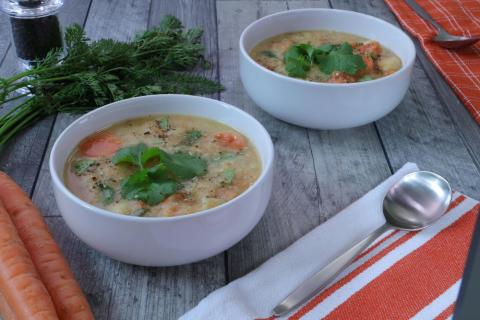
  1. Peel and chop the onion, garlic and carrots. De-seed and chop the pepper.
  2. In a large saucepan, fry the onion, garlic and pepper in oil over a medium heat until soft.
  3. Add the carrots, water, stock cubes and lentils and bring to the boil.
  4. Simmer for around 45 minutes.
  5. Serve hot.

Time Saver Tips

Soup can be made ahead and heated up when you need it for a super easy meal. Why not make double the amount so there’s enough to freeze? Let the soup cool before putting in the fridge and use it up within two days, or freeze it for later.

Cost Saver Tips

You could swap the vegetable stock cube for reduced salt stock granules if that’s what you have in – just check the label for the amount you’ll need for 1 litre of water. You could also use green or brown lentils instead of red ones. Why not try swapping lentils for other dried or tinned pulses, too – like split peas, cannellini beans or chickpeas? If you’re using tinned pulses, there’s no need to cook this for quite so long, and use a little less stock. Soup is always a good use of leftover vegetables too.

Tips for Kids

If your little one isn’t always the biggest fan of vegetables, you could try chopping them extra small or blend the soup so it’s smooth – a great way to make them a little less obvious and for a more consistent texture. Your wee one might enjoy choosing what vegetables to put in the soup, then helping to prepare them. They’ll hopefully be more likely to eat it after helping you make it, too! To up their fibre intake, serve with a slice of thick wholemeal bread.

Nutritional Information

Based on a single serving of 418g (% of an adult's reference intake)

Energy

252 kcals ( 13 %)

1,063 kJ ( 13 %)

Fat

0.6 g ( 3 %)

Saturates

36.6 g ( %)

Sugar

10.5 g ( 12 %)

Salt

1.5 g ( 25 %)

Detailed nutritional information

Per 100g Per 418g serving
Energy Kcals 60 252
Energy Kj 254 1,063
Protein 3.5 g 14.6 g
Total Fat g g
Saturated Fat 0.1 g 0.6 g
Carbohydrates 8.8 g 36.6 g
Total Sugars 2.5 g 10.5 g
NSP Fibre 3.1 g 13 g
Sodium 145 mg 607 mg
Salt 0.4 g 1.5 g

Find out about nutritional labelling

Nutrition labels on the front of packaging

  • Most of the big supermarkets and many food manufacturers display nutritional information on the front of pre-packed food.
  • Front of pack nutrition labels provide information on the number of grams of fat, saturated fat, sugars and salt and the amount of energy (in kJ and kcal) in a serving or portion of a recipe.
  • The labels also include information about reference intakes (expressed as a percentage) which are guidelines about the approximate amount of particular nutrients and energy required for a healthy diet.
  • The colour coding tells you at a glance if the food has high (red), medium (amber) or low (green) amounts of fat, saturated fat, sugars and salt.
  • The more greens on the label, the healthier the choice
  • Amber means neither high nor low, so you can eat foods with all or mostly ambers on the label most of the time.
  • Reds on the label means the food is high in that nutrient and these are the foods we should cut down on. Try to eat these foods less often and in small amounts.

Food shopping tips

If you’re trying to decide which product to choose, check to see if there's a nutrition label on the front of the pack. This will help you to quickly assess how your choices stack up. You will often find a mixture of red, amber and green colour coding for the nutrients. So when you're choosing between similar products, try to go for more greens and ambers and fewer reds if you want to make a healthier choice.

Back to top

Ingredients

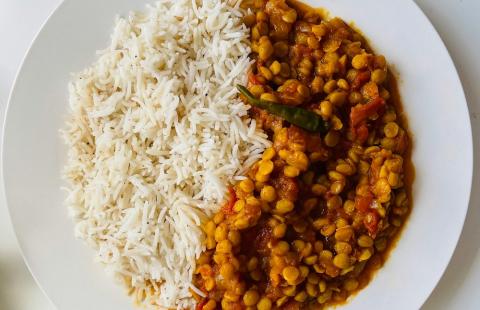
  • ½ Pack (250g) Red Lentils
  • 3 (9g) Garlic Cloves
  • 1 Small Sized (60g) Onion
  • ½ Tins (200g) Chopped Tomatoes
  • 2 Teaspoons (6g) Curry Powder
  • 1 Teaspoons (3g) Chilli Powder
  • 1 Mug (300g) Dried Rice

This recipe has been added to your Meal Planner.

Allergy Disclaimer

Always check the label of each ingredient for allergy warnings.

Method

  1. Add lentils to a medium pan, half fill with water and bring to boil.
  2. Peel the onion and garlic and chop them. Add to the pan along with tomatoes, chilli powder and curry powder.
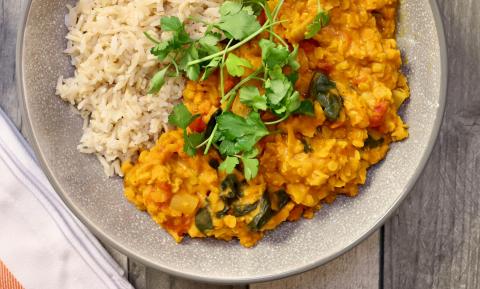
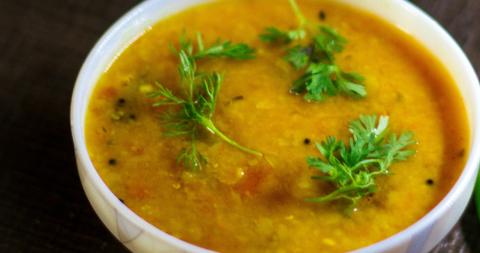
  3. Simmer for 20-30 minutes until the dahl thickens.
  4. Meanwhile cook rice as per the instructions on the packet.
  5. Serve dahl with rice.

Time Saver Tips

Can be cooked in advance and reheated.

Tips for Kids

It doesn't matter if your kids don't like spicy food – you can use smaller amounts of curry and chilli powder to suit their tastes.

Nutritional Information

Based on a single serving of 470g (% of an adult's reference intake)

Energy

508 kcals ( 25 %)

2,134 kJ ( 25 %)

Fat

0.5 g ( 3 %)

Saturates

103.4 g ( %)

Sugar

3.8 g ( 4 %)

Salt

0.2 g ( 3 %)

Detailed nutritional information

Per 100g Per 470g serving
Energy Kcals 108 508
Energy Kj 454 2,134
Protein 4.7 g 22.1 g
Total Fat g g
Saturated Fat 0.1 g 0.5 g
Carbohydrates 22 g 103.4 g
Total Sugars 0.8 g 3.8 g
NSP Fibre 1.1 g 5.2 g
Sodium 13 mg 61 mg
Salt 0.0 g 0.2 g

Find out about nutritional labelling

Nutrition labels on the front of packaging

  • Most of the big supermarkets and many food manufacturers display nutritional information on the front of pre-packed food.
  • Front of pack nutrition labels provide information on the number of grams of fat, saturated fat, sugars and salt and the amount of energy (in kJ and kcal) in a serving or portion of a recipe.
  • The labels also include information about reference intakes (expressed as a percentage) which are guidelines about the approximate amount of particular nutrients and energy required for a healthy diet.
  • The colour coding tells you at a glance if the food has high (red), medium (amber) or low (green) amounts of fat, saturated fat, sugars and salt.
  • The more greens on the label, the healthier the choice
  • Amber means neither high nor low, so you can eat foods with all or mostly ambers on the label most of the time.
  • Reds on the label means the food is high in that nutrient and these are the foods we should cut down on. Try to eat these foods less often and in small amounts.

Food shopping tips

If you’re trying to decide which product to choose, check to see if there's a nutrition label on the front of the pack. This will help you to quickly assess how your choices stack up. You will often find a mixture of red, amber and green colour coding for the nutrients. So when you're choosing between similar products, try to go for more greens and ambers and fewer reds if you want to make a healthier choice.

Back to top
Subscribe to Eat Better Feel Better