This article was created with

eat-better-feel-better-logo-2.png

Ingredients

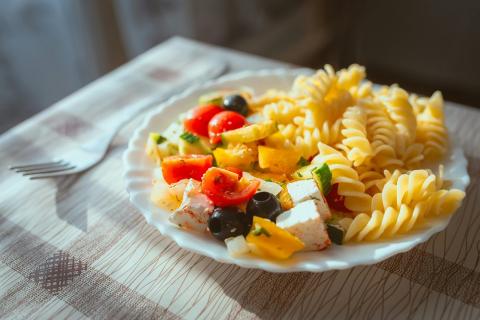
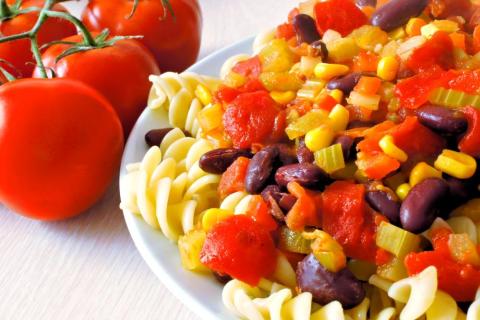
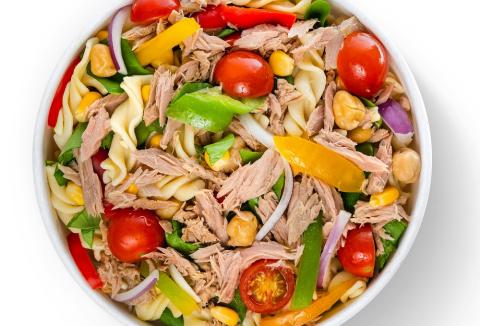
  • ¼ Pack (125g) Dried Pasta
  • 2 Tablespoons (20g) Olive Oil
  • 1 Lemon
  • 1 (160g) Red Pepper
  • 8 (120g) Cherry Tomatoes
  • 4 (40g) Spring Onions
  • ¼ Can (65g) Sweetcorn
  • ¼ Can (60g) Kidney Beans

This recipe has been added to your Meal Planner.

Allergy Disclaimer

Always check the label of each ingredient for allergy warnings.

Method

  1. Cook the pasta in fast-boiling water until just tender but with ‘bite’ (al dente).
  2. Drain the pasta and rinse in cold water. Stir in 1 tablespoon olive oil.
  3. Prepare the vegetables. Wash the pepper, tomatoes and spring onions. De-seed, slice and dice the pepper. Quarter the tomatoes and slice the spring onions. Add all vegetables to the pasta. Drain the kidney beans and add to the pasta with all the other vegetables.
  4. Squeeze the lemon and add the juice to the remaining olive oil. Whisk together, or mix with a fork, and add to the pasta.
  5. Toss the ingredients together. Serve immediately or use as a lunchbox meal.

Time Saver Tips

It’s a good idea to prepare the veg while the pasta is bubbling away.

Cost Saver Tips

You can use regular sized tomatoes instead of cherry tomatoes and red onion instead of spring onion. You could also use any vegetables you have left over - try with grated carrot or peas.

Tips for Kids

Why not try using their favourite pasta shapes, such as twirls or shells? You could also give wholemeal pasta or spaghetti a go, or make it with noodles or rice, too. Follow the cooking times on the packet for wholemeal pasta noodles or rice. One way to give this extra texture is by popping in some pulses, such as canned kidney beans or chickpeas. Or you could even try adding a hard-boiled egg.

Nutritional Information

Based on a single serving of 160g (% of an adult's reference intake)

Energy

180 kcals ( 9 %)

758 kJ ( 9 %)

Fat

0.9 g ( 3 %)

Saturates

27.9 g ( %)

Sugar

5.1 g ( 6 %)

Salt

0 g ( 0 %)

Detailed nutritional information

Per 100g Per 160g serving
Energy Kcals 113 180
Energy Kj 474 758
Protein 3.2 g 5.1 g
Total Fat g g
Saturated Fat 0.6 g 0.9 g
Carbohydrates 17.4 g 27.9 g
Total Sugars 3.2 g 5.1 g
NSP Fibre 2.3 g 3.6 g
Sodium 2 mg 4 mg
Salt 0 g 0 g

Find out about nutritional labelling

Nutrition labels on the front of packaging

  • Most of the big supermarkets and many food manufacturers display nutritional information on the front of pre-packed food.
  • Front of pack nutrition labels provide information on the number of grams of fat, saturated fat, sugars and salt and the amount of energy (in kJ and kcal) in a serving or portion of a recipe.
  • The labels also include information about reference intakes (expressed as a percentage) which are guidelines about the approximate amount of particular nutrients and energy required for a healthy diet.
  • The colour coding tells you at a glance if the food has high (red), medium (amber) or low (green) amounts of fat, saturated fat, sugars and salt.
  • The more greens on the label, the healthier the choice
  • Amber means neither high nor low, so you can eat foods with all or mostly ambers on the label most of the time.
  • Reds on the label means the food is high in that nutrient and these are the foods we should cut down on. Try to eat these foods less often and in small amounts.

Food shopping tips

If you’re trying to decide which product to choose, check to see if there's a nutrition label on the front of the pack. This will help you to quickly assess how your choices stack up. You will often find a mixture of red, amber and green colour coding for the nutrients. So when you're choosing between similar products, try to go for more greens and ambers and fewer reds if you want to make a healthier choice.
Back to top

Ingredients

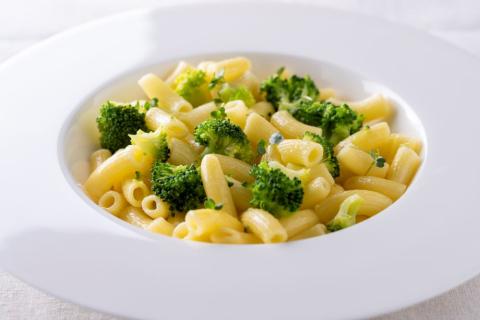
  • 4 Cups (300g) Macaroni
  • 1 Pinch (1g) Ground Black Pepper
  • 4 Tablespoons (60g) Low Fat Spread
  • 2 ½ Tablespoons (50g) Plain Flour
  • 3 Cups (568ml) Semi-Skimmed Milk
  • 5 Reduced Fat Tablespoons (120g) Cheddar Cheese
  • 8 Spears (360g) Broccoli

This recipe has been added to your Meal Planner.

Allergy Disclaimer

Always check the label of each ingredient for allergy warnings.

Method

  1. Cook macaroni as per instructions on the pack.
  2. Wash and chop broccoli and boil for 5-10 minutes.
  3. Melt low fat spread in a pan, remove from heat and stir in flour to make a paste. Heat again for 1 minute and then gradually add the milk, stirring continuously until the sauce thickens. Add grated cheese and black pepper.
  4. Drain macaroni and mix with sauce. Once heated through serve with broccoli.

Cost Saver Tips

Serve with your favourite vegetable in season.

Tips for Kids

Can make this with different shaped pasta and serve with their favourite vegetable.

Nutritional Information

Based on a single serving of 420g (% of an adult's reference intake)

Energy

407 kcals ( 20 %)

1,697 kJ ( 20 %)

Fat

6.3 g ( 32 %)

Saturates

48.3 g ( %)

Sugar

8.4 g ( 9 %)

Salt

0.8 g ( 13 %)

Detailed nutritional information

Per 100g Per 420g serving
Energy Kcals 97 407
Energy Kj 407 1,697
Protein 5.8 g 24.4 g
Total Fat g g
Saturated Fat 1.5 g 6.3 g
Carbohydrates 11.5 g 48.3 g
Total Sugars 2 g 8.4 g
NSP Fibre 0.9 g 3.8 g
Sodium 91 mg 382 mg
Salt 0.2 g 0.8 g

Find out about nutritional labelling

Nutrition labels on the front of packaging

  • Most of the big supermarkets and many food manufacturers display nutritional information on the front of pre-packed food.
  • Front of pack nutrition labels provide information on the number of grams of fat, saturated fat, sugars and salt and the amount of energy (in kJ and kcal) in a serving or portion of a recipe.
  • The labels also include information about reference intakes (expressed as a percentage) which are guidelines about the approximate amount of particular nutrients and energy required for a healthy diet.
  • The colour coding tells you at a glance if the food has high (red), medium (amber) or low (green) amounts of fat, saturated fat, sugars and salt.
  • The more greens on the label, the healthier the choice
  • Amber means neither high nor low, so you can eat foods with all or mostly ambers on the label most of the time.
  • Reds on the label means the food is high in that nutrient and these are the foods we should cut down on. Try to eat these foods less often and in small amounts.

Food shopping tips

If you’re trying to decide which product to choose, check to see if there's a nutrition label on the front of the pack. This will help you to quickly assess how your choices stack up. You will often find a mixture of red, amber and green colour coding for the nutrients. So when you're choosing between similar products, try to go for more greens and ambers and fewer reds if you want to make a healthier choice.

Back to top

Ingredients

  • 1 Tablespoon (10g) Vegetable Oil
  • 1 Medium sized (150g) Onion
  • 12 Medium (120g) Mushrooms
  • 1 Tin (400g) Chopped or Plum Tomatoes
  • 3 Tins (375g) Scottish Mackerel Fillets in Tomato Sauce
  • 2 Cups (300g) Dried Pasta

This recipe has been added to your Meal Planner.

Allergy Disclaimer

Always check the label of each ingredient for allergy warnings.

Method

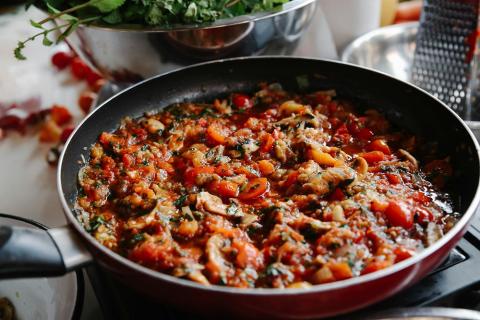
  1. Peel and finely chop the onion. Rinse or wipe the mushrooms and slice them.
  2. Heat the oil in a saucepan, add the onion and fry for around 3 minutes or until tender.
  3. Stir in the mushrooms and chopped tomatoes. If using plum tomatoes, chop them up using a spoon when in the pan. Bring to the boil, reduce the heat and simmer for around 10 minutes.
  4. Meanwhile, cook the pasta according to the instructions on the packet.
  5. When the onion, mushroom and tomato sauce has simmered for around 10 minutes, add the mackerel. Stir and simmer for another 5 minutes.
  6. When the pasta is cooked, drain and pour the sauce over the pasta. Serve immediately.

Cost Saver Tips

This is a great recipe if you’re trying to get your little one to eat some more oily fish. For a change, you could try swapping the canned mackerel with canned sardines in tomato sauce.

Tips for Kids

To make this extra tasty looking, why not use their favourite pasta shapes and add their favourite vegetables, too? For a fibre boost, you could give wholemeal pasta a go, or see if your little one prefers a mix of both wholemeal and white pasta. Just make sure and adjust cooking time, as it could take 2-4 minutes longer to cook. This is a great recipe to encourage them to eat oily fish. For a change, replace the canned mackerel with canned sardines in tomato sauce.

Nutritional Information

Based on a single serving of 387g (% of an adult's reference intake)

Energy

485 kcals ( 24 %)

1,964 kJ ( 24 %)

Fat

3.4 g ( 17 %)

Saturates

60.5 g ( %)

Sugar

8.9 g ( 10 %)

Salt

0.6 g ( 10 %)

Detailed nutritional information

Per 100g Per 387g serving
Energy Kcals 125 485
Energy Kj 508 1,964
Protein 6.4 g 24.7 g
Total Fat g g
Saturated Fat 0.9 g 3.4 g
Carbohydrates 15.6 g 60.5 g
Total Sugars 2.3 g 8.9 g
NSP Fibre 1 g 4 g
Sodium 64 mg 247 mg
Salt 0.2 g 0.6 g

Find out about nutritional labelling

Nutrition labels on the front of packaging

  • Most of the big supermarkets and many food manufacturers display nutritional information on the front of pre-packed food.
  • Front of pack nutrition labels provide information on the number of grams of fat, saturated fat, sugars and salt and the amount of energy (in kJ and kcal) in a serving or portion of a recipe.
  • The labels also include information about reference intakes (expressed as a percentage) which are guidelines about the approximate amount of particular nutrients and energy required for a healthy diet.
  • The colour coding tells you at a glance if the food has high (red), medium (amber) or low (green) amounts of fat, saturated fat, sugars and salt.
  • The more greens on the label, the healthier the choice
  • Amber means neither high nor low, so you can eat foods with all or mostly ambers on the label most of the time.
  • Reds on the label means the food is high in that nutrient and these are the foods we should cut down on. Try to eat these foods less often and in small amounts.

Food shopping tips

If you’re trying to decide which product to choose, check to see if there's a nutrition label on the front of the pack. This will help you to quickly assess how your choices stack up. You will often find a mixture of red, amber and green colour coding for the nutrients. So when you're choosing between similar products, try to go for more greens and ambers and fewer reds if you want to make a healthier choice.

Back to top

Ingredients

  • 4 Fillets (400g) Fresh Scottish Mackerel
  • 2 Tablespoons (20g) Vegetable Oil
  • 2 Medium (300g) Onion
  • 6 (18g) Garlic Cloves or 30g Garlic Puree
  • ½ Teaspoon (2g) Ground Ginger
  • 1 Teaspoon (3g) Dried Cumin
  • 2 Teaspoons (6g) Ground Coriander
  • 1 Teaspoon (3g) Ground Turmeric
  • 1 Teaspoon (3g) Garam Masala
  • ½ Large Tub (250g) Low Fat Yoghurt
  • 4 (20g) Green Chillies
  • 1 Mug (300g) Easy Cook Rice

This recipe has been added to your Meal Planner.

Allergy Disclaimer

Always check the label of each ingredient for allergy warnings.

Method

  1. Peel and chop the onion and garlic.
  2. Wash the chillies and cut them in half lengthwise. Remove the seeds and white bit surrounding them. Finely chop the chillies. Wash hands immediately after.
  3. Heat the oil in a frying pan and cook the onion over medium heat for 5 minutes, or until softened and lightly brown.
  4. Add the garlic and spices to the pan and stir for 2 minutes.
  5. Add the yogurt and chillies to the pan. Cover with a lid and simmer on a low heat for 10 minutes.
  6. Add the mackerel fillets and continue to simmer on a low heat for 10 minutes or until the fish is cooked through and flakes easily. Try not to cook too long as the fish will produce a liquid and the sauce will spoil.
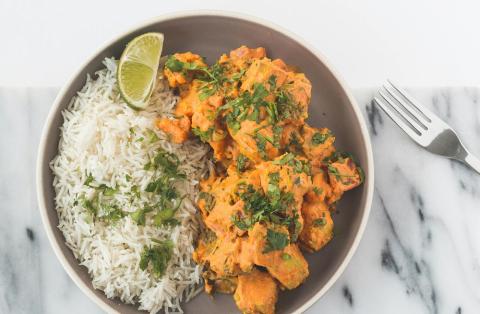
  7. While the fish is cooking, boil the rice according to the instructions on the packet and serve with the fish curry.

Time Saver Tips

This recipe is tastiest if you use mackerel fillets. To prepare whole fish, clean then remove heads and tails, split the fish down the middle and remove the bones. To remove the skin, take the tail end of the fish and make a small angled cut through the flesh, with a sharp knife. Hold the fish tight with your hand while you gently move your knife through the fish, running the blade under the skin to loosen it. Wash the fillets and set aside, ensuring to clean hands, surfaces and all utensils used with the raw fish. If that sounds too time consuming, you can always use fresh or tinned mackerel that’s already been deboned.

Cost Saver Tips

Not got all these individual spices in? No worries – you can just use a few heaped teaspoons of curry powder. Pitta bread goes great with this if that’s what you’ve got in, or as a different option to try instead of rice.

Tips for Kids

If your wee one finds the taste of mackerel a bit strong, you could try mixing in some white fish or salmon so it’s got lots of different flavours.

Nutritional Information

Based on a single serving of 402g (% of an adult's reference intake)

Energy

537 kcals ( 27 %)

2,268 kJ ( 27 %)

Fat

3.2 g ( 16 %)

Saturates

83.4 g ( %)

Sugar

9.1 g ( 10 %)

Salt

0.4 g ( 7 %)

Detailed nutritional information

Per 100g Per 402g serving
Energy Kcals 134 537
Energy Kj 564 2,268
Protein 5.5 g 21.9 g
Total Fat g g
Saturated Fat 0.8 g 3.2 g
Carbohydrates 20.7 g 83.4 g
Total Sugars 2.3 g 9.1 g
NSP Fibre 0.9 g 3.7 g
Sodium 38 mg 152 mg
Salt 0.1 g 0.4 g

Find out about nutritional labelling

Nutrition labels on the front of packaging

  • Most of the big supermarkets and many food manufacturers display nutritional information on the front of pre-packed food.
  • Front of pack nutrition labels provide information on the number of grams of fat, saturated fat, sugars and salt and the amount of energy (in kJ and kcal) in a serving or portion of a recipe.
  • The labels also include information about reference intakes (expressed as a percentage) which are guidelines about the approximate amount of particular nutrients and energy required for a healthy diet.
  • The colour coding tells you at a glance if the food has high (red), medium (amber) or low (green) amounts of fat, saturated fat, sugars and salt.
  • The more greens on the label, the healthier the choice
  • Amber means neither high nor low, so you can eat foods with all or mostly ambers on the label most of the time.
  • Reds on the label means the food is high in that nutrient and these are the foods we should cut down on. Try to eat these foods less often and in small amounts.

Food shopping tips

If you’re trying to decide which product to choose, check to see if there's a nutrition label on the front of the pack. This will help you to quickly assess how your choices stack up. You will often find a mixture of red, amber and green colour coding for the nutrients. So when you're choosing between similar products, try to go for more greens and ambers and fewer reds if you want to make a healthier choice.

Back to top

Ingredients

  • 3 In Brine (Drained) Tins (300g) Mackerel
  • 3 Medium Sized Or 300g Of Cold Mashed Potato (340g) Potatoes
  • 1 Tablespoons (15g) Reduced Calorie Mayonnaise
  • 4 (40g) Spring Onions
  • 1 3 Medium Slices of Wholemeal Bread Cup (85g) Breadcrumbs
  • 1 Egg
  • 2 Tablespoons (40g) Plain Flour
  • 2 Long Grain Cups (150g) Easy Cook Rice
  • 1 Frozen Cup (160g) Peas
  • 1 Frozen Cup (160g) Sweetcorn

This recipe has been added to your Meal Planner.

Allergy Disclaimer

Always check the label of each ingredient for allergy warnings.

Method

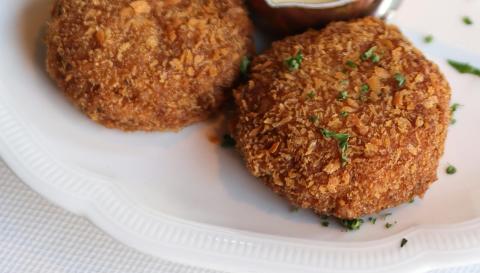
  1. Separate mackerel into flakes and mix in bowl with mashed potato and mayonnaise.
  2. Peel and chop the spring onions into small pieces and add to mixture.
  3. Crack egg into a bowl and beat with a fork.
  4. Add the flour to a separate bowl.
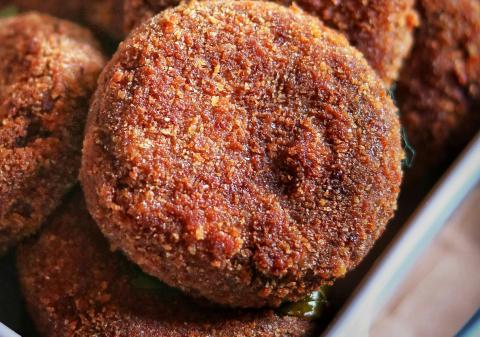
  5. Divide the mixture into 8 and shape into a ball then flatten.
  6. Lightly toast/ grill bread, cut off the crusts and cut each slice open to allow the inside to be toasted/ grilled. Once cooled rub between fingers to make the bread crumbs.
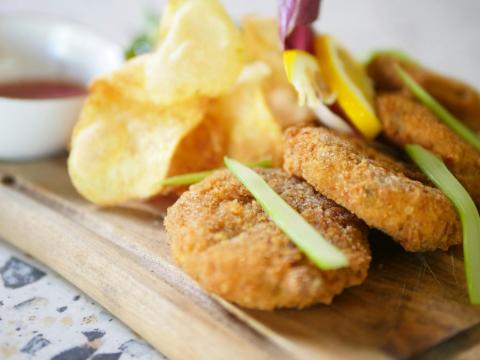
  7. Coat each fish cake in flour, then egg and roll in breadcrumbs.
  8. Grill on each side for 5 minutes until golden brown and hot throughout.
  9. Cook the rice and vegetables as per instructions on the packet and serve together with the fish cakes.

Time Saver Tips

Can prepare fish cakes in advance. They can be stored in the fridge before cooking for 1 day or frozen. Buy ready made breadcrumbs.

Cost Saver Tips

Make in bulk and freeze.

Tips for Kids

Involve children in shaping and coating the fish cakes.

Nutritional Information

Based on a single serving of 370g (% of an adult's reference intake)

Energy

562 kcals ( 28 %)

2,360 kJ ( 28 %)

Fat

3.3 g ( 17 %)

Saturates

85.1 g ( %)

Sugar

3.7 g ( 4 %)

Salt

1.1 g ( 18 %)

Detailed nutritional information

Per 100g Per 370g serving
Energy Kcals 152 562
Energy Kj 638 2,360
Protein 6.6 g 27.7 g
Total Fat g g
Saturated Fat 0.9 g 3.3 g
Carbohydrates 23 g 85.1 g
Total Sugars 1 g 3.7 g
NSP Fibre 1.4 g 5.2 g
Sodium 104 mg 385 mg
Salt 0.3 g 1.1 g

Find out about nutritional labelling

Nutrition labels on the front of packaging

  • Most of the big supermarkets and many food manufacturers display nutritional information on the front of pre-packed food.
  • Front of pack nutrition labels provide information on the number of grams of fat, saturated fat, sugars and salt and the amount of energy (in kJ and kcal) in a serving or portion of a recipe.
  • The labels also include information about reference intakes (expressed as a percentage) which are guidelines about the approximate amount of particular nutrients and energy required for a healthy diet.
  • The colour coding tells you at a glance if the food has high (red), medium (amber) or low (green) amounts of fat, saturated fat, sugars and salt.
  • The more greens on the label, the healthier the choice
  • Amber means neither high nor low, so you can eat foods with all or mostly ambers on the label most of the time.
  • Reds on the label means the food is high in that nutrient and these are the foods we should cut down on. Try to eat these foods less often and in small amounts.

Food shopping tips

If you’re trying to decide which product to choose, check to see if there's a nutrition label on the front of the pack. This will help you to quickly assess how your choices stack up. You will often find a mixture of red, amber and green colour coding for the nutrients. So when you're choosing between similar products, try to go for more greens and ambers and fewer reds if you want to make a healthier choice.

Back to top

Ingredients

  • 1 Tablespoon (10g) Vegetable Oil
  • 1 Large (240g) Onion
  • 1 Tin (400g) Chopped or Plum Tomatoes
  • 3 Tins (375g) Scottish Mackerel in Brine
  • 6 Large (880g) Potatoes
  • 7 Tablespoons (100ml) Semi-Skimmed Milk
  • 4 Tablespoons (100g) Cheddar Cheese (choose reduced fat whenever possible)
  • 1 Pinch Black Pepper to taste

This recipe has been added to your Meal Planner.

Allergy Disclaimer

Always check the label of each ingredient for allergy warnings.

Method

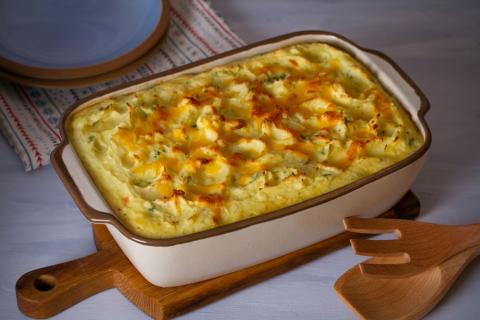
  1. Preheat the oven to 180°C / 160°C fan oven / 350°F / gas mark 4.
  2. Peel the potatoes and cut into cubes, then boil them until they're soft.
  3. Peel and chop the onion. Heat oil in pan and fry the onions until golden.
  4. Add the chopped tomatoes, drained mackerel and pepper. If using plum tomatoes, chop them up using a spoon when in the pan. Stir mixture and heat through.
  5. Mash the potatoes with milk until smooth. Grate the cheese.
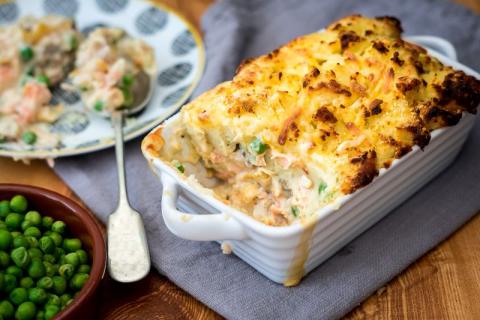
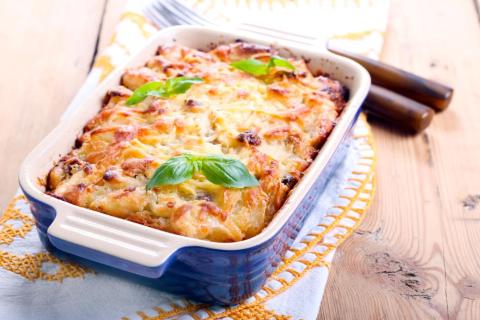
  6. Place the fish mixture into an oven proof dish and then spoon the potato on top. Sprinkle the grated cheese on top.
  7. Place in oven for about 20 minutes until the top is golden brown. Serve with your favourite vegetables.

Time Saver Tips

Why not prepare this fish pie in advance so it’s ready to just pop into the oven later? You could even make it in bulk ready to use another day.

Tips for Kids

If your wee one finds the taste a bit too strong at first, you could try using a mixture of mackerel and a white fish to begin with. Then gradually put in more mackerel over time so they get used to the flavour. To reduce salt intake, fresh mackerel is a really good choice. You could even use salmon – whichever fish your little one likes best. This is extra healthy and tasty when you serve it with your child’s favourite vegetables – fresh, frozen or out of a can.

Nutritional Information

Based on a single serving of 506g (% of an adult's reference intake)

Energy

421 kcals ( 22 %)

1,609 kJ ( 22 %)

Fat

5.1 g ( 26 %)

Saturates

44.8 g ( %)

Sugar

12 g ( 13 %)

Salt

0.8 g ( 13 %)

Detailed nutritional information

Per 100g Per 506g serving
Energy Kcals 83 421
Energy Kj 318 1,609
Protein 5 g 25.3 g
Total Fat g g
Saturated Fat 1 g 5.1 g
Carbohydrates 8.9 g 44.8 g
Total Sugars 2.4 g 12 g
NSP Fibre 0.8 g 3.8 g
Sodium 67 mg 337 mg
Salt 0.2 g 0.8 g

Find out about nutritional labelling

Nutrition labels on the front of packaging

  • Most of the big supermarkets and many food manufacturers display nutritional information on the front of pre-packed food.
  • Front of pack nutrition labels provide information on the number of grams of fat, saturated fat, sugars and salt and the amount of energy (in kJ and kcal) in a serving or portion of a recipe.
  • The labels also include information about reference intakes (expressed as a percentage) which are guidelines about the approximate amount of particular nutrients and energy required for a healthy diet.
  • The colour coding tells you at a glance if the food has high (red), medium (amber) or low (green) amounts of fat, saturated fat, sugars and salt.
  • The more greens on the label, the healthier the choice
  • Amber means neither high nor low, so you can eat foods with all or mostly ambers on the label most of the time.
  • Reds on the label means the food is high in that nutrient and these are the foods we should cut down on. Try to eat these foods less often and in small amounts.
Food shopping tips

If you’re trying to decide which product to choose, check to see if there's a nutrition label on the front of the pack. This will help you to quickly assess how your choices stack up. You will often find a mixture of red, amber and green colour coding for the nutrients. So when you're choosing between similar products, try to go for more greens and ambers and fewer reds if you want to make a healthier choice.
Back to top

Ingredients

  • 1 Such As Quorn Pack (500g) Meat Free Chicken Style Pieces
  • 1 Tablespoons (10g) Vegetable Oil
  • 1 Medium Sized (150g) Onion
  • 1 Medium Sized (100g) Courgette
  • 10 Medium Sized (100g) Mushrooms
  • 1 (160g) Red Pepper
  • 2 Tablespoons (30g) Soy Sauce
  • 1 Pack (250Array) Egg Noodles

This recipe has been added to your Meal Planner.

Allergy Disclaimer

Always check the label of each ingredient for allergy warnings.

Method

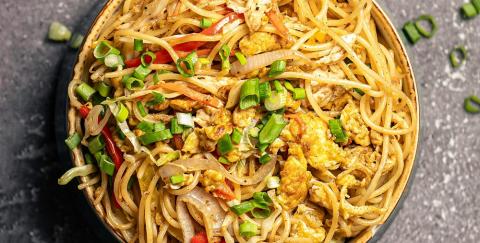
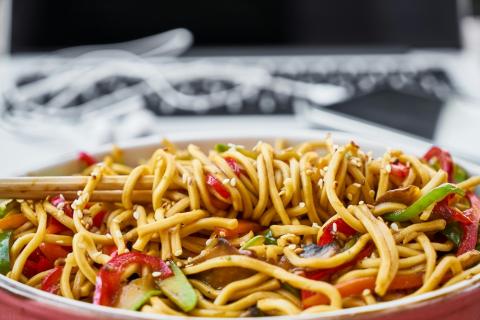
  1. Peel and dice the onions, then wash and slice mushrooms, courgette and pepper.
  2. Heat the oil in a large pan or wok over a high heat. Add the onions to the pan and fry for 2 minutes then add the meat free pieces for a further 2 minutes.
  3. Add the vegetables to the pan and fry for 5 minutes until the vegetables start to soften.
  4. Meanwhile cook the noodles as instructed on the packet.
  5. Add 4 teaspoons of soy sauce to the stir fry and the other 2 tsp to be mixed into the noodles once drained. Alternatively mix the drained noodles into the stir fry with the soy sauce.

Cost Saver Tips

Look out for vegetables in season and on offer.

Tips for Kids

Let them help to slice the vegetables. Add their favourite vegetables to the stir fry.

Nutritional Information

Based on a single serving of 348g (% of an adult's reference intake)

Energy

414 kcals ( 21 %)

1,740 kJ ( 21 %)

Fat

1.4 g ( 7 %)

Saturates

58.1 g ( %)

Sugar

6.6 g ( 7 %)

Salt

3.1 g ( 52 %)

Detailed nutritional information

Per 100g Per 348g serving
Energy Kcals 119 414
Energy Kj 500 1,740
Protein 8.4 g 29.2 g
Total Fat g g
Saturated Fat 0.4 g 1.4 g
Carbohydrates 16.7 g 58.1 g
Total Sugars 1.9 g 6.6 g
NSP Fibre 3.2 g 11.1 g
Sodium 362 mg 1,260 mg
Salt 0.9 g 3.1 g

Find out about nutritional labelling

Nutrition labels on the front of packaging

  • Most of the big supermarkets and many food manufacturers display nutritional information on the front of pre-packed food.
  • Front of pack nutrition labels provide information on the number of grams of fat, saturated fat, sugars and salt and the amount of energy (in kJ and kcal) in a serving or portion of a recipe.
  • The labels also include information about reference intakes (expressed as a percentage) which are guidelines about the approximate amount of particular nutrients and energy required for a healthy diet.
  • The colour coding tells you at a glance if the food has high (red), medium (amber) or low (green) amounts of fat, saturated fat, sugars and salt.
  • The more greens on the label, the healthier the choice
  • Amber means neither high nor low, so you can eat foods with all or mostly ambers on the label most of the time.
  • Reds on the label means the food is high in that nutrient and these are the foods we should cut down on. Try to eat these foods less often and in small amounts.

Food shopping tips

If you’re trying to decide which product to choose, check to see if there's a nutrition label on the front of the pack. This will help you to quickly assess how your choices stack up. You will often find a mixture of red, amber and green colour coding for the nutrients. So when you're choosing between similar products, try to go for more greens and ambers and fewer reds if you want to make a healthier choice.

Back to top

Ingredients

  • 1 Lean Pack (500g) Minced Beef
  • ½ Cups (50g) Breadcrumbs
  • 1 Egg
  • 2 Tablespoons (6g) Mixed Herbs
  • 1 Pinch (1g) Ground Black Pepper
  • 1 (700g) Ready Made Tomato Pasta Sauce With Vegetables
  • ½ Pack (300g) Spaghetti

This recipe has been added to your Meal Planner.

Allergy Disclaimer

Always check the label of each ingredient for allergy warnings.

Method

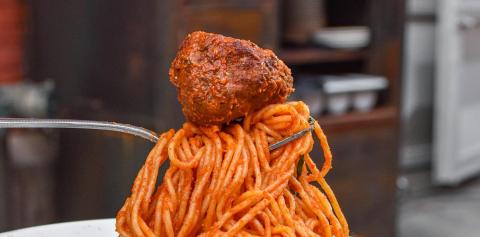
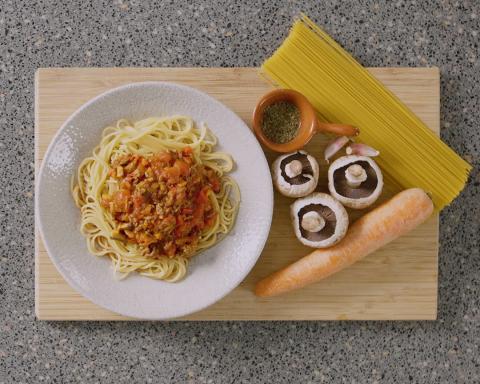
  1. Mix the mince, breadcrumbs, herbs and black pepper together in a bowl. Crack the egg and add to the mixture, mix well.
  2. Shape the mixture into 16 meatballs.
  3. Cook the meatballs in a frying pan, over a medium heat until they're browned all over.
  4. Cook the spaghetti as instructed on packet.
  5. Once the meatballs have browned, pour the sauce over them and heat through for 5 minutes.
  6. Serve with spaghetti.

Tips for Kids

The kids will love getting their hands messy with this dish – just remember to make them wash their hands after handling the raw meat.

Nutritional Information

Based on a single serving of 435g (% of an adult's reference intake)

Energy

513 kcals ( 26 %)

2,158 kJ ( 26 %)

Fat

5.7 g ( 28 %)

Saturates

58.7 g ( %)

Sugar

10.4 g ( 12 %)

Salt

1.7 g ( 29 %)

Detailed nutritional information

Per 100g Per 435g serving
Energy Kcals 118 513
Energy Kj 496 2,158
Protein 8.1 g 35.2 g
Total Fat g g
Saturated Fat 1.3 g 5.7 g
Carbohydrates 13.5 g 58.7 g
Total Sugars 2.4 g 10.4 g
NSP Fibre 1.6 g 7 g
Sodium 147 mg 639 mg
Salt 0.4 g 1.7 g

Find out about nutritional labelling

Nutrition labels on the front of packaging

  • Most of the big supermarkets and many food manufacturers display nutritional information on the front of pre-packed food.
  • Front of pack nutrition labels provide information on the number of grams of fat, saturated fat, sugars and salt and the amount of energy (in kJ and kcal) in a serving or portion of a recipe.
  • The labels also include information about reference intakes (expressed as a percentage) which are guidelines about the approximate amount of particular nutrients and energy required for a healthy diet.
  • The colour coding tells you at a glance if the food has high (red), medium (amber) or low (green) amounts of fat, saturated fat, sugars and salt.
  • The more greens on the label, the healthier the choice
  • Amber means neither high nor low, so you can eat foods with all or mostly ambers on the label most of the time.
  • Reds on the label means the food is high in that nutrient and these are the foods we should cut down on. Try to eat these foods less often and in small amounts.

Food shopping tips

If you’re trying to decide which product to choose, check to see if there's a nutrition label on the front of the pack. This will help you to quickly assess how your choices stack up. You will often find a mixture of red, amber and green colour coding for the nutrients. So when you're choosing between similar products, try to go for more greens and ambers and fewer reds if you want to make a healthier choice.

Back to top

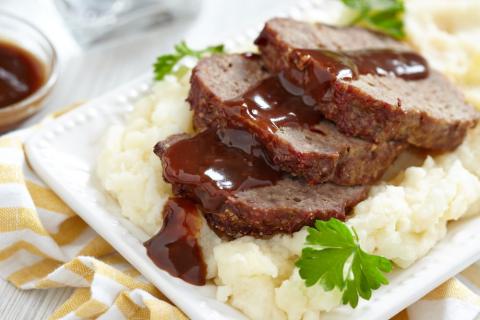
Ingredients

  • 1 lean Pack (500g) Lean Minced Beef
  • 1 Cup (100g) Wholemeal Breadcrumbs
  • 1 (60g) Onion
  • 3 (240g) Carrots
  • 2 Tablespoons (30g) Ketchup
  • 2 Tablespoons (6g) Chopped Parsley
  • 1 Egg
  • 2 Tablespoons (30g) Barbecue Sauce
  • 5 (1kg) Potatoes
  • 1 Pack (225g) Green Beans

This recipe has been added to your Meal Planner.

Allergy Disclaimer

Always check the label of each ingredient for allergy warnings.

Method

  1. Preheat the oven to 180°C / 160°C fan oven / 325°F / gas mark 4. Line a baking tray with greaseproof/ baking paper.
  2. Peel onion and one of the carrots then grate. Peel potatoes and cut into approximately 2.5cm chunks. Peel and slice the other carrots then finely chop parsley.
  3. Place the mince into  a large bowl, add grated onions, grated carrot, breadcrumbs (see notes how to make fresh breadcrumbs), tomato ketchup, parsley and egg. Mix well using hands and add black pepper if desired.
  4. Shape mixture into an approximately 10cmx18cm rectangle on the baking tray. Bake in oven for 25-30 minutes.
  5. Meanwhile place the potatoes in a large pan and cover with boiling water. Bring the water back to the boil then reduce the heat and simmer for approximately 20 minutes.  
  6. Place the sliced carrots and green beans into another pan, cover with boiling water and bring to the boil then reduce heat and simmer for approximately 10 minutes.
  7. Remove meatloaf from the oven and drain any excess fat. Spread the barbecue sauce over the top of the meatloaf and return to the oven for 5- minutes. Remove from oven and stand for 5 minutes before slicing.
  8. Check the potatoes and vegetables are cooked through using a fork then drain and serve with the meatloaf.

Time Saver Tips

Meatloaf can be made in advance and served cold.

Cost Saver Tips

A use of leftover vegetables. Buy mince in bulk and freeze extra for another day. Use frozen green beans instead of fresh.

Tips for Kids

They will enjoy helping to make and shape the meatloaf. Serve with their favourite vegetables.

Nutritional Information

Based on a single serving of 496g (% of an adult's reference intake)

Energy

540 kcals ( 27 %)

2,271 kJ ( 27 %)

Fat

6 g ( 30 %)

Saturates

67.5 g ( %)

Sugar

10.9 g ( 12 %)

Salt

1.5 g ( 26 %)

Detailed nutritional information

Per 100g Per 496g serving
Energy Kcals 109 540
Energy Kj 458 2,271
Protein 7.7 g 38.2 g
Total Fat g g
Saturated Fat 1.2 g 6 g
Carbohydrates 13.6 g 67.5 g
Total Sugars 2.2 g 10.9 g
NSP Fibre 1.3 g 6.4 g
Sodium 117 mg 580 mg
Salt 0.3 g 1.5 g

Find out about nutritional labelling

Nutrition labels on the front of packaging

  • Most of the big supermarkets and many food manufacturers display nutritional information on the front of pre-packed food.
  • Front of pack nutrition labels provide information on the number of grams of fat, saturated fat, sugars and salt and the amount of energy (in kJ and kcal) in a serving or portion of a recipe.
  • The labels also include information about reference intakes (expressed as a percentage) which are guidelines about the approximate amount of particular nutrients and energy required for a healthy diet.
  • The colour coding tells you at a glance if the food has high (red), medium (amber) or low (green) amounts of fat, saturated fat, sugars and salt.
  • The more greens on the label, the healthier the choice
  • Amber means neither high nor low, so you can eat foods with all or mostly ambers on the label most of the time.
  • Reds on the label means the food is high in that nutrient and these are the foods we should cut down on. Try to eat these foods less often and in small amounts.

Food shopping tips

If you’re trying to decide which product to choose, check to see if there's a nutrition label on the front of the pack. This will help you to quickly assess how your choices stack up. You will often find a mixture of red, amber and green colour coding for the nutrients. So when you're choosing between similar products, try to go for more greens and ambers and fewer reds if you want to make a healthier choice.

Back to top

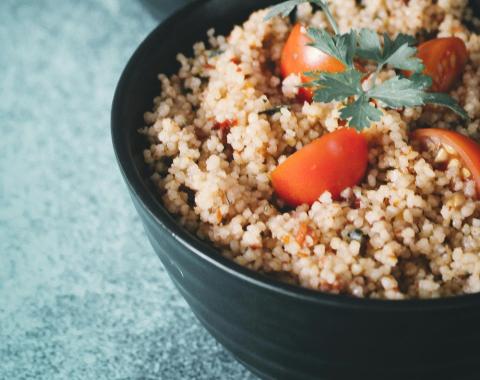
Ingredients

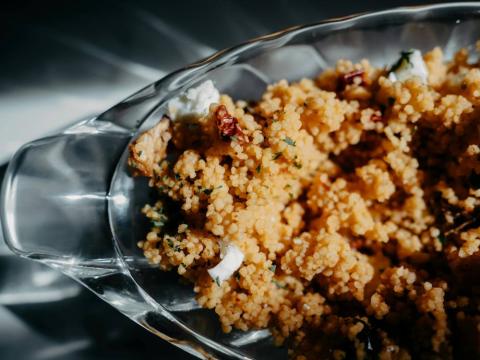
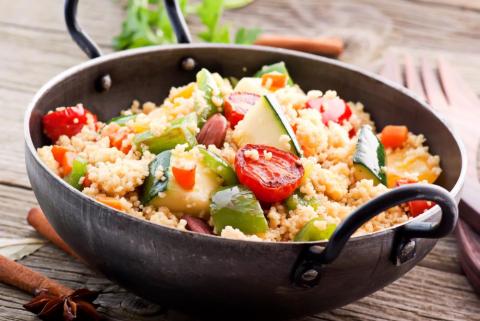
  • 8 Tablespoons (200g) Couscous
  • 1 Reduced Salt (7g) Vegetable Stock Cube (use reduced salt whenever possible)
  • 1 ½ Mugs (330ml) Boiling Water
  • 4 (340g) Tomatoes
  • 4 Tablespoons (120g) Sweetcorn
  • ½ Tin (120g) Kidney Beans
  • 8 Leaves (40g) Lettuce
  • 4 (40g) Spring Onions
  • 4 Tablespoons (40g) Olive Oil
  • 1 Lime
  • 2 (6g) Garlic Cloves or 2 Teaspoons Garlic Puree
  • ½ Teaspoon (2g) Chilli Powder
  • 1 Pinch Black Pepper to taste

This recipe has been added to your Meal Planner.

Allergy Disclaimer

Always check the label of each ingredient for allergy warnings.

Method

  1. In a heatproof bowl, dissolve the stock cube in the boiling water.
  2. Add the couscous to the bowl, cover with a plate or cling film and allow to sit for 5-10 minutes.
  3. Rinse and chop the tomatoes, and rinse and tear the lettuce. Wash the spring onions, peeling the outer layers if necessary, and chop.
  4. Peel and finely chop the garlic, and add to a bowl or mug with the olive oil, juice of the lime, chilli powder and black pepper. Mix well.
  5. Drain and rinse the kidney beans.
  6. When the couscous has soaked up all the water, allow it to cool before adding the tomatoes, sweetcorn, kidney beans, lettuce, spring onions and the dressing. Mix well and serve.

Time Saver Tips

You could try making this salad ahead to keep in the fridge until you're ready to eat it.

Cost Saver Tips

This dish is a great way to use up leftover salad vegetables, so why not try using whatever you have in, like cucumber or carrots? You could even try adding some raisins or chopped apple for some extra sweetness and a different feel.

Tips for Kids

Letting your wee one choose and prepare their own salad vegetables with you is lots of tasty fun. How about challenging them to see how colourful they can make it?!

Nutritional Information

Based on a single serving of 314g (% of an adult's reference intake)

Energy

413 kcals ( 21 %)

1,748 kJ ( 21 %)

Fat

1.9 g ( 10 %)

Saturates

66 g ( %)

Sugar

6.6 g ( 7 %)

Salt

0.8 g ( 13 %)

Detailed nutritional information

Per 100g Per 314g serving
Energy Kcals 132 413
Energy Kj 557 1,748
Protein 4.6 g 14.3 g
Total Fat g g
Saturated Fat 0.6 g 1.9 g
Carbohydrates 21 g 66 g
Total Sugars 2.1 g 6.6 g
NSP Fibre 2.1 g 6.7 g
Sodium 103 mg 324 mg
Salt 0.3 g 0.8 g

Find out about nutritional labelling

Nutrition labels on the front of packaging

  • Most of the big supermarkets and many food manufacturers display nutritional information on the front of pre-packed food.
  • Front of pack nutrition labels provide information on the number of grams of fat, saturated fat, sugars and salt and the amount of energy (in kJ and kcal) in a serving or portion of a recipe.
  • The labels also include information about reference intakes (expressed as a percentage) which are guidelines about the approximate amount of particular nutrients and energy required for a healthy diet.
  • The colour coding tells you at a glance if the food has high (red), medium (amber) or low (green) amounts of fat, saturated fat, sugars and salt.
  • The more greens on the label, the healthier the choice
  • Amber means neither high nor low, so you can eat foods with all or mostly ambers on the label most of the time.
  • Reds on the label means the food is high in that nutrient and these are the foods we should cut down on. Try to eat these foods less often and in small amounts.

Food shopping tips

If you’re trying to decide which product to choose, check to see if there's a nutrition label on the front of the pack. This will help you to quickly assess how your choices stack up. You will often find a mixture of red, amber and green colour coding for the nutrients. So when you're choosing between similar products, try to go for more greens and ambers and fewer reds if you want to make a healthier choice.

Back to top
Subscribe to Eat Better Feel Better