This article was created with

eat-better-feel-better-logo-2.png

Ingredients

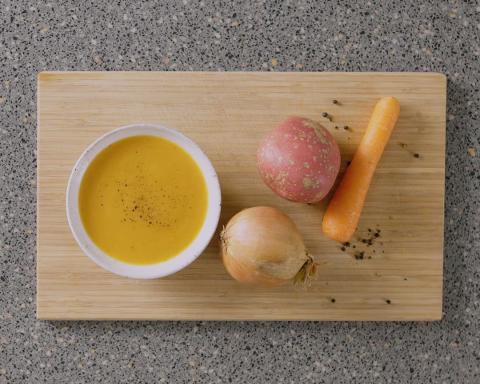
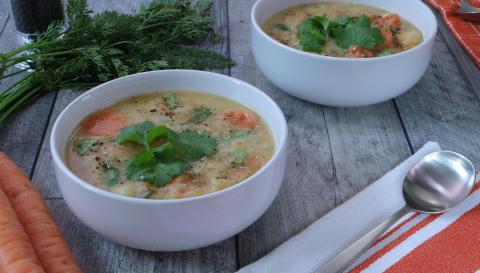
  • 2 Medium Sized (170g) Potatoes
  • 2 (300g) Leeks
  • 2 Medium (160g) Carrots
  • 1 Medium (150g) Onion
  • 2 Medium (200g) Courgettes
  • 2 Frozen Tablespoons (60g) Frozen Green Peas
  • 1 Small Tin (200g) Chopped or Plum Tomatoes
  • 1 (7g) Vegetable Stock Cube (use reduced salt whenever possible)
  • (750ml) Water
  • 1 Pinch Black Pepper to taste

This recipe has been added to your Meal Planner.

Allergy Disclaimer

Always check the label of each ingredient for allergy warnings.

Method

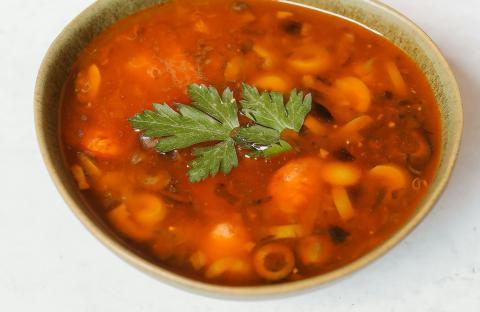
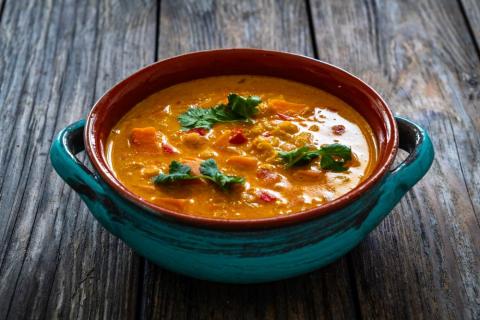
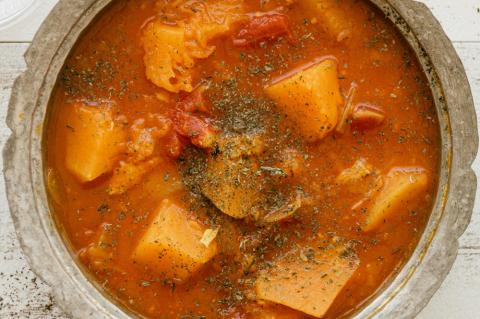
  1. Wash, peel and chop the potatoes, leeks and carrots. Peel and chop the onion. Wash and slice the courgette.
  2. Put the prepared vegetables, except the peas and tomatoes, in a large pan.
  3. Add the water and the stock cube.
  4. Heat the mixture to boiling point and then reduce the heat to a simmer. Put the pan lid on and cook for 20 minutes or until the vegetables are tender. Add a little more water if needed.
  5. Add the frozen peas and the tinned tomatoes. If using plum tomatoes, chop them up using a spoon when in the pan. Cook for 5 minutes and then leave to cool for 10 minutes.
  6. Use a blender or potato masher to blend the soup to how you like it (optional).
  7. Season with black pepper and reheat gently. Serve hot.

Time Saver Tips

You don’t have to peel the potato or carrots to make this soup delicious – just chop them up and toss them in. You can save time by preparing the soup in advance and heating it when you want to. Remember to cool it down before putting it in the fridge or freezer.

Cost Saver Tips

Make double the quantity and freeze half. This is a good way of using extra or leftover vegetables. Other vegetables that could be substituted in this recipe include turnip and parsnip.

Tips for Kids

Blend the soup so that the vegetables are hidden. You could also add a tablespoon of fresh parsley to the soup if you like. Serve with a slice of thick wholemeal bread for extra fibre.

Nutritional Information

Based on a single serving of 363g (% of an adult's reference intake)

Energy

88 kcals ( 4 %)

329 kJ ( 4 %)

Fat

0.1 g ( 1 %)

Saturates

18.1 g ( %)

Sugar

10.4 g ( 12 %)

Salt

0.8 g ( 13 %)

Detailed nutritional information

Per 100g Per 363g serving
Energy Kcals 24 88
Energy Kj 91 329
Protein 1.1 g 4.2 g
Total Fat g g
Saturated Fat 0 g 0.1 g
Carbohydrates 5 g 18.1 g
Total Sugars 2.9 g 10.4 g
NSP Fibre 1.4 g 5.1 g
Sodium 85 mg 307 mg
Salt 0.2 g 0.8 g

Find out about nutritional labelling

Nutrition labels on the front of packaging

  • Most of the big supermarkets and many food manufacturers display nutritional information on the front of pre-packed food.
  • Front of pack nutrition labels provide information on the number of grams of fat, saturated fat, sugars and salt and the amount of energy (in kJ and kcal) in a serving or portion of a recipe.
  • The labels also include information about reference intakes (expressed as a percentage) which are guidelines about the approximate amount of particular nutrients and energy required for a healthy diet.
  • The colour coding tells you at a glance if the food has high (red), medium (amber) or low (green) amounts of fat, saturated fat, sugars and salt.
  • The more greens on the label, the healthier the choice
  • Amber means neither high nor low, so you can eat foods with all or mostly ambers on the label most of the time.
  • Reds on the label means the food is high in that nutrient and these are the foods we should cut down on. Try to eat these foods less often and in small amounts.

Food shopping tips

If you’re trying to decide which product to choose, check to see if there's a nutrition label on the front of the pack. This will help you to quickly assess how your choices stack up. You will often find a mixture of red, amber and green colour coding for the nutrients. So when you're choosing between similar products, try to go for more greens and ambers and fewer reds if you want to make a healthier choice.
Back to top

Ingredients

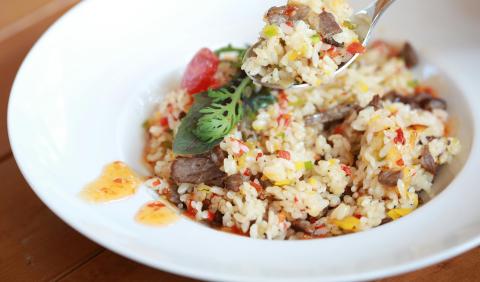
  • 1 Pack (400g) Diced Lamb
  • 1 Tablespoon (15ml) Lime Juice or Juice from 1 Lime
  • 1 Teaspoon (3g) Paprika
  • 1 Teaspoon (3g) Chilli Powder
  • 1 Tablespoon (10g) Vegetable Oil
  • 1 (45g) Green Chilli
  • 1 Medium (150g) Onion
  • 2 (6g) Garlic Cloves or 1 Teaspoon (5g) Garlic Puree
  • 1 Piece (20g) Fresh Ginger
  • ½ Teaspoon (2g) Ground Turmeric
  • 1 Teaspoon (3g) Ground Cumin
  • 1 Teaspoon (1g) Dried Coriander Leaf
  • 1 Teaspoon (3g) Garam Masala
  • 1 Can (200g) Chopped or Plum Tomatoes or Passata
  • 1 (160g) Red Pepper
  • 1 Medium (85g) Tomato
  • 0.3 Pack (85g) Baby Spinach
  • (10g) Fresh Coriander
  • 1 Mug (300g) Easy Cook Rice

This recipe has been added to your Meal Planner.

Allergy Disclaimer

Always check the label of each ingredient for allergy warnings.

Method

  1. Trim any visible fat from the lamb and place in a medium bowl. Mix in the lime juice, paprika and chilli powder. Leave to marinade for a minimum of 15 minutes (if marinading for hours or overnight be sure to place this in the fridge).
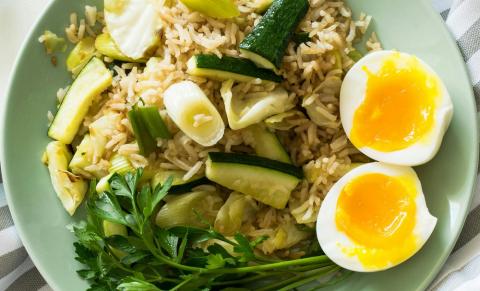
  2. Peel the onion and garlic and chop finely. Peel the ginger and grate. Wash, slice and de-seed the green chilli then chop finely (to de-seed chilli, wash the chilli and cut it in half lengthwise. Remove the seeds and white bit surrounding them). Wash your hands immediately afterwards.
  3. Heat the oil in a large pan and then add the onion, garlic, ginger and green chilli and fry on a high heat for 3-4 minutes. Add the lamb and fry for a further 2-3 minutes.
  4. Add the turmeric, cumin, dried coriander and garam masala to the pan, reduce the heat to medium and cook for a further 2 minutes.
  5. Wash and de-seed the red pepper and chop it into chunks. Wash and chop the tomato.
  6. Add the chopped tomatoes or passata to the pan along with the red pepper. If using plum tomatoes, chop them up using a spoon when in the pan. Once it starts to bubble, reduce the heat and simmer for 15-20 minutes until the lamb is tender.
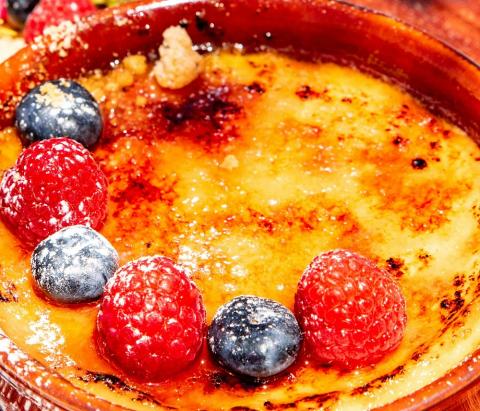
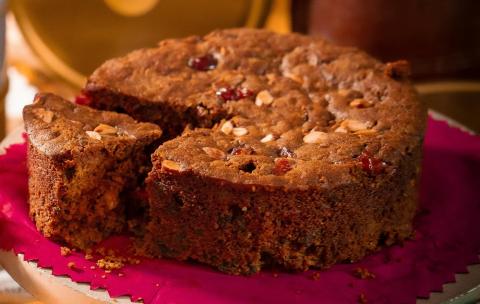
  7. Meanwhile, cook the rice as per manufacturer's instructions.
  8. Stir the tomato into the curry and simmer for a further 2 -3 minutes, then add the spinach and stir gently until it begins to wilt.
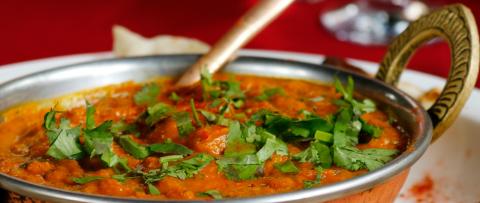
  9. Serve balti with rice and add chopped coriander to the top if desired.

Time Saver Tips

It’s super time-saving to cook a big batch of balti sauce so you can keep some in the fridge or freezer for later. Just make sure it cools down first and you only reheat it once. That way, all you need to do is fry up some fresh lamb each time. You can let the lamb rest in the sauce beforehand so it’s ready when you come to cook it. It might even taste extra great if you do!

Cost Saver Tips

It’s just as tasty to use any meat such as pork, beef or chicken in this. So why not keep your eyes peeled for any offers, or use cheaper cuts of meat such as whole chicken thighs and dice them yourself? Frozen meat could also be used and is often cheaper - simply defrost it before you use it. This recipe is a great idea for using up any leftover cooked meat from a roast. chicken, turkey or joint – just add it into the sauce to heat through. Just make sure to use up any leftovers within 24 hours. If you don't have lime juice you can swap it for lemon juice.  You could even just use chickpeas (400g can in unsalted water) or other pulses for a tasty vegetarian option. A really quick and cheap trick if you don’t have all these different spices in your cupboard is to just use a few heaped teaspoons of mild curry powder instead.

Tips for Kids

If it’s a bit on the spicy side for your wee one, you could try reducing the amount of spices in the dish or take out the green chilli to cool things down a bit next time. One easy idea is to have chilli flakes that you can add at the table for any grownups who like their spice – or if your little one is feeling adventurous!

Nutritional Information

Based on a single serving of 426g (% of an adult's reference intake)

Energy

526 kcals ( 26 %)

2,181 kJ ( 26 %)

Fat

4.2 g ( 21 %)

Saturates

80 g ( %)

Sugar

6.5 g ( 7 %)

Salt

0.3 g ( 5 %)

Detailed nutritional information

Per 100g Per 426g serving
Energy Kcals 123 526
Energy Kj 512 2,181
Protein 6.9 g 29.3 g
Total Fat g g
Saturated Fat 1 g 4.2 g
Carbohydrates 18.8 g 80 g
Total Sugars 1.5 g 6.5 g
NSP Fibre 0.9 g 4 g
Sodium 30 mg 128 mg
Salt 0.1 g 0.3 g

Find out about nutritional labelling

Nutrition labels on the front of packaging

  • Most of the big supermarkets and many food manufacturers display nutritional information on the front of pre-packed food.
  • Front of pack nutrition labels provide information on the number of grams of fat, saturated fat, sugars and salt and the amount of energy (in kJ and kcal) in a serving or portion of a recipe.
  • The labels also include information about reference intakes (expressed as a percentage) which are guidelines about the approximate amount of particular nutrients and energy required for a healthy diet.
  • The colour coding tells you at a glance if the food has high (red), medium (amber) or low (green) amounts of fat, saturated fat, sugars and salt.
  • The more greens on the label, the healthier the choice
  • Amber means neither high nor low, so you can eat foods with all or mostly ambers on the label most of the time.
  • Reds on the label means the food is high in that nutrient and these are the foods we should cut down on. Try to eat these foods less often and in small amounts.

Food shopping tips

If you’re trying to decide which product to choose, check to see if there's a nutrition label on the front of the pack. This will help you to quickly assess how your choices stack up. You will often find a mixture of red, amber and green colour coding for the nutrients. So when you're choosing between similar products, try to go for more greens and ambers and fewer reds if you want to make a healthier choice.

Back to top

Ingredients

  • 9 Tablespoons (180g) Plain Flour
  • 4 Tablespoons (80g) Wholemeal Flour
  • 4 Tablespoons (60g) Low Fat Spread
  • 4 Tablespoons (75g) Brown Sugar
  • 3 Teaspoons (12g) Baking Powder
  • ½ Pints (225ml) Semi-Skimmed Milk
  • 1 (110g) Apple

This recipe has been added to your Meal Planner.

Allergy Disclaimer

Always check the label of each ingredient for allergy warnings.

Method

  1. Preheat the oven to 200°C / 180°C fan oven / 400°F / gas mark 6. Arrange cake cases in tin.
  2. Peel and core the apple and cut into small pieces
  3. In a large bowl add low fat spread and sugar, mix together well with a wooden spoon.
  4. Sift the flour and baking powder into the bowl along with milk. Alternatively add some flour then some milk, mixing well in between.
  5. Add the apple to the bowl and mix then divide mixture between the cases.
  6. Bake in oven for 20-25 minutes until golden brown. Serve once cooled.

Time Saver Tips

Bake in advance and store in an airtight container.

Tips for Kids

Let then help to prepare the mixture. Make sure apple is cut into small pieces so it softens when cooked. As this recipe contains added sugar it’s best kept to mealtimes.

Nutritional Information

Based on a single serving of 54g (% of an adult's reference intake)

Energy

125 kcals ( 6 %)

526 kJ ( 6 %)

Fat

0.7 g ( 4 %)

Saturates

24.1 g ( %)

Sugar

8.6 g ( 10 %)

Salt

0.4 g ( 6 %)

Detailed nutritional information

Per 100g Per 54g serving
Energy Kcals 232 125
Energy Kj 974 526
Protein 5.9 g 3.2 g
Total Fat g g
Saturated Fat 1.3 g 0.7 g
Carbohydrates 44.6 g 24.1 g
Total Sugars 16 g 8.6 g
NSP Fibre 2.2 g 1.2 g
Sodium 285 mg 154 mg
Salt 0.7 g 0.4 g

Find out about nutritional labelling

Nutrition labels on the front of packaging

  • Most of the big supermarkets and many food manufacturers display nutritional information on the front of pre-packed food.
  • Front of pack nutrition labels provide information on the number of grams of fat, saturated fat, sugars and salt and the amount of energy (in kJ and kcal) in a serving or portion of a recipe.
  • The labels also include information about reference intakes (expressed as a percentage) which are guidelines about the approximate amount of particular nutrients and energy required for a healthy diet.
  • The colour coding tells you at a glance if the food has high (red), medium (amber) or low (green) amounts of fat, saturated fat, sugars and salt.
  • The more greens on the label, the healthier the choice
  • Amber means neither high nor low, so you can eat foods with all or mostly ambers on the label most of the time.
  • Reds on the label means the food is high in that nutrient and these are the foods we should cut down on. Try to eat these foods less often and in small amounts.

Food shopping tips

If you’re trying to decide which product to choose, check to see if there's a nutrition label on the front of the pack. This will help you to quickly assess how your choices stack up. You will often find a mixture of red, amber and green colour coding for the nutrients. So when you're choosing between similar products, try to go for more greens and ambers and fewer reds if you want to make a healthier choice.

Back to top

Ingredients

  • 2 Wholemeal (600g) Plain Shop Bought Pizza Base
  • 1 Tins (400g) Chopped Tomatoes
  • 1 Tablespoons (15g) Tomato Puree
  • 1 Teaspoons (1g) Mixed Herbs
  • 2 Large (300g) Chicken Breasts
  • 1 Tablespoons (10g) Vegetable Oil
  • 1 Can (227g) Pineapple Chunks In Juice
  • 4 Tablespoons (120g) Tinned Sweetcorn
  • To Taste (1g) Ground Black Pepper
  • 2 Grated Tablespoons (20g) Cheddar Cheese

This recipe has been added to your Meal Planner.

Allergy Disclaimer

Always check the label of each ingredient for allergy warnings.

Method

  1. Heat the oven to 190°C / 375°F / 170°C fan oven / gasmark 5 - follow temperature instructions on the back of the pizza base box.
  2. Cut the chicken breasts into small pieces and fry in the oil until cooked through.
  3. While the chicken is cooking, drain the chopped tomatoes of some juice and add to a saucepan with the tomato puree and dried mixed herbs. Simmer over a low heat until slightly thickened.
  4. Grate the cheese.
  5. Spread the tomato sauce onto the plain pizza bases and dress the pizzas with the cooked chicken, drained pineapple and sweetcorn.
  6. Then top with a thin layer of grated mature cheese and a sprinkle of black pepper.
  7. Bake in the oven for 15-20 minutes and enjoy hot.

Time Saver Tips

Buy a pre-made cheese and tomato pizza and add your own toppings. Buy cheese already grated.

Cost Saver Tips

Buy a pre-made pizza!

Tips for Kids

Choose their favourite toppings and get them to decorate the pizzas before they go in the oven.

Nutritional Information

Based on a single serving of 341g (% of an adult's reference intake)

Energy

635 kcals ( 32 %)

2,680 kJ ( 32 %)

Fat

1.7 g ( 9 %)

Saturates

92.6 g ( %)

Sugar

14.6 g ( 16 %)

Salt

1.5 g ( 26 %)

Detailed nutritional information

Per 100g Per 341g serving
Energy Kcals 186 635
Energy Kj 786 2,680
Protein 10.1 g 34.3 g
Total Fat g g
Saturated Fat 0.5 g 1.7 g
Carbohydrates 27.2 g 92.6 g
Total Sugars 4.3 g 14.6 g
NSP Fibre 1.3 g 4.4 g
Sodium 181 mg 619 mg
Salt 0.5 g 1.5 g

Find out about nutritional labelling

Nutrition labels on the front of packaging

  • Most of the big supermarkets and many food manufacturers display nutritional information on the front of pre-packed food.
  • Front of pack nutrition labels provide information on the number of grams of fat, saturated fat, sugars and salt and the amount of energy (in kJ and kcal) in a serving or portion of a recipe.
  • The labels also include information about reference intakes (expressed as a percentage) which are guidelines about the approximate amount of particular nutrients and energy required for a healthy diet.
  • The colour coding tells you at a glance if the food has high (red), medium (amber) or low (green) amounts of fat, saturated fat, sugars and salt.
  • The more greens on the label, the healthier the choice
  • Amber means neither high nor low, so you can eat foods with all or mostly ambers on the label most of the time.
  • Reds on the label means the food is high in that nutrient and these are the foods we should cut down on. Try to eat these foods less often and in small amounts.

Food shopping tips

If you’re trying to decide which product to choose, check to see if there's a nutrition label on the front of the pack. This will help you to quickly assess how your choices stack up. You will often find a mixture of red, amber and green colour coding for the nutrients. So when you're choosing between similar products, try to go for more greens and ambers and fewer reds if you want to make a healthier choice.

Back to top

Ingredients

  • 8 Heaped Tablespoons (240g) Self-Raising Flour
  • 2 Tablespoons (40g) Sugar
  • 3 Tablespoons (85g) Dried Cranberries
  • 1 Egg
  • 11 Tablespoons (165ml) Freshly Squeezed Orange Juice
  • 8 Tablespoons (125g) Low Fat Spread

This recipe has been added to your Meal Planner.

Allergy Disclaimer

Always check the label of each ingredient for allergy warnings.

Method


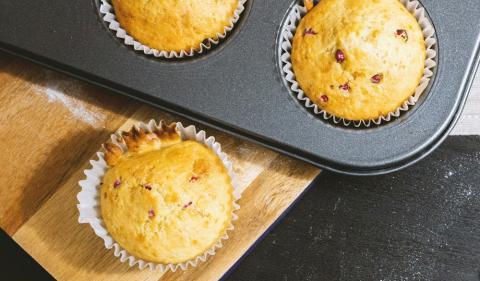
  1. Preheat the oven to 200°C / 180°C fan oven / 400°F / gas mark 6.
  2. Mix flour and sugar together in a large bowl  then add cranberries.
  3. Rub in the spread using fingers.
  4. Crack egg into a small bowl and beat with a fork, stir in the orange juice and then add to the other ingredients.
  5. Place muffin cases on an oven proof tray and 3/4 fill with the mixture.
  6. Bake in oven until lightly browned and firm to touch, around 15- 20 minutes.

Time Saver Tips

To make things easier, you could prepare these ahead of time. Once they’ve cooled just pop them into an airtight container to stay fresh. Orange juice from a carton tastes just as good, and saves having to squeeze them when time’s tight!

Cost Saver Tips

Why not try making this with whatever dried fruit you’ve got in your cupboard? Remember, bigger fruits might just need chopping up a bit smaller.

Tips for Kids

Kids will love helping you mix the ingredients. You could even get them to help you fill up the muffin cases too so they feel like your little star in the kitchen! As this recipe contains added sugar it’s best kept to mealtimes.

Nutritional Information

Based on a single serving of 55g (% of an adult's reference intake)

Energy

155 kcals ( 8 %)

649 kJ ( 8 %)

Fat

1.1 g ( 6 %)

Saturates

26 g ( %)

Sugar

9.9 g ( 11 %)

Salt

0.3 g ( 6 %)

Detailed nutritional information

Per 100g Per 55g serving
Energy Kcals 281 155
Energy Kj 1,180 649
Protein 5.3 g 2.9 g
Total Fat g g
Saturated Fat 2 g 1.1 g
Carbohydrates 47.3 g 26 g
Total Sugars 18 g 9.9 g
NSP Fibre 1.6 g 0.9 g
Sodium 257 mg 141 mg
Salt 0.6 g 0.3 g

Find out about nutritional labelling

Nutrition labels on the front of packaging

  • Most of the big supermarkets and many food manufacturers display nutritional information on the front of pre-packed food.
  • Front of pack nutrition labels provide information on the number of grams of fat, saturated fat, sugars and salt and the amount of energy (in kJ and kcal) in a serving or portion of a recipe.
  • The labels also include information about reference intakes (expressed as a percentage) which are guidelines about the approximate amount of particular nutrients and energy required for a healthy diet.
  • The colour coding tells you at a glance if the food has high (red), medium (amber) or low (green) amounts of fat, saturated fat, sugars and salt.
  • The more greens on the label, the healthier the choice
  • Amber means neither high nor low, so you can eat foods with all or mostly ambers on the label most of the time.
  • Reds on the label means the food is high in that nutrient and these are the foods we should cut down on. Try to eat these foods less often and in small amounts.

Food shopping tips

If you’re trying to decide which product to choose, check to see if there's a nutrition label on the front of the pack. This will help you to quickly assess how your choices stack up. You will often find a mixture of red, amber and green colour coding for the nutrients. So when you're choosing between similar products, try to go for more greens and ambers and fewer reds if you want to make a healthier choice.

Back to top

Ingredients

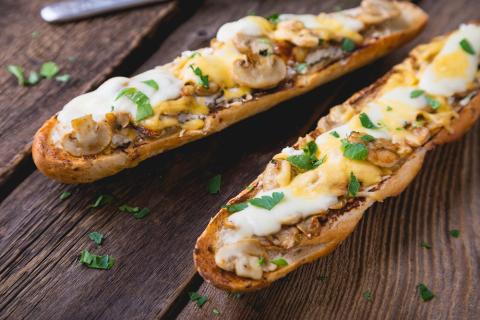
  • ½ (240g) French Stick
  • 2 Tablespoons (30g) Tomato Puree
  • 2 Tablespoons (30ml) Water
  • 10 Tablespoons (100g) Reduced Fat Cheddar Cheese
  • 1 (60g) Onion
  • ½ (80g) Red Pepper
  • 1 Can (198g) Sweetcorn
  • 5 (50g) Mushrooms
  • 2 Teaspoons (2g) Mixed Herbs

This recipe has been added to your Meal Planner.

Allergy Disclaimer

Always check the label of each ingredient for allergy warnings.

Method

  1. Pre heat grill.
  2. Slice bread into half and then slice each piece lengthways, giving four open pieces of bread.
  3. Mix tomato puree with water and spread onto each piece of bread.
  4. Peel and finely chop the onion, deseed and chop the pepper, wipe and slice mushrooms and drain sweetcorn.
  5. Place a mixture of the vegetables onto each piece of bread.
  6. Grate cheese and sprinkle over each piece of bread. Place bread onto grill pan then sprinkle over herbs.
  7. Grill until cheese is bubbling.

Cost Saver Tips

Can use any left over vegetables

Tips for Kids

They will enjoy topping their pizza with their favourite veg!

Nutritional Information

Based on a single serving of 160g (% of an adult's reference intake)

Energy

302 kcals ( 15 %)

1,270 kJ ( 15 %)

Fat

2.9 g ( 15 %)

Saturates

49.1 g ( %)

Sugar

8.3 g ( 9 %)

Salt

1.3 g ( 22 %)

Detailed nutritional information

Per 100g Per 160g serving
Energy Kcals 189 302
Energy Kj 794 1,270
Protein 10.2 g 16.3 g
Total Fat g g
Saturated Fat 1.8 g 2.9 g
Carbohydrates 30.7 g 49.1 g
Total Sugars 5.2 g 8.3 g
NSP Fibre 1.8 g 2.9 g
Sodium 326 mg 522 mg
Salt 0.8 g 1.3 g

Find out about nutritional labelling

Nutrition labels on the front of packaging

  • Most of the big supermarkets and many food manufacturers display nutritional information on the front of pre-packed food.
  • Front of pack nutrition labels provide information on the number of grams of fat, saturated fat, sugars and salt and the amount of energy (in kJ and kcal) in a serving or portion of a recipe.
  • The labels also include information about reference intakes (expressed as a percentage) which are guidelines about the approximate amount of particular nutrients and energy required for a healthy diet.
  • The colour coding tells you at a glance if the food has high (red), medium (amber) or low (green) amounts of fat, saturated fat, sugars and salt.
  • The more greens on the label, the healthier the choice
  • Amber means neither high nor low, so you can eat foods with all or mostly ambers on the label most of the time.
  • Reds on the label means the food is high in that nutrient and these are the foods we should cut down on. Try to eat these foods less often and in small amounts.

Food shopping tips

If you’re trying to decide which product to choose, check to see if there's a nutrition label on the front of the pack. This will help you to quickly assess how your choices stack up. You will often find a mixture of red, amber and green colour coding for the nutrients. So when you're choosing between similar products, try to go for more greens and ambers and fewer reds if you want to make a healthier choice.

Back to top

Ingredients

  • 4 Rashers (100g) Back Bacon
  • 4 Medium Sized (340g) Tomatoes
  • 4 Eggs
  • 2 Teaspoons (10g) Vinegar
  • 4 Slices (144g) Wholemeal Bread

This recipe has been added to your Meal Planner.

Allergy Disclaimer

Always check the label of each ingredient for allergy warnings.

Method

  1. Wash the tomatoes, cut them in half and cook them under a hot grill.
  2. Trim the fat off the bacon, add to the grill and cook for 2-3 minutes on each side until crispy.
  3. Whilst grilling, half fill a large pan with water and add the vinegar. Bring to the boil then turn the heat down to medium. Gently break the eggs (at room temperature) into the water. The eggs should be spaced out in the pan. Keep on a low heat and cook for 3-4 minutes or until the white of the eggs are set then remove using a spoon.
  4. Toast the bread and serve up.

Nutritional Information

Based on a single serving of 193g (% of an adult's reference intake)

Energy

230 kcals ( 11 %)

962 kJ ( 11 %)

Fat

3.8 g ( 19 %)

Saturates

16.6 g ( %)

Sugar

3.8 g ( 4 %)

Salt

1.8 g ( 31 %)

Detailed nutritional information

Per 100g Per 193g serving
Energy Kcals 119 230
Energy Kj 498 962
Protein 8.9 g 17.1 g
Total Fat g g
Saturated Fat 2 g 3.8 g
Carbohydrates 8.6 g 16.6 g
Total Sugars 2 g 3.8 g
NSP Fibre 1.6 g 4.6 g
Sodium 381 mg 736 mg
Salt 1 g 1.8 g

Find out about nutritional labelling

Nutrition labels on the front of packaging

  • Most of the big supermarkets and many food manufacturers display nutritional information on the front of pre-packed food.
  • Front of pack nutrition labels provide information on the number of grams of fat, saturated fat, sugars and salt and the amount of energy (in kJ and kcal) in a serving or portion of a recipe.
  • The labels also include information about reference intakes (expressed as a percentage) which are guidelines about the approximate amount of particular nutrients and energy required for a healthy diet.
  • The colour coding tells you at a glance if the food has high (red), medium (amber) or low (green) amounts of fat, saturated fat, sugars and salt.
  • The more greens on the label, the healthier the choice
  • Amber means neither high nor low, so you can eat foods with all or mostly ambers on the label most of the time.
  • Reds on the label means the food is high in that nutrient and these are the foods we should cut down on. Try to eat these foods less often and in small amounts.

Food shopping tips

If you’re trying to decide which product to choose, check to see if there's a nutrition label on the front of the pack. This will help you to quickly assess how your choices stack up. You will often find a mixture of red, amber and green colour coding for the nutrients. So when you're choosing between similar products, try to go for more greens and ambers and fewer reds if you want to make a healthier choice.

Back to top

Ingredients

  • 2 Large (600g) Plain Shop Bought Pizza Base
  • 1 Tins (400g) Chopped Tomatoes
  • 1 Tablespoons (15g) Tomato Puree
  • 1 Teaspoons (1g) Mixed Herbs
  • 2 Medium Sized (320g) Red Peppers
  • 8 Medium Sized (80g) Mushrooms
  • 4 Medium Sized (340g) Tomatoes
  • 2 Small Sized (120g) Red Onions
  • 2 (Grated) Tablespoons (20g) Cheddar Cheese

This recipe has been added to your Meal Planner.

Allergy Disclaimer

Always check the label of each ingredient for allergy warnings.

Method

  1. Heat the oven to 190°C / 375°F / 170°C fan oven / gasmark 5 - follow the temperature instructions on the back of the pizza base box.
  2. Drain the chopped tomatoes of some juice and add to the pan with the tomato puree and dried mixed herbs. Simmer over a low heat until slightly thickened.
  3. While the sauce is simmering, wash and slice the peppers and tomatoes. Rinse or wipe the mushrooms and slice them. Peel and chop the red onions and grate the cheese.
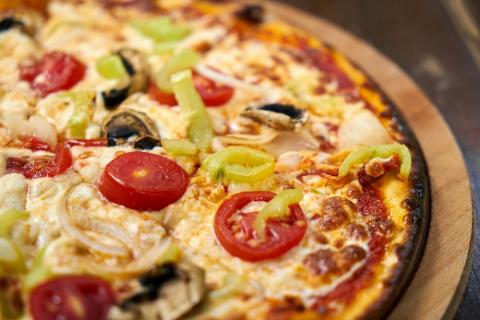
  4. Spread the tomato sauce onto the plain pizza bases and dress the pizzas with the pepper, mushrooms, tomatoes and red onion.
  5. Finish with a thin layer of grated mature cheese.
  6. Bake in the oven for 15-20 minutes and enjoy hot.

Time Saver Tips

Buy a pre-made cheese and tomato pizza and add your own toppings. Buy cheese already grated.

Cost Saver Tips

Buy a pre-made pizza!

Tips for Kids

Choose their favourite toppings and get them to decorate the pizzas before they go in the oven.

Nutritional Information

Based on a single serving of 402g (% of an adult's reference intake)

Energy

540 kcals ( 27 %)

2,279 kJ ( 27 %)

Fat

1.3 g ( 7 %)

Saturates

90.8 g ( %)

Sugar

16.6 g ( 18 %)

Salt

1.3 g ( 21 %)

Detailed nutritional information

Per 100g Per 402g serving
Energy Kcals 134 540
Energy Kj 567 2,279
Protein 4.4 g 17.9 g
Total Fat g g
Saturated Fat 0.3 g 1.3 g
Carbohydrates 22.6 g 90.8 g
Total Sugars 4.1 g 16.6 g
NSP Fibre 1.7 g 6.8 g
Sodium 125 mg 504 mg
Salt 0.3 g 1.3 g

Find out about nutritional labelling

Nutrition labels on the front of packaging

  • Most of the big supermarkets and many food manufacturers display nutritional information on the front of pre-packed food.
  • Front of pack nutrition labels provide information on the number of grams of fat, saturated fat, sugars and salt and the amount of energy (in kJ and kcal) in a serving or portion of a recipe.
  • The labels also include information about reference intakes (expressed as a percentage) which are guidelines about the approximate amount of particular nutrients and energy required for a healthy diet.
  • The colour coding tells you at a glance if the food has high (red), medium (amber) or low (green) amounts of fat, saturated fat, sugars and salt.
  • The more greens on the label, the healthier the choice
  • Amber means neither high nor low, so you can eat foods with all or mostly ambers on the label most of the time.
  • Reds on the label means the food is high in that nutrient and these are the foods we should cut down on. Try to eat these foods less often and in small amounts.

Food shopping tips

If you’re trying to decide which product to choose, check to see if there's a nutrition label on the front of the pack. This will help you to quickly assess how your choices stack up. You will often find a mixture of red, amber and green colour coding for the nutrients. So when you're choosing between similar products, try to go for more greens and ambers and fewer reds if you want to make a healthier choice.

Back to top

Ingredients

  • 4 Small (400g) Chicken Breasts
  • 3 Tablespoons (60g) Plain Flour
  • 1 Medium Egg
  • 3 Cups (150g) Breadcrumbs
  • 5 Large (1kg) Potatoes
  • 2 Tablespoons (20g) Vegetable Oil
  • 1 Can (420g) Baked Beans (choose reduced salt & sugar whenever possible)

This recipe has been added to your Meal Planner.

Allergy Disclaimer

Always check the label of each ingredient for allergy warnings.

Method

  1. Wash potatoes and then cut in half and then into wedges. Cook in a pan of boiling water for 10 minutes.
  2. Preheat the oven to 200°C / 180°C fan oven / 400°F / gas mark 6.
  3. Dice chicken into approximately 2cm x 2 cm cubes.
  4. Break egg into a bowl and whisk using a fork. Put the flour and breadcrumbs on separate plates. Cover a baking tray with greaseproof paper.
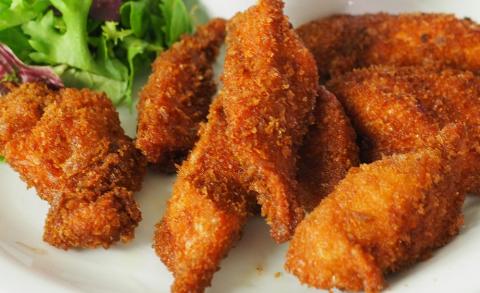
  5. Coat each cube of chicken in flour, then dip in the egg and roll in breadcrumbs until all surfaces are covered. Place on the baking tray.
  6. Drain the wedges, then place on another baking tray  and drizzle the oil over them.
  7. Cook wedges and nuggets in the oven for approximately 20 minutes, turning over half way. Ensure the chicken is white in the middle before serving.
  8. Heat the baked beans through on the hob or microwave and serve with the nuggets and wedges.

Time Saver Tips

Prepare the nuggets while the potatoes are cooking. You can also make the nuggets in advance and keep them in the fridge until needed.

Cost Saver Tips

Keep your eyes peeled for chicken that’s on offer and put it in the freezer. Chicken thighs are cheaper and work just as well in this as chicken breasts. You could even buy chicken in bulk and freeze it for later. Vegetables like sweetcorn and peas work really well from frozen or tinned. Baked beans work well too – basically whatever you’ve got in! To spice it up, why not try sprinkling some chilli powder onto the wedges before baking them in the oven? A great way to use up any leftover bread is by making your own breadcrumbs. Just take six slices of medium bread, toast it a little under the grill, cut off the crusts and slice each piece open so you can toast the inside. Once it’s cooled down, rub between your fingers into crumbs. You could even try using wholemeal bread for a bit of extra fibre.

Tips for Kids

They will love helping to make the nuggets - just make sure they wash their hands after handling raw chicken.

Nutritional Information

Based on a single serving of 499g (% of an adult's reference intake)

Energy

681 kcals ( 34 %)

2,887 kJ ( 34 %)

Fat

1.4 g ( 7 %)

Saturates

113.9 g ( %)

Sugar

10.5 g ( 12 %)

Salt

1.5 g ( 25 %)

Detailed nutritional information

Per 100g Per 499g serving
Energy Kcals 136 681
Energy Kj 579 2,887
Protein 8.5 g 42.3 g
Total Fat g g
Saturated Fat 0.3 g 1.4 g
Carbohydrates 22.8 g 113.9 g
Total Sugars 2.1 g 10.5 g
NSP Fibre 2.2 g 10.8 g
Sodium 102 mg 509 mg
Salt 0.3 g 1.5 g

Find out about nutritional labelling

Nutrition labels on the front of packaging

  • Most of the big supermarkets and many food manufacturers display nutritional information on the front of pre-packed food.
  • Front of pack nutrition labels provide information on the number of grams of fat, saturated fat, sugars and salt and the amount of energy (in kJ and kcal) in a serving or portion of a recipe.
  • The labels also include information about reference intakes (expressed as a percentage) which are guidelines about the approximate amount of particular nutrients and energy required for a healthy diet.
  • The colour coding tells you at a glance if the food has high (red), medium (amber) or low (green) amounts of fat, saturated fat, sugars and salt.
  • The more greens on the label, the healthier the choice
  • Amber means neither high nor low, so you can eat foods with all or mostly ambers on the label most of the time.
  • Reds on the label means the food is high in that nutrient and these are the foods we should cut down on. Try to eat these foods less often and in small amounts.

Food shopping tips

If you’re trying to decide which product to choose, check to see if there's a nutrition label on the front of the pack. This will help you to quickly assess how your choices stack up. You will often find a mixture of red, amber and green colour coding for the nutrients. So when you're choosing between similar products, try to go for more greens and ambers and fewer reds if you want to make a healthier choice.

Back to top

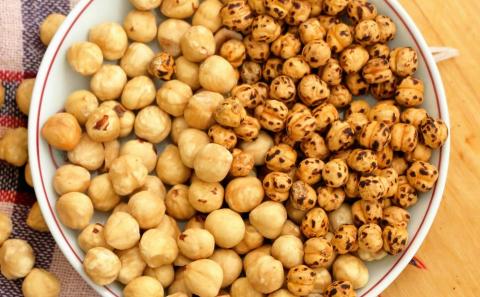
Ingredients

  • (240g) Chickpeas In Unsalted Water
  • (10ml) Olive Oil
  • (16g) Honey
  • (5g) Ground Cinnamon

This recipe has been added to your Meal Planner.

Allergy Disclaimer

Always check the label of each ingredient for allergy warnings.

Method

  1. Preheat the oven to 180°C / 160°C fan oven / 350°F / gas mark 4.
  2. Rinse the chickpeas in a colander and pop off all the skins (this is optional but adds to the texture)
  3. Line a baking tray with greaseproof/ baking paper and spread the chickpeas onto the tray.
  4. Bake in the oven for approximately 45 minutes. Test a chickpea to see if it crunches.
  5. While they are roasting mix the other ingredients in a bowl.
  6. When they crunch remove chickpeas from the oven and add to the  bowl. Mix until the chickpeas are coated.
  7. Pour back onto the baking tray and bake for a further 10 minutes.
  8. Once cooled, store in an airtight container.

Remember that little ones can choke on small foods. Read our page on choking to see what you can do to prevent this. 

Time Saver Tips

Why not try making these in advance and storing them until you need them? Talk about a handy snack for your wee one! If you don’t have the spices in the recipe, you could try others like mixed spice or chilli powder to add some heat.

Tips for Kids

If your wee one is a bit funny about spices, you could see if they prefer it if you just add a little less. As this recipe contains added sugar it’s best kept to mealtimes.

Nutritional Information

Based on a single serving of 54g (% of an adult's reference intake)

Energy

116 kcals ( 6 %)

488 kJ ( 6 %)

Fat

0.7 g ( 4 %)

Saturates

13.7 g ( %)

Sugar

4.9 g ( 5 %)

Salt

1 g ( 1 %)

Detailed nutritional information

Per 100g Per 54g serving
Energy Kcals 215 116
Energy Kj 903 488
Protein 7.6 g 4.1 g
Total Fat g g
Saturated Fat 1.3 g 0.7 g
Carbohydrates 25.3 g 13.7 g
Total Sugars 9.1 g 4.9 g
NSP Fibre 4.2 g 2.3 g
Sodium 2 mg 1 mg
Salt 1 g 1 g

Find out about nutritional labelling

Nutrition labels on the front of packaging

  • Most of the big supermarkets and many food manufacturers display nutritional information on the front of pre-packed food.
  • Front of pack nutrition labels provide information on the number of grams of fat, saturated fat, sugars and salt and the amount of energy (in kJ and kcal) in a serving or portion of a recipe.
  • The labels also include information about reference intakes (expressed as a percentage) which are guidelines about the approximate amount of particular nutrients and energy required for a healthy diet.
  • The colour coding tells you at a glance if the food has high (red), medium (amber) or low (green) amounts of fat, saturated fat, sugars and salt.
  • The more greens on the label, the healthier the choice
  • Amber means neither high nor low, so you can eat foods with all or mostly ambers on the label most of the time.
  • Reds on the label means the food is high in that nutrient and these are the foods we should cut down on. Try to eat these foods less often and in small amounts.

Food shopping tips

If you’re trying to decide which product to choose, check to see if there's a nutrition label on the front of the pack. This will help you to quickly assess how your choices stack up. You will often find a mixture of red, amber and green colour coding for the nutrients. So when you're choosing between similar products, try to go for more greens and ambers and fewer reds if you want to make a healthier choice.

Back to top
Subscribe to Eat Better Feel Better