This article was created with

eat-better-feel-better-logo-2.png

Ingredients

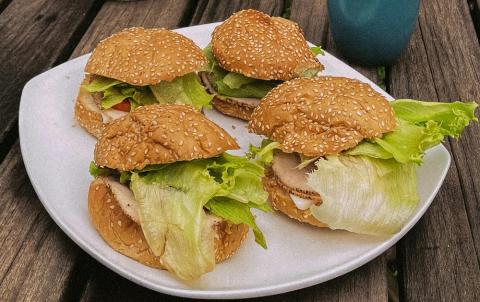
  • 1 Pack (500g) Turkey Mince
  • 1 Small sized (60g) Red onion
  • (25g) Breadcrumbs
  • 2 Tablespoons (30g) Semi-Skimmed Milk
  • 1 Heaped measure Teaspoon (30g) Plain Flour
  • 1 Avocado
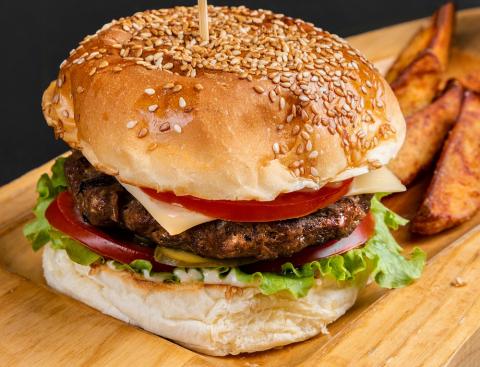
  • 4 Leaves (20g) Lettuce
  • 1 Medium sized (160g) Red Pepper
  • 4 (340g) Burger Buns

This recipe has been added to your Meal Planner.

Allergy Disclaimer

Always check the label of each ingredient for allergy warnings.

Method

  1. Preheat the oven to 200°C / 180°C fan oven / 400°F / gas mark 6.
  2. Peel and finely chop (or grate) the red onion.
  3. Mix the mince, red onion and breadcrumbs in a bowl.
  4. Add the milk and mix well.
  5. Using a little flour on your hands, gently shape the mixture into 4 burgers.
  6. Place on a tray in the oven for 30 minutes, and turn halfway through.
  7. Meanwhile, wash and shred the lettuce, and wash and slice the pepper.
  8. Cut the avocado in half lengthwise around the seed. Hold the avocado in one hand, and with the other hand twist and rotate the two halves apart. Remove the seed by slipping a spoon between the seed and the fruit and gently work the seed out of the fruit. Slice the inside of the avocado halves into sections then use your fingers to separate the avocado segments from the peel.
  9. When the burgers are ready, put onto the buns and add the lettuce, avocado and pepper on top.
  10. Enjoy the burgers hot!

Time Saver Tips

Make the burgers in advance and store in the fridge until you are ready to cook them.

Cost Saver Tips

Turkey thigh mince is cheaper than turkey breast mince. Serve the turkey burger with tomatoes and cucumber instead of avocado and red pepper. Make your own breadcrumbs.

Tips for Kids

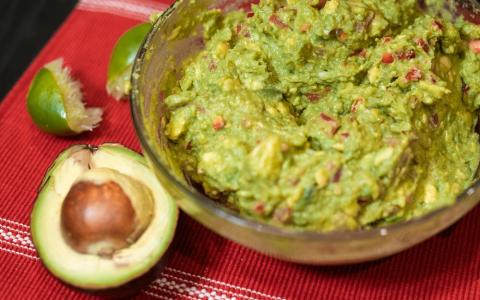
Instead of slicing the avocado, you could mash it with a teaspoon of lemon or lime juice to make guacamole - the kids will love mashing!

Nutritional Information

Based on a single serving of 301g (% of an adult's reference intake)

Energy

498 kcals ( 25 %)

2,096 kJ ( 25 %)

Fat

3.1 g ( 16 %)

Saturates

51.8 g ( %)

Sugar

5.9 g ( 7 %)

Salt

1.5 g ( 24 %)

Detailed nutritional information

Per 100g Per 301g serving
Energy Kcals 165 498
Energy Kj 696 2,096
Protein 13.2 g 39.7 g
Total Fat g g
Saturated Fat 1 g 3.1 g
Carbohydrates 17.2 g 51.8 g
Total Sugars 1.9 g 5.9 g
NSP Fibre 1.2 g 3.6 g
Sodium 194 mg 584 mg
Salt 0.5 g 1.5 g

Find out about nutritional labelling

Nutrition labels on the front of packaging

  • Most of the big supermarkets and many food manufacturers display nutritional information on the front of pre-packed food.
  • Front of pack nutrition labels provide information on the number of grams of fat, saturated fat, sugars and salt and the amount of energy (in kJ and kcal) in a serving or portion of a recipe.
  • The labels also include information about reference intakes (expressed as a percentage) which are guidelines about the approximate amount of particular nutrients and energy required for a healthy diet.
  • The colour coding tells you at a glance if the food has high (red), medium (amber) or low (green) amounts of fat, saturated fat, sugars and salt.
  • The more greens on the label, the healthier the choice
  • Amber means neither high nor low, so you can eat foods with all or mostly ambers on the label most of the time.
  • Reds on the label means the food is high in that nutrient and these are the foods we should cut down on. Try to eat these foods less often and in small amounts.

Food shopping tips

If you’re trying to decide which product to choose, check to see if there's a nutrition label on the front of the pack. This will help you to quickly assess how your choices stack up. You will often find a mixture of red, amber and green colour coding for the nutrients. So when you're choosing between similar products, try to go for more greens and ambers and fewer reds if you want to make a healthier choice.
Back to top

Ingredients

  • 4 (256g) Tortillas
  • 1 Pack (240g) Roast / Cooked Chicken
  • 1 Ripe (150g) Mango
  • 1 Small (60g) Red onion
  • 1 (3g) Garlic Clove
  • 2 Tablespoons (60g) Raisins
  • 8 Small Leaves (40g) Lettuce
  • 2 (10g) Red Chilli Peppers
  • 1 Orange
  • ¼ Teaspoon (1g) Paprika
  • ¼ Teaspoon (1g) Ground Ginger
  • ¼ Teaspoon (1g) Ground Coriander (Preferably Fresh)
  • 1 To Taste Pinch (1g) Ground Black Pepper

This recipe has been added to your Meal Planner.

Allergy Disclaimer

Always check the label of each ingredient for allergy warnings.

Method

  1. Squeeze the juice from the orange into a bowl and add the paprika, ginger, coriander, black pepper and raisins.
  2. Peel and finely chop the red onion and garlic. Add to the bowl with the juice and spices.
  3. Peel the mango, chop the flesh into small pieces and add to the bowl.
  4. Chop the chicken into bite sized pieces and add to the bowl.
  5. Rinse and dry the lettuce leaves, tear into small pieces and add to the bowl.
  6. Wash the chillies and cut in half lengthwise. Remove the seeds and white bit around them. Finely chop the chillies and add to the bowl. Wash hands immediately afterwards.
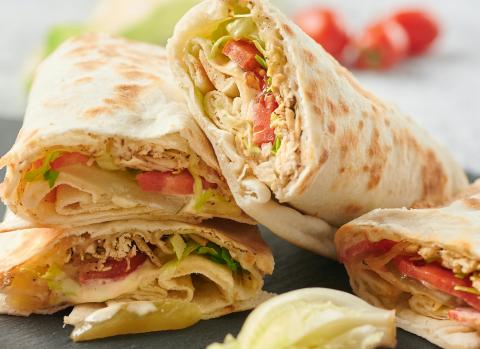
  7. Add one quarter of the contents of the bowl to the centre of each tortilla. Fold the tortilla according to the instructions on the packet, cut in half if wish, and serve.

Cost Saver Tips

It’s worth getting some chilli powder instead of buying fresh chillies that'll go out of date quickly. Also, this is a good recipe to use up any leftover chicken.

Tips for Kids

Get them to help roll or fold the tortillas.

Nutritional Information

Based on a single serving of 219g (% of an adult's reference intake)

Energy

338 kcals ( 17 %)

1,427 kJ ( 17 %)

Fat

1 g ( 5 %)

Saturates

51.7 g ( %)

Sugar

17.5 g ( 19 %)

Salt

0.6 g ( 10 %)

Detailed nutritional information

Per 100g Per 219g serving
Energy Kcals 155 338
Energy Kj 655 1,427
Protein 9.6 g 20.9 g
Total Fat g g
Saturated Fat 0.5 g 1 g
Carbohydrates 23.7 g 51.7 g
Total Sugars 8 g 17.5 g
NSP Fibre 1.4 g 3.1 g
Sodium 109 mg 238 mg
Salt 0.3 g 0.6 g

Find out about nutritional labelling

Nutrition labels on the front of packaging

  • Most of the big supermarkets and many food manufacturers display nutritional information on the front of pre-packed food.
  • Front of pack nutrition labels provide information on the number of grams of fat, saturated fat, sugars and salt and the amount of energy (in kJ and kcal) in a serving or portion of a recipe.
  • The labels also include information about reference intakes (expressed as a percentage) which are guidelines about the approximate amount of particular nutrients and energy required for a healthy diet.
  • The colour coding tells you at a glance if the food has high (red), medium (amber) or low (green) amounts of fat, saturated fat, sugars and salt.
  • The more greens on the label, the healthier the choice
  • Amber means neither high nor low, so you can eat foods with all or mostly ambers on the label most of the time.
  • Reds on the label means the food is high in that nutrient and these are the foods we should cut down on. Try to eat these foods less often and in small amounts.

Food shopping tips

If you’re trying to decide which product to choose, check to see if there's a nutrition label on the front of the pack. This will help you to quickly assess how your choices stack up. You will often find a mixture of red, amber and green colour coding for the nutrients. So when you're choosing between similar products, try to go for more greens and ambers and fewer reds if you want to make a healthier choice.

Back to top

Ingredients

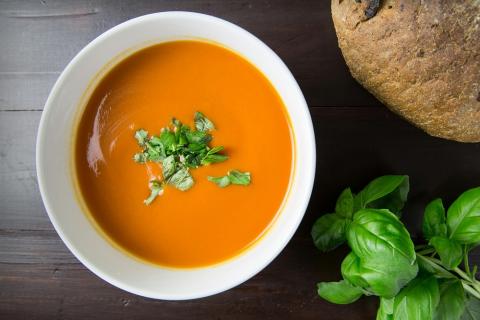
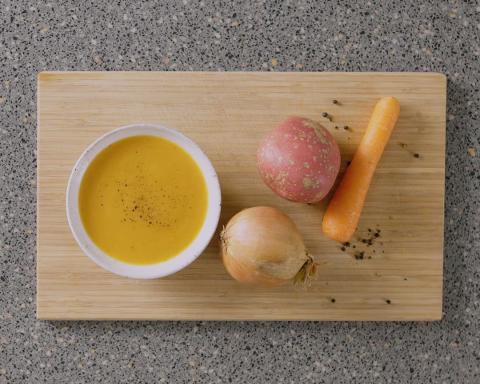
  • 1 Small (60g) Onion
  • ½ Tablespoon (5g) Vegetable Oil
  • 1 Large (200g) Potato
  • 3 Large (420g) Carrots
  • 2 (14g) Vegetable Stock Cubes (use reduced salt when possible)
  • 2 Pints (1,200ml) Water
  • 2 Tablespoons (30ml) Semi-Skimmed Milk
  • 1 Pinch Ground Black Pepper

This recipe has been added to your Meal Planner.

Allergy Disclaimer

Always check the label of each ingredient for allergy warnings.

Method

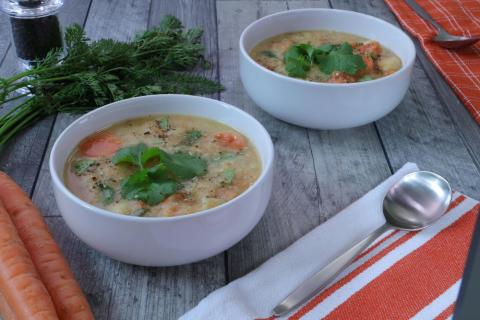
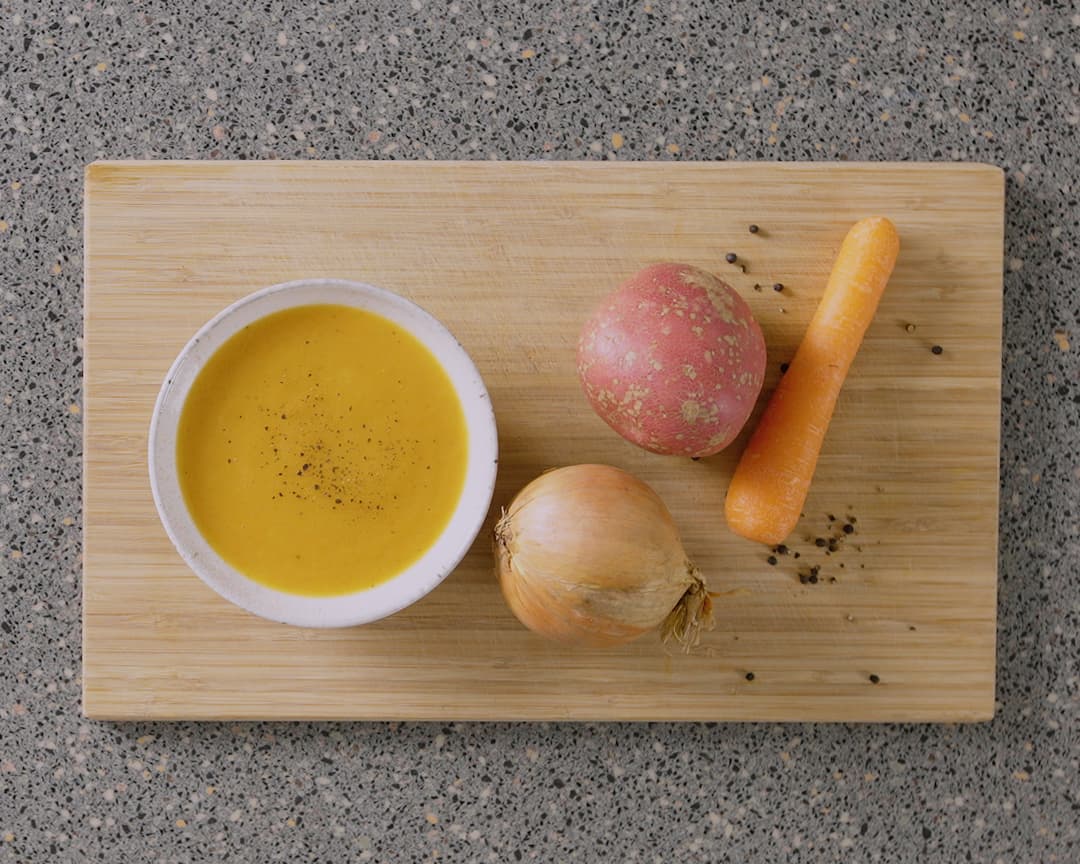
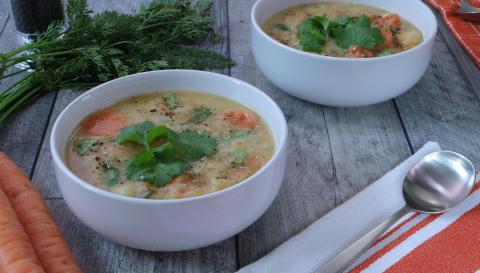
  1. Peel and chop the onions and potatoes and wash and chop the carrots.
  2. Heat oil in a large pan then add onions and fry until golden.
  3. Dissolve stock cubes in boiling water then add to the pan along with carrots and potato.
  4. Bring to the boil, then lower heat and simmer for 30- 35 minutes until vegetables are soft.
  5. Allow the soup to cool a little and then mash or put through a blender or sieve.
  6. Add the milk and black pepper to taste then reheat ready to serve. Don't allow the soup to boil as the milk may curdle. 

Time Saver Tips

For a quick and easy lunch, why not make the soup in advance and heat it up when required?

Cost Saver Tips

Why not try making twice the amount? That way there’s plenty left to put in the freezer for an easy meal another day. Just remember to let it cool before popping it into the freezer. You can always add in other vegetables, like swede for example, if you have any to use up.

Tips for Kids

How about chopping any vegetables up small or blending them to make them less obvious for your wee one to spot? Your child will love helping you to prepare and chop or mash the vegetables. They might even be more likely to eat it when they know they helped you to make it. Serve the soup with wholemeal bread to boost the fibre content. Try adding spices, such as cumin, curry powder or coriander to add extra flavour - you can always stir these in after serving your wee one if they're not keen.

Nutritional Information

Based on a single serving of 373g (% of an adult's reference intake)

Energy

75 kcals ( 4 %)

320 kJ ( 4 %)

Fat

0.3 g ( 1 %)

Saturates

14.5 g ( %)

Sugar

6.9 g ( 8 %)

Salt

1.5 g ( 25 %)

Detailed nutritional information

Per 100g Per 373g serving
Energy Kcals 20 75
Energy Kj 86 320
Protein 0.5 g 2 g
Total Fat g g
Saturated Fat 0.1 g 0.3 g
Carbohydrates 3.9 g 14.5 g
Total Sugars 1.9 g 6.9 g
NSP Fibre 0.7 g 2.7 g
Sodium 165 mg 612 mg
Salt 0.4 g 1.5 g

Find out about nutritional labelling

Nutrition labels on the front of packaging

  • Most of the big supermarkets and many food manufacturers display nutritional information on the front of pre-packed food.
  • Front of pack nutrition labels provide information on the number of grams of fat, saturated fat, sugars and salt and the amount of energy (in kJ and kcal) in a serving or portion of a recipe.
  • The labels also include information about reference intakes (expressed as a percentage) which are guidelines about the approximate amount of particular nutrients and energy required for a healthy diet.
  • The colour coding tells you at a glance if the food has high (red), medium (amber) or low (green) amounts of fat, saturated fat, sugars and salt.
  • The more greens on the label, the healthier the choice
  • Amber means neither high nor low, so you can eat foods with all or mostly ambers on the label most of the time.
  • Reds on the label means the food is high in that nutrient and these are the foods we should cut down on. Try to eat these foods less often and in small amounts.

Food shopping tips

If you’re trying to decide which product to choose, check to see if there's a nutrition label on the front of the pack. This will help you to quickly assess how your choices stack up. You will often find a mixture of red, amber and green colour coding for the nutrients. So when you're choosing between similar products, try to go for more greens and ambers and fewer reds if you want to make a healthier choice.

Back to top

Ingredients

  • 1 (400g) Cauliflower
  • 1 (150g) Onion
  • 1 (140g) Carrot
  • ½ (80g) Leek
  • 1 Head (150g) Broccoli
  • 1 (160g) Red Pepper
  • 2 Cups (160g) Frozen Mixed Vegetables
  • 2 (170g) Tomatoes
  • ½ Pint (300ml) Semi-Skimmed Milk
  • 1 Tablespoon (20g) Cornflour
  • 12 Tablespoons (120g) Reduced Fat Cheddar Cheese
  • 1 Teaspoon (8g) Wholegrain Mustard
  • 1 to taste Pinch (1g) Ground Black Pepper
  • 2 ½ Cups (150g) Breadcrumbs
  • 20 (800g) New Potatoes
This recipe has been added to your Meal Planner.

Allergy Disclaimer

Always check the label of each ingredient for allergy warnings.

Method

  1. Preheat the oven to 180°C / 160°C fan oven / 360°F / gas mark 4.
  2. Peel and chop onion and carrots, place in a large pan with a mug of cold water and bring to the boil then simmer gently.
  3. With hands break the cauliflower and broccoli into small florets. After 2 minutes of simmering add them to the pan with the onion and carrot.
  4. Cover the pan with a lid allowing the vegetables to steam gently. Add more water if the pan boils dry.
  5. Deseed the pepper and dice. Slice the leek and grate the cheese.
  6. Mix the cornflour in a teacup with a small amount of the milk to make a paste.
  7. Once the cauliflower is tender (test with a knife). Transfer the vegetables to a oven proof dish along with the pepper, leek and frozen vegetables, leave cooking water in the pan.
  8. Pour the cornflour paste into the pan used to cook the vegetables and return to heat. Gradually add the remaining milk, stirring all the time with a wooden spoon until the mixture boils and thickens.
  9. Remove the sauce from the heat and stir in half the grated cheese and the mustard. Add black pepper to taste. Pour sauce over the vegetables.
  10. Slice the tomatoes and place on top of the vegetables and sauce. Mix breadcrumbs and remaining cheese together and sprinkle over the tomatoes.
  11. Bake in the oven for approximately 30-35 minutes until bubbling and golden. While baking wash new potatoes and boil for approximately 10 minutes and serve with the bake.
Time Saver Tips

Can be made in advance and baked when required. Once cooled can be kept in the fridge for another day.

Cost Saver Tips

Can be frozen after cooling. Defrost throughly before reheating. Can be made with left over vegetables.

Tips for Kids

Use their favourite vegetables.

Nutritional Information

Based on a single serving of 632g (% of an adult's reference intake)

Energy

550 kcals ( 28 %)

2,309 kJ ( 28 %)

Fat

4.4 g ( 22 %)

Saturates

92.9 g ( %)

Sugar

19.5 g ( 22 %)

Salt

1.8 g ( 30 %)

Detailed nutritional information

Per 100g Per 632g serving
Energy Kcals 87 550
Energy Kj 365 2,309
Protein 4.5 g 28.4 g
Total Fat g g
Saturated Fat 0.7 g 4.4 g
Carbohydrates 14.7 g 92.9 g
Total Sugars 3.1 g 19.5 g
NSP Fibre 1.4 g 8.8 g
Sodium 115 mg 727 mg
Salt 0.3 g 1.8 g

Find out about nutritional labelling

Nutrition labels on the front of packaging

  • Most of the big supermarkets and many food manufacturers display nutritional information on the front of pre-packed food.
  • Front of pack nutrition labels provide information on the number of grams of fat, saturated fat, sugars and salt and the amount of energy (in kJ and kcal) in a serving or portion of a recipe.
  • The labels also include information about reference intakes (expressed as a percentage) which are guidelines about the approximate amount of particular nutrients and energy required for a healthy diet.
  • The colour coding tells you at a glance if the food has high (red), medium (amber) or low (green) amounts of fat, saturated fat, sugars and salt.
  • The more greens on the label, the healthier the choice
  • Amber means neither high nor low, so you can eat foods with all or mostly ambers on the label most of the time.
  • Reds on the label means the food is high in that nutrient and these are the foods we should cut down on. Try to eat these foods less often and in small amounts.

Food shopping tips

If you’re trying to decide which product to choose, check to see if there's a nutrition label on the front of the pack. This will help you to quickly assess how your choices stack up. You will often find a mixture of red, amber and green colour coding for the nutrients. So when you're choosing between similar products, try to go for more greens and ambers and fewer reds if you want to make a healthier choice.

Back to top

Ingredients

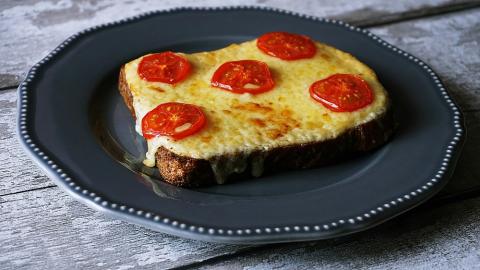
  • 2 Medium sized (170g) Tomatoes
  • 1 Small sized (60g) Red onion
  • ¼ (120g) Cucumber
  • 1 Tablespoon (1g) Fresh Coriander
  • 1 Tablespoon (10g) Vegetable Oil
  • 4 (160g) Wheat Flour Tortillas
  • 6 Tablespoons (60g) Reduced Fat Cheddar Cheese
  • To taste Ground Black Pepper

This recipe has been added to your Meal Planner.

Allergy Disclaimer

Always check the label of each ingredient for allergy warnings.

Method

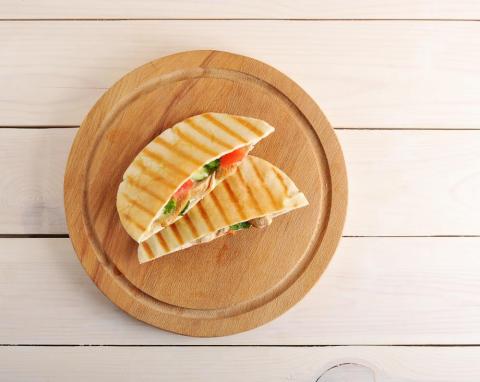
  1. Grate the cheese and set to one side then peel and finely dice the onion. Finely dice the tomatoes and cucumber. Finely chop the coriander and then mix with onion, tomatoes and cucumber to make the salsa.
  2. Heat a few drops of oil in a large frying pan. Add one of the tortillas to the pan and then turn it over so it is lightly oiled.
  3. Add a quater of the salsa mixture and spread over the tortilla. Add a quarter of the cheese and sprinkle with black pepper.
  4. Cook over a medium heat for 1-2 minutes, until the cheese starts to melt and the tortilla browns slightly.
  5. Fold the tortilla in half and wrap in tin foil to keep warm while cooking the remaining tortillas.
  6. Slice in half and serve while hot.

Time Saver Tips

Salsa can be made in advance. Buy pre grated cheese and salsa.

Cost Saver Tips

White onions can be used if you don't have any red onions.

Tips for Kids

Why not let them help to prepare the salsa?

Nutritional Information

Based on a single serving of 130g (% of an adult's reference intake)

Energy

183 kcals ( 9 %)

770 kJ ( 9 %)

Fat

1.8 g ( 9 %)

Saturates

26.9 g ( %)

Sugar

3 g ( 3 %)

Salt

0.9 g ( 15 %)

Detailed nutritional information

Per 100g Per 130g serving
Energy Kcals 140 183
Energy Kj 593 770
Protein 6.4 g 8.3 g
Total Fat g g
Saturated Fat 1.4 g 1.8 g
Carbohydrates 20.7 g 26.9 g
Total Sugars 2.3 g 3 g
NSP Fibre 1.4 g 1.8 g
Sodium 169 mg 220 mg
Salt 0.7 g 0.9 g

Find out about nutritional labelling

Nutrition labels on the front of packaging

  • Most of the big supermarkets and many food manufacturers display nutritional information on the front of pre-packed food.
  • Front of pack nutrition labels provide information on the number of grams of fat, saturated fat, sugars and salt and the amount of energy (in kJ and kcal) in a serving or portion of a recipe.
  • The labels also include information about reference intakes (expressed as a percentage) which are guidelines about the approximate amount of particular nutrients and energy required for a healthy diet.
  • The colour coding tells you at a glance if the food has high (red), medium (amber) or low (green) amounts of fat, saturated fat, sugars and salt.
  • The more greens on the label, the healthier the choice
  • Amber means neither high nor low, so you can eat foods with all or mostly ambers on the label most of the time.
  • Reds on the label means the food is high in that nutrient and these are the foods we should cut down on. Try to eat these foods less often and in small amounts.

Food shopping tips

If you’re trying to decide which product to choose, check to see if there's a nutrition label on the front of the pack. This will help you to quickly assess how your choices stack up. You will often find a mixture of red, amber and green colour coding for the nutrients. So when you're choosing between similar products, try to go for more greens and ambers and fewer reds if you want to make a healthier choice.

Back to top

Ingredients

  • 4 Medium Fillets (600g) White Fish, eg Pollock
  • 4 Medium (340g) Tomatoes
  • ½ Pot (250g) Low Fat Natural Yoghurt
  • 6 (60g) Spring Onions
  • 10 Tablespoons (100g) Cheddar Cheese (choose reduced fat whenever possible)
  • 16 (640g) New Potatoes
  • 4 Medium (320g) Carrots
  • 8 Tablespoons (240g) Frozen Green Peas

This recipe has been added to your Meal Planner.

Allergy Disclaimer

Always check the label of each ingredient for allergy warnings.

Method

  1. Preheat the oven to 180°C / 160°C fan oven / 350°F / gas mark 4.
  2. Place the fish in a single layer in a lightly greased ovenproof dish.
  3. Wash and slice the tomatoes and place on top of the fish.
  4. Wash and finely chop the spring onions and grate the cheese.
  5. Mix together the yogurt, spring onions and half of the cheese.
  6. Spoon this over the fish and tomatoes and sprinkle the remaining cheese on top.
  7. Bake in the oven for 20 minutes until golden.
  8. While the fish is cooking, wash and chop the potatoes and carrots.
  9. Cook the potatoes in boiling water for around 15 minutes and the carrots for 6-8 minutes.
  10. Heat the frozen peas as per instructions on the bag and serve with the fish bake, potatoes and carrots.

Time Saver Tips

For this recipe you don't have to peel the potatoes – much quicker! And save even more time by using cheese that's already been grated.

Cost Saver Tips

Any kind of white fish or cheese can be used, so why not choose whatever’s on offer? Frozen fish may be cheaper than fresh. Any type of potatoes can be used, too – boiled, baked or mashed. If you don’t have natural yogurt, no worries – any plain yogurt or crème fraîche works well. Try to go for low-fat ones as a healthier option.

Tips for Kids

Little ones might prefer a milder cheese, and it’s all good to leave out the spring onions if they prefer it that way. It’s extra tasty served with any of their favourite vegetables – fresh, frozen or out of a tin.

Nutritional Information

Based on a single serving of 609g (% of an adult's reference intake)

Energy

410 kcals ( 21 %)

1,741 kJ ( 21 %)

Fat

4.4 g ( 22 %)

Saturates

43.3 g ( %)

Sugar

17.2 g ( 19 %)

Salt

0.9 g ( 15 %)

Detailed nutritional information

Per 100g Per 609g serving
Energy Kcals 67 410
Energy Kj 256 1,741
Protein 6.9 g 41.8 g
Total Fat g g
Saturated Fat 0.7 g 4.4 g
Carbohydrates 7.1 g 43.3 g
Total Sugars 2.8 g 17.2 g
NSP Fibre 1.5 g 9.3 g
Sodium 58 mg 354 mg
Salt 0.1 g 0.9 g

Find out about nutritional labelling

Nutrition labels on the front of packaging

  • Most of the big supermarkets and many food manufacturers display nutritional information on the front of pre-packed food.
  • Front of pack nutrition labels provide information on the number of grams of fat, saturated fat, sugars and salt and the amount of energy (in kJ and kcal) in a serving or portion of a recipe.
  • The labels also include information about reference intakes (expressed as a percentage) which are guidelines about the approximate amount of particular nutrients and energy required for a healthy diet.
  • The colour coding tells you at a glance if the food has high (red), medium (amber) or low (green) amounts of fat, saturated fat, sugars and salt.
  • The more greens on the label, the healthier the choice
  • Amber means neither high nor low, so you can eat foods with all or mostly ambers on the label most of the time.
  • Reds on the label means the food is high in that nutrient and these are the foods we should cut down on. Try to eat these foods less often and in small amounts.

Food shopping tips

If you’re trying to decide which product to choose, check to see if there's a nutrition label on the front of the pack. This will help you to quickly assess how your choices stack up. You will often find a mixture of red, amber and green colour coding for the nutrients. So when you're choosing between similar products, try to go for more greens and ambers and fewer reds if you want to make a healthier choice.

Back to top

Ingredients

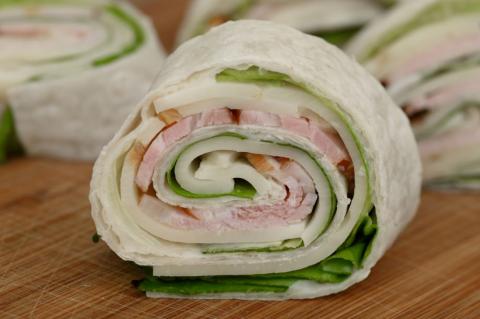
  • 4 Large Wholewheat Tortilla Wraps
  • 2 Level Tablespoons (30g) Mayonnaise (choose light mayo whenever possible)
  • 1 Pack (240g) Sliced Cooked Chicken
  • 1 Medium Avocado
  • 16 (80g) Lettuce Leaves
  • 1 (160g) Red Pepper
  • 4 Tablespoons (80g) Ready-Made Salsa

This recipe has been added to your Meal Planner.

Allergy Disclaimer

Always check the label of each ingredient for allergy warnings.

Method

  1. Cut the avocado in half lengthwise around the stone. Hold the avocado in one hand, and with the other hand twist and rotate the two halves apart. Remove the stone by slipping a spoon between the stone and the fruit and gently work the stone out of the fruit. Slice the inside of the avocado halves into sections then use your fingers to separate the avocado segments from the peel.
  2. Wash and shred the lettuce.
  3. Wash and de-seed the red pepper and slice into thin strips.
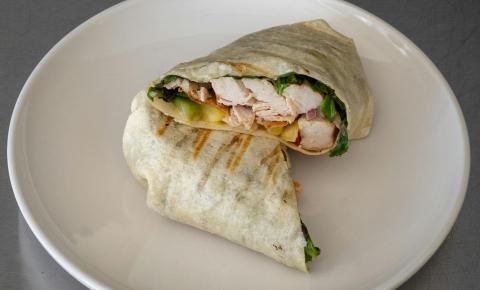
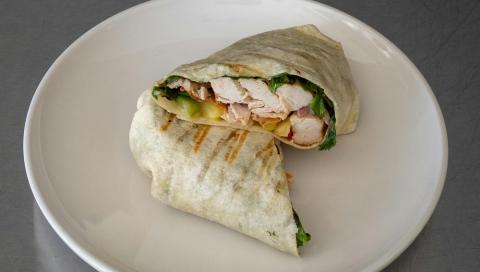
  4. Spread the wraps with mayonnaise, and layer up the chicken,  avocado, lettuce and pepper.
  5. Top with the salsa.
  6. Roll up (or fold up) the tortilla and serve.

Time Saver Tips

To make life easy, why not prepare this in advance – that way, you can keep it in the fridge until you’re ready to eat it?

Cost Saver Tips

This can be made with any salad vegetables, so a good way to save is to use whatever’s on offer – such as sweetcorn, different types of lettuce, baby spinach, cherry tomatoes or grated carrot. This recipe is an easy way to use up any leftover cooked chicken. It’s super easy to make this vegetarian by using a can of mixed beans, instead of chicken. Fancy making your own salsa? Check out the recipe 'Spicy Bean Burritos and Salsa'. Another quick and easy option is to use finely chopped tomatoes instead.

Tips for Kids

Little ones will love shredding lettuce with their (clean) hands. Why not ask if they can help you layer, roll and fold their own wrap? It’s good to be hands on with food after all! Kids love to try new things – like giving sweet chilli sauce or other dressings a go to give this a different flavour.

Nutritional Information

Based on a single serving of 215g (% of an adult's reference intake)

Energy

361 kcals ( 18 %)

1,487 kJ ( 18 %)

Fat

4.2 g ( 21 %)

Saturates

26.3 g ( %)

Sugar

3.9 g ( 4 %)

Salt

0.9 g ( 15 %)

Detailed nutritional information

Per 100g Per 215g serving
Energy Kcals 168 361
Energy Kj 692 1,487
Protein 9.8 g 21 g
Total Fat g g
Saturated Fat 2 g 4.2 g
Carbohydrates 12.2 g 26.3 g
Total Sugars 1.8 g 3.9 g
NSP Fibre 1.2 g 2.6 g
Sodium 168 mg 362 mg
Salt 0.4 g 0.9 g

Find out about nutritional labelling

Nutrition labels on the front of packaging

  • Most of the big supermarkets and many food manufacturers display nutritional information on the front of pre-packed food.
  • Front of pack nutrition labels provide information on the number of grams of fat, saturated fat, sugars and salt and the amount of energy (in kJ and kcal) in a serving or portion of a recipe.
  • The labels also include information about reference intakes (expressed as a percentage) which are guidelines about the approximate amount of particular nutrients and energy required for a healthy diet.
  • The colour coding tells you at a glance if the food has high (red), medium (amber) or low (green) amounts of fat, saturated fat, sugars and salt.
  • The more greens on the label, the healthier the choice
  • Amber means neither high nor low, so you can eat foods with all or mostly ambers on the label most of the time.
  • Reds on the label means the food is high in that nutrient and these are the foods we should cut down on. Try to eat these foods less often and in small amounts.

Food shopping tips

If you’re trying to decide which product to choose, check to see if there's a nutrition label on the front of the pack. This will help you to quickly assess how your choices stack up. You will often find a mixture of red, amber and green colour coding for the nutrients. So when you're choosing between similar products, try to go for more greens and ambers and fewer reds if you want to make a healthier choice.

Back to top

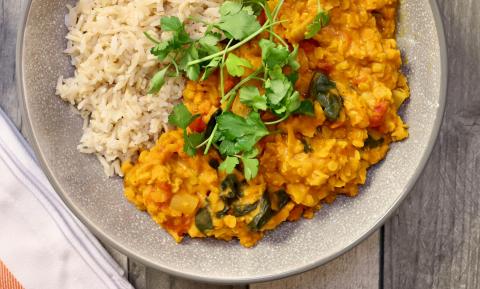
Ingredients

  • 2 Tablespoons (20g) Vegetable Oil
  • 2 Medium (300g) Onions
  • 2 (6g) Garlic Cloves or 2 Teaspoons Garlic Puree
  • ½ Teaspoons (2g) Ground Ginger
  • 2 Teaspoons (6g) Garam Masala (or any medium curry powder)
  • 1 Teaspoons (3g) Chilli Flakes
  • 1 (160g) Red Pepper
  • 1 Large Sized (150g) Chicken Fillet
  • 1 Tin (400g) Chopped or Plum Tomatoes
  • 1 Tin (390g) Green Lentils
  • (200ml) Cold Water
  • 1 Mug (300g) Easy Cook Rice
  • 1 Small bunch (10g) Fresh Coriander (optional)

This recipe has been added to your Meal Planner.

Allergy Disclaimer

Always check the label of each ingredient for allergy warnings.

Method

  1. Peel and finely chop the onion, peel and crush the garlic, and de-seed and chop the red pepper.
  2. Cut the chicken into small pieces.
  3. Heat the oil in a large saucepan. Fry the onions until they're soft.
  4. Add the garlic, ginger, spices and red pepper. Cook slowly for 5 minutes.
  5. Drain and rinse the green lentils and add to the saucepan with the chicken, chopped tomatoes and cold water. If using plum tomatoes, chop them up using a spoon when in the pan.
  6. Cook on a low heat for about 30 minutes until the chicken is tender.
  7. Cook the rice as per the instructions on the packet.
  8. Chop the coriander (optional), add to the curry, and serve the curry with rice.

Time Saver Tips

You could use a low-salt, vegetable or tomato-based cook-in sauce instead of the garlic, dried ginger, garam masala, chilli flakes, chopped tomatoes and water. The spices could also be replaced with 3 or 4 teaspoons of curry powder.

Cost Saver Tips

This recipe is a good way to use up leftover chicken. Or you could try replacing the chicken with leftover vegetables or more pulses for a vegetarian option. You can also use ground coriander instead of fresh coriander.

Nutritional Information

Based on a single serving of 476g (% of an adult's reference intake)

Energy

463 kcals ( 23 %)

1,883 kJ ( 23 %)

Fat

0.7 g ( 4 %)

Saturates

83.5 g ( %)

Sugar

10.3 g ( 11 %)

Salt

0.2 g ( 3 %)

Detailed nutritional information

Per 100g Per 476g serving
Energy Kcals 97 463
Energy Kj 396 1,883
Protein 4.5 g 21.6 g
Total Fat g g
Saturated Fat 0.1 g 0.7 g
Carbohydrates 17.5 g 83.5 g
Total Sugars 2.2 g 10.3 g
NSP Fibre 1.7 g 8.2 g
Sodium 16 mg 74 mg
Salt 0 g 0.2 g

Find out about nutritional labelling

Nutrition labels on the front of packaging

  • Most of the big supermarkets and many food manufacturers display nutritional information on the front of pre-packed food.
  • Front of pack nutrition labels provide information on the number of grams of fat, saturated fat, sugars and salt and the amount of energy (in kJ and kcal) in a serving or portion of a recipe.
  • The labels also include information about reference intakes (expressed as a percentage) which are guidelines about the approximate amount of particular nutrients and energy required for a healthy diet.
  • The colour coding tells you at a glance if the food has high (red), medium (amber) or low (green) amounts of fat, saturated fat, sugars and salt.
  • The more greens on the label, the healthier the choice
  • Amber means neither high nor low, so you can eat foods with all or mostly ambers on the label most of the time.
  • Reds on the label means the food is high in that nutrient and these are the foods we should cut down on. Try to eat these foods less often and in small amounts.

Food shopping tips

If you’re trying to decide which product to choose, check to see if there's a nutrition label on the front of the pack. This will help you to quickly assess how your choices stack up. You will often find a mixture of red, amber and green colour coding for the nutrients. So when you're choosing between similar products, try to go for more greens and ambers and fewer reds if you want to make a healthier choice.

Back to top

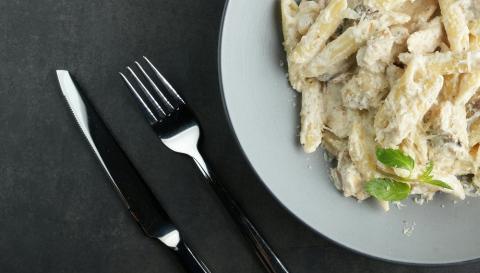
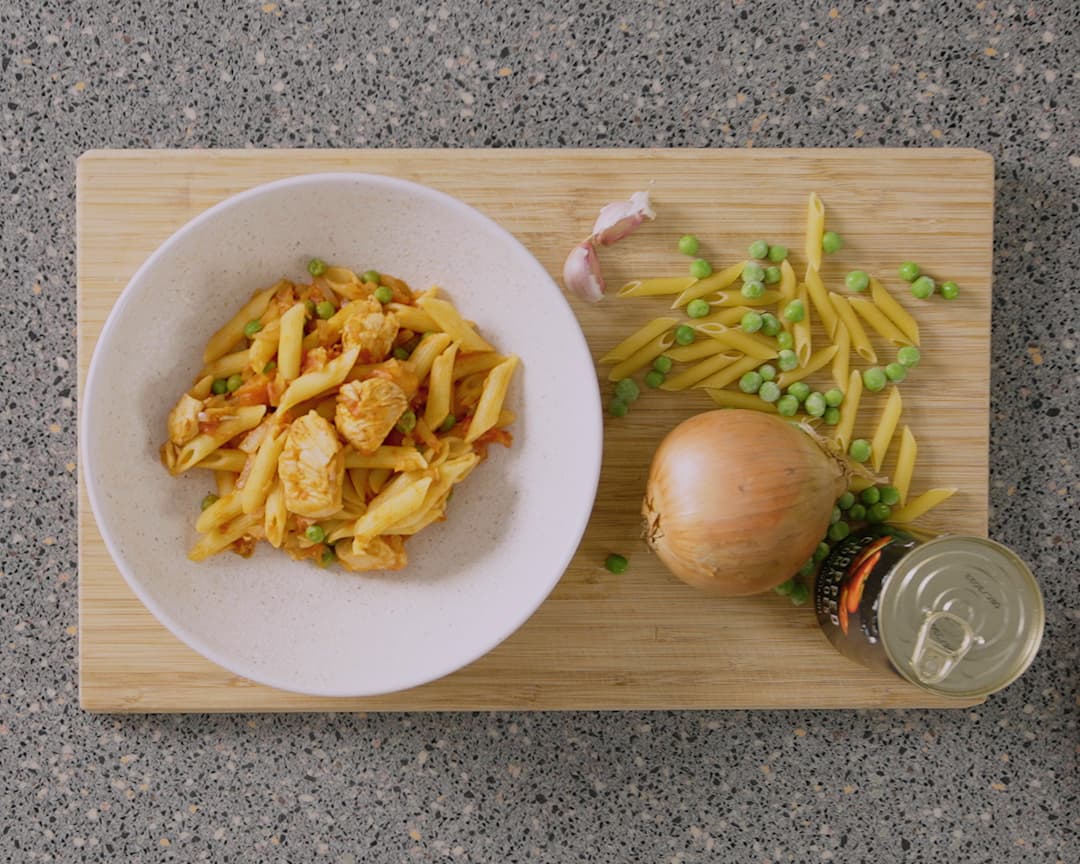
Ingredients

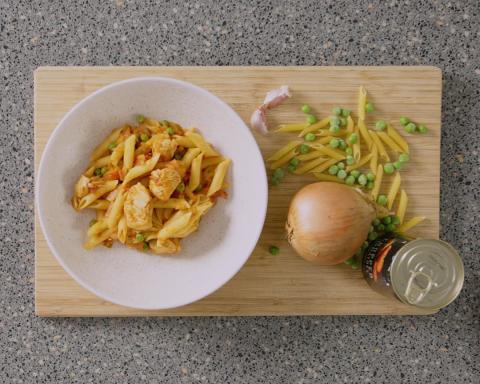
  • 4 Cups (300g) Pasta
  • 3 (450g) Chicken Breasts
  • 2 Medium Sized (300g) Onions
  • 2 (6g) Garlic Cloves or 1 Teaspoon (5g) Garlic Puree
  • 2 Tablespoons (20ml) Vegetable Oil
  • 1 Cup (150g) Fresh or Frozen Peas
  • 2 Tablespoons (30g) Tomato Puree
  • 1 Can (400g) Chopped or Plum Tomatoes
  • 1 Pinch Ground Black Pepper

This recipe has been added to your Meal Planner.

Allergy Disclaimer

Always check the label of each ingredient for allergy warnings.

Method

  1. Cook the pasta as per manufacturer’s instructions and drain.
  2. Dice chicken into bite size pieces. Peel onion and dice. Finely chop or crush the garlic.
  3. Heat oil in a large pan then add chicken and cook until sealed (2-3 minutes).
  4. Add chopped onions and garlic and cook for 5 minutes.
  5. Add tomato puree, chopped tomatoes and peas along with any black pepper then stir. If using plum tomatoes, chop them up using a spoon when in the pan.
  6. Simmer gently for 5 minutes, then add pasta and heat through before serving.

Time Saver Tips

Don’t forget, as the pasta’s cooking you can make use of the time to get your other ingredients ready to go in. Talk about multitasking! You can also used pre-diced chicken instead of whole chicken and garlic puree instead of the garlic cloves, to save you some chopping. How about cooking some extra sauce and freezing it for a quick meal on another day?

Cost Saver Tips

Why not try using chicken thigh meat instead of breast? It’s cheaper and just as tasty. You could also buy pasta in bulk when it’s on offer. It’s always a good idea to see what vegetables you already have in your fridge or freezer to use in this. You could even pop in a can of tuna or salmon instead of chicken – just drain it and add it to the sauce. You could also use plum tomatoes instead of chopped tomatoes, as these are often cheaper.

Tips for Kids

You could ask your little one to choose some of their favourite vegetables. There are two of their five a day in this meal, but you can always add more! Pasta comes in all shapes and sizes too – what’s their favourite? Making up their mind about what goes into this might even make them more likely to tuck into it! An easy way to help get your kid eating more fibre is to give wholemeal pasta a go. Another simple option is to mix wholemeal with white pasta so they don’t even notice the difference. Just make sure and adjust cooking time, as it could take 2-4 minutes longer to cook.

Nutritional Information

Based on a single serving of 435g (% of an adult's reference intake)

Energy

464 kcals ( 23 %)

1,887 kJ ( 23 %)

Fat

0.9 g ( 5 %)

Saturates

64.8 g ( %)

Sugar

12.7 g ( 14 %)

Salt

0.2 g ( 0 %)

Detailed nutritional information

Per 100g Per 435g serving
Energy Kcals 107 464
Energy Kj 434 1,887
Protein 8.8 g 38.2 g
Total Fat g g
Saturated Fat 0.2 g 0.9 g
Carbohydrates 14.9 g 64.8 g
Total Sugars 2.9 g 12.7 g
NSP Fibre 1.7 g 7.4 g
Sodium 19 mg 85 mg
Salt 0 g 0.2 g

Find out about nutritional labelling

Nutrition labels on the front of packaging

  • Most of the big supermarkets and many food manufacturers display nutritional information on the front of pre-packed food.
  • Front of pack nutrition labels provide information on the number of grams of fat, saturated fat, sugars and salt and the amount of energy (in kJ and kcal) in a serving or portion of a recipe.
  • The labels also include information about reference intakes (expressed as a percentage) which are guidelines about the approximate amount of particular nutrients and energy required for a healthy diet.
  • The colour coding tells you at a glance if the food has high (red), medium (amber) or low (green) amounts of fat, saturated fat, sugars and salt.
  • The more greens on the label, the healthier the choice
  • Amber means neither high nor low, so you can eat foods with all or mostly ambers on the label most of the time.
  • Reds on the label means the food is high in that nutrient and these are the foods we should cut down on. Try to eat these foods less often and in small amounts.

Food shopping tips

If you’re trying to decide which product to choose, check to see if there's a nutrition label on the front of the pack. This will help you to quickly assess how your choices stack up. You will often find a mixture of red, amber and green colour coding for the nutrients. So when you're choosing between similar products, try to go for more greens and ambers and fewer reds if you want to make a healthier choice.

Back to top

Ingredients

  • 4 Small (400g) Chicken Breasts
  • 1 Tablespoon (10g) Vegetable Oil
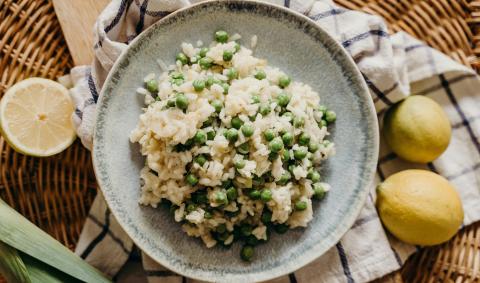
  • 2 Cups (320g) Frozen Peas
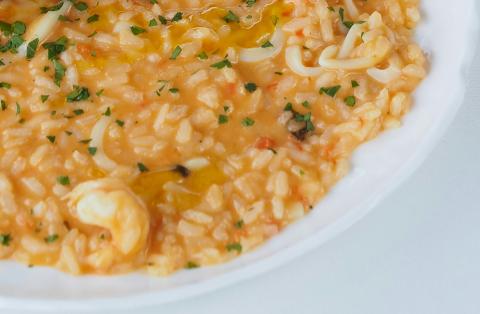
  • 1 Mug (300g) Risotto Rice
  • 1 (7g) Chicken or Vegetable Stock Cube (use reduced salt when possible)

This recipe has been added to your Meal Planner.

Allergy Disclaimer

Always check the label of each ingredient for allergy warnings.

Method

  1. Dice chicken into bite size pieces. Dissolve the stock cube in 1 pint (600ml) boiling water.
  2. Heat the oil in a large pan then add the chicken to the pan. Cook for 2-3 minutes stirring continuously to stop the chicken sticking.
  3. Add the rice to the pan and cook for a further 1 minute then add the stock.
  4. Bring to the boil, then lower the heat and place a lid on the pan. Cook for 20-30 minutes stirring occasionally. If necessary add additional water to the pan.
  5. When the rice begins to soften, remove the pan lid to allow the liquid to be fully absorbed. Add the peas to heat through and season with black pepper.
  6. The risotto is ready once the rice is fully cooked and the stock has been absorbed, leaving a creamy dish to serve.

Time Saver Tips

Buy diced chicken to save time chopping.

Cost Saver Tips

One way to save is to buy chicken in bulk or when it’s on offer. That way you can just freeze any leftovers for another day. Remember, chicken thighs are cheaper than breast meat and just as tasty. This can also be made with turkey or other meat – so why not keep a look out for what offers are on? When defrosting meat, remember to keep it covered on the bottom shelf of the fridge so harmful bacteria can't drip onto other food.

Tips for Kids

Add their favourite vegetables, such as peppers or carrots.

Nutritional Information

Based on a single serving of 332g (% of an adult's reference intake)

Energy

470 kcals ( 24 %)

1,994 kJ ( 24 %)

Fat

0.9 g ( 5 %)

Saturates

72.4 g ( %)

Sugar

4.7 g ( 5 %)

Salt

0.9 g ( 15 %)

Detailed nutritional information

Per 100g Per 332g serving
Energy Kcals 142 470
Energy Kj 601 1,994
Protein 10 g 33.3 g
Total Fat g g
Saturated Fat 0.3 g 0.9 g
Carbohydrates 21.8 g 72.4 g
Total Sugars 1.4 g 4.7 g
NSP Fibre 1.6 g 5.4 g
Sodium 105 mg 349 mg
Salt 0.3 g 0.9 g

Find out about nutritional labelling

Nutrition labels on the front of packaging

  • Most of the big supermarkets and many food manufacturers display nutritional information on the front of pre-packed food.
  • Front of pack nutrition labels provide information on the number of grams of fat, saturated fat, sugars and salt and the amount of energy (in kJ and kcal) in a serving or portion of a recipe.
  • The labels also include information about reference intakes (expressed as a percentage) which are guidelines about the approximate amount of particular nutrients and energy required for a healthy diet.
  • The colour coding tells you at a glance if the food has high (red), medium (amber) or low (green) amounts of fat, saturated fat, sugars and salt.
  • The more greens on the label, the healthier the choice
  • Amber means neither high nor low, so you can eat foods with all or mostly ambers on the label most of the time.
  • Reds on the label means the food is high in that nutrient and these are the foods we should cut down on. Try to eat these foods less often and in small amounts.

Food shopping tips

If you’re trying to decide which product to choose, check to see if there's a nutrition label on the front of the pack. This will help you to quickly assess how your choices stack up. You will often find a mixture of red, amber and green colour coding for the nutrients. So when you're choosing between similar products, try to go for more greens and ambers and fewer reds if you want to make a healthier choice.

Back to top
Subscribe to Eat Better Feel Better