Scottish government logo

This article was created with

eat-better-feel-better-logo-2.png

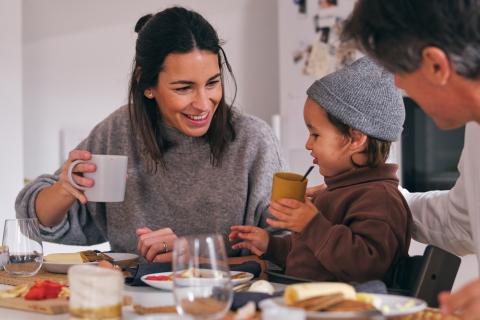
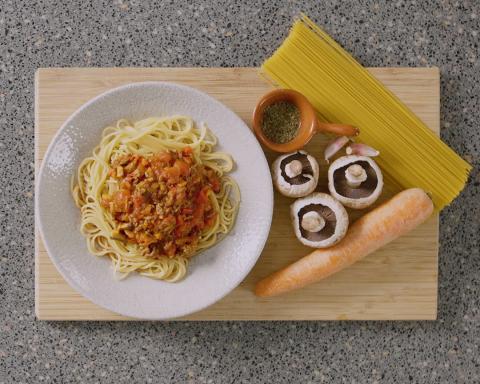
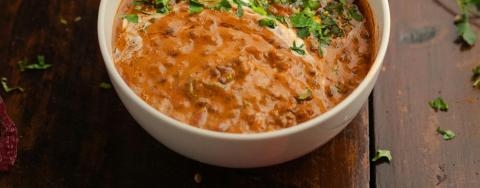
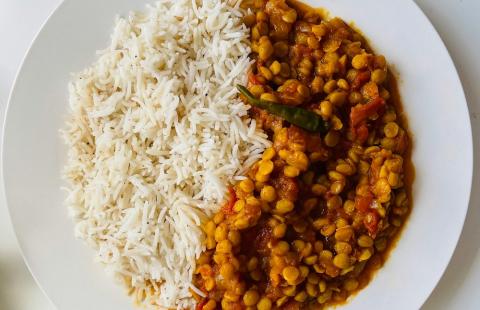
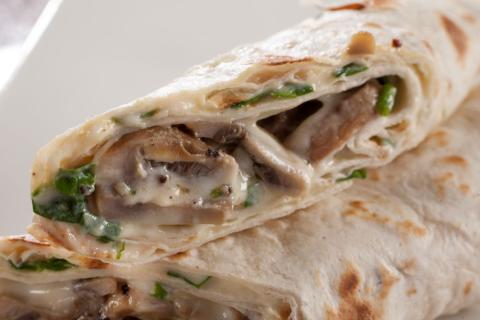
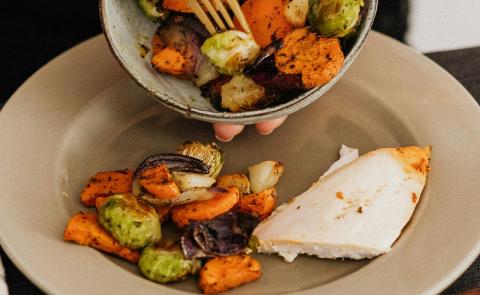
We’ve got a plateful of videos that are all about cooking quick and tasty meals for your family. When you try one get your kids to cook along with you. Why? Well, getting them involved is not only good fun, but also keeps them busy until tea time, which should make things a bit easier for you. And here’s the thing - you might find that they eat a little more if they’ve helped make it. Sweet.

Ready? Just click on the meal you want to make and cook along. You can pause or go back at any time.​

Jump to a section in this article

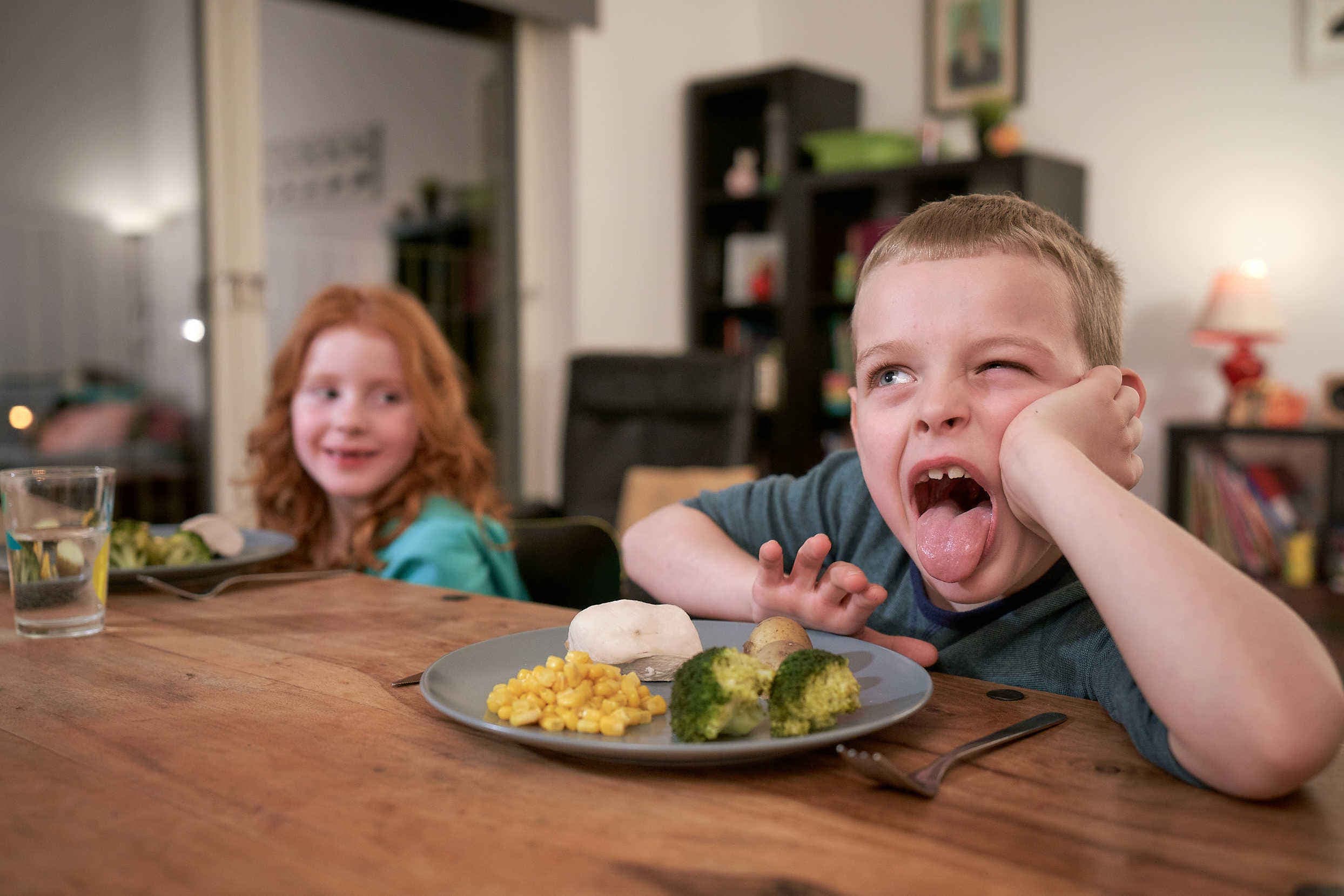
It's normal for kids to be a bit fussy about what they eat – but it can also be a bit of a pain if they're refusing to eat the food you put in front of them! Especially if it means you end up making more than one meal every night.

Why not try these tips from parents all around Scotland? Maybe making food for dinosaurs will do the trick!

Jump to a section in this article

Want them to eat up and get a bit a bit of goodness in them at the same time? Look no further than our list of simple swapping ideas.

Jump to a section in this article

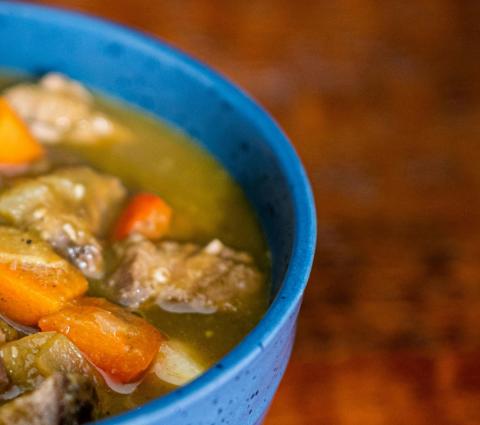
Cooking tasty, easy meals for your family doesn't need lots of time or money. Better still, you’re likely to have plenty left for the next day or two. If you have freezer space, you can always pop leftovers in there for those days when there’s just no time to cook a meal from scratch.

Jump to a section in this article

Cooking for your family begins with making sure you’re properly prepared, following instructions and storing all food in the right place. There are no shortcuts when it comes to your family’s health but thankfully it's all pretty straightforward and our top tips for food safety will keep you right.

You and your kids can learn more about food safety in the kitchen by playing this game from Food Standards Scotland together.

Jump to a section in this article

Kids love sweet things, so getting them to eat less sugar is tricky. Plus, with sugar hidden in so many everyday foods and drinks, it can be hard to know what's healthy and what's not. However, it's important we do our best, because too much sugar isn't just bad for kids' teeth. In the long run it can also lead to more serious issues like obesity, which in turn is linked to type 2 diabetes, and is the second-biggest preventable cause of cancer. But there are lots of easy and simple ways you can help reduce the amount of sugar your kids are eating.

Jump to a section in this article

Kids love to snack. The cries of "I'm starving, what can I eat now?!" are all too familiar for most parents. The problem is that many snacks can be full of saturated fat, salt and sugar. Eating too much of these over time can lead to serious health problems, so it's important to have healthy alternatives to hand when your wee one comes along demanding crisps and chocolate.

We've got some great ideas for quick, low-cost healthy snacks for busy families. When you're out and about our snack heroes will help fight hunger, or if you're looking for an after school nibble why not try one of our snack recipes? Making a few weekly changes can help keep your kids happy and healthy.

Jump to a section in this article

Ingredients

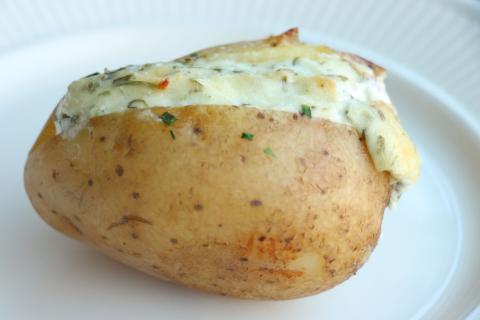
  • 4 Medium (720g) Baking Potatoes
  • 1 Pack (240g) Roast / Cooked Chicken
  • 1 Tin (200g) Sweetcorn
  • 4 Level Tablespoons (60g) Mayonnaise (choose light mayo whenever possible)
  • 4 Teaspoons (12g) Vegetable Oil

This recipe has been added to your Meal Planner.

Allergy Disclaimer

Always check the label of each ingredient for allergy warnings.

Method

  1. Set the oven to 200°C / 180°C fan oven / 400°F / gas mark 6.
  2. Rinse the potatoes in water and use a fork to prick each one all over.
  3. Using your hands, cover each potato in a teaspoon of oil.
  4. Place each potato on a foil covered tray and cook for between 1¼ and 1½ hours.When cooked, the skin should be golden brown and crisp, and the potato should give a little when squeezed. Alternatively you can place the potatoes on a plate and cook in the microwave for 15 minutes.
  5. Cut the chicken into bite-sized pieces and mix with the drained sweetcorn and mayonnaise.
  6. Cut the potatoes in half then spoon the chicken and sweetcorn mixture over them and serve. 

Time Saver Tips

For a handy shortcut, you could try cooking the potatoes in the microwave instead. Prick the potatoes with a fork so they don’t burst, cook on full power for 10 minutes, then turn the potatoes over and cook for another 5 minutes. If the potatoes are still hard, cook for another minute at a time until soft all the way through. The cooking time will depend on your microwave and the number of potatoes you cook at once.

Cost Saver Tips

If you have any leftover chicken, it’s great to use it in a sandwich the next day – talk about an easy lunch! Swapping the chicken for tinned tuna is another healthy and tasty option for your little one. Try adding extra vegetables within the filling as an easy way to get little ones eating their five a day. You could even serve it with some salad on the side.

Tips for Kids

If your little one isn’t a fan of the skins, why not scoop out the potato once cooked and mix it with the filling? You could try to encourage them to eat a little bit of potato skin, but don’t let it put them off the whole meal!

Nutritional Information

Based on a single serving of 293g (% of an adult's reference intake)

Energy

438 kcals ( 22 %)

1,839 kJ ( 22 %)

Fat

2.6 g ( 13 %)

Saturates

45.9 g ( %)

Sugar

5.5 g ( 6 %)

Salt

0.2 g ( 3 %)

Detailed nutritional information

Per 100g Per 293g serving
Energy Kcals 150 438
Energy Kj 628 1,839
Protein 7.5 g 22 g
Total Fat g g
Saturated Fat 0.9 g 2.6 g
Carbohydrates 15.7 g 45.9 g
Total Sugars 1.9 g 5.5 g
NSP Fibre 2 g 5.8 g
Sodium 25 mg 72 mg
Salt 0.1 g 0.2 g

Find out about nutritional labelling

Nutrition labels on the front of packaging

  • Most of the big supermarkets and many food manufacturers display nutritional information on the front of pre-packed food.
  • Front of pack nutrition labels provide information on the number of grams of fat, saturated fat, sugars and salt and the amount of energy (in kJ and kcal) in a serving or portion of a recipe.
  • The labels also include information about reference intakes (expressed as a percentage) which are guidelines about the approximate amount of particular nutrients and energy required for a healthy diet.
  • The colour coding tells you at a glance if the food has high (red), medium (amber) or low (green) amounts of fat, saturated fat, sugars and salt.
  • The more greens on the label, the healthier the choice
  • Amber means neither high nor low, so you can eat foods with all or mostly ambers on the label most of the time.
  • Reds on the label means the food is high in that nutrient and these are the foods we should cut down on. Try to eat these foods less often and in small amounts.

Food shopping tips

If you’re trying to decide which product to choose, check to see if there's a nutrition label on the front of the pack. This will help you to quickly assess how your choices stack up. You will often find a mixture of red, amber and green colour coding for the nutrients. So when you're choosing between similar products, try to go for more greens and ambers and fewer reds if you want to make a healthier choice.

Back to top
Ingredients

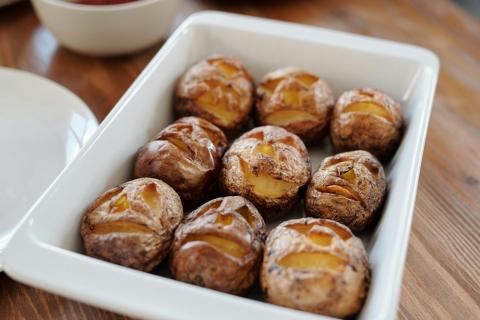
  • 4 Large Baking Potatoes

This recipe has been added to your Meal Planner.

Allergy Disclaimer

Always check the label of each ingredient for allergy warnings.

Method

  1. Preheat the oven to 170°C / 150°C fan oven / 310°F / gas mark 3. Place the potatoes in a large pan and cover with boiling water.
  2. Wash potatoes and dry them thoroughly with a cloth.
  3. Place the potatoes on the centre shelf of the oven and let them bake for 1.5-2 hours until crisp. Check with a fork to make sure they are cooked through.
  4. Alternatively, the potatoes can be precooked in a microwave, 5-6 minutes on each side depending on power, and then crisped in the oven for 10-15 minutes.

Cost Saver Tips

Reduced salt and sugar baked beans and/or cheese, or tuna and sweetcorn are some no-fuss options.

Tips for Kids

Baked potatoes can be a great side to a main meal or an easy lighter meal, served with a variety of fillings. Why not include vegetables in the fillings or as a side to help towards your little one’s five a day? If your little one isn’t a fan of the skins, why not scoop out the potato once cooked and mix it with the filling? You could try to encourage them to eat a little bit of potato skin, but don’t let it put them off the whole meal!
Nutritional Information

Based on a single serving of 220g (% of an adult's reference intake)

Energy

213 kcals ( 11 %)

909 kJ ( 11 %)

Fat

0.2 g ( 1 %)

Saturates

49.7 g ( %)

Sugar

3.1 g ( 3 %)

Salt

0.1 g ( 1 %)

Detailed nutritional information

Per 100g Per 220g serving
Energy Kcals 97 213
Energy Kj 413 909
Protein 2.5 g 5.5 g
Total Fat g g
Saturated Fat 0.1 g 0.2 g
Carbohydrates 22.6 g 49.7 g
Total Sugars 1.4 g 3.1 g
NSP Fibre 2.6 g 5.7 g
Sodium 2 mg 4 mg
Salt 0.0 g 0.1 g

Find out about nutritional labelling

Nutrition labels on the front of packaging

  • Most of the big supermarkets and many food manufacturers display nutritional information on the front of pre-packed food.
  • Front of pack nutrition labels provide information on the number of grams of fat, saturated fat, sugars and salt and the amount of energy (in kJ and kcal) in a serving or portion of a recipe.
  • The labels also include information about reference intakes (expressed as a percentage) which are guidelines about the approximate amount of particular nutrients and energy required for a healthy diet.
  • The colour coding tells you at a glance if the food has high (red), medium (amber) or low (green) amounts of fat, saturated fat, sugars and salt.
  • The more greens on the label, the healthier the choice
  • Amber means neither high nor low, so you can eat foods with all or mostly ambers on the label most of the time.
  • Reds on the label means the food is high in that nutrient and these are the foods we should cut down on. Try to eat these foods less often and in small amounts.

Food shopping tips

If you’re trying to decide which product to choose, check to see if there's a nutrition label on the front of the pack. This will help you to quickly assess how your choices stack up. You will often find a mixture of red, amber and green colour coding for the nutrients. So when you're choosing between similar products, try to go for more greens and ambers and fewer reds if you want to make a healthier choice.

Back to top

Ingredients

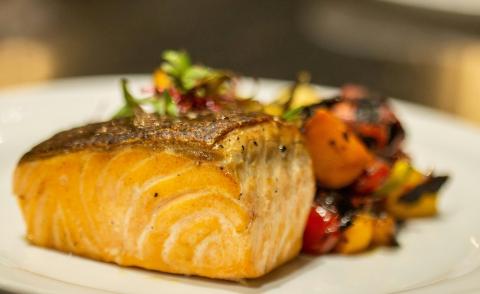
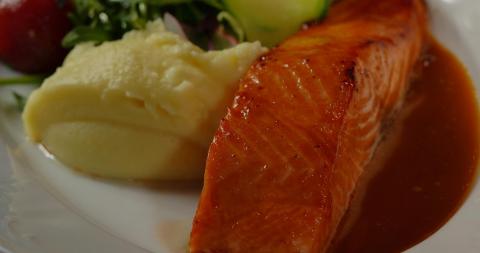
  • 4 Fillets (440g) Pink Salmon
  • 2 Tablespoons (20g) Vegetable Oil
  • 1 Teaspoon (1g) Dried Thyme
  • 6 (800g) Potatoes
  • 2 (280g) Carrots
  • ½ (500g) Turnip
  • 2 (180g) Parsnips
  • 3 Teaspoons (24g) Honey

This recipe has been added to your Meal Planner.

Allergy Disclaimer

Always check the label of each ingredient for allergy warnings.

Method

  1. Preheat the oven to 170°C / 150°C fan oven / 310°F / gas mark 3.
  2. Wash and peel potatoes and vegetables then cut into small cubes of similar size.
  3. Cook in a pan of boiling water for 10 minutes.
  4. Meanwhile line a baking tray with tin foil and place the salmon fillets onto it.
  5. In a small bowl pour half the oil, add the thyme and mix well. Using a pastry brush or your fingers, spread the oil on top of each fillet of salmon.
  6. Drain the water from the vegetables and place back into the pan. Add the remaining oil to the pan and mix to coat the vegetables.
  7. Spread the vegetables onto another baking tray and drizzle honey over the top. Roast in the oven for approximately 20-30 minutes until the vegetables are beginning to brown.
  8. The salmon should be added to the oven with approximately 15 minutes left to ensure it is ready at the same time as the vegetables.
  9. Once the salmon has cooked remove from oven, and if desired turn the heat up to crisp the vegetables further.

Time Saver Tips

Try roasting the potatoes and carrots without peeling.

Cost Saver Tips

Frozen salmon is often cheaper. Try with other herbs, such as basil, oregano if you don't have thyme in the cupboard.

Tips for Kids

Try taking them to your local fishmongers to choose the salmon or their favourite fish. Get them to mix the oil and herbs and brush this on to the salmon. If using fingers, wash them afterwards!

Nutritional Information

Based on a single serving of 516g (% of an adult's reference intake)

Energy

443 kcals ( 22 %)

1,863 kJ ( 22 %)

Fat

2.6 g ( 13 %)

Saturates

50 g ( %)

Sugar

15 g ( 17 %)

Salt

0.5 g ( 8 %)

Detailed nutritional information

Per 100g Per 516g serving
Energy Kcals 86 443
Energy Kj 361 1,863
Protein 4.8 g 24.8 g
Total Fat g g
Saturated Fat 0.5 g 2.6 g
Carbohydrates 9.7 g 50 g
Total Sugars 2.9 g 15 g
NSP Fibre 1.6 g 8.2 g
Sodium 24 mg 124 mg
Salt 0.1 g 0.5 g

Find out about nutritional labelling

Nutrition labels on the front of packaging

  • Most of the big supermarkets and many food manufacturers display nutritional information on the front of pre-packed food.
  • Front of pack nutrition labels provide information on the number of grams of fat, saturated fat, sugars and salt and the amount of energy (in kJ and kcal) in a serving or portion of a recipe.
  • The labels also include information about reference intakes (expressed as a percentage) which are guidelines about the approximate amount of particular nutrients and energy required for a healthy diet.
  • The colour coding tells you at a glance if the food has high (red), medium (amber) or low (green) amounts of fat, saturated fat, sugars and salt.
  • The more greens on the label, the healthier the choice
  • Amber means neither high nor low, so you can eat foods with all or mostly ambers on the label most of the time.
  • Reds on the label means the food is high in that nutrient and these are the foods we should cut down on. Try to eat these foods less often and in small amounts.

Food shopping tips

If you’re trying to decide which product to choose, check to see if there's a nutrition label on the front of the pack. This will help you to quickly assess how your choices stack up. You will often find a mixture of red, amber and green colour coding for the nutrients. So when you're choosing between similar products, try to go for more greens and ambers and fewer reds if you want to make a healthier choice.

Back to top
Subscribe to Eat Better Feel Better