 Activities & Play
 Behaviour
 Childcare
 Children's rights
 Development & Growing Up
 Family, Friends & Relationships
 Feeding Your Baby
 Food & Eating
 Health & Safety
 Mental Health & Wellbeing
 Money & Work
 Online Behaviour & Safety
 Pregnancy & First Days
 School & Education
 Sleep
Sleep

Jump to a section in this article

We all want our schools to be safe, positive and inclusive places where children can learn and thrive. And there's lots we can do as parents to help our children understand what’s expected of them at school.
It’s up to your child’s school to set rules about what your child can and can’t do in school, but they're encouraged to gather parents', carers' and young people's views about expectations of behaviour. They should also provide information about what happens if behaviour doesn’t meet expectations.
If your child has been struggling with their behaviour at school, we’ve got tips to help here.
What schools expect from children and young people
Schools should work with pupils and parents to develop rules and expectations for behaviour. These expectations are often based around the school's values.
While these vary between schools, they might include:
- treating staff, pupils and visitors with respect and kindness
- being inclusive and not using prejudiced or abusive language (racist, sexist, homophobic or transphobic)
- respecting the school building and grounds
- keeping yourself and others safe
- only using phones at times and places where they’re allowed
- attending classes, being ready to learn, and participating positively.
All schools should have a ‘Relationship and Behaviour Policy’ that sets out what’s expected of children and young people, and what the school will do if pupils need help with their behaviour. As a parent you could be asked to contribute to the development of this policy and you should be able to find it on your school’s website, or you can ask the school for a copy.
School rules and discrimination
Schools can’t treat pupils unfairly because of their:
- disability
- gender reassignment
- pregnancy or maternity
- race
- religion or belief
- sex
- sexual orientation.
This means schools need to think about how their rules or expectations might impact on some young people. So for example:
- If the school uniform policy has a rule that pupils can’t wear head coverings, there should be an exception for religious purposes or if a child needs to wear a wig for medical reasons.
- If pupils are meant to stay in class and not leave the room during lessons, pupils with additional support needs may be allowed to leave if they need to.
You can find out more about discrimination in education and what to do if you think the school is being unfair on the Citizens Advice Scotland website.

School rules about phones
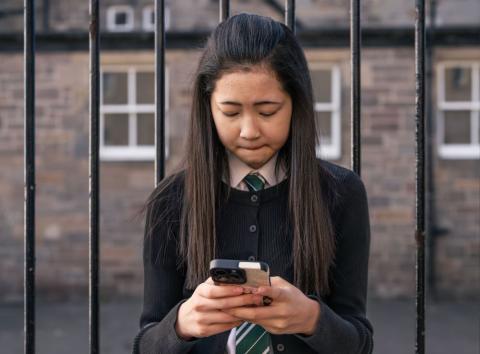
Mobile devices like phones and tablets can sometimes be used for learning, but they can also be distracting. In some cases they can be used for harassing or bullying other pupils or staff.
At the moment, it’s up to the school to set its own rules about mobile phone usage. For example, pupils may be asked to switch off phones in class or keep them in their bags. Or they may be asked to keep them in sealed pouches during class time. Or schools may decide to ban phones completely throughout the school day or on school premises.
Again, there may be circumstances where schools will allow exceptions to these rules for pupils who need it. For example, if they:
- need their phone to monitor medical conditions (like diabetes)
- are a young carer who needs to keep in touch with their family
- have additional support needs and use their phone to help them communicate and learn.
The school’s phone rules may also affect parents – for example, the school might ask you not to film school plays or sports events or you might be asked to go through the school office if you need to reach your child rather than phone or text them directly.
If you have any concerns about the school’s rules about phones (for example, if your child needs to have their phone with them for a particular reason) the best thing to do is get in touch with the school to talk to let them know.
How can I help my child understand what's expected of them?
As parents, we can help our kids understand what’s expected of them. Here are some examples.
Home vs school
We can talk to them about why some things that may be okay at home (like shouting or running around) aren’t acceptable at school, where there are lots more children who need to be kept safe.
Mobile phone use
We can talk to them about the school’s rules around mobile phones, and why these are important for helping them learn without getting distracted. You can try to support this by only messaging your child at break or lunchtime or by calling the school office if you need to speak to your child or pass on a message.
We can also talk to them about staying safe when they’re using their phone, and treating other people with respect (for example, not posting pictures or videos of other pupils without their permission and not making mean or offensive comments).
Our pages on talking to your child about online safety, setting boundaries and screen time have more advice to help here.
Talking about respect
We can set a good example by treating everyone around us with kindness and respect and helping our children learn to be more understanding and inclusive. These pages all have tips for talking to your child about differences:
What can I do to support my child at school?
Helping your child be ready to learn and keeping in touch with the school so you know what’s going on will also help your child meet the school’s expectations.
Helping them come to school prepared to learn
Helping your child be ready for school is a great way to help them meet their school’s expectations. So for example you can try to make sure:
- they get a good night’s sleep on school nights – we have bedtime tips for younger kids and sleep tips for older kids and teens here
- they’re sticking to the rules around school uniform – our page on school uniform has information about how schools set their uniform policies and how to get help with costs
- their bags are packed with everything they need (PE kits, books, devices) and that any electronic devices required for learning are charged over night
- they have time and space to do their homework.
Our pages on helping younger children to learn and supporting older children and teens to learn have more advice to help.
Keeping in touch with the school
Another important way to support your child is to keep in touch with the school. Keeping on top of messages and emails can be tricky, but it’s important to read any communications the school sends you, so you know what’s going on.
This works both ways. If you have worries about how your child’s getting on, their school will be happy to help and support you. You can start by talking to their class teacher, head of year or guidance teacher.
It’s also important to let the school know if your child is off school if they’re ill, or for any other reason. If you’re having problems getting your child to go in, there are lots of things the school can do to support you. Our page on school avoidance has more advice.

How do schools deal with disruptive behaviour?
Some children can find the structure and demands of school difficult. Others may try pushing boundaries, or taking risks – this is as a normal part of growing up.
The school’s relationship and behaviour policy should set out what will happen if a pupil’s behaviour doesn’t meet the expected standards. The way schools respond varies, but they must give pupils a chance to share how they feel and take this into account, along with their individual needs and circumstances.
Schools also need to be mindful of the needs of other pupils whose learning may be disrupted, and staff who have the right to work safely. By considering everyone’s needs and looking at supportive options first, schools can make sure any consequences are fair and proportionate.
Ensuring everyone is safe
If a child’s behaviour could cause harm to themselves or others, the school’s priority should be to make sure everyone is safe.
Supporting pupils to improve their behaviour
If a young person is struggling to meet expectations, their school should support them to change their behaviour. This shouldn’t be about punishing them or making them feel bad. It should be about helping them to understand why their behaviour is disruptive, working out why they’re acting that way and making a plan to help them improve their behaviour.
For example:
- They might have to talk to a teacher who can help them understand how their behaviour affects others.
- If they’ve been messing about in class, they may have to stay in at break or lunchtime to finish their work.
Addressing underlying issues
The way children behave can communicate a lot about what they’re thinking, feeling or worrying about. The school should look into what’s causing the behaviour and help address this.
For example:
- A child may be being noisy and disruptive in class because they don’t understand the subject and are trying to cause a distraction. In this case, the school may offer them extra help with the subject.
- A child may shut down and refuse to do any work because they’re overwhelmed by their environment. In this case they may be allowed a time out, or to do some of their work in a quieter room.
- A child may be skipping school because they’re being bullied. In this case, the school should look into the situation and deal with the bullying.
- A child may use racist or homophobic language without realising how hurtful and harmful it is. In this case a teacher may talk to them about it to help them understand.
Whole-school approaches
In some cases (for example, racism, bullying or vaping), the school may talk to all the pupils about the issue, to make sure everyone understands what is and isn’t acceptable and why.
Different approaches for different pupils
While schools should expect all pupils to behave in line with their values and rules, they may respond in different ways depending on the child’s needs and circumstances.
For example, for some children a reminder of the expectations is enough to help them change their behaviour, while others might need a bit more support.
This means that different children may be treated in different ways, even for similar behaviour. This can sometimes seem unfair, but it's about ensuring each child is supported the right way to help them meet expectations. Your child's school should help pupils understand that fair doesn't always mean the same.

 Mental Health & Wellbeing
 Online Behaviour & Safety