 Activities & Play
 Behaviour
 Childcare
 Children's rights
 Development & Growing Up
 Family, Friends & Relationships
 Feeding Your Baby
 Food & Eating
 Health & Safety
 Mental Health & Wellbeing
 Money & Work
 Online Behaviour & Safety
 Pregnancy & First Days
 School & Education
 Sleep
Sleep

Jump to a section in this article
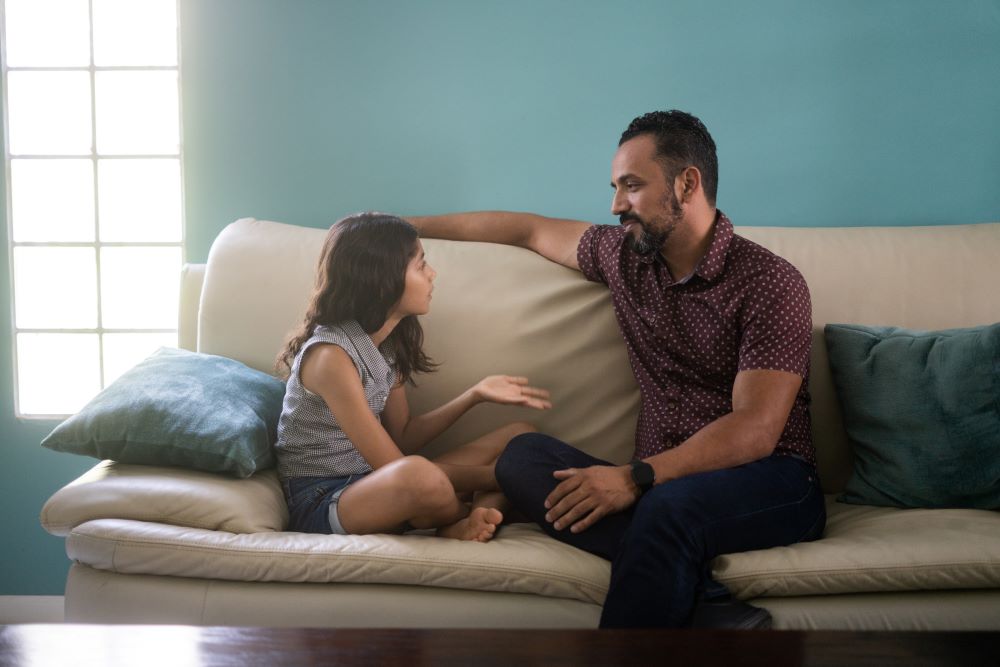
Just as it’s important to talk to children about how people and families come in all sorts of shapes and sizes and colours, it’s also important to let them know that people can think and feel in different ways too. And it’s never too early to start talking about this together. The more they know about the differences between us, the more they can come to understand and accept other children and adults who aren’t like them. This can help prevent them from making hurtful comments and reduce problems like bullying.
What is neurodivergence?
The brains of neurodivergent people are ‘wired’ differently to the majority of other people (‘neurotypical’ people). This means they see and experience the world in a different way – and this can make things difficult because the world is often designed for ‘neurotypical’ people and doesn’t account for the way neurodivergent people experience things.
Tips for talking to children about neurodivergence and neurodiversity
Tip #1: Talk to them positively about difference
You can start by talking to your child about the things they’re good at and the things they struggle with, and explaining how this is different for everyone. And wouldn’t it be boring if we were all the same – if we were all brilliant at football but no good at baking there’d be no more cake!
Tip #2: Talk about how everyone learns in their own way
It’s good for children not just to learn but to think about how they learn. Everyone learns in a slightly different way – some people like to hear things read out loud, while others would rather read to themselves, look at diagrams or watch a video. Some people like to draw mindmaps or pictures while others will make lists. Encouraging your child to think about what they like to do will help them understand that there’s no right or wrong way to think or learn.
Tip #3: Explain the difference between fairness and ‘the same’
Sometimes when children see other children being treated differently to them they may think this isn’t fair. Why is one child allowed a time out from class when they’re not?
So it’s a good idea to talk to them about how ‘fairness’ doesn’t always mean everybody being treated in the same way or given the same things. For example, a child might need a boost to reach something on a high shelf where an adult wouldn't. Or a child who’s allergic to certain foods might need a different lunch. It’s not about getting the same, it’s about getting what you need.
Tip #4: Watch programmes and read books that represent diversity
Reading books and watching programmes online or on TV that represent diversity is a great way for children to learn more about the world, and offers you a chance to start a conversation about difference. You can find lots of ideas for younger kids on the Love Reading 4 Kids website while the Scottish Book Trust have ideas of books for 9-11 year olds and books for 12-14 year olds.
Tip #5: Talk about being kind and understanding
Remind them that everyone is good at some things and not so good at other things, and it’s not nice to tease or make fun of someone who’s struggling. Instead, saying something kind may help them feel much better.



 Family, Friends & Relationships
 Behaviour