 Activities & Play
 Behaviour
 Childcare
 Children's rights
 Development & Growing Up
 Family, Friends & Relationships
 Feeding Your Baby
 Food & Eating
 Health & Safety
 Mental Health & Wellbeing
 Money & Work
 Online Behaviour & Safety
 Pregnancy & First Days
 School & Education
 Sleep
Sleep

Jump to a section in this article
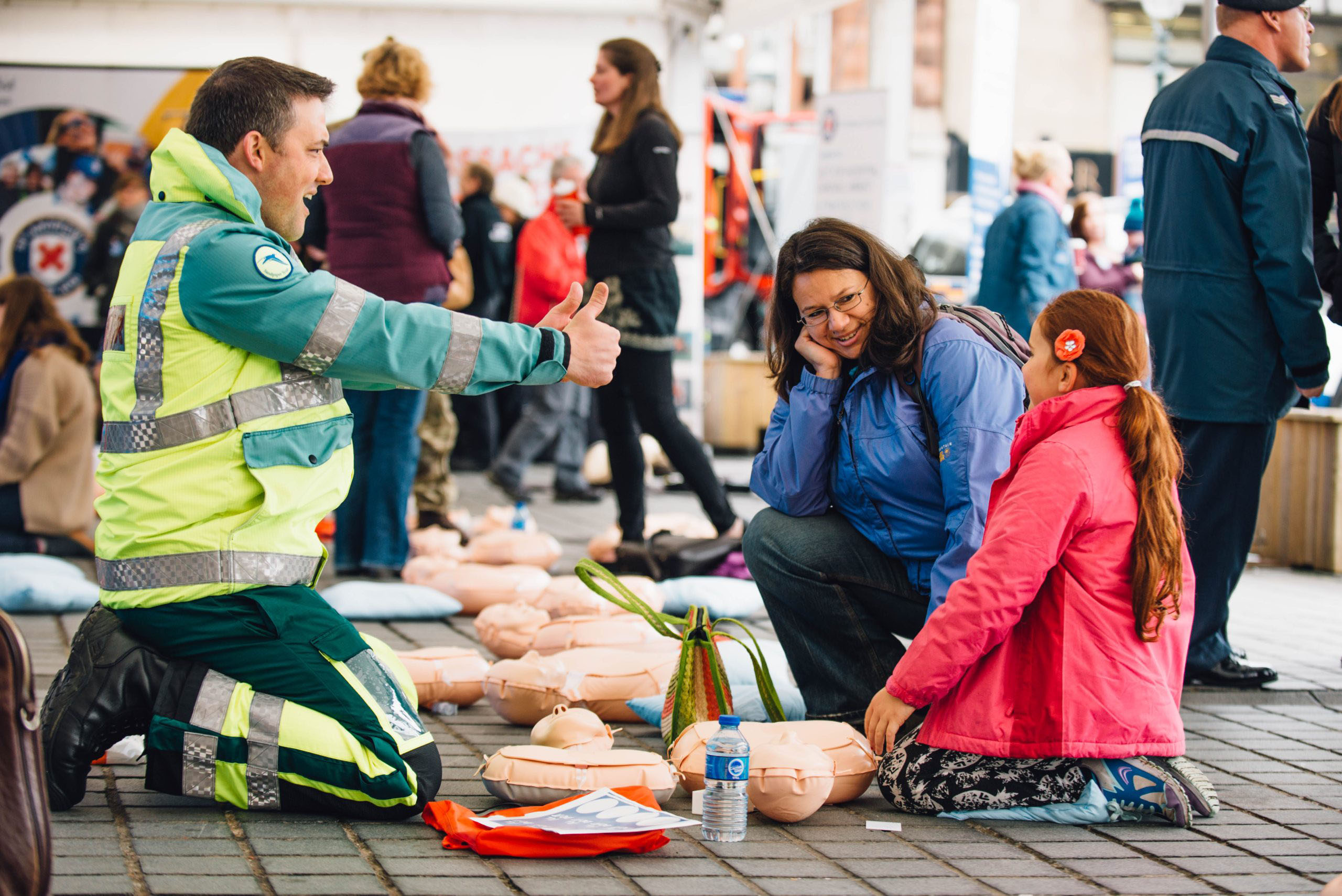
You’ve probably seen people on telly doing CPR when someone has a cardiac arrest. But did you know that you can learn to do this too? By learning to do CPR, you could save a life one day. Everyone has a part to play in saving a life – even young children can learn to call for help. Here you can find out more about why CPR is so important and how you and all the family can learn this lifesaving skill.
Why is CPR so important?
A cardiac arrest happens when a person’s heart suddenly stops beating, they collapse, and their breathing is abnormal or has stopped. Without quick action, the person will die.
If someone has a cardiac arrest, it is easy to feel overwhelmed and afraid to act. However, you can greatly increase their likelihood of survival by:
- Shout for help and gently shake the person who has collapsed to check for a response.
- Call 999 and put your phone on loudspeaker.
- Look and listen for signs of normal breathing – look for the rise and fall of their chest.
- Start chest compressions – the ambulance call handler will tell you what to do.
CPR (‘cardiopulmonary resuscitation’) helps maintain blood and oxygen flow to vital organs until the emergency services arrive in the event of a cardiac arrest. CPR greatly increases the person’s chance of surviving.
Any CPR is better than no CPR – which is why it’s so important to learn how to do it, so you feel confident enough to try.
How do I learn to do CPR?
You can learn to do CPR from home or in a face-to-face setting, it’s up to you.
- Save a Life Scotland has lots of resources to help you learn, including this video.
- The Resuscitation Council UK also has information on how to do CPR.
- The British Heart Foundation has an online training course to help you learn CPR in 15 minutes for free.
- If you’d like to learn CPR face to face, you can get in touch with Save a Life Scotland here.
By taking the time to learn these skills you could save a life one day.
CPR for babies and children
CPR on children and babies is different to CPR on adults. In the unlikely event that a child or baby suffers a cardiac arrest, it is always best to be prepared.
- The Resuscitation Council UK has information on how to do CPR on adults, children and babies.
- The British Heart Foundation also have advice on how to do CPR on a child or baby.
More information
NHS inform has more information on cardiac arrests and CPR, including where to get support if you’ve seen or provided CPR.
 Activities & Play
 Mental Health & Wellbeing