 Activities & Play
 Behaviour
 Childcare
 Children's rights
 Development & Growing Up
 Family, Friends & Relationships
 Feeding Your Baby
 Food & Eating
 Health & Safety
 Mental Health & Wellbeing
 Money & Work
 Online Behaviour & Safety
 Pregnancy & First Days
 School & Education
 Sleep


Jump to a section in this article

These days, it’s hard to avoid screens – whether that’s smartphones, tablets, laptops, computers, games consoles or TVs. So is it okay for babies to have screen time?
In line with the World Health Organisation's guidelines, it’s recommended that babies and infants under 2 don't have any screen time at all, apart from video calls with friends and family. And it’s not just about babies looking at screens. At this age, how you use your phone or other devices when you’re around your wee one can have a big impact – and putting it away will have lots of benefits for your baby’s development.
How much screen time should babies have?
In line with the World Health Organisations guidelines, it’s recommended that there is no screen time for wee ones under 2, apart from video chatting or face time with family members and friends, as this can help them learn communication skills.
Here are some reasons why screens aren’t great for wee ones:
- Videos and apps are too fast-paced and noisy for babies – their wee brains simply can’t take it all in.
- Watching activity on a screen isn’t nearly as helpful for developing speech, language and communication skills as talking face to face to a real person or sharing a story. That’s because there’s no back and forth communication with screens. Also, babies can’t really connect what they see on screen to what they see in the real world. You can find out more about how wee ones develop communication skills here.
- They’re not active when they’re looking at a screen – they’ll move around much more if they playing with you or with their toys, and this is better for their physical health and development.
Why is it important for parents to put our phones away too?
It’s good to keep babies away from screens. But what about how we, as parents and carers, use our phones and other devices around our wee ones? It’s also really important to try to limit our own screen use when we’re with them.
We’re not saying ‘give up your phone’ – because realistically how would that work? We need our phones for all sorts of things, from keeping in touch and getting reminders to banking and finding our way around, not to mention much-needed downtime.
But there are some big benefits to setting your phone aside when you’re with your baby and focusing all your attention on them.
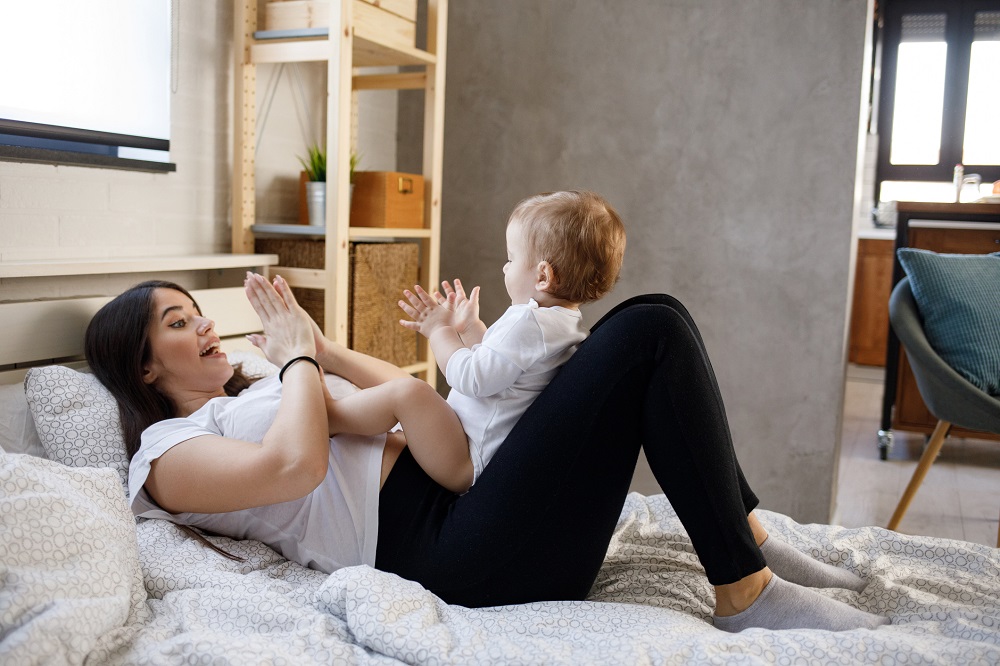
Chatting and playing face to face helps babies feel safe and secure
Research shows that being on our phones makes it harder for us to respond to our child in the moment, which can make it harder for them to learn to communicate and socialise with others as they grow up. There’s even a word for this – ‘technoference’.
Babies may seem little and helpless, but they’re born ready to start interacting with their parents and carers. And they love having our full attention, and to feel that we’re responding to them – it helps them feel safe and connected. If you’re looking at your phone and they can’t see your face, this can be upsetting for them. And if it happens often, it could affect their development.
Simple, everyday moments of chatting, playing and responding to your child are what really help them learn to communicate and feel connected. Putting away our screens gives us more of these special moments together.
Chatting and playing face to face helps babies’ brains develop
Believe it or not, 80% of a child’s brain development takes place before they’re 3. This is why it’s super important to spend as much time as we can interacting with our wee ones during this time, and put our phones away whenever we can.
Cutting down on screen time isn’t just good for health and behaviour, it also helps your child’s speech, language and communication skills. Every chat, smile and story you share helps their brain grow and builds the foundations for learning and confidence later on. The good news is, you’re probably already doing lots of great things to interact with your baby, like responding to their funny faces and sounds, singing to them when you’re holding them, chatting to them while you’re out for a walk or sharing bedtime stories.
Our page on connecting with your baby has lots of tips to help you build on these lovely moments to engage with your wee one throughout the day, even when you’re busy. We also have lots of tips for having fun with your baby, including ideas for toys you can make for free!
Chatting and playing face to face helps babies develop their communication skills
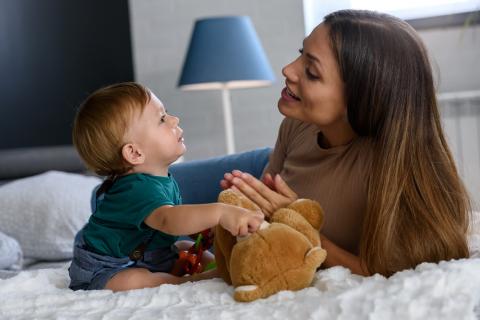
You might find the idea of ‘chatting’ with your baby a bit strange – it’s not as if they can talk back! But through their interactions with you, they’re learning the skills they need to talk, like how to make different sounds, how to link words with the things they see around them and how to take turns in a conversation. Our pages on chatting with your baby and how babies learn to talk explain more.

Tips for reducing your screen time
‘Putting our phones away’ is easier said than done – they’re designed to keep us scrolling! But we have tips to help if you want to reduce your screen time.
Screen-free activities to keep babies happy
When we’re super busy it can be so tempting to hand your wee one your phone to keep them occupied. But with the recommendation for under 2s to avoid screen time in mind, here are some tips for screen-free activities you can try while you’re also trying to go about your day.
Tip #1: Have a sing-along
If you need to keep baby happy and engaged while you’ve got your hands full, how about putting on some music and having a sing-song? Baby will love to hear the sound of your voice, even if you’re no Taylor Swift! Try and make sure baby can see your face when you’re singing – watching your expressions will help them learn to talk.
The Scottish Book Trust’s Bookbug app has loads of songs and nursery rhymes perfect to keep little ones listening – you can even make a playlist of your favourites.
Tip #2: Running commentary
If singing’s not for you, just chatting to your baby as you get things done will keep them engaged and let them know you’re not ignoring them. You can help them to tune in by using a sing song voice that goes up and down.
If your baby responds with their own sounds and movements, try copying them. When you copy your baby, they notice you’re listening and see that you want to keep the conversation going.
Both singing and chatting are great ways of making baby feel included and helping them learn new words at the same time.
Tipo #3: Laundry fun
If you’re trying to get a wash on, how about encouraging your wee one to throw balled up socks into the machine? This is great fun – and great for helping them develop their motor skills.
Tip #4: Box of fun
Babies don’t need fancy toys to keep them occupied. Try filling a shoe box with everyday items you can find lying around the house, like a spoon, a toilet roll, a tennis ball and the teething ring from your Baby Box, and letting baby sort through them – just make sure you keep a close eye on them while they’re playing.
Change the contents regularly to keep them interested and make sure you choose items big enough not to be swallowed, with no small pieces that can break off or sharp edges or points.
Tip #5: Scribbling is fun
Try offering your wee one some paper and a crayon to scribble with. Yes, they’ll make a mess, but it will keep them busy and help them learn to use their hands and fingers. Just make sure crayons stay in their hands and don’t go in their mouths or up their noses!
Tip #6: Tea-time jam session
Babies love making noise! So how about making some simple instruments for your wee one by filling a plastic bottle with pasta or rice? (Make sure the lid is very firmly shut so they can’t open it and don’t leave them alone with these.) Or why not give them some pots and a wooden spoon to bang them with? Then put on the radio and watch them play along!



 Family, Friends & Relationships
 Mental Health & Wellbeing